By: Victoria Stevens
New York, NY (June 19, 2026) -According to the National Registry of Exonerations, 97 exonerations occurred in 2025. Forty homicide cases—78% of the 51 homicide exonerations in 2025—were marred by official misconduct. Of the 97 exonerations in 2025, 32% were no-crime cases. These 31 exonerations included wrongful convictions for drug possession, homicide, sexual assault, and child sex abuse. Persons exonerated in 2025 lost an average of 14.2 years to wrongful imprisonment for crimes they did not commit—1,373 years in total. Thirty-seven percent (36/97) of the persons exonerated lost more than 20 years each. Of those, 13 spent more than 30 years in prison, and three of those spent more than 40 years in prison for crimes they did not commit. These statistics show that there is a flaw in our Criminal Justice System which needs to be addressed.
Rolling Stone’s senior writer and true-crime investigator Paul Solotaroff has been investigating a1995 murder case of 12-year-old Josette Wright from Carmel, NY. Due to his persistence in uncovering buried records, he has shed light on the wrongful convictions of two teenage boys, which led to his landmark investigation, The Devil You Knew. Solotaroff has gone farther to create an eight-part true crime series called Bone Valley: The Devil’s Quarry that revisits the case and brings these buried records to the forefront. It was selected for the 2026 Tribeca Film Festival in the audio-first program.
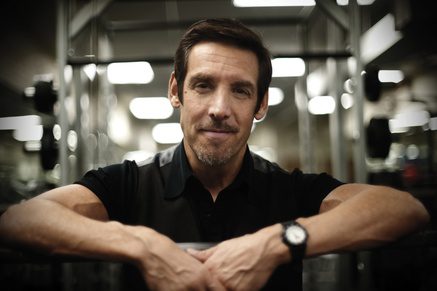
“As a journalist, my subject is giving names and voices to the nameless and securing justice and breaking down every possible door I can to secure justice to the folks who have been horrifically denied it. Among the many stories that I have reported on, there was a kind of arc. When you report on the poor in America, you are of necessity reporting on the war on drugs because the war on drugs is and always has been a war on the poor,” said Solotaroff.
Through his work with law enforcement agencies across the U.S., Solotaroff has seen firsthand the ethical standards of different police departments, as well as where those standards fall short.
“I’ve had the opportunity to work with brilliant law enforcement officers—including federal agents from the DEA and FBI—who helped me understand what bad policing looks like. What sadistic, racist, statistics-driven policing looks like. I’ve investigated one major city police department after another, including Chicago, Los Angeles, and New York. In the back of my mind, though, I kept wondering: what does this look like in small-town America? If bad policing can cause so much harm in major cities—cities already deep in debt from judgments and settlements paid to Black community members who were wrongfully shot, killed, or imprisoned without evidence—what happens in communities with little oversight and no social justice nonprofits tracking these abuses? Lo and behold, the Innocence Project brought a compelling story to my attention, which became my investigative piece The Devil You Knew,” explained Solotaroff.
Solotaroff spent years uncovering the truth behind the rape and murder of 12-year-old Josette Wright, which also revealed the false accusations against Anthony DiPippo and Andrew Krivak. Even more revealing was why those accusations were made in the first place.
“After the county lost the trial to Anthony in 2016, they stonewalled when he sued them, and he was able to depose all their corrupt officers. What those officers told Anthony’s lawyers under oath was so horrifying and so clearly criminal that the county offered Anthony $12 million to keep the depositions from becoming public. Every criminal case involving those officers would likely have been thrown out because they had turned out to be crooks with badges,” expressed Solotaroff.
In small-town America, too many cases are quietly buried and marked closed, leaving a painful question: when will this injustice end, and where can the innocent turn for justice?
“When Chicago was finally forced to turn over two years of personnel records from the Chicago Police Department in a well-known 2014–2015 case, it gave researchers at the Invisible Institute an unprecedented look at an entire department’s files. What they found was revealing: in a large city police force, about 20 percent of officers do most of the crime solving, while another small group simply follows family members into law enforcement and is neither harmful nor corrupt. But at the bottom, there is another 20 percent tied to wrongful shootings, false arrests, and repeated civilian complaints for violent misconduct,” said Solotaroff.
Those officers, Solotaroff explained, are often exposed in major cities and then end up working in small-town police departments. In Putnam County, however, the problem was even more basic: the officers involved had never been properly trained. Neither had worked a murder case, and they had not been taught the constitutional standards required for an investigation. They did not even Mirandize the teenagers before questioning them and forcing false confessions. In a major city, those procedural violations would likely have surfaced at the first trial, and the case would have been thrown out. But in small-town America, Solotaroff said, the sheriff can operate with enormous unchecked power.
He also noted that Anthony identified the prime suspect, Howard Gombert, and gathered seven volumes of evidence against him. Yet that suspect remained free, moved to Connecticut, and later found additional victims. Connecticut authorities eventually arrested, tried, and convicted him for the rape of a 7-year-old child, sentencing him to 30 years. Solotaroff warned that the man is expected to be released in late 2026 or early 2027, after serving about 26 years. Because of that, he said, the series was created not only to inform the public, but also to raise concern and pressure the Putnam County Police Department to reopen the investigation into Josette Wright’s murder and other disappearances that occurred while the suspect was free.
If you would like to listen to the audio series, Bone Valley: The Devil’s Quarry, then please visit Audible at Introducing – Bone Valley Season 5 | The Devil’s Quarry | Wrongful Conviction | Podcasts on Audible | Audible.com
Spotify at Introducing – Bone Valley Season 5 | The Devil’s Quarry – Bone Valley | Podcast on Spotify
Apple Podcast at Bone Valley – Podcast – Apple Podcasts