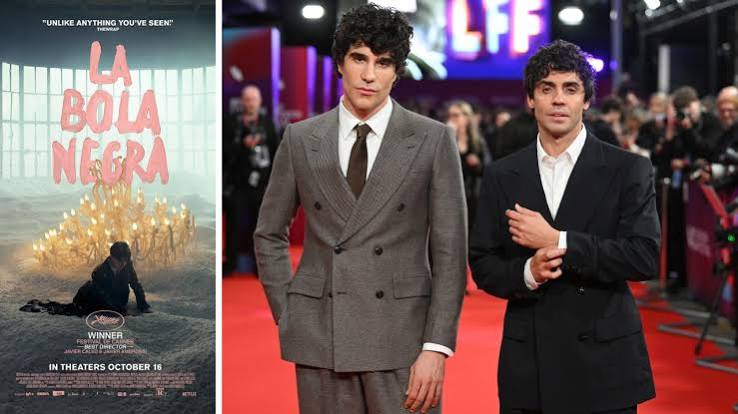
Festival Theaters celebrates queer cinema with a Palm Springs screening of a film about love, exclusion, and the enduring need to belong.
Photos: THT
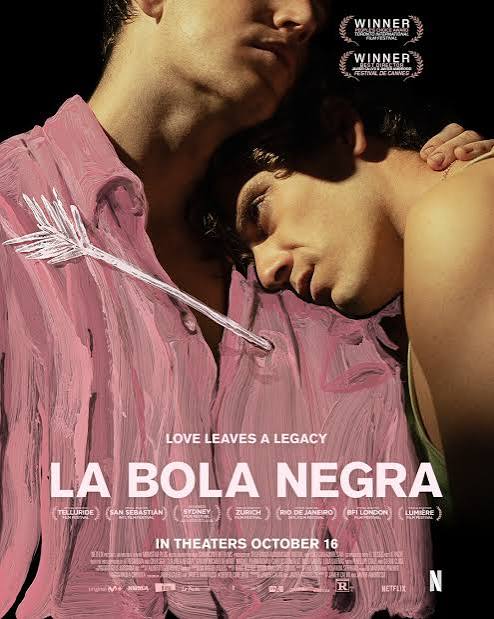
Palm Springs, CA (The Hollywood Times) 10/30/26 – Before the lights dimmed for La Bola Negra (The Black Ball) at Festival Theaters, the evening’s opening remarks offered a heartfelt reminder of what independent movie theaters can mean to a community: a place to gather, discover challenging stories, and see lives onscreen that have too often been pushed into the shadows.
The welcome began with thanks to Netflix for providing the film and the evening’s swag, making the screening possible, and supporting queer cinema in Palm Springs. Appreciation also extended to the evening’s sponsors and those helping bring the gathering to life.
The evening also brought a little local restaurant news. During a pre-show conversation, Patrick, who was bartending for Paul Bar/Food, told me the Palm Springs restaurant is expanding. Located at 3700 East Vista Chino, Paul O’Halloran’s neighborhood spot has served classic cocktails and New York-inspired fare since 2018. Its official website currently announces a November 2026 reopening, with the exact date still to come, something for local food lovers to keep an eye on.
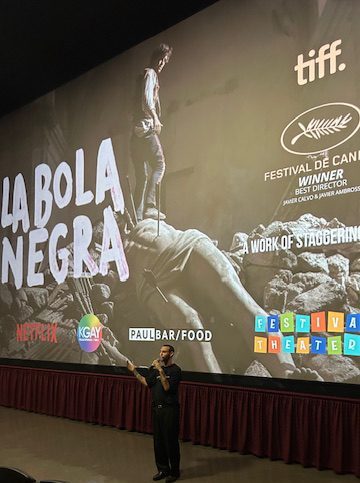
Introducing La Bola Negra as “a generational epic of acceptance,” the evening’s host expressed excitement about sharing the film with local audiences. Beyond this particular screening, the remarks emphasized a broader commitment to bringing contemporary independent cinema to the Coachella Valley.
“We’re really trying to keep an independent cinema alive in the Coachella Valley,” the host Zach Solomon said, describing the ambition to bring Palm Springs the kind of programming found in New York, Los Angeles, and independent theaters across the country.
It was a direct appeal to moviegoers to help sustain that vision by showing up and supporting the theater. The introduction ended with a lighter moment: an invitation for audience members to lift their popcorn buckets once more before the film began.
What followed inspired a deeply personal response from The Hollywood Times writer Kim, whose reflections capture both the film’s beauty and the painful questions it leaves behind.
An Ocean Full of Secrets
Reflections by Kim
“The heart of a gay man is an ocean full of secrets.”
There is a line in La Bola Negra that seems to hold the entire film within it. An ocean of hidden loves, buried grief, unspoken desires, and lives lived in the shadows of other people’s judgments.
Like Guillermo del Toro’s The Shape of Water, this extraordinary Spanish film, directed by Javier Calvo and Javier Ambrossi, will stay with me for days.
The cinematography is breathtaking, at times almost unbearably intense. This is a story told more through images than words. Light falls across a face, the camera lingers on a body, a landscape opens before us, beautiful and indifferent to human suffering.
There are moments when the silence feels almost unbearable. I could feel myself holding my breath, my body tightening, waiting for something terrible to happen. At other moments, the tenderness is so unexpected that something inside me softens. The film does not allow us the comfortable distance of spectators. It draws us into the emotional lives of its characters.
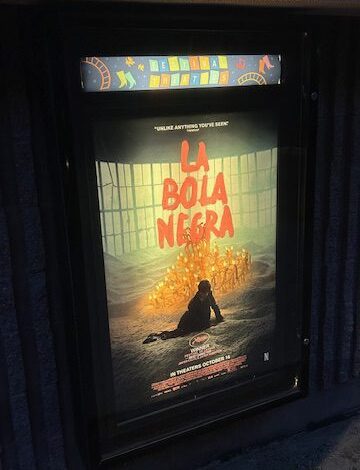 The title, The Black Ball, comes from an old practice in exclusive Spanish social clubs. Members voted on whether someone was worthy of admission by dropping a white or black ball into a box. White meant acceptance. Black meant rejection. A small, almost absurdly civilized ritual through which one human being could declare another unworthy of belonging.
How chilling that something so simple could carry such cruelty. No shouting, no bloodshed, no need to look the rejected person in the eye. Just a black ball dropped into a box.
The film draws inspiration from an unfinished play by Federico García Lorca, murdered in 1936, whose surviving pages tell of a young man subjected to this ritual of exclusion.
Spanning three generations, La Bola Negra follows the lives of gay men whose longing for love and belonging collides with the expectations of their societies. The Spanish Civil War forms part of its landscape, but what horrified me most was not the physical wounds of war. It was the casual indifference of cruelty.
 The ease with which ordinary people humiliate, punish, and destroy those who fall outside the accepted norms of the tribe. The comfortable certainty of those who believe that their place within society gives them the right to decide who belongs and who does not. Cruelty does not always arrive with a weapon. Sometimes it comes dressed in respectability, carrying the approval of the community.
Although the film focuses on gay men, it occasionally turns its gaze toward women who step beyond their prescribed roles. Here, too, we recognize the machinery of male power, the policing of desire and behavior, and the punishment of those who refuse to remain within the boundaries drawn for them.
What makes the film so devastating is that it does not simply show us persecution. It makes us feel what persecution does to the human spirit. The love that must remain hidden. The tenderness that becomes dangerous. The silence that settles into families and passes from one generation to another, long after the original cruelty has been forgotten.
And yet, amid all this brutality, there is extraordinary beauty. Love persists. Desire survives. Tenderness finds its way through the cracks in the walls we build around one another.
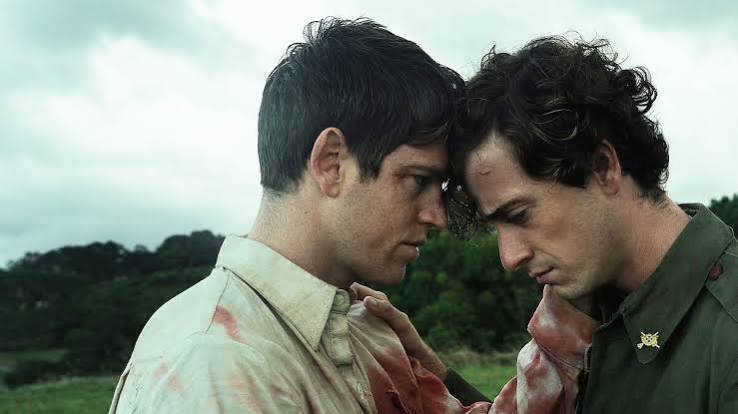 Perhaps that is what moved me most. The terrible human capacity for cruelty, set against an equally astonishing capacity to love.
La Bola Negra is not an easy film to watch. Nor should it be. It is visually magnificent, emotionally devastating, and profoundly human.
Long after the final images faded, I found myself thinking about that little black ball. How easily we cast it. How casually we decide who belongs.
And about that ocean of secrets, the generations of men and women who carried their loves, their longings, and their sorrows beneath the surface of lives the world would permit them to live.
How much beauty have we lost because someone, somewhere, decided that another human being did not belong?
By Valerie Milano and Kim Kieler
The Hollywood Times
Pre-show event: