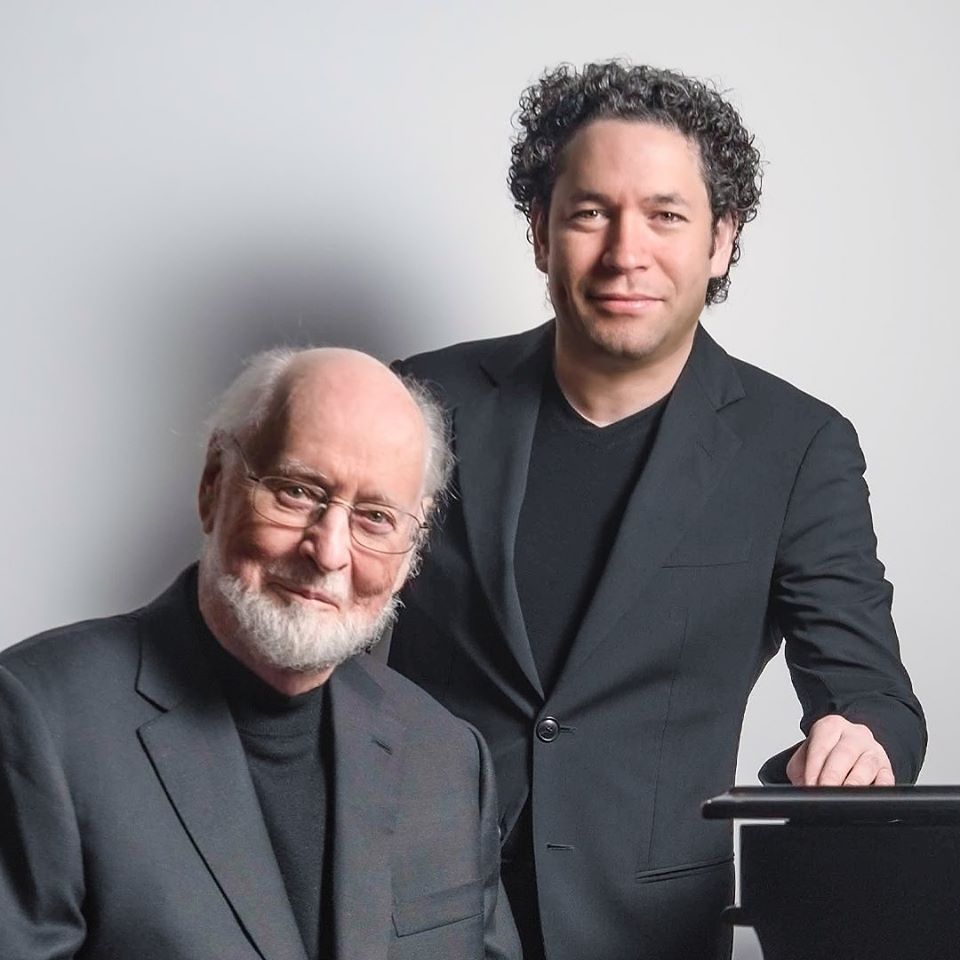
At the Walt Disney Concert Hall, the extraordinary relationship between Gustavo Dudamel and John Williams was honored in Bravo Gustavo!, a new composition by the aging composer.
By John Lavitt
Los Angeles, CA (The Hollywood Times) 06-14-2026
It must have been overwhelming when Gustavo Dudamel first arrived in Los Angeles. After all, the young Venezuelan conductor was not simply taking over a legendary American orchestra. He was stepping into a city that thrives on mythology, fame, pressure, and impossible expectations. Only 28 when he officially began his tenure as the new Music Director of the Los Angeles Philharmonic in the 2009–10 season, he must have felt like he was conducting in the middle of a storm of celebrity.
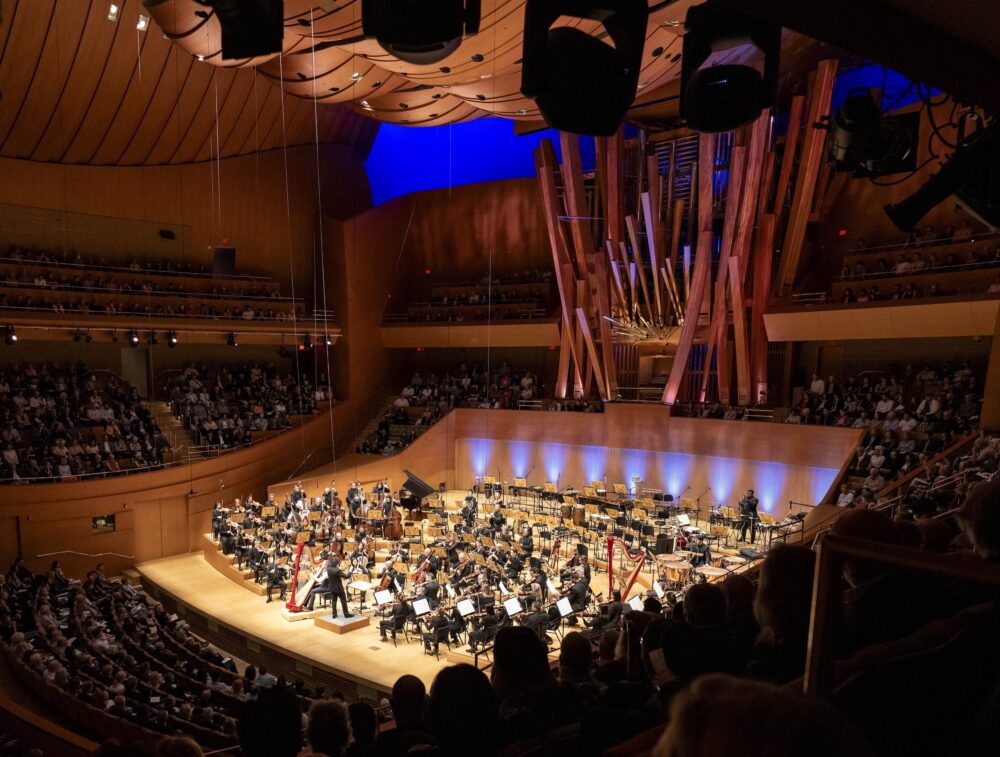
Moreover, the LA Phil is not a regional orchestra waiting to be discovered. As one of the world’s most visible and adventurous orchestras, it is housed in Frank Gehry’s masterpiece, the Walt Disney Concert Hall, one of the most recognizable concert halls ever built. When Dudamel arrived in Los Angeles, he carried not only the hopes of his native Venezuela, a South American nation tucked between the Andes and the Caribbean, with a population nearly ten million smaller than California’s, but also the intense scrutiny of the classical music world: could this celebrated prodigy fulfill his extraordinary promise and become more than a symbol of cross-cultural enlightenment?
On June 4 at Walt Disney Concert Hall, “Gustavo Dudamel: Celebrating the Musicians of the LA Phil” felt like an answer to a question that is no longer asked. After 17 seasons, Dudamel did not use the evening as a personal coronation. Instead, he turned the spotlight on the musicians who helped him build his Los Angeles legacy. Throughout the program, individual LA Phil musicians stepped forward, reminding the audience that an orchestra is not an abstract institution. It is a living body composed of extraordinary souls.
Still, beyond the stillness of the loss to come, the emotional center of the night came near the end with the world premiere of Bravo, Gustavo! by John Williams. A newly composed LA Phil commission written as a surprise tribute to Dudamel and the orchestra. With precision and grace, amid the bountiful grasslands of their harvest – new music – the composer paid tribute to his friend.
With room made for his wheelchair, Williams sat near the stage, a broad smile on his face and close enough for the moment to feel personal. It is not easy for the aging composer to get out these days, but he was more than willing to make the effort to honor his friend. Seated among his devoted audience, Williams cheered for Dudamel with unmistakable pride, revealing the true nature of the tribute. The moment reflected a relationship built over years of collaboration, mentorship, and musical exploration.
When Dudamel arrived in Los Angeles, Williams helped him navigate the unique pressures of leading one of the world’s most visible orchestras. Beyond offering friendship and a steady hand, Williams helped the young man navigate the city’s complex constellation of artists, celebrities, and cultural power brokers. For Dudamel, Williams must have been more than a legendary composer. He was a lighthouse.
That image matters. When Dudamel arrived in Los Angeles, the waters were rough. Leading the LA Phil meant meeting the expectations of one of the world’s great orchestras while navigating Hollywood’s shifting currents. In a city where influence, celebrity, and opportunity often move at dizzying speed, everything must have felt like a torrent of information. A lighthouse is most valuable when the shoreline is hard to make out. In those early years, John Williams helped illuminate the way forward. He knew how to move between the concert hall and the movie studio without apology.
By the time Dudamel arrived, Williams already had five Oscars on his mantelpiece, including Jaws, Star Wars, and Schindler’s List. He was not just famous. He was part of the emotional architecture of Los Angeles and beyond. Still, in the quiet moments between two unlikely friends, their relationship never felt like a grand master dispensing wisdom from above. It felt warmer than that. Williams recognized the young conductor’s gift and, in doing so, helped Los Angeles recognize it as well.
That guidance mattered because Dudamel’s deepest achievement here has been to expand the idea of what an orchestra can be without lowering the standard required to earn favor with the classical community. The prodigy growing into his baton embraced the old repertoire, new music, Latin American voices, film scores, community work, youth innovations, and the grand public gesture. Under his leadership, the LA Phil did not become less serious by becoming more open. It became more alive.
The June 4 program reflected that philosophy. Rossini, Mozart, Paganini, Mendelssohn, Tchaikovsky, Philip Glass, Caroline Shaw, Nino Rota, Andrés Martín, Gabriela Ortiz, and Williams no longer felt like rival kingdoms battling for classical supremacy. Instead, each composer became a distinct neighborhood within a diverse and ambitious musical landscape. Such a diverse repertoire is part of Dudamel’s legacy. He opened the door for the orchestra to explore new boundaries and expand its range.
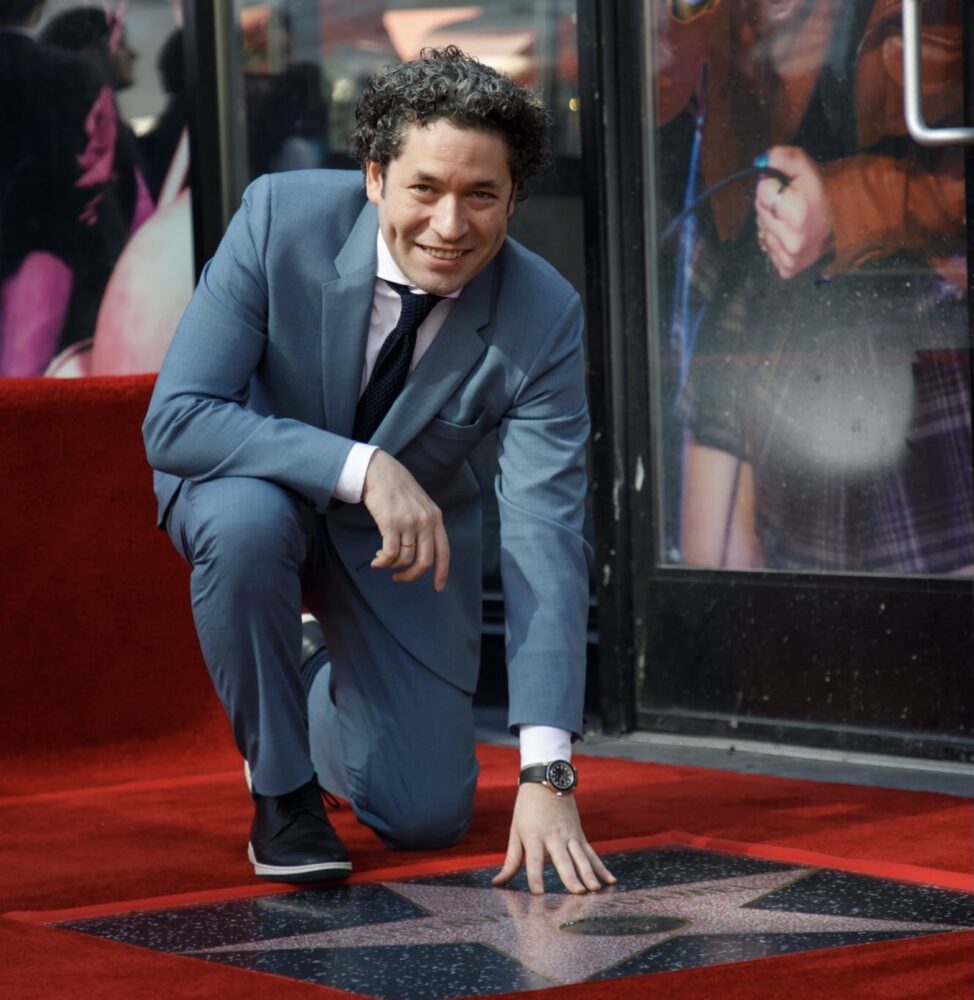
Williams has long understood that same truth. His greatest film scores never apologize for beauty, directness, or emotional force. Bravo Gustavo! belongs to that lineage. The piece does not attempt to summarize Dudamel’s 17 seasons. That would be impossible. Instead, it captures the sound of gratitude in motion. The trumpets do not mourn. They blaze. The orchestra does not sound like it is saying goodbye. It sounds like it is saying thank you.
LA Phil President & CEO Kim Noltemy recognized the moment’s emotional weight, telling The New York Times, “John Williams has long been a cherished part of the LA Phil family, and this gesture is both deeply meaningful and wonderfully joyful. Bravo Gustavo! is a fitting tribute — not only to Gustavo, but to the extraordinary musicians who bring this orchestra to life.”
The title could have been a bit silly and obvious in lesser hands. In the maestro’s hands, Bravo Gustavo! becomes clean and heartfelt. A friend salutes a friend, in the form of a composer saluting a conductor. Most of all, it captures one of the quieter truths of Dudamel’s Los Angeles journey: even the brightest talents in the cultural world sometimes need a friend to help them find the shore.
Dudamel will soon take his next great step with the New York Philharmonic, and Los Angeles will miss him dearly. But this concert resisted funeral language. That was its strength. The evening did not bury a chapter. It illuminated a new one by celebrating Gustavo’s accomplishment. Williams could recognize and honor the legacy of the Venezuelan composer.
When the applause rose inside Disney Hall, the feeling was not only nostalgia. It was recognition: Gustavo Dudamel had reached the shore. John Williams had helped light the way. And with Bravo Gustavo!, he gave Los Angeles a small, shining keepsake of that journey.