It seems appropriate that I should be writing this while sitting in a Long Beach Island beach house. The ocean rages outside my window, filling the air with a rhythmic ambiance. It’s almost hypnotic the way the ocean calls to us, inspiring those stories of pirates and treasure to go with it. The ocean is, after all, a part of our species’ survival story. It’s worth mentioning that the word soul may literally derive from a Proto-Germanic word that means “belonging to the sea.” It calls to us, and us to it. And tales of swash-buckling pirates tether us to a sense of adventure. That’s what I love about the Atlantic Ocean. It holds deep within its belly a plethora of dazzling jewels and precious metals, perhaps forever lost. But that’s the word—perhaps—that captures us, isn’t it? Because that grain of doubt sits there uncomfortably in the shoe and stirs us forward toward action. Because maybe, just maybe those treasures might be uncovered soon, after all. Perhaps they are not lost forever. Only just for a little more time…
The story of Oak Island seems to inspire a lot of strong reactions. There’s the mystery and excitement of a buried treasure. There’s the skeptics on the sidelines, eyes permanently rolling. There’s the nerds that study this mystery and suggest new theories. It has pulled together a whole assortment of experts, from historians to archeologists. And it has evoked such strong emotion that one wonders if we aren’t discussing the existence of bigfoot or aliens, or some divine entity.
The legend goes that a dying sailor from Captain Kidd’s crew whispered of an abandoned treasure buried somewhere on Oak Island in Nova Scotia, Canada. Of course, the word spread quickly, and the island has seen two centuries’ worth of excavation since. From digging to drilling, metal detectors, and spelunking, hundreds—if not thousands—of treasure-seekers have turned over the place. Several artifacts have been uncovered too. There was a garnet pin from the 16th century, a gold brooch from the 1300s, a keyhole plate, a mysterious piece of copper with strange markings on it, and even a 17th century coin.
But many have come out of their seaside foraging empty-handed, as well. Some say that a liberated slave found the treasure long ago. Others say it has sunk deep within the soft earth beneath the island, inaccessible, even with our modern technology. It’s like finding a needle in a haystack. Or maybe it’s like a haystack with no needle at all, and it turns out that dying sailor was just pulling our leg.
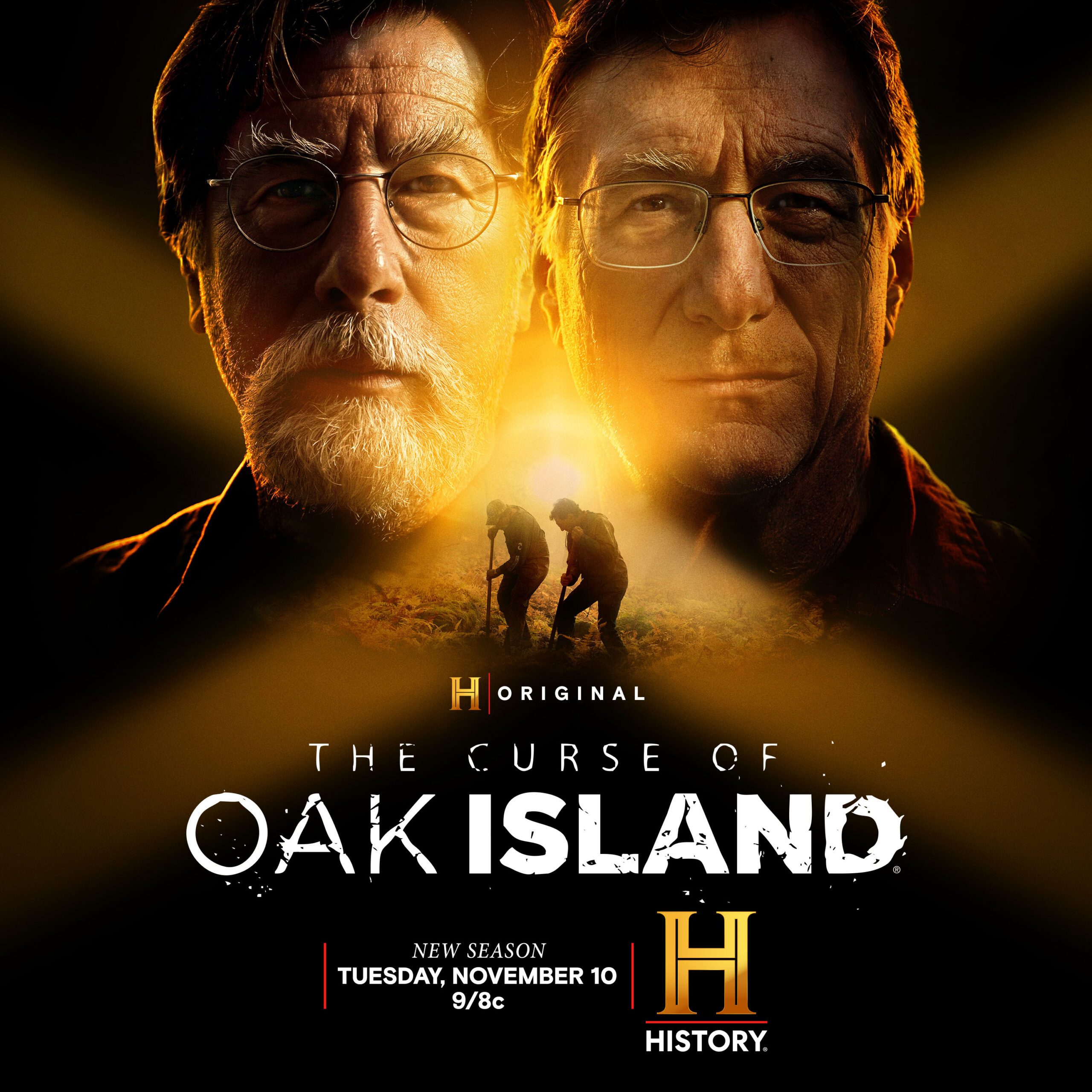
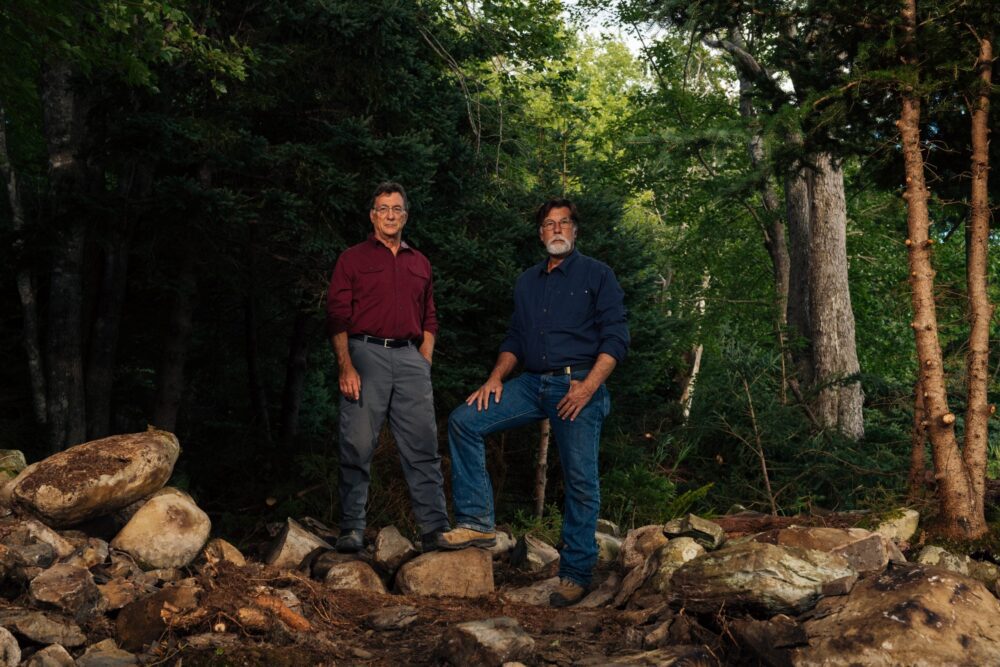
In History’s The Curse of Oak Island, Rick and Marty Lagina continue their quest to stun nay-sayers, and find the legendary treasure. It has been a long journey—13 seasons of it, in fact. And the next season starts soon, leaving audience members to ask, “Are were there yet?” After previewing the first episode of season 14, I suddenly feel the tingling for more. I wonder, is it greed or adventurousness that makes one want to scour the earth? Maybe it’s in our nature to seek. There’s a reason why books like Treasure Island and Count of Monte Cristo are best sellers, after all. Maybe it’s in the journey that we learn more about ourselves along the way. It is a test of willpower and how far we go for belief. It is a tantalizing drive, a curiosity maybe. A hunger more-like, and a sense of wonder that makes this story worth coming back to season after season.
It’s not only a fascination in what these treasure-seekers might dig up that makes this show enticing. It’s also the history involved in this enterprise. The adventurers consult with several experts—an archeologist, a metallurgist, historians and more. There are lessons to be learned along the way, as they consider the age of metals, and the minerals found in the earth. The show connects us to earth and even geology. Suddenly we find ourselves looking down into the gravel, realizing perhaps for the first time how old and wisened our planet truly is. And uncovering its depth means uncovering its truth and wisdom, as well, in a way that can feel simply captivating. This is the History network (formerly known as The History Channel), after all, and this kind of subject matter is to be expected.
While I enjoy and fascinate with the Lagina brothers’ quest, and applaud their efforts, I must, unfortunately call one element of this History series out, however. It is the use of an Artificially Generated Image that leads me to question the professionalism and seriousness of the makers of this show. It is not a stretch to say that Artificial Intelligence plagiarizes the work of online artists everywhere. I have known artists that have had their artwork quite literally imitated, or even copied and pasted, for another online user to claim as their own. And the use of A.I. has become synonymous with tacky online accounts too desperate to be interesting with no gumption for the hard work involved. This is the History network, and I am just as shocked to see such A.I. images here, as I was for Shark Week and that infamous two rows of teeth in an orca’s mouth. It leads me to question if the shortcuts will make us lazy, and whether or not we are here to learn or simply to be entertained. If the History network wants to maintain a certain level of prestige and seriousness, it ought to rethink this element of their production. How expensive can a human-made image of a knight be, after all? And what is the deeper meaning here?
To me it shows a lack of seriousness, using images that do not even qualify for copyright laws, and very well may have been taken and repurposed from another part of the internet. It is simply recycled material now, and I wonder if the producers feel that viewers no longer deserve a certain standard of viewing. That’s not to mention, of course, the exorbitant cost it demands of our planet to produce such images—the gallons of water wasted, noise pollution, and destruction of nature. From where I am standing, I know that viewers deserve a higher standard of filmmaking and educational entertainment.
It is certainly an existential reckoning of humankind, forcing the deeper question of who we are as a species and what values elevate us beyond basal entertainment. For me, the quest for buried treasure is more than greed or curiosity. It evokes a sense of wonder, and demands of us a certain level of excellence. It inspires us to be more wholly human. Not artificial, or cheap, but fully authentic instead. Because humanity, and civilization by extension, is about the breaking of new ground, challenging boundaries, and peaking through the threshold of what could be not only more but better. I wonder, how many layers must we uncover to discover such brilliance in our world and within ourselves? In The Curse of Oak Island, we look back while pressing forward, digging deeper into both the earth and ourselves to find what makes us truly eternal. And it asks one question of each of us: do you believe it can be done? As for me, I believe.
Season 14 of The Curse of Oak Island begins November 10 at 9 pm ET on History.