Facing each other at twin Steinway pianos, the celebrated duo channels decades of collaboration into a hypnotically precise performance of Glass’ Cocteau Trilogy.
By John Lavitt
Los Angeles, CA (The Hollywood Times) 04-04-2026
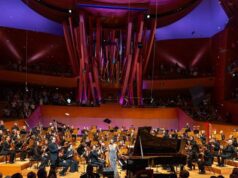
At Walt Disney Concert Hall on March 31, 2026, as part of the Colburn Celebrity Recitals, Katia and Marielle Labèque delivered a performance of Philip Glass’s Cocteau Trilogy that felt less like a public event and more like a private act of devotion, shared, almost incidentally, with an audience.
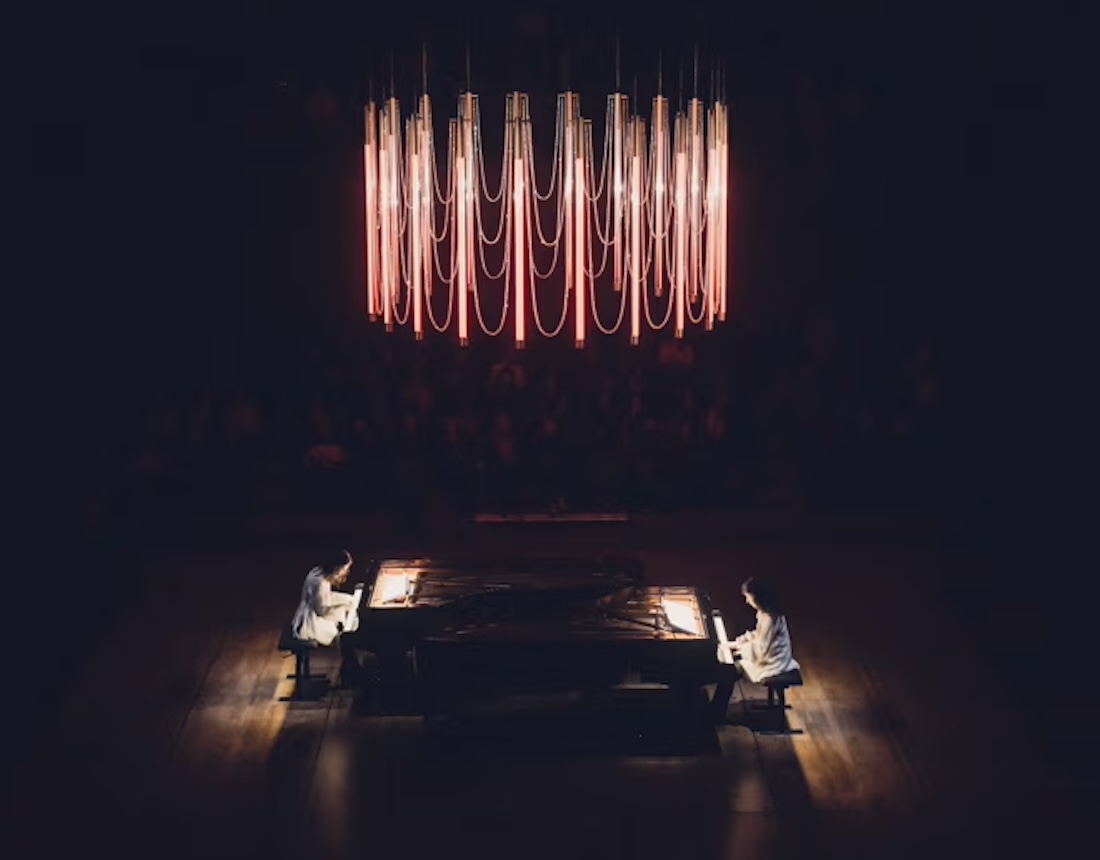
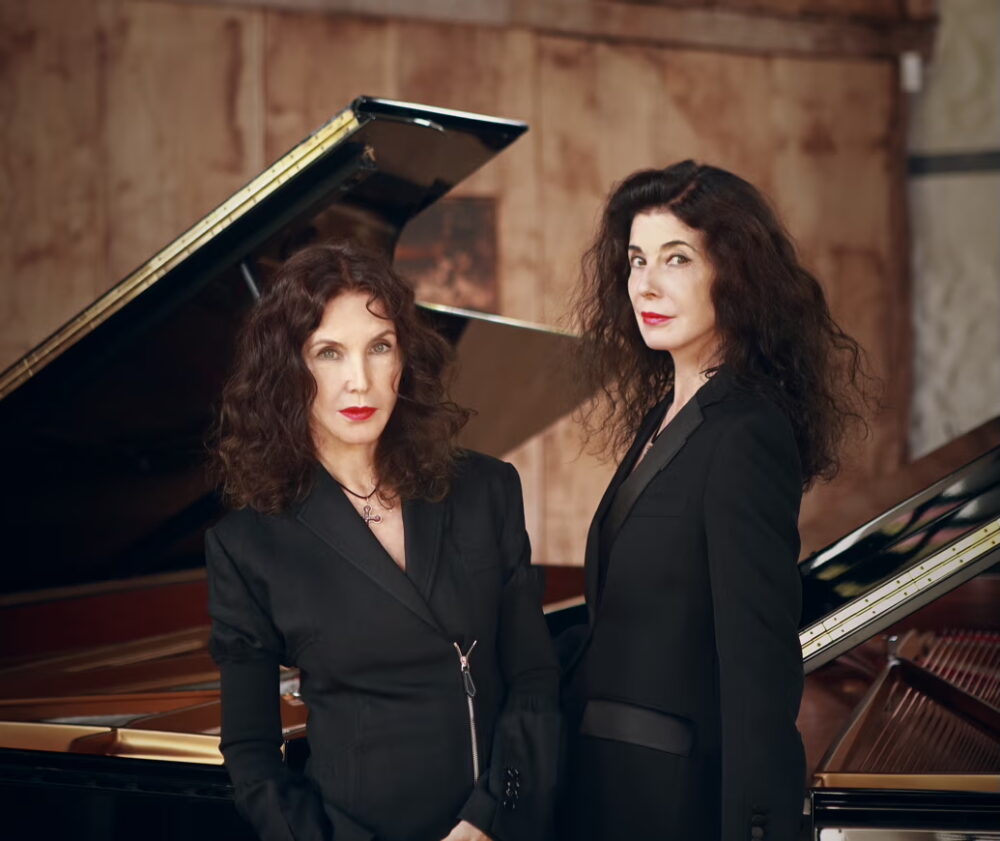
Seated at two facing Steinway pianos, the sisters created a closed, self-contained world. Their communication was almost imperceptible: a glance, a breath, a shared instinct honed over decades of performing together at the highest level. It quickly became clear that the size of the venue did not matter. Whether in this architectural landmark, a football stadium, or a basement rehearsal space, their intensity, most likely, remains unchanged. They are artists defined not by spectacle but by focus.
That focus has taken them to some of the biggest stages in the world. Over 33,000 people attended their gala concert with the Berlin Philharmonic under Sir Simon Rattle at the Waldbühne, while an incredible 100,000 gathered for the Vienna Summer Night Concert at Schönbrunn — an event broadcast to more than 1.5 million viewers worldwide. Yet, none of that grandeur defines them as clearly as what they bring to the keyboard: discipline, unity, and an almost ascetic dedication to the music itself.
Their relationship with Philip Glass is also deeply rooted. In 2015, at this very hall, they premiered Glass’s Concerto for Two Pianos with the Los Angeles Philharmonic conducted by Gustavo Dudamel. That history was evident here, as they returned to his music not merely as passing interpreters but as long-standing collaborators who understand its inner logic.
The Cocteau Trilogy — three suites inspired by Glass’s operatic adaptations of Jean Cocteau’s films — unfolded as a series of mesmerizing cycles. In Orphée, repeated patterns gradually built up, drawing the listener in deeper. The sisters demonstrated impressive control, shaping each phrase with accuracy while avoiding over-dramatization.
But Glass is never purely meditative. Sudden harmonic shifts and rhythmic changes punctuate the flow, breaking the trance just as it begins to settle. In La Belle et la Bête, these moments come like sudden cuts in a film, pulling the listener back to awareness. The Labèques navigate these transitions with remarkable synchronization, as if operating from a single musical mind.
After the intermission, Les Enfants Terribles deepened the emotional tone. The repetitions became more persistent, and the atmosphere grew more intense. Still, the sisters stayed restrained, allowing the tension to build naturally instead of forcing it.
Despite added production elements — lighting, scenography, and subtle sensory improvements like scratch-and-sniff cards in everyone’s programs — the performance never lost the creative drive. That focus was always the same: two pianists, facing each other, completely absorbed.
What remained was not just a moment, but a continuous state of focus. The Labèque sisters did not perform for the audience. They performed the music and invited the audience to join them there. It was an invitation that felt like a true creative blessing.