By Gordon Durich
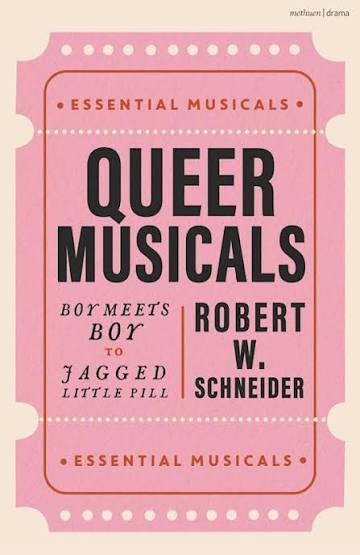
Los Angeles, CA (The Hollywood Times) 7/23/26 – Crisply compiled, Robert Schneider’s book “Queer Musicals. Boy Meets Boy to Jagged Little Pill” is a treasure trove of information on musicals, for lovers of the stage, gay or not.
Robert Schneider (he/him/his) is a New York City-based award-winning director, producer, podcast host and educator. He hails from Thousand Oaks, California.
In this solid coverage of the glory days of musicals a-la-Broadway circa second half of the 20th to early 21st century, Schneider informs and entertains. Whether you’re a student of the theater or a fan, “Queer Musicals” digs into the backstories of The Great White Way’s major hits.
The historical background of Broadway shows such as “Boy Meets Boy” to more familiar productions such as “La Cage aux Folles’ and “Hedwig and the Angry Inch” (a personal favorite) is both contextually fascinating and fun. Who knew 2013’s “Kinky Boots” launched the career of queer icon Billy Porter. It was based on an indy film of 2005, and the book was by Harvey Fierstein and featured (great) music by singer songwriter Cyndi Lauper.
Yogi Berra once said, “If you come to a fork in the road, take it.” This tip held true when learning about the development of many musicals which were hatched from another form. An example Schneider names (“Honorable Mentions”) is “Applause,” which hit in 1970 and was adapted from the movie “All About Eve.” This is just one gem in amongst a bevy of tidbits including “Rent” (another fave) adapted from the opera “La Boheme” and brilliantly translated one of the core themes (consumption) to the AIDS crisis. I find it interesting how the outrageous character of Mimi in “Rent” found acceptance even on a somewhat superficial level from “straight” audiences.
Robert Schneider also cites “Priscilla, Queen of the Desert” as another screen-to-stage adaptation (“The Adventures of Priscilla Queen of the Desert” circa 1994, starring Hugo Weaving and Terence Stamp) which found its place in musical theater history, and wowed audiences from Sydney, Australia to San Francisco.
The book dives deeply into specific groundbreaking musicals including off-Broadway’s “The Knife,” dealing with transgender characters. In this ball of confusion, with the casting of cisgender star Mandy Patinkin, Schneider notes he was “in female-identifying clothing akin to the same horrors as Brooks’ faux musical (referring to “The Producers.”).
Anyone passionate about, or even just curious about, musicals in general will find this book a tonic. Musicals which are not queer in theme are woven into the discussion of the revolution happening in New York in the 1980s when mainstream musicals such as “The Phantom of the Opera” vied with popularity of performers such as Boy George, David Bowie and Grace Jones. Along with Annie Lennox and Prince, they “upset those in the establishment with their denial of binary aesthetics. Manhattan clubs competed with Broadway in a sense, offering an alternative, with musical sounds such as rap, funk, hip-hop, house music and techno. This was the era of MTV and new exciting music and music videos. “
It’s interesting to consider that Club 54, the seminal disco has morphed into a theatre, with offerings such as “Cabaret,” widely celebrated as a queer musical, and now “The Rocky Horror Show” which is currently playing at the venue.
“Queer Musicals” is confronting and will make you think. About taboo subjects and misconceptions about what is “real” in the theater and what is raw and jagged. Meet the nuances and consciousness that have been ignored – until now.
In the words of Kurt Russell in “The Art of the Steal,” “Either write something worth reading about or do something worth writing about.” This book by Robert Schneider does both.