
A fascinating and unexpected film from Nepal worth seeing is Elephants in the Fog, a senstitive debut by Abinash Bikfram Shah set in the heart of Nepal’s transgender community. Winner of this year’s Un Certain Regard jury prize at Cannes, it screened at AFI FEST on October 22. Elephants in the Fog is about about the matriarch of a Kinnar community – played by newcomer Puspa Thing Lama – whose daughter goes missing whilst on patrol for wild elephants living in the surrounding forests. Elephants in the Fog is Nepal’s submission for Best International Feature Film at the Oscars in 2027.
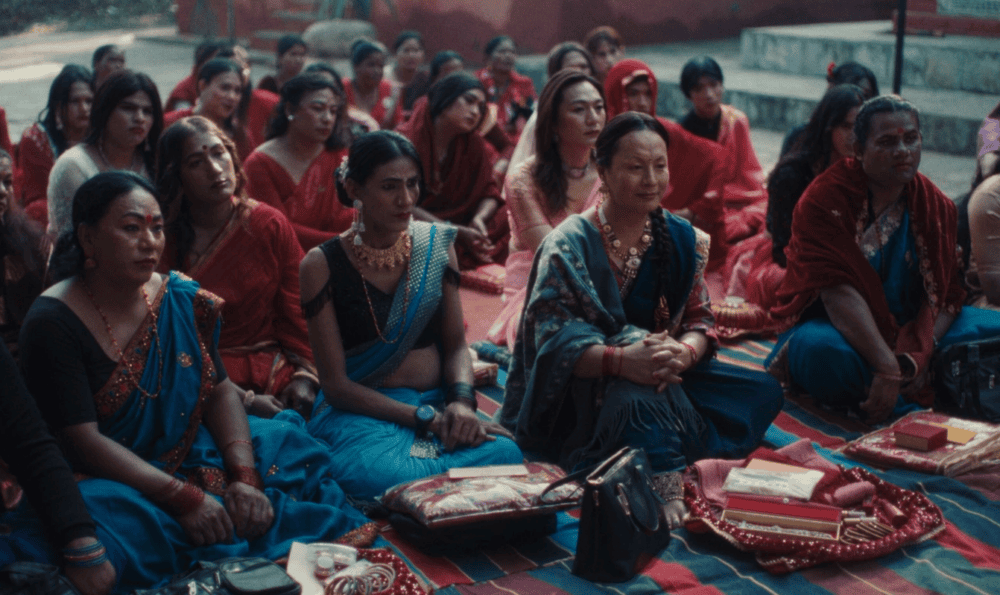
Set in Thori, a rural municipality of Nepal, Elephants in the Fog focuses its narrative on the local Kinnar community, made up of the matriarch Pirati (Pushpa Thing Lama) and her adopted daughters. The transgender women make up their own family, despite the prejudices they face and the way they are perceived from people outside of their community in their village surrounded by wild elephants.

When Aspara, one of Pirati’s daughters, goes missing, her family does everything in their power to find her and get justice, while Pirati herself is torn between her duty to the community as a Kinnar and her need for personal freedom and love. Elephants in the Fog explores a community about which most viewers in the audience probably don’t know to exist and shines a light on what life really looks like from their perspective. This is true in terms of the narrative as well as behind the camera, as the actors cast in the roles of the Kinnars are transgender women.
The term Kinnar refers to a traditional third-gender, transgender, or intersex community in North India, In the 21st century, many hijras live in well-defined and organized all-hijra communities, led by a guru. Over generations, these communities have consisted of those who are in abject poverty or who have been rejected by or fled their family of origin. Today, Nepal, Pakistan, India, and Bangladesh have all legally accepted the existence of a third gender, with India, Pakistan, and Nepal including an option for them on passports and certain official documents.
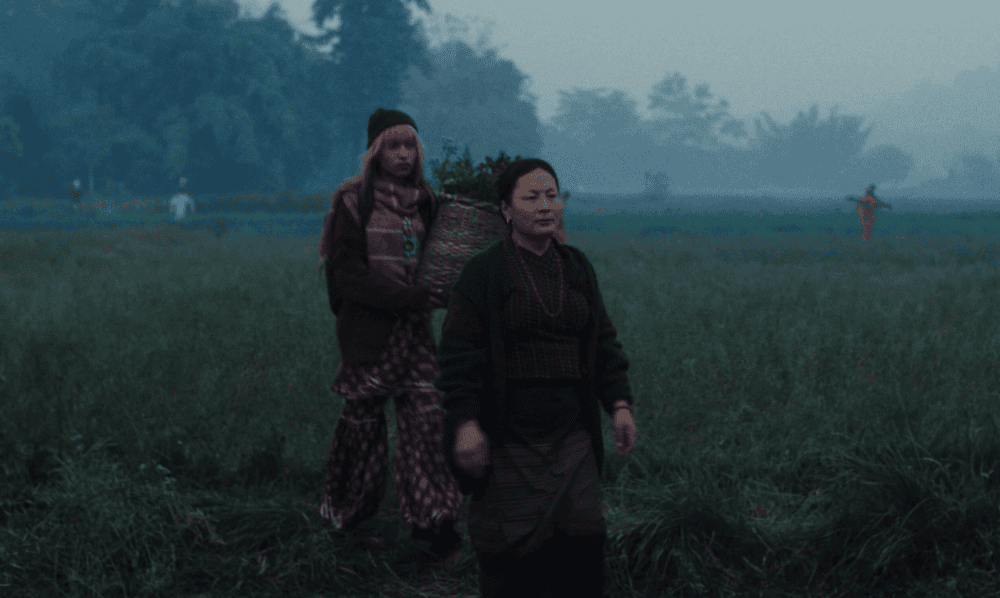
The Kinnars themselves and the relationships between them are the beating heart of this character-driven movie, and the driving force behind this story. The choice to film on location is also a successful one, as the film highlights the landscape of the country it is filmed in. Directed by Abinash Bikram Shuah, Elephants in the Fog is as much about the Kinnars as it is about the place in which it is set and filmed in, which is constantly present in the narrative through the beautiful cinematography by Noé Bach.
Elephants in the Fog tends to focus on Pirati, the “mother” of the Kinnar family, more than anyone else. The stories of the other Kinnars who are equally as compelling, but not developed in detail. This is true especially for Aspara who wears a blonde wig and loves dancing. We do learn that Aspara had previously worked as a sex worker for a mean-spirited pimp but asked to join Pirati’s Kinnar family, which requires celibacy and real work. That work includes performances at heterosexual weddings, where they provide blessings to the newly-weds and also bless pregnant women. We do see an induction ceremony of a new Kinnar into the community with an aged Kinnar as their guru.

The Kinnars worship Bahuchara Mata, the Hindu goddess of chastity and fertility in her maiden aspect, of the incarnation of the Hinglaj. She is worshiped as a goddess of fertility, chastity, protection, and transformation. The Kinnar and Hijra communities invoke her name when bestowing blessings for newborns and newlywed couples. In regional folklore, she is associated with curing impotence, protecting those who cross traditional gender norms, and granting sacred legitimacy to third-gender roles. Although many Kinnars are also sex workers, Pirati’s “family” follows the guidance of their guru about celibacy. They perform blessings at weddings and other occasions related to fertility and child-bearing during the day, but are not supposed to be out at night. The village appreciates their good services but remains watchful of transgressions.
While tense throughout, the first act feels slower than the rest of the movie. Much of it sets up the setting as well as the key information that the audience should be aware of regarding the Kinnar community and how they are perceived and their playful moments as well as their ability to help the village farming community. Although the Kinnar family is supposed to be celibate, it turns out at Pirati has a relationship with a Nepalese man who dotes on her and often gives her rides on his bicycle. The others consider this inappropriate given Pirati’s role as a “mother.”

Things heat up when the young wig-wearing Aspara is seen dancing with straight sex workers for a large group of young men. Pirati drags her back home and admonishes her for violating the rules of her Kinnar “family.” Aspara’s former relationship with an abusive tuktuk driver becomes the reason for Aspara’s disappearance into the forest and possibly her death. This forest in this part of southern Nepal is a dangerous place with herds of wild elephants that often enter local villages in search of food and destroy the crops. The forest of Thori village is considered sacred to the god Shiva and the elephants to be respected and feared. No one dares to go into the forest at night. However, the Kunnars seem to have a special relation to this sacred forest, as we come to see in story.

Although the Kinnars dress up scarecrows with discarded clothing of bright colors to ward off elephants, the villagers seem unable to keep the elephants from approaching the village and eating their crops. Eventually the villagers put up an electric fence to keep the elephants from entering freely at night, but its effectiveness has its limitations. The elephants come to be a symbolic mix of nature’s ways and traditional religious beliefs that determine the fascinating direction of the film.
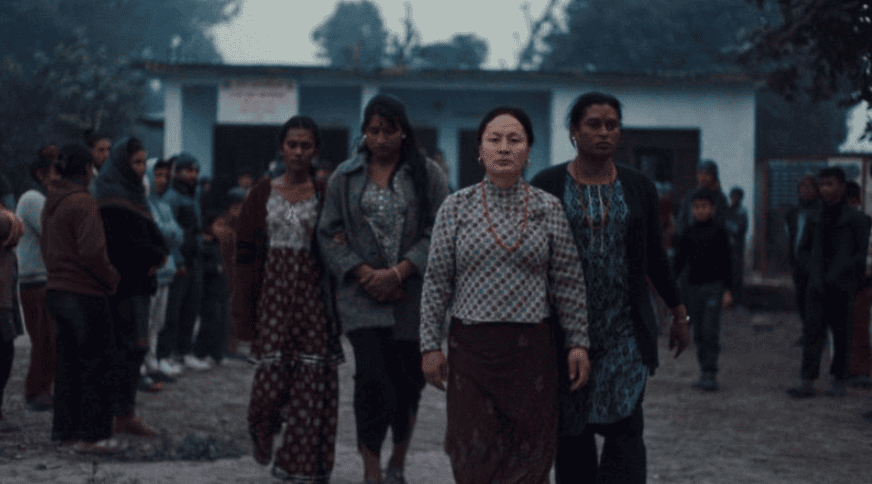
Overall, Elephants in the Fog is a powerful film that shines a light on an underrepresented and misunderstood community in Nepal and the love they have for each other. Like a small handful of international films before it, Shahl’s feature debut continues the tradition established by Italian neorealism of on location shooting, non-professional actors, and focusing on the everyday people in a masterful way. In doing so, the film manages to continue the legacy of classic masterpieces like Roberto Rosselini’s Rome, Open City, Vittorio De Sica’s Bicycle Thieves, and Satyaljit Ray’s Pather Panchali.

TDirector Abinash Bikram Shah is known as one of Nepal’s best screenwriters and also the directors of Lori (2022) and The Black Hen (2015). and After the screening at AFI FEST in a Q&A, Shah provided a number of insights about how he first contacted this Kinnar community and the making of the film. Working with non-professional locals proved to be a truly amazing experience.