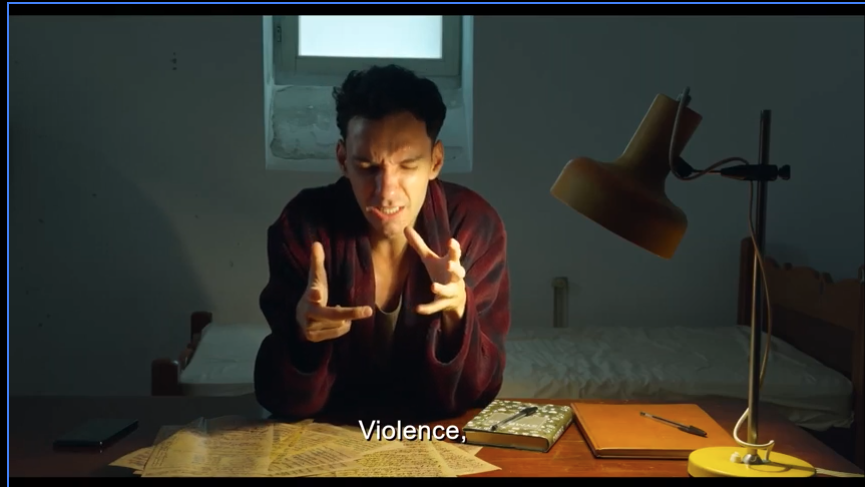
Radu Jude’s Dracula (2025) is bound to bore and upset some viewers and titillate others who are familiar with Jude’s highly sexualized sense of humor. This 170-minute-long semi-slapstick deconstruction of the Dracula myth is no sacred homage to the legends surrounding Vlad the Impaler known as Dracula nor a canonization of the Dracula legends as found in Hollywood movies. In Radu Jude’s Dracula (2025), a filmmaker (played by actor Adonis Tanța) sits in his bathrobe over yellowed sheets of scrawled notes. Having received mixed reviews on a test screening of his latest film, he cheerfully prompts an AI chatbot on his iPad to produce more commercially viable alternatives. He is going for a take on Bram Stoker’s Dracula, which was itself inspired by the mythology of Vlad Dracul (aka Vlad the Impaler), the fearsome fifteenth-century voivode of Wallachia, part of modern-day Romania.
The director’s story is set, like Stoker’s, in Transylvania, the centermost region of the country, control of which has been contested throughout history; in the twentieth century alone, it changed hands back and forth between Hungary and Romania three times, most recently as part of the armistice following the Second World War. Since then, Vlad Dracul’s place of birth, Sighișoara, has become both a UNESCO World Heritage Site and a tourist trap, seen here with themed cabaret shows and animatronic bats.
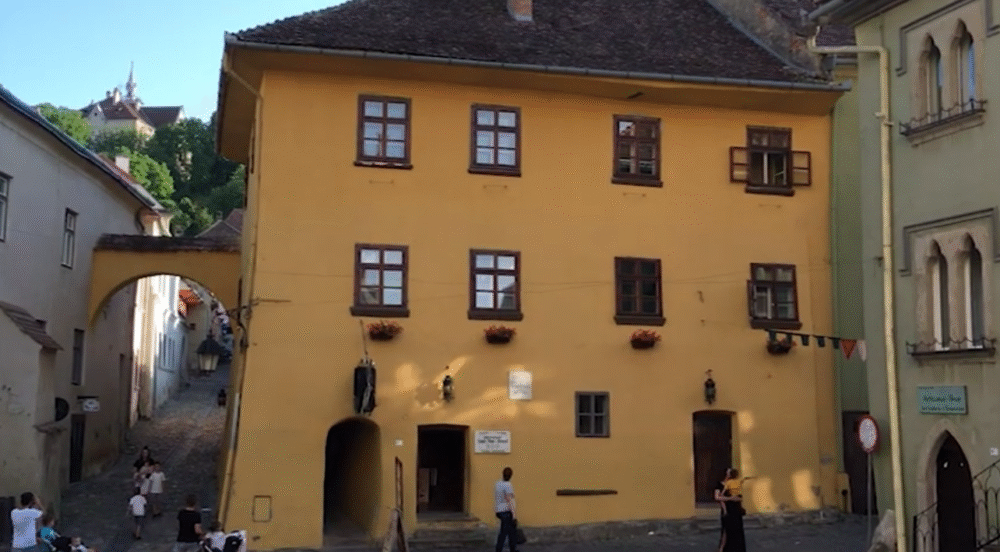
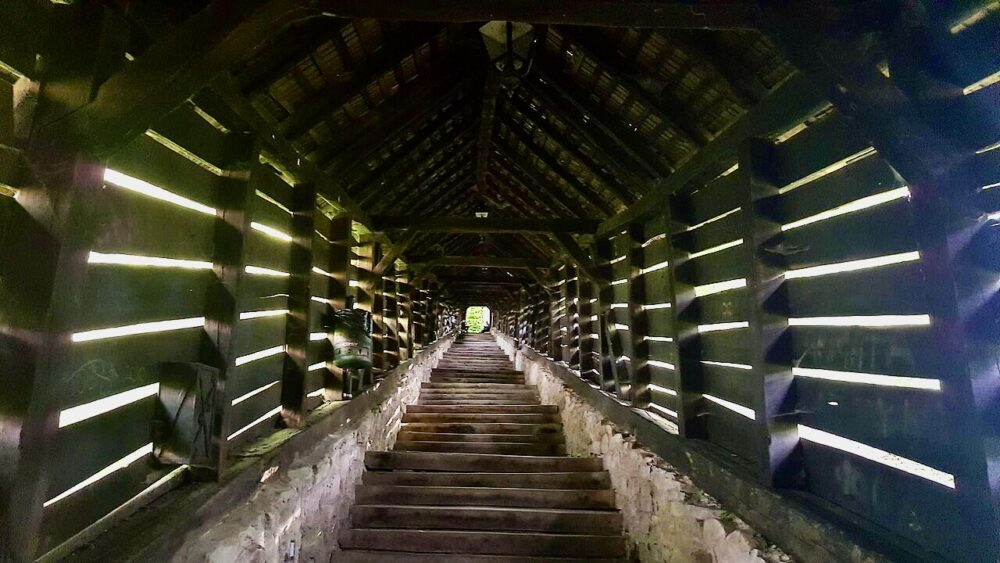
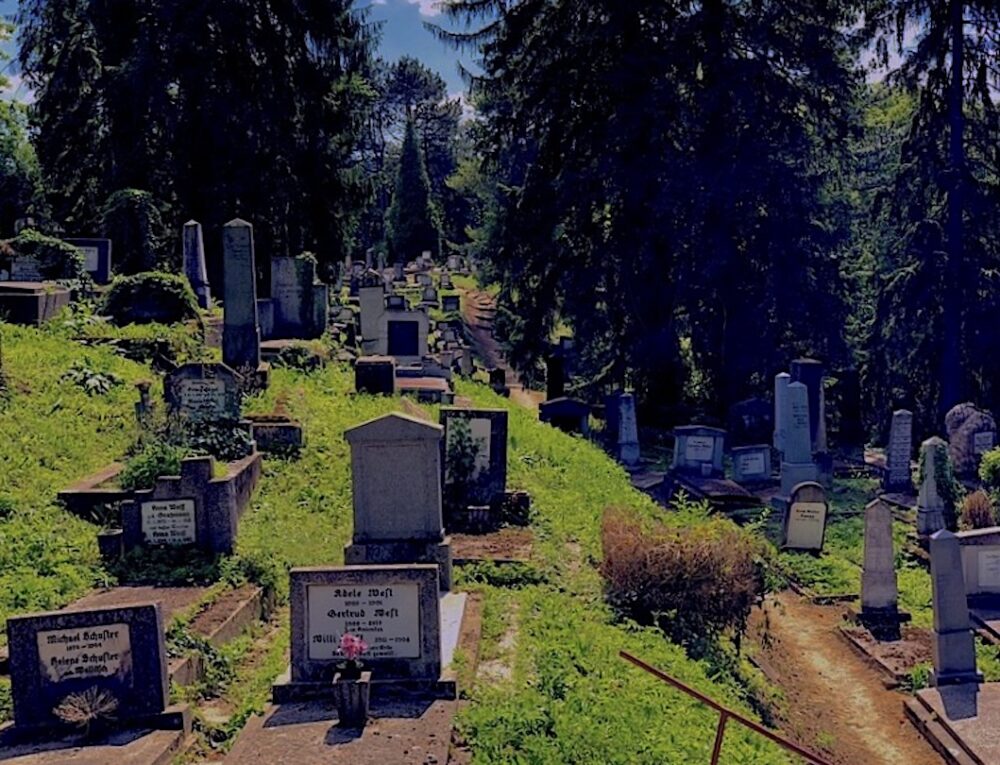
I have visited the walled town of Sighișoara, with its charming old buildings, medieval bell tower, and its Lutheran church and graveyard at the top of the hill – accessed through a long flight of wooden stairs in a covered structure ascending from the town center to the hilltop. Over the years, Sighișoara has developed as a tourist haunt – full of activities and Dracula-themed events aimed at the tourists. In the town close to the main square is yellow building purported to be the birthplace of Vlad III the Impaler.
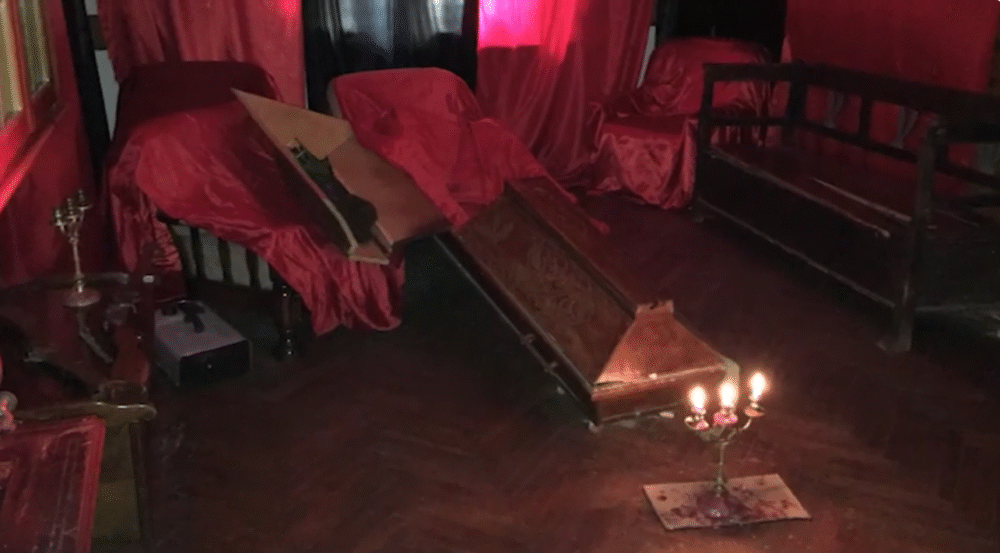
It has been a family-run restaurant for some time and very popular with tourists. There are nightly Dracula-themed shows and upstairs a small room with a coffin and the plaster cast of Dracula. Radu Jude filmed parts of his Dracula film in this place, although the actual show in his film is a wild, sexualized run for your money.
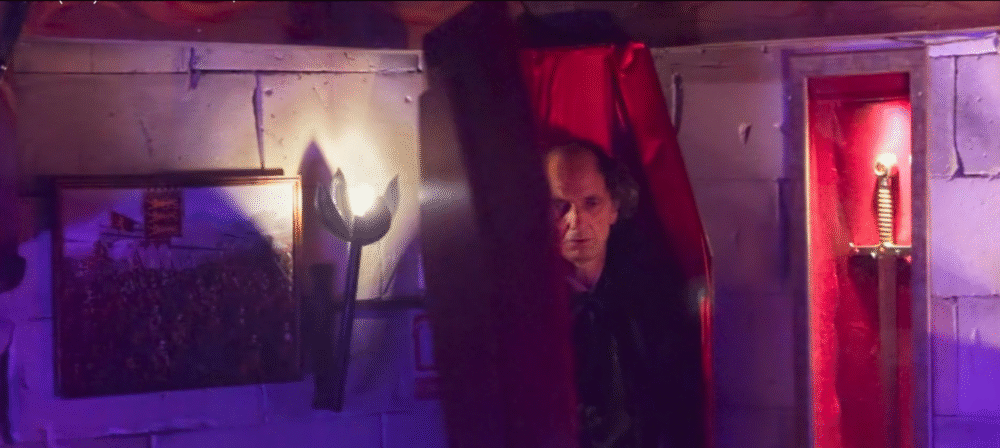
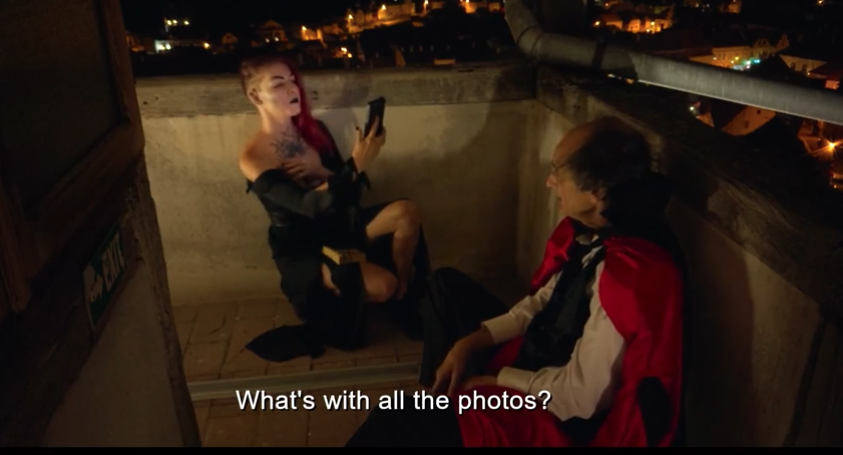
He has Adonis Tanța acts as a flamboyant, fast-talking rather gay M.C. of the evening show which features a sexy minimally clad young Vampira (Oana Maria Zaharia) being seduced the vampiric Dracula (Gabriel Spahiu) who emerges from a coffin in the corner of the room, sinking his teeth into her neck while fondling her breasts.
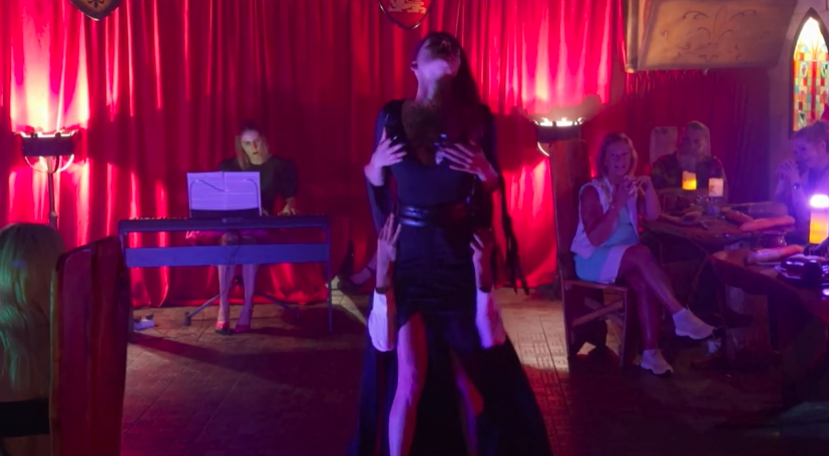
After this part of the floor show, the touristic audience is invited pay 1000 Euros to have sex with one partner of the performing duo. Obviously, the line between Adonis’ being a pimp and the restaurant owner’s desire for quick cash meld into a find example of Radu Jude’s obsession with the vulgar sex at the heart of so much human interaction. In the second part of the restaurant show, the audience are given stakes and told to go out and hunt down the vampiric couple to kill them – shades of Murnau’s film.
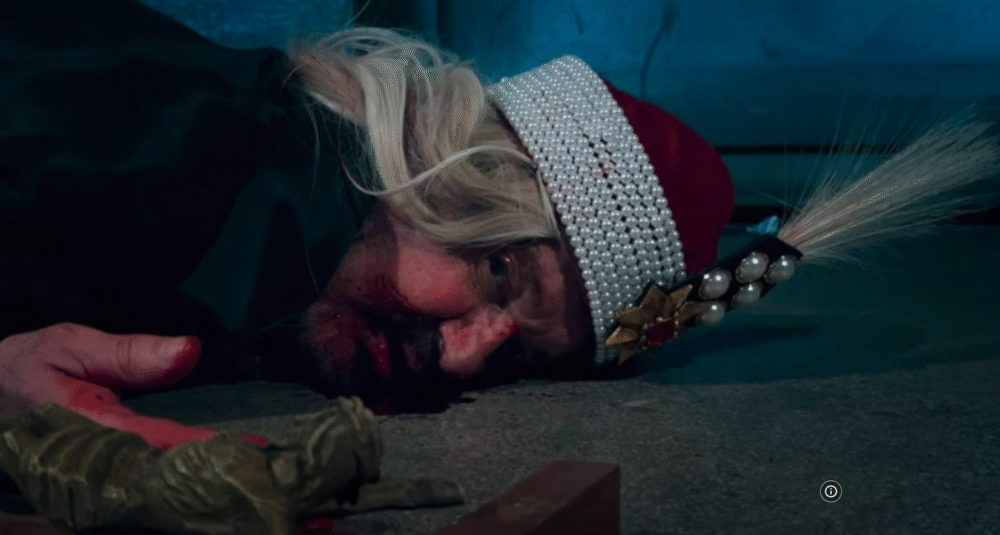
Jude’s multi-part riot of horror, comedy, history, politics, sex, and death, clocking in at nearly three hours, is shot through with the director’s signature penchant for expansive referentiality and charming vulgarity. Exquisitely shoddy AI-generated imagery recurs throughout the film (which, as far as we know, was written with the exclusive use of Jude’s human mind), rendering scarecrows, carriage crashes, drownings, the summoning of demons, a vampiric orgy, and more. Elsewhere, theatrical trappings and anachronisms abound, plus the whole thing was shot on an iPhone 15—as was Jude’s other film of this year, Kontinental ’25, a social realist drama involving the suicide of a homeless man and the guilt of the bailiff who had been tasked with his eviction.
Like Bad Luck Banging or Loony Porn (2021), Do Not Expect Too Much from the End of the World (2023), and all of Jude’s deceptively dense, provocative work, Dracula seems to sprint in many directions at once, with every exhilarating chase leading back to the depravities of extractive capitalism. In the press notes, Jude says that he intended the film itself to be a vampire, sucking “life, images, meaning.”
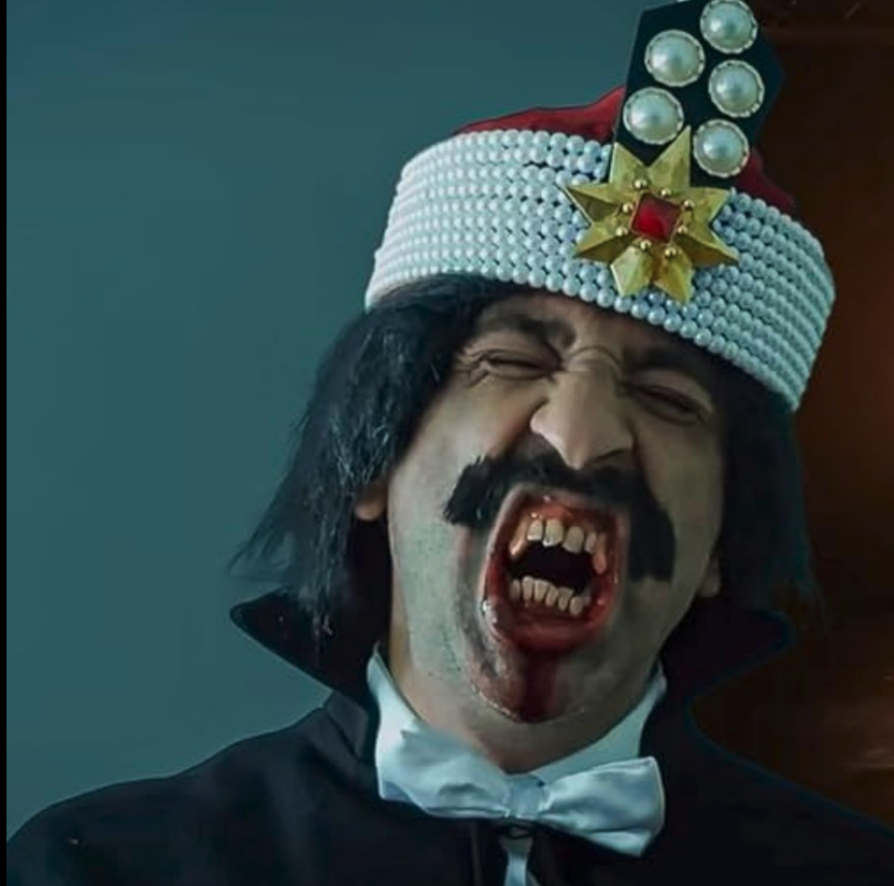
It is often claimed that Bram Stoker’s late-Victorian Gothic novel Dracula was inspired by legends around Vlad the Impaler, a 15th-century ruler of Wallachia, a region bordering Transylvania. Vlad certainly did not lack horridness. He became known as “the Impaler” for his treatment of enemies and called himself “Vlad Dracula,” or “Son of the Dragon,” alluding to his father’s membership in a chivalric order. More recent scholarship suggests that Stoker likely found the name Dracula in Whitby’s Public Library while on holiday, selecting it simply because he believed it meant “devil” in Romanian. Regardless of whether Stoker plucked “Dracula” from a library note or not, the name and the figure were shaped again and again by how others looked at Dracula. In fact, in Stoker’s novel, Dracula himself has no inner voice. His story unfolds through letters, diaries, and telegrams and is assembled from the perceptions of others.
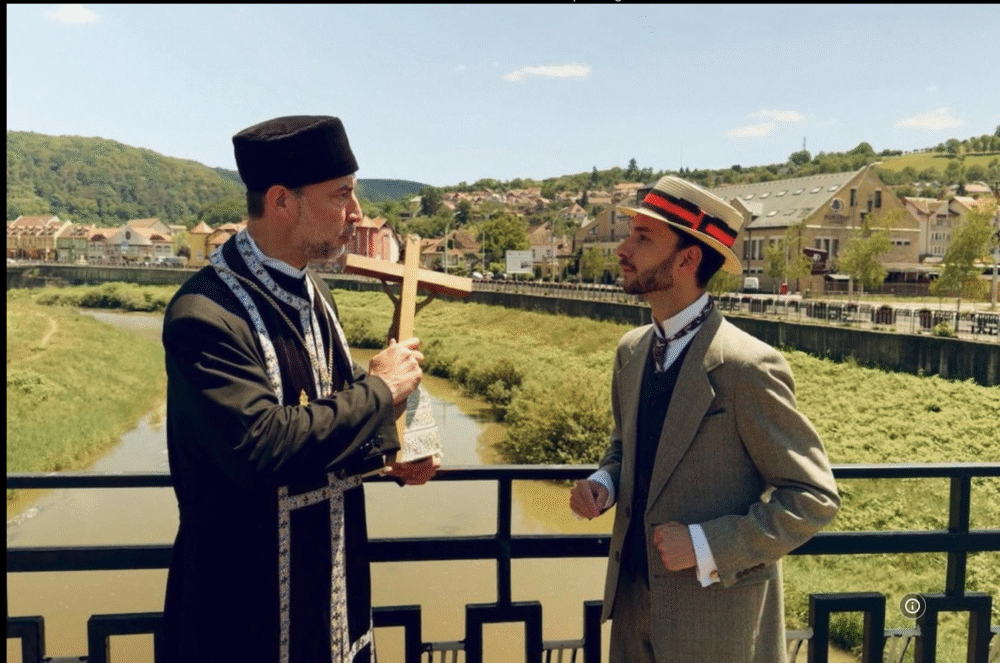
This mediated representation of the count also makes up the larger chunk of his post-literary existence, especially in movies, where he survives as a pop artifact, open to parody and remix. It may be a matter of meta-literary irony that Dracula’s eternal curse, more than his thirst for blood, resides in the fact that he never possesses an identity of his own. Not least for this misdeed of “othering,” some took pity on the count and humanized him. Already in Lambert Hillyer’s Dracula’s Daughter (1936) the story centers on Countess Zaleska, the daughter of Dracula, who struggles with her own vampirism as she attempts to destroy her father’s body and free herself from the inherited curse. In Francis Ford Coppola’s Bram Stoker’s Dracula (1992), the monster becomes a fallen lover, a tragic hero who experiences immortality as perpetual loss.
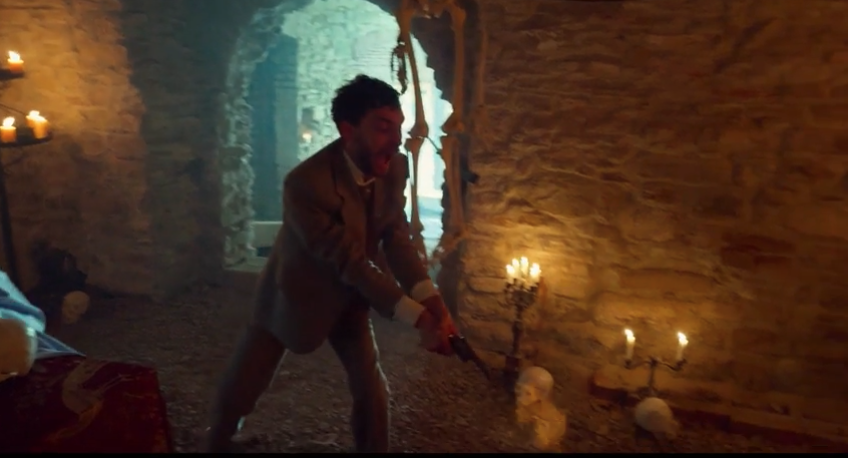
Radu Jude’s 2025 rendering of Dracula clearly follows the tradition of mediated representation. The nearly three-hours mashup is a satirical trip through legend, politics, pop culture, and technology. It follows a filmmaker in Transylvania stuck with writer’s block who uses generative AI to propose wildly different Dracula ideas: a workplace satire, an erotic cabaret, cartoons, socialist-era propaganda, and TikTok videos. Through 14 chapters, the film treats vampirism as if answering the generative AI prompt, “Hey ChatGPT, what are the different representations of Dracula?” However, the film’s formal experiments, what Alvin Toffler called “information overload,” ultimately also serve as commentary.
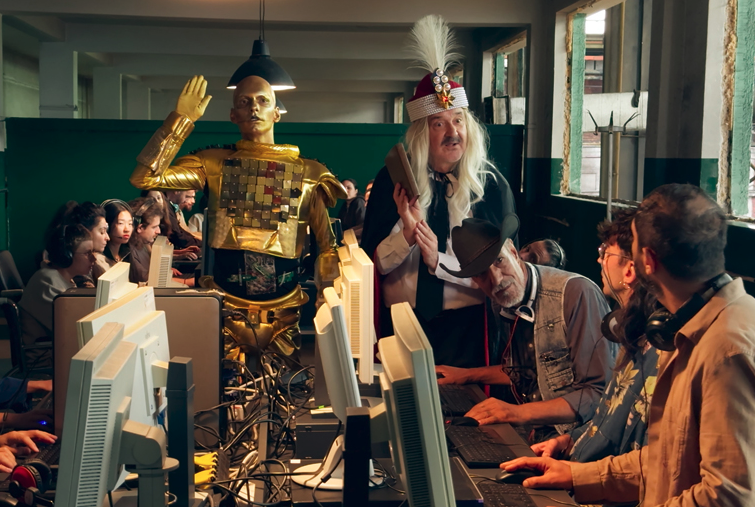
Dracula becomes a metaphor for being sucked into an endless algorithm. Not unlike Stoker’s unseen count, the platforms that run our feeds seize on human experience as raw material, draining it into predictions and habits that let them feed again. In short, Radu Jude’s film reframes the Dracula myth as a critique of attention extraction in the age of artificial intelligence, using a form that mimics an algorithmic data dump. In Jude’s own words, “the film itself is Dracula.”
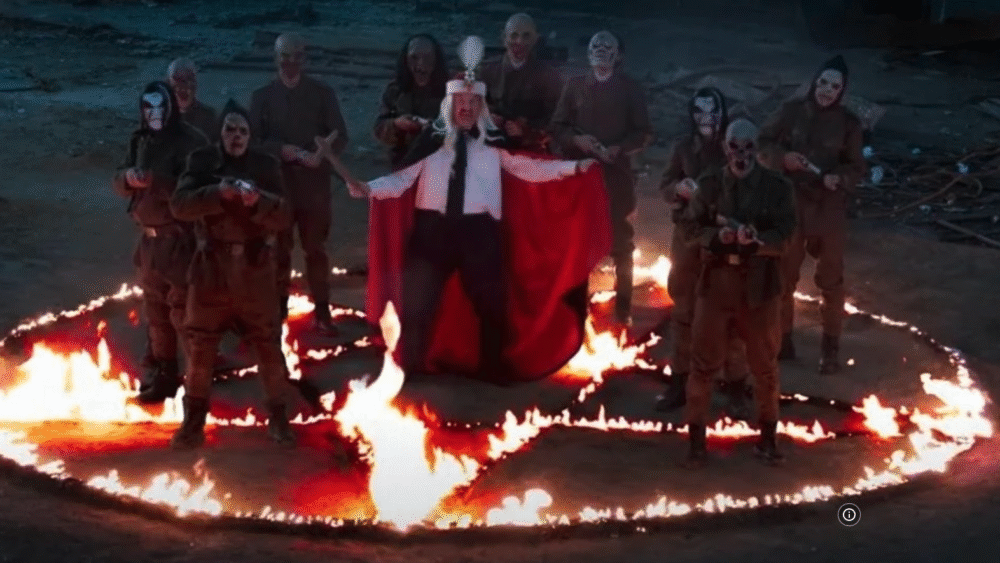
Each chapter in Jude’s Dracula plays out like a prompt and its response: Dracula reimagined in a new genre or format. One segment poses “Dracula on social media,” and spits out a TikTok-style skit of the count as an internet influencer; another asks for a Broadway musical, resulting in an erotic cabaret number with vampires; yet another tries a workplace comedy. At one point the film repurposes footage from F. W. Murnau’s Nosferatu as a spoof advertisement for penis enlargements. Besides visual references, the “training data” are academic texts and historical references. Characters quote philosophers like Wittgenstein and Heidegger amid the absurdity.