After two years in mothballs, OUTFEST, the premiere LGBTQ+ Film Organization in Los Angeles has staged its come back this weekend with OUTFEST NEXT. This year’s prime location is the LOOK Theatres in Glendale, which feature 3 large comfortable theaters perfect for larger viewing audiences. Nov. 6 – 9 were the dates of the grand return, with two films apiece on Thursday and Friday evenings, while a larger selection of feature films and shorts on Saturday and Sunday. One interesting screening on Saturday, November 8, has been “At the Place of Ghosts” (“Sk+te’kmujue’kati”), directed by visionary Canadian filmmaker Bretten Hannam. His new film follows up their wondrous feature “Wildwood” (2022). “At the Place of Ghosts” is a visually inventive journey of siblinghood and generational healing.
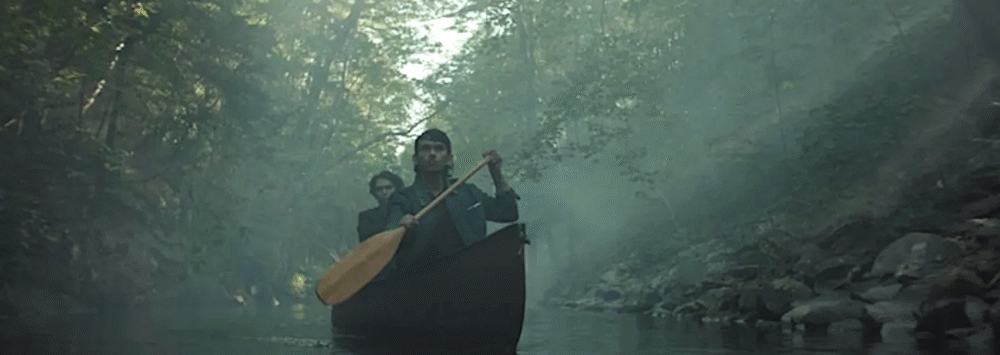
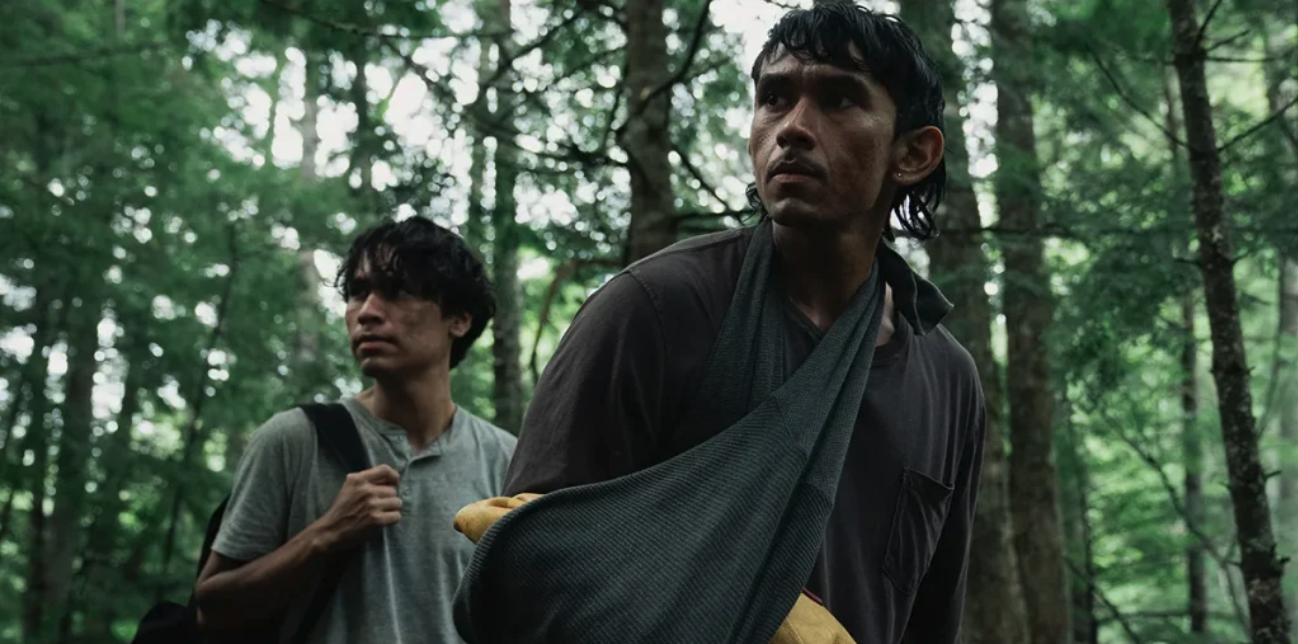
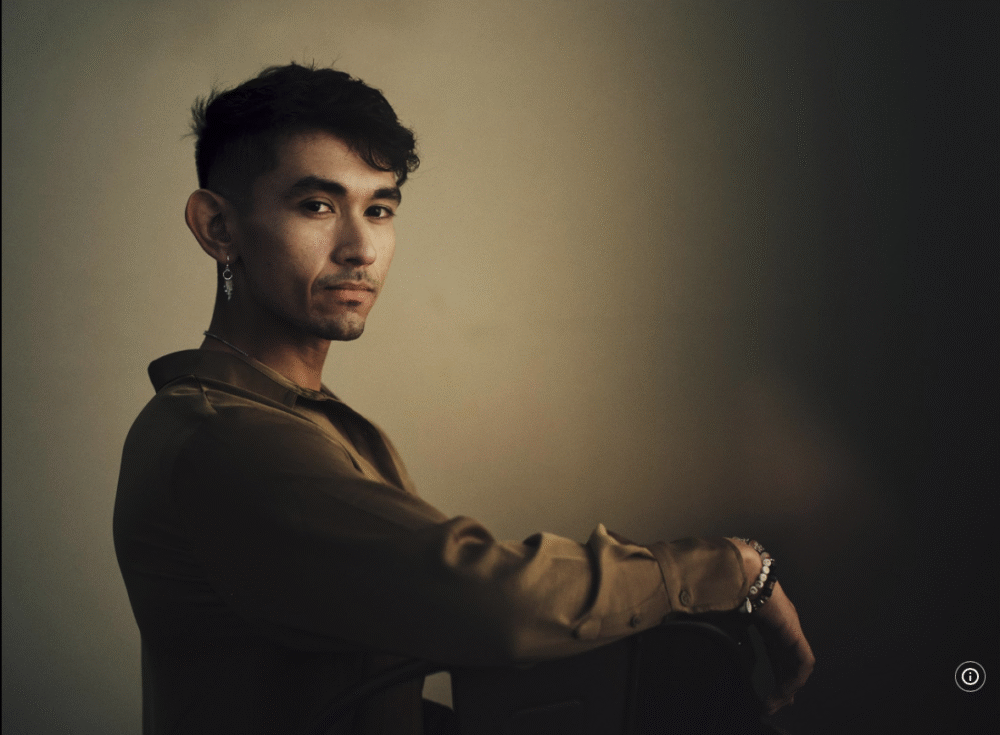
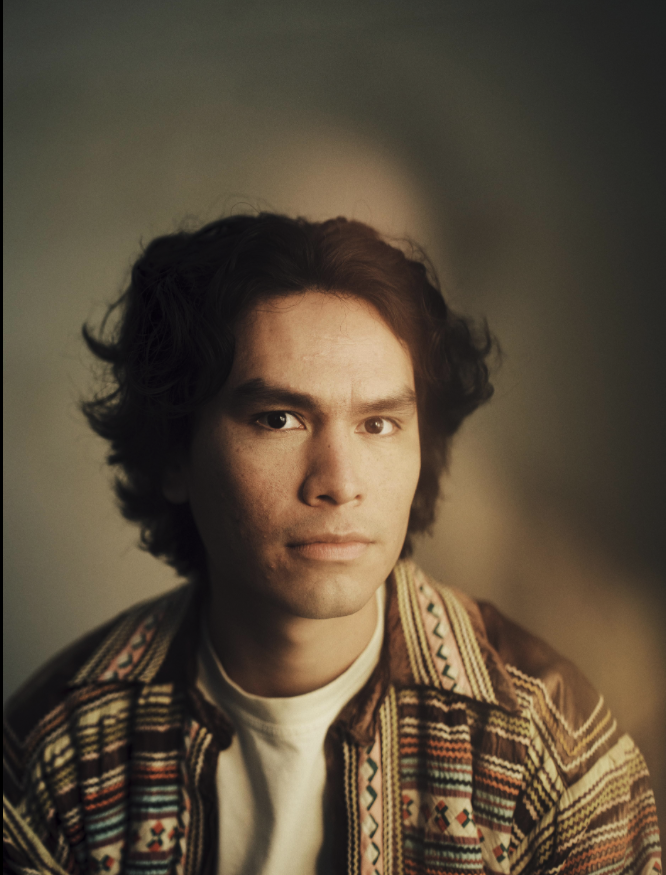
Hannam bravely leaps into a new genre and setting: the Sk+te’kmujue’kati, a haunted forest where ancestral ghosts weave seamlessly into the present among those who walk through its trees in search of answers. After a malevolent spirit from their past returns to the physical realm, threatening their already fragile sense of closure, estranged siblings Mise’l (Blake Alec Miranda) and Antle (Forrest Goodluck) must band together to confront the darkness of their childhood by embarking upon a dangerous and immersive journey into the woods.
Siblings Mise’l and Antle, who were close as children, but trauma from their upbringing has caused them to drift apart as adults. Antle lives in the woods and is busy raising his daughter; Mise’l left for the big city and found his life as a gay man. When they are both haunted by a malevolent spirit of bones and rot, the siblings are forced to reunite. after a dark entity visits the former at their job in a diner, leaving an indelible black mark on their arm. With apparently instinctual awareness, the siblings both know immediately what this means and what needs to be done. They set out to traverse the forest of Sk+te’kmujue’katik, where time collapses in on itself and ghosts from the past live, in the hope of expunging their demons.
The forest plays a similar role to the one in Alex Garland’s “Annihilation,” in the sense that it represents a liminal zone where characters reconsider established ideas around both the world and themselves. But unlike that film, in which alien contact is the cause, the “how” and “why” of Hannam’s surreal heterotopia remain unanswered. It’s one of several shrewd decisions that help create an at once immersive and alienating atmosphere. With limited dialogue and an emphasis on the visual, the film is full of striking imagery that often belies our expectations of indigenous storytelling.
Indigenous filmmaker Bretten Hannam has created a work rooted in Mi’kmaw culture, giving the story a specific and powerful voice. This is a film that moves at its own unhurried pace, building a mood of quiet dread and profound emotional weight. Its visuals are striking and its psychological landscape is dense. The film doesn’t just ask you to watch a story; it invites you to stand at the edge of a dark forest and prepare for a journey that is both spiritual and deeply unsettling.
As the brothers walk, they see apparitions of their Mi’kmaw ancestors, the shadows of colonial soldiers, and most unnervingly, the specters of their own younger selves. The experience is dreamlike and disorienting, heightened by Jeremy Dutcher’s discordant, melancholy score. This is where the film departs from convention, using its supernatural framework to explore memory in a truly special way.
The brothers’ meandering path through the woods is a direct journey into their own psyches. This time-bending forest forces them to confront the traumatic memories of an event involving their abusive father. The encounters with their childhood selves are especially powerful, allowing them to witness their own history and directly face the source of their pain. The film presents a sophisticated idea of what it means to heal. It suggests that healing isn’t about finding a single, cathartic release or erasing the past.
An encounter with colonial British Red Coats jarringly disrupts our communing with nature, while a later episode that sees the siblings stumble upon an ominous minimalist structure, seemingly transplanted from the future rather than the past, is the film’s most transcendent experience. Hannam prefers practical effects, but the instances of CGI are convincing enough, belying a tight budget on all but a couple of occasions. Central to the construction of this bewitching setting is the cinematography of Guy Godfree, who is helped by the stunning views of Nova Scotia.