By Renée Santos
Inside the warm hush of the Harmony Gold Theatre in Hollywood, a community gathered not simply to watch a film, but to remember, to grieve, to witness, and to awaken tenderness in one another. Holding the Pieces, presented by Alzheimer’s Los Angeles, moved through the room like memory itself — soft in some places, sharp in others, luminous in the spaces where love insists on remaining.
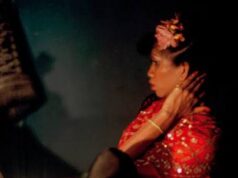
Directed by Kimleigh Smith, written by Courtney Stewart, and produced by Embrace Your Cape, the three-part series follows Rose Yelder, played with exquisite vulnerability by Juanita Jennings. Rose’s unraveling is delicate, quiet, and heartbreakingly familiar to anyone who has pressed a hand to a loved one’s shoulder while feeling them slip toward a world just beyond reach. Alzheimer’s here is not a villain; it is a shadow, an echo, a slow unspooling of a life once firmly held. And in response, her family gathers — with humor, frustration, tenderness, and the flawed, fierce devotion that defines love in its most human form.

The beauty of this project is not only in the narrative, but in the lives braided into it. In the post-premiere conversation, a kind of cosmic alignment revealed itself — a sense that this film was not chosen by its artists but sent for them.
The luminous young actress Jayani Jalese, who embodies Lisa with aching sincerity, shared the heartbreak of losing both her grandmother and great-grandmother. Monnae Michaell, tender in her portrayal of Bethany, spoke openly of caring for her cherished friend and mentor. Director Kimleigh Smith carried the sorrow of her Aunt Emma into every frame she sculpted, each moment guided by love and memory. Juanita Jennings shared screen time with her son, Aaron Jennings — a sacred creative moment that might never have existed without this story and their story of Juanita’s mother. These were not simply performances; they were tributes. A constellation of artists drawn together by loss, legacy, and purpose — as if the universe whispered, this story is calling you; say yes.
There is a deliberate and necessary power in centering a Black family in this story. This is not a color-blind narrative — it is a Black narrative told with intention, cultural truth, and lived experience. In the panel conversation, Alzheimer’s LA representative Petra Niles spoke to the painful reality that Black families often feel unseen, unheard, or undervalued within medical systems — their concerns minimized, their pain under-believed, their loved ones treated as though their lives hold less urgency.
To witness this story guided by a Black director, led by a Black cast, and grounded in the nuances of Black familial care is not only authentic — it is essential. There is no appropriation here, no borrowed grief. This is a narrative told by those who carry this history, this burden, this love. It honors the disproportionate impact Alzheimer’s has on Black communities while affirming the dignity, visibility, and humanity of those who have too often been overlooked.
This representation does not demand attention — it deserves it. It asserts, with quiet, steadfast truth: our stories matter, our families matter, our memories matter.
And while this vignette stands powerfully on its own, it also gently signals the film’s larger intention — to widen the frame and acknowledge how Alzheimer’s intersects with communities of color at large. Without diminishing the specificity or weight of this Black family’s experience, the series thoughtfully foreshadows what is to come: future stories, including a deeply resonant Latino narrative, that continue to illuminate how this disease disproportionately affects minority communities — each with its own cultural language of love, loss, and caregiving.
By honoring one community at a time — not blending them, not flattening them — the project underscores a profound truth: Alzheimer’s does not move through all families equally. Access to care, trust in medical systems, historical trauma, and cultural caregiving traditions shape each journey in ways that deserve to be seen in their fullness. The choice to tell these stories individually, yet in conversation with one another, feels intentional — a commitment to representation that is layered, respectful, and deeply human.
The audience felt it. Caregivers wiped tears before the first frame even appeared. Hands reached across armrests. Strangers nodded knowingly. This wasn’t a Hollywood premiere; it was communion.
And woven beneath the film is the mission of Alzheimer’s Los Angeles — a reminder that storytelling is not just art; it is advocacy. Films like Holding the Pieces do more than touch hearts — they build bridges. They reduce stigma. They educate families who are quietly carrying impossible weight. They transform isolation into recognition and grief into community. They ensure that those walking through cognitive decline do not walk alone or unseen.
This work matters not because it entertains, but because it remembers what society often forgets — that love persists, dignity matters, and connection is medicine.
Holding the Pieces does not rush. It breathes. It honors the long pauses of caregiving — the patience, the fatigue, the soft humor that keeps families afloat, the tiny victories that feel like miracles. It reminds us that while memory may fade, love often becomes something more distilled, stubborn, sacred.
As the credits rolled, it wasn’t simply applause — it was gratitude. Gratitude for truth. For representation. For the courage to tell this story, and for the visibility granted to those navigating this disease in silence.
This is more than a film series. It is a lantern. A hand extended. A reminder that even when life splinters into pieces, we can hold them — together — and that love, above all else, is what remains.
Watch & Learn More
Trailer:
Full film on Alzheimer’s LA YouTube: https://youtu.be/3krof9VCH-I
Project Info: https://www.alzheimersla.org/