Los Angeles, CA (The Hollywood Times) 8/12/2026 — There is something immediately disarming about filmmaker Dillon Bentlage.
During a recent conversation about his independent feature Watching Mr. Pearson, Bentlage spoke from home, occasionally accompanied by the sounds of his dogs in the background. He laughed easily, smiled often, and spoke about filmmaking with the relaxed sincerity of someone who is less interested in talking about Hollywood than he is in talking about people.
That warmth makes sense when discussing Watching Mr. Pearson, a film that explores dementia not simply as a diagnosis, but as a profound change in a person’s life — and as an opportunity to find new ways of connecting with someone who is still very much there.
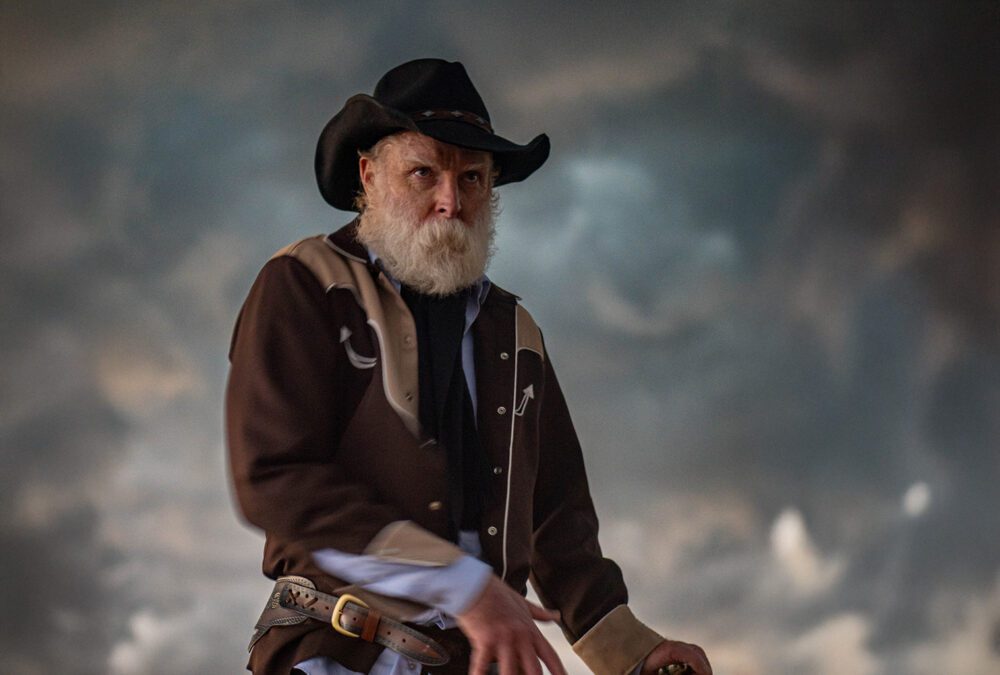
The film follows Robert, a retired actor living with dementia, and the two caregivers who look after him. His daytime caregiver, Caroline, discovers that one way to reach Robert is through the world he knows best: acting. She begins reenacting scenes from his old films with him, helping him reconnect with memories, his identity and, ultimately, the world around him.
For Bentlage, the idea began with an unexpected rabbit hole.
“I’m really into just deep diving on Wikipedia and learning a lot about different actors,” he explained. “And I read that Sean Connery had gone through Alzheimer’s before he passed away.”
Bentlage became fascinated by the years of Connery’s life after his retirement from acting.
“He had been retired for 17 years, and this was a battle that he was sort of facing very privately,” Bentlage said. “I just was really interested in how, you know, he had been retired for 17 years, and this was a battle that he was sort of facing very privately, and what that would have manifested like in him.”

He took the idea to his friend and co-writer Simon Kenitz Kincaid, whose own family experience with Alzheimer’s gave the concept an even deeper emotional connection.
“His grandfather was battling Alzheimer’s for nine years,” Bentlage said. “So then we just started talking more and more about it and what the story could potentially be.”
The screenplay came together quickly.
“I think we had our first draft in three months,” Bentlage recalled. “And that’s a good sign if you have something quick that’s just inspiring you to keep working on it.”
There were, of course, numerous rewrites before production, but the filmmakers never lost their connection to the story.
“It was nice to just feel that pull towards the story for both of us that we didn’t want to put it down and we wanted to keep working on,” he said. “And I’m really proud of what it’s become.”
A Film That Found Its Own Audience
What began as an artistic exploration has gradually developed into something larger.
Bentlage said the filmmakers never set out to make an advocacy film about Alzheimer’s or dementia. Instead, they wanted to tell a compelling human story and allow audiences to find their own connections within it.
“When we started writing it, we didn’t intend it to be an advocacy film,” he said. “This was again just artistic expression.”
Yet audiences began bringing their own experiences to screenings.
“We’ve found that more and more people really seem to gravitate towards the subject matter, the way that we tell the story,” Bentlage said.
The filmmakers deliberately chose to keep the story hopeful.
“We tried our best to stay hopeful and bright and happy about, you know, the relationship that the caregivers Caroline and Robert, our lead actors, kind of create throughout the story–rather than focusing on just the diagnosis.”
That approach appears to be resonating.
Following screenings, audiences have stayed to participate in Q&As and share their own experiences with dementia and caregiving. The film has also attracted support from organizations–including the Alzheimer’s Association and AARP.
The filmmakers have begun arranging private screenings at senior facilities for residents, caregivers, family members, and community members. The film has also been accredited by the National Council for Therapeutic Recreation Certification, allowing caregivers to earn hours toward their recreational therapy credentials.
For Bentlage, all of that has been an unexpected extension of the film’s life.
“We’re really happy that it sparked conversation around people going through this, how to interact with people going through this, the things that you can take away from a family member and the joy you can still find.”
The philosophy behind the film can be summed up in one particularly powerful idea.
“Our mantra was really to try to treat dementia as a profound change–and not a decline–in a loved one,” Bentlage said. “And that’s what we were really trying to go for with the film.”

Building a Movie, One Community at a Time
Watching Mr. Pearson did not have the kind of massive advertising budget that often accompanies theatrical releases.
Instead, the filmmakers built their audience in the old-fashioned way: one community at a time.
“We didn’t have a lot of budget to do that, unfortunately,” Bentlage said.
With the help of theatrical booker and distribution consultant Ry Levy, the filmmakers developed a curated roadshow strategy designed to bring the film directly into communities, where the cast and crew had personal connections.
They put up posters, distributed postcards, bookmarks, and coasters; visited local businesses, and reached out to community organizations, care facilities, and local press.
“We would just go to every small local shop and ask if we could put a poster in their window,” Bentlage explained.
The strategy has worked.
Some screenings have been extended because of demand, including two additional screenings in Madison, Connecticut, that each drew approximately 70 people.
“We’ve just been taking it market by market to really make sure we could curate a community-driven approach,” Bentlage said.
And there was a reason for that choice beyond simply finding an audience.
“The film is so much about connection that we really wanted to connect with every audience we could.”
Finding the Person Behind the Diagnosis
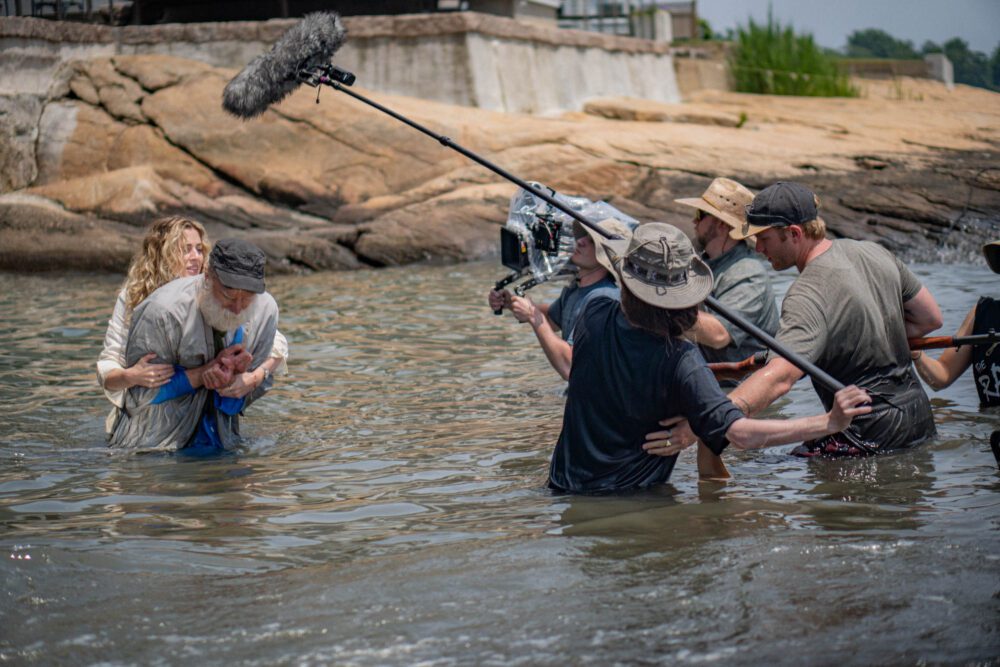
At the center of the story is Robert, a retired actor living along the Connecticut coast, and Caroline, his daytime caregiver.
Caroline, originally from Poland, is trying to obtain a visa, and must demonstrate that she possesses unique abilities in her field. Her unique ability turns out to be her understanding of how to connect with Robert.
Rather than treating him simply as a patient, she recognizes the actor still living inside him.
She encourages him to perform.
“She starts encouraging his performances, kind of like blending into his daily routine of just–let’s perform an old film,” Bentlage explained. “He’s able to recite the lines as if he’s still on set.”
That connection is not always easy, and the film does not pretend that caregiving is without difficult moments. But the goal remains to help Robert feel connected.
“Obviously, there’s a little bit of drama there, and things kind of go a little awry,” Bentlage said. “But the idea is for her to help him feel more reconnected.”
Bentlage also drew from extensive research while developing the film, speaking with people who work in memory-care settings and learning about the experiences of caregivers and families.
One nighttime sequence involving Robert and his caregiver Miguel was informed by conversations about “sundowning,” a phenomenon that can occur in people with dementia, and may involve increased confusion or agitation later in the day.
The filmmakers wanted those details to feel authentic–without allowing the research to overwhelm the story.
“We wanted it to be a film,” Bentlage said. “And obviously, you know, taking that story where we want to go with it…as the primary concern.”
A Personal Connection
Bentlage’s interest in the subject also comes from personal experience.
His grandmother lived with dementia during the later part of her life, although her condition never progressed to the point that many families associate with advanced Alzheimer’s disease.
He remembers seeing the ways dementia could affect ordinary aspects of everyday life.
After his grandfather died, Bentlage noticed his grandmother struggling with organizational and planning tasks that had once been easy for her.
“I remember her trying to plan a dinner party for my father and all the siblings, and just not being able to keep everyone’s schedule straight,” he said.
What struck him was that she was aware of what was happening.
“That really put her in bad spirits because she was very aware of her inability to do that at the time.”
Other family experiences also informed his understanding of the disease. Bentlage said his aunt’s parents both died after battles with Alzheimer’s lasting more than a decade.
The filmmakers supplemented those personal experiences with research and conversations with people working in memory wards and memory-care facilities.
“A Love Letter” to Aging and Caregiving
Perhaps the most meaningful measure of Watching Mr. Pearson has come not from critics, but from audience members who have approached Bentlage after screenings.
He recalled one woman at a screening in Somerville, Massachusetts, who attended with her husband, whose grandmother has Alzheimer’s.
The woman told the filmmakers that she had always struggled to know how to interact with her husband’s grandmother.
After watching the film, she felt differently.
“I don’t have a question,” she told them. “I just want to let you guys know that I’ve always found it very difficult to connect with her because I don’t know how to interact with someone who’s going through that, but after seeing your film, I’m so excited to see her because I feel like I can.”
For Bentlage, that response represented exactly the kind of connection he hoped the film could create.
“I’d love people to just feel that sort of excitement to care for a loved one,” he said.
He also hopes audiences will recognize the value and identity of people throughout their later years.
“Value someone’s identity and worth in their later years,” he said, quoting an idea frequently expressed by his co-writer Simon.
That idea leads back to the unlikely inspiration for the entire project: Wikipedia.
Bentlage admitted that he spends a great deal of time reading about actors online. He pointed out that an actor’s biography might say that they retired in one year and died years later, with only a few sentences covering the intervening period.
“And we are just so interested in those 16 years,” he said. “How do you define someone’s life in three sentences? That’s actually 16 years. There’s so much life there.”
That may be the heart of Watching Mr. Pearson.
It is a film about what happens during those years that don’t always make it into biographies — the relationships, the memories, the laughter, the confusion, the caregiving and the small moments of connection that continue long after a person has left the spotlight.
“One of the Best Films of the Year”
The film has already earned strong critical praise, including from one critic who called it “one of the best films of the year.”
Bentlage received the compliment with characteristic humility.
“That was crazy,” he said with a laugh. “I really appreciate it. I mean, I’ve seen a lot of movies this year that I thought were fantastic, so I don’t know. I don’t know if we deserve that praise, but that was really sweet of him.”
The film stars Hugo Armstrong, Sam Bullington, Dominikah Zawada, Luis Rizo and Zainab Jah.
But while critical recognition is certainly meaningful, Bentlage seems most interested in what happens after the credits roll.
For filmmakers considering their own independent projects, he has another message: don’t wait for Hollywood’s traditional machinery to decide whether your movie deserves an audience.
“Definitely take chances on yourself,” he said. “Don’t worry too much about the traditional avenues of filmmaking.”
He encourages filmmakers to see the success of other artists as inspiration rather than competition.
“Look at everyone else’s success around you as inspiration instead of competition, because this is not a competitive sport.”
And perhaps most importantly, he says filmmakers should think about distribution from the beginning.
“Think about bringing your film through the finish line,” Bentlage advised. “Don’t finish it and have someone else potentially put it in front of audiences. How would you put it in front of audiences if you were in charge of it?”
His answer is simple:
“And I would advocate that you should be in charge of it most of the time.”
For someone who made a film so deeply concerned with connection, it seems fitting that Bentlage has approached its release the same way he approached the story itself — personally, directly, and one relationship at a time.
Watching Mr. Pearson may have begun with a filmmaker wondering what happens to an actor during the years after the spotlight fades. It has grown into something much broader: a reminder that a person’s life does not become less meaningful simply because their circumstances change.
And perhaps that is why the film has connected so strongly with audiences.
As Bentlage puts it, “There’s so much life there.”