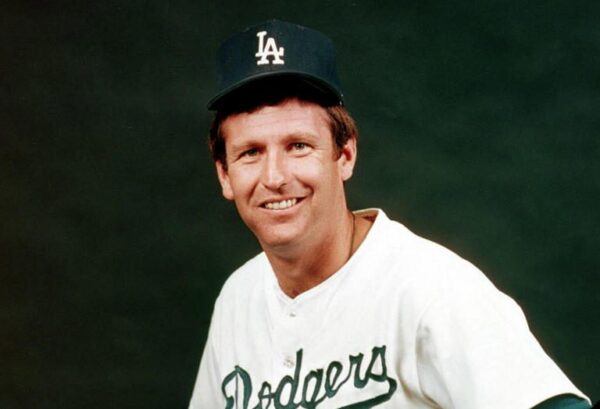
Tommy John, the longtime Major League baseball pitcher whose name is forever linked to the groundbreaking elbow surgery that saved his career and those of countless others since, has died, officials said Sunday. He was 83.
John is survived by his wife and three children, Tommy, Travis and Tamara, according to a statement from the Los Angeles Dodgers, one of the southpaw’s six major league teams. John had been in hospice care, Reuters reported last week.
“We are saddened to hear the news of Tommy John’s passing today,” said Stan Kasten, president & CEO of the Los Angeles Dodgers, in a statement on Sunday. “Tommy was an exceptional pitcher throughout his career in Major League Baseball, and his courageous role in becoming the first to have surgery that would go on to bear his name can’t be overstated. His impact both on and off the field has been felt by ball players of all ages and will be for generations to come.”
Tommy John was never famous for being smooth or silent: he was known for work. As a Major League pitcher, he competed through the grind of long seasons, facing hitters at the top of their game and learning to adjust when something stopped working. But it was a personal battle that ultimately made his name travel far beyond baseball scoreboards.
John’s career included seasons of determination and steady performance, built on the kind of pitching that comes from repetition and experience. Even after setbacks, he kept the same mindset: stay in the fight and keep searching for solutions. That attitude mattered most when his throwing arm began to break down. For a pitcher, an elbow injury isn’t just painful: it threatens everything, from command to confidence.
After playing for the Dodgers for six seasons, it was in a game in 1974 that John felt a “crash” in his left elbow. Doctors told him that he had torn his UCL, likely to end his career, as nearly every player before him had.
The team doctor Frank Jobe told John of a “one in a hundred” medical procedure. The procedure would take four hours involving taking a tendon from his non-pitching right arm and transplanting it to his left pitching arm. The tendon was placed between arm bones by Dr. Frank Jobe, who then used anchors to secure the ligament. John needed a second surgery to help with lack of sensation in his left fingers.
It was a risk, but John reached the point where rest and other treatments weren’t enough, he needed the surgery. At the time, though, it wasn’t a legend—it was a gamble taken by a man who understood the stakes. He had a career to protect, and he trusted the process of recovery even when the timeline felt uncertain.
John would miss all of the 1975 season. He did make his comeback during the 1976 season, finishing with a 10-10 record. When asked by reporters how he was feeling, he joked, “I asked the doctors for Koufax’s arm, but I’m afraid they gave me Mrs. Koufax’s arm.”
However, John turned to form for the Dodgers in the 1977 season, helping the team to win the National League pennant, then lost in the World Series. But John finished second in the league’s Cy Young balloting, winning 20 games.
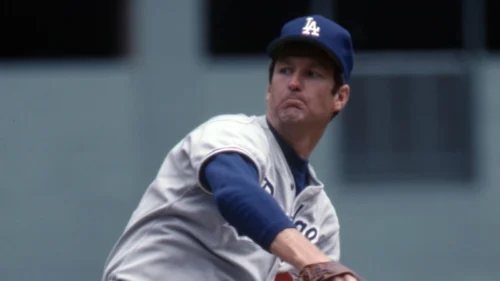
John would win 90 games as a Dodger, which ranks 24th in franchise history. He would pitch also for the Yankees, A’s and Angels, retiring at the age of 46. When he retired in 1989, he had pitched in 14 seasons AFTER his surgery, winning 164 of his 288 career wins.
What truly set John apart wasn’t only the comeback, but the way he approached it. After surgery and rehabilitation, his return to pitching proved that recovery could lead to real performance, not just survival. In a sport where injuries often end dreams, John became a living example of perseverance.
Today, the phrase “Tommy John surgery” may be what people remember first. Most of the players whose careers were saved by the surgery were pitchers, including former Dodgers Rich Hill, Yu Darvish and Eric Gagne, as well as current players Tarik Skubal and Shohei Ohtani. But the deeper takeaway is about Tommy John the person: a competitor who refused to accept the worst-case outcome and turned his own setback into a legacy.