Canadian filmmaker Chris Vautour uses dance, body, age and intergenerational collaboration to challenge what audiences expect to see on screen
Palm Springs, CA (The Hollywood Times) 9/20/26 – There is something wonderfully defiant about a film that refuses to explain itself.
Chris Vautour’s experimental short Pole Are Opposites, which celebrated its world premiere at the Cinema Diverse Palm Springs LGBTQ+ Film Festival, does exactly that. It places two very different women, two bodies and two generations around a pair of poles and allows the audience to confront its own assumptions about femininity, sexuality, age and who gets to occupy traditionally erotic spaces.
Vautour, a Canadian filmmaker currently completing an artist residency just north of Pioneertown, describes the film as an abstract and experimental work rather than a conventional narrative. The original idea grew out of her friendship and creative collaboration with younger filmmaker Laurent Spidal Pouyer, whom Vautour met while upgrading her cinematography skills at Concordia in Montreal.
The contrast between the two women immediately fascinated Vautour. Pouyer is a competition pole dancer, while Vautour is a 58-year-old masculine-presenting butch lesbian. Their backgrounds and generations appeared vastly different, yet through working together they discovered common ground in their experiences of acceptance, identity and simply being allowed to exist as themselves.
That contrast becomes the visual language of Pole Are Opposites.
 One pole is occupied by a traditionally feminine woman whose movement evokes the familiar cultural image of pole dancing. Then another woman enters the frame: older, butch, masculine-presenting and moving in a completely different way.
Vautour does not ask the audience to decide which woman belongs there.
They both do.
That seemingly simple idea gives Pole Are Opposites its power.
Vautour told The Hollywood Times that one of her motivations was the rarity of seeing a 58-year-old body presented naturally on screen, particularly the body of a masculine-presenting lesbian. She has made it part of her artistic mission to create work for Gen X butch lesbians, whom she believes remain largely invisible or reduced to stereotypes in film.
Click below for our exclusive interview:
It is an important distinction. Pole Are Opposites is not interested in making its central body more conventionally palatable.
Vautour deliberately leaves cellulite visible. She does not disguise fat or attempt to make her movements conform to familiar ideas about what audiences have been taught is “sexy.”
Instead, the body simply exists.
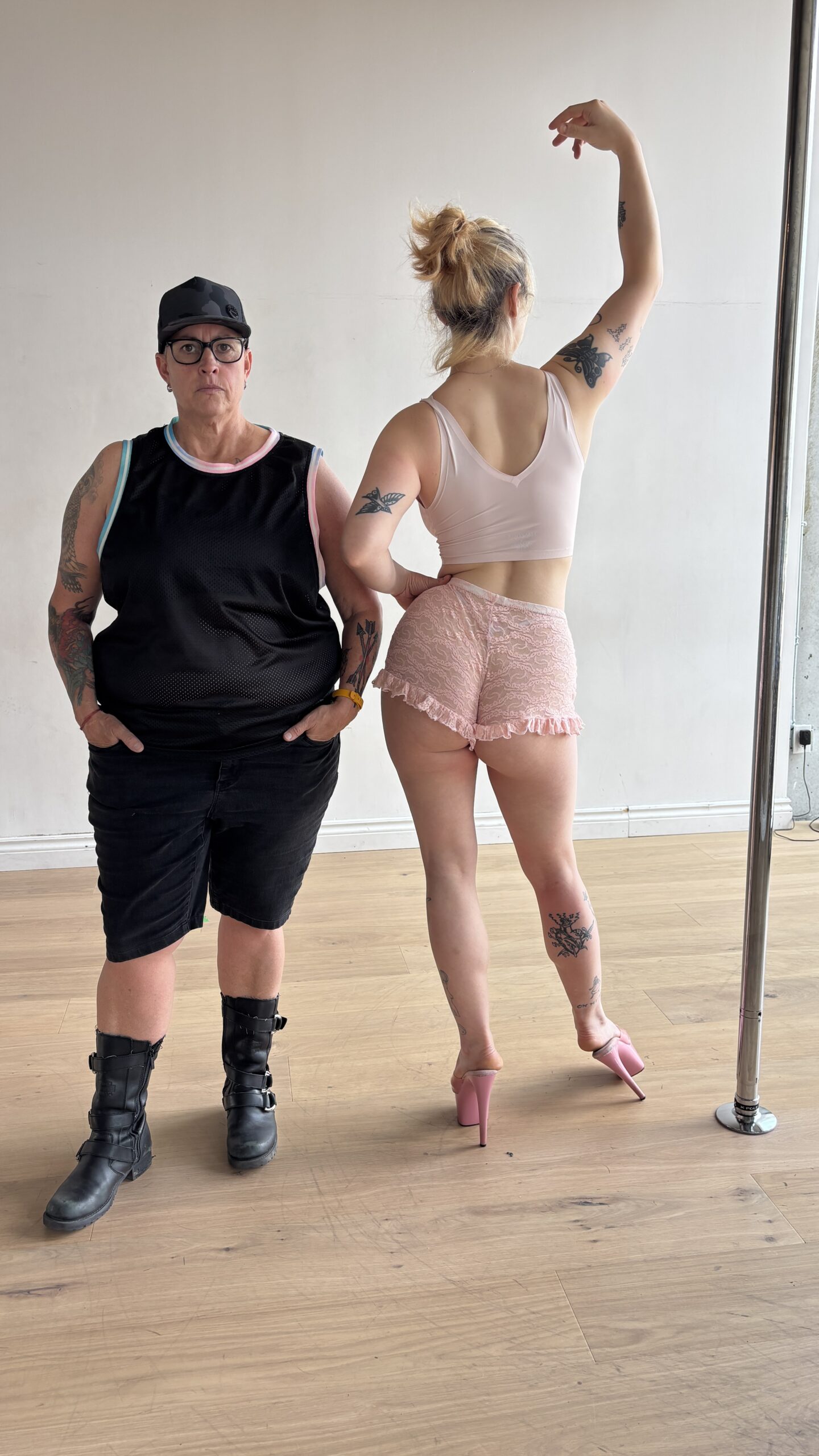 That makes the film unexpectedly intimate.
At Cinema Diverse, where Pole Are Opposites screened after a collection of more traditionally scripted narrative shorts, Vautour sensed that some audience members were not entirely certain how they were supposed to react.
Was it funny? Provocative? Serious? Were they supposed to be uncomfortable?
Vautour seems perfectly comfortable leaving those questions unanswered.
She intentionally presented her physicality without glamorizing or concealing it, recognizing that even a queer audience may be unaccustomed to seeing an older butch body occupy this particular cinematic space.
And perhaps that uncertainty is exactly where Pole Are Opposites becomes most interesting.
Audiences are accustomed to movies telling them how to feel. Music swells. Characters explain themselves. Narrative cues tell us when to laugh, cry or applaud.
Vautour offers no such instructions.
Instead, she creates something closer to a cinematic installation—a space in which two women can move independently without competing with, judging or diminishing one another.
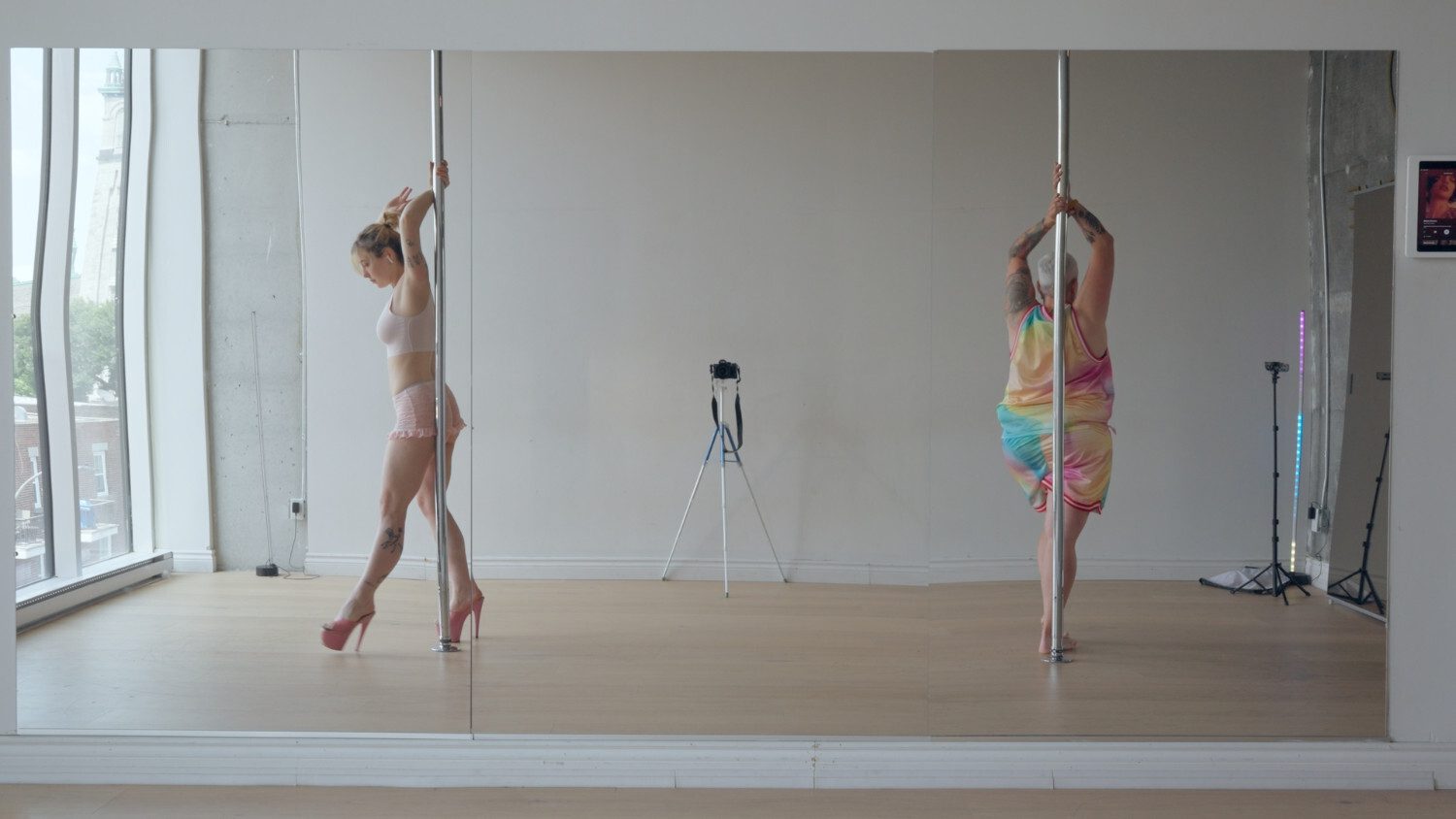 The filmmaking itself followed that philosophy.
Very little was rigidly planned. Vautour knew one woman would occupy one pole while the other occupied the second. From there, the filmmakers allowed the piece to develop organically.
One of its most effective moments, when the two women eventually begin performing the same dance, was discovered during filming. Neither woman needs to surrender her individuality for the two to arrive at shared movement. Their synchronization becomes less about conformity than connection.
That idea extends beyond the screen to the relationship between Vautour and her younger co-director, Laurence Bidal-Pouliot.
Vautour speaks passionately about the importance of intergenerational LGBTQ+ collaboration. Working with Pouyer offered more than another filmmaker’s perspective; it created a reciprocal relationship in which experience and youth could support one another rather than compete.
“We need to bridge that gap,” Vautour told The Hollywood Times, explaining that younger queer people can benefit from the experience of older generations while older artists can equally benefit from the confidence and perspective younger collaborators bring.
It is one of the most appealing ideas behind the entire project.
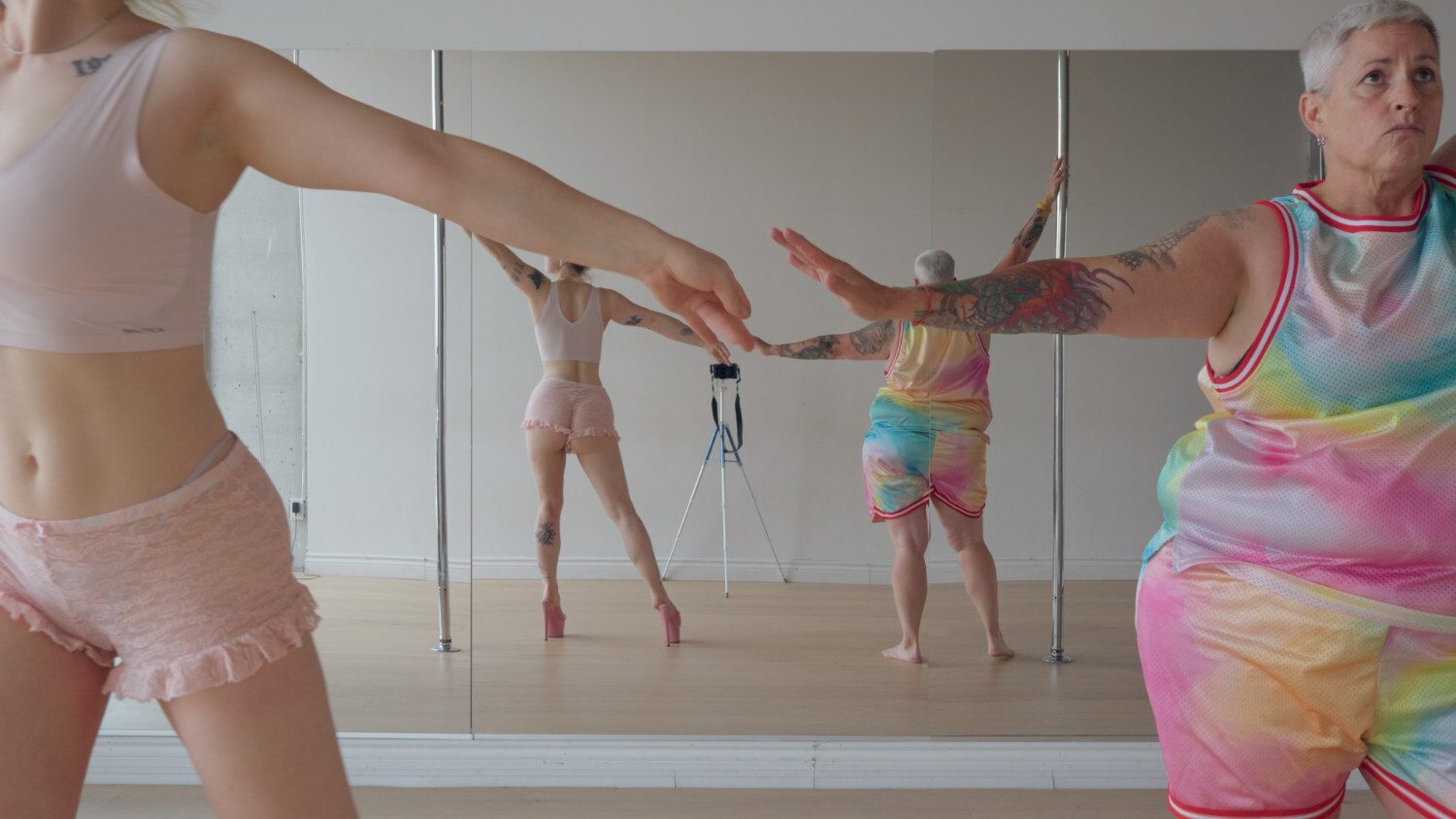 Pole Are Opposites may initially appear to be about contrasting bodies, but ultimately it is about allowing difference to coexist without requiring one person to diminish herself so another can shine.
Vautour describes filmmaking itself as a dance. Rather than controlling every detail before cameras roll, she prefers to leave room for collaborators, accidents, instincts and discoveries to change the work.
That philosophy is evident throughout Pole Are Opposites. It feels spontaneous because, in many ways, it is.
Vautour hopes audiences walk away having seen something they have not seen before—and perhaps reconsidering both cinema and their assumptions about bodies, aging and vulnerability.
Her own story makes that message even more meaningful.
Vautour spent roughly three decades working in the film industry as a location manager and scout, surrounded by filmmakers while repeatedly starting creative projects of her own that she never completed or showed publicly.
Now, at 58, she is reclaiming that unfinished work.
Her next project is an experimental, stream-of-consciousness feature examining those three decades of filmmaking, queer history and the complicated ways women can suppress their own creativity while trying to survive and earn a living within an industry historically shaped by patriarchal structures.
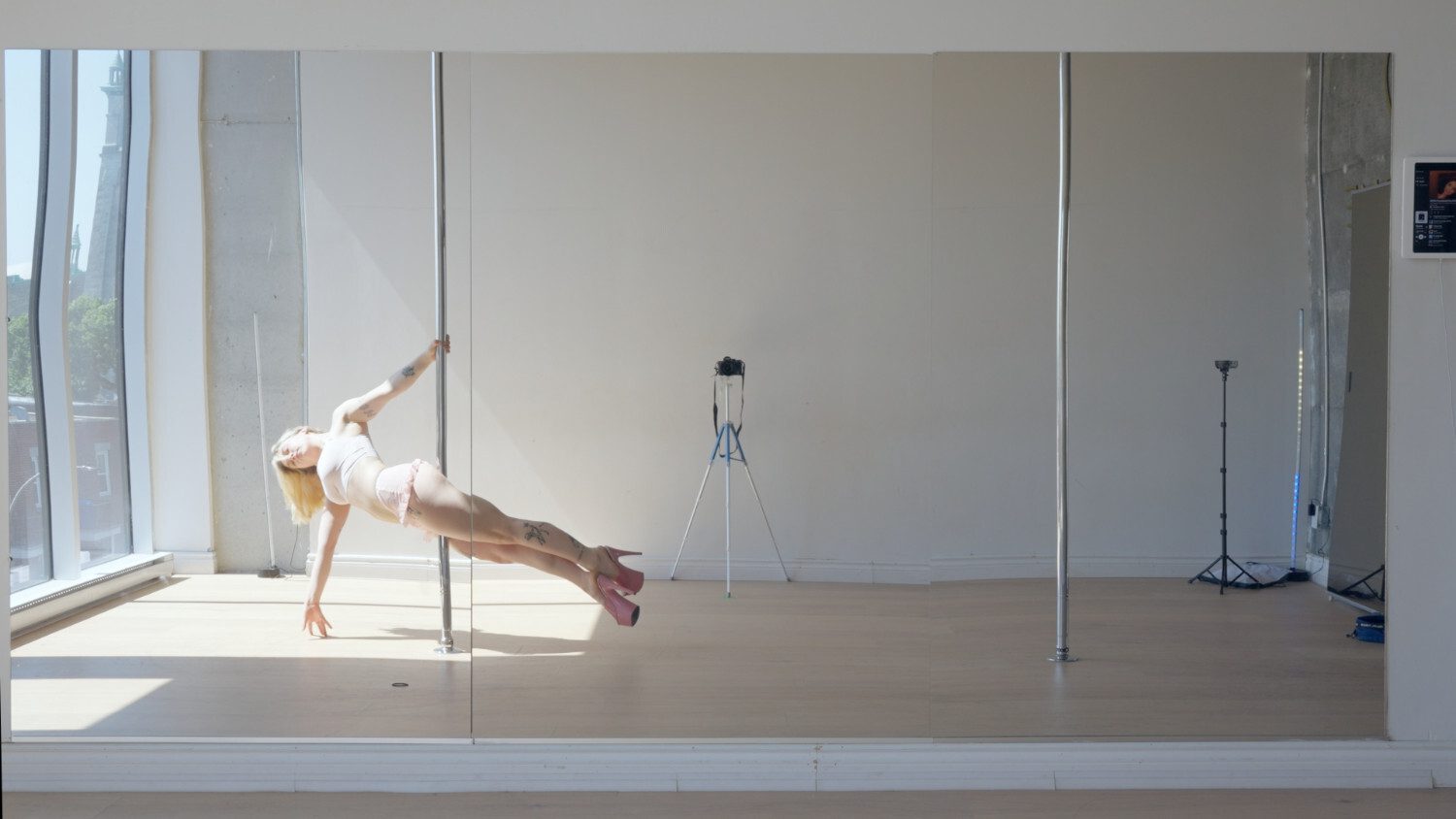 The idea running through the project is simple and powerful: it is never too late.
Vautour has no intention of disappearing.
“I’m 58 now,” she told The Hollywood Times. “I don’t plan on stopping being a filmmaker until the day I die.”
After watching Pole Are Opposites, one hopes she keeps that promise.
Because Vautour is creating space for people who have too often been left outside the frame, and sometimes the most radical thing a filmmaker can do is turn on the camera, step into that frame herself and refuse to hide.
By Valerie Milano