By Tequila Mockingbird
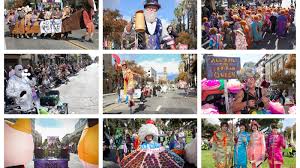
Los Angeles, CA (The Hollywood Times) 9/19/25 – The Pasadena Doo Dah Parade, long known as the “Twisted Sister” of the Rose Parade, has always embraced the offbeat, the eccentric, and the wildly creative. Born in 1978 as a parody of Pasadena’s more famous New Year’s Day celebration, it quickly grew into its own institution, attracting artists, musicians, oddball civic groups, and countless colorful personalities.
I first began marching in the Doo Dah in the 1980s as part of the East Hollywood Silverlake Barbecue Association. We were one of many community groups that added homemade energy to the streets of Pasadena. Years later, in 1998, I was honored to be crowned Pasadena Doo Dah Queen, tossing aside a powdered wig to reveal green dreadlocks and belting out “Mack the Knife” in German. That moment, like so many in Doo Dah history, embodied the parade’s mixture of satire, absurdity, and raw performance art.
The Past: Queens, Marshals, and Local Legends
Over the decades, the parade has built a gallery of unforgettable figures. The first queen, Dorothy Romani, came from the Stardust Ballroom in 1978, while grand marshals have ranged from Corky Peterson to performance troupes like Culture Clash. Regulars such as Snotty Scotty & the Hankies, belly dancer Narayana, and comic‐goth entertainer Count Smokula became fixtures. Others, like performance artist Cherry Capri and community historian Charles Phoenix, brought their own flair as Doo Dah royalty.
The parade became famous not only for its participants but also for its traditions: tossing tortillas into the crowd, dressing in costumes that defy categories, and crowning unlikely monarchs chosen for their wit, mischief, or sheer nerve.
The Present: A Pause in the Celebration
This year, for the first time in recent memory, Pasadena’s Doo Dah Parade is taking a break. Organizers from the nonprofit Light Bringer Project announced that the parade will not roll in 2025. Financial constraints, wildfire impacts, and the need to protect arts‐education programs for underserved youth have led to the postponement. Instead, a “No Doo Dah Day” will take place in November 2025 as a placeholder celebration. The full parade is scheduled to return stronger than ever on November 22, 2026.
The Future: What Lies Ahead
If history is any guide, Doo Dah will return with even more outrageous entries and loyal marchers. From neighborhood bands to surreal floats, the parade thrives on reinvention. The Royal Court and Queen tryouts will continue to produce memorable personalities, and the streets of Pasadena will once again echo with music, laughter, and the toss of tortillas.
In the future, technology may even sneak its way into Doo Dah. Parade participants already carry props, instruments, and costumes that sometimes go missing in the chaos. AirTags or similar trackers could become the unofficial “safety pins” of Doo Dah logistics—keeping instruments, banners, or coolers from vanishing in the post‐parade haze. A satirical twist isn’t hard to imagine floats parodying surveillance, clowns juggling GPS trackers, or a “Lost & Found Brigade” marching with giant AirTags strapped to their backs.
A Living Tradition
The Doo Dah Parade has always been more than a parade. It’s a celebration of community, creativity, and resistance to the ordinary. Whether you marched in the 1980s, reigned as a queen in the 1990s, or plan to toss tortillas in 2026, you are part of a lineage that redefines what a parade can be. Pasadena may pause this year, but the spirit of Doo Dah never really goes away.