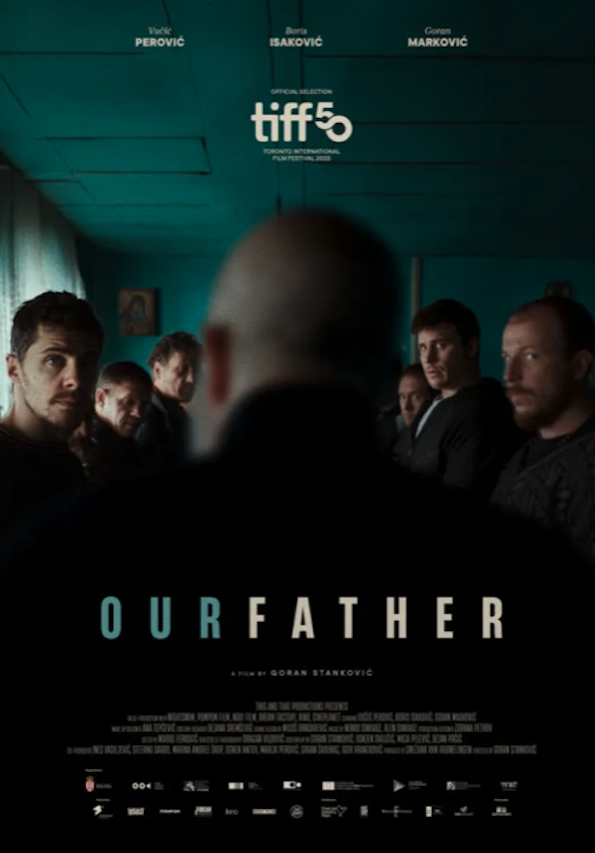
Featured in the line-up of films at this year’s SEEfest is a debut narrative feature Our Father (Oce Nas) from Serbia, directed by Goran Stanković. Our Father follows 32-year-old Dejan who, after years of spiraling addiction, arrives at a secluded monastery commune run by a strict but magnetic priest. Isolated from the outside world, the commune treats addiction through labor, discipline, obedience and faith. Assigned a humble guardian and immersed in a rigid daily routine, Dejan (Vućić Perović) begins a slow and painful journey toward recovery. But when a when a disturbing video surfaces showing a patient violently enforcing the rules, the outside world takes notice and Dejan is forced to choose between protecting the system that gave him a purposed or confronting the truth he can no longer ignore.
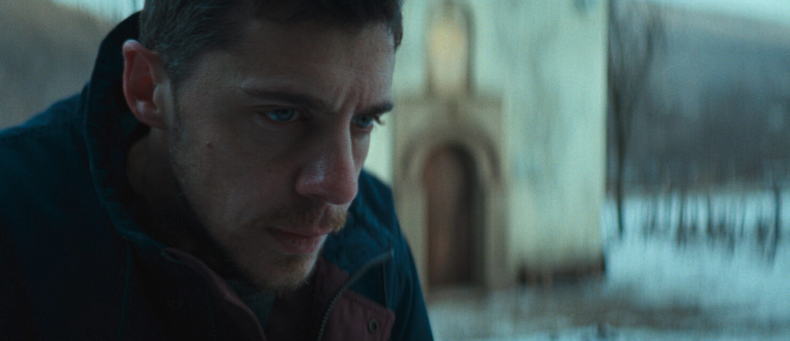
As the film opens, Dejan (Vućić Perović) is in the horrible throes of quitting heroin cold turkey. Suffering spasms, chills, and uncontrollable bowels, it’s only when he finally comes out of this painful physical withdrawal is he able to see where he is and what has become of him. Dejan is in a remote Serbian mountain monastery that is also an unorthodox rehab facility. This monastery commune, run with an iron fist by an Orthodox priest, Father Branko (Boris Isaković). The rules are straightforward: No drugs, no methadone, no cell phones, no outside contacts: Only work and prayer as the tools of rehabilitation. Dejan undergoes “cold turkey” and step one is bodily recovery. But Father Branko demands spiritual cleansing too. Dejan is a non-believer who shows no interest in attending Mass inside the small church at the monastery.
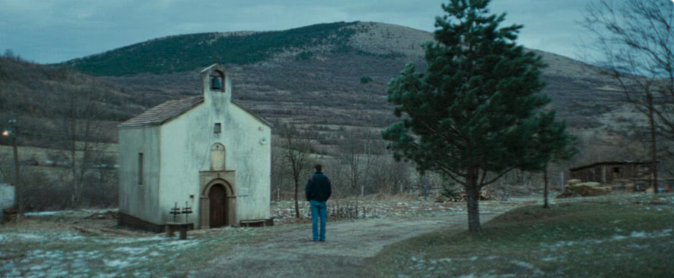
It takes a while for Dejan to understand the severe limitations put on the rehab patients – all men. Those who breach the regulations will undergo severe punishment. Dejan learns this the hard way when he’s caught, high as a kite, after relapsing on another resident’s smuggled stash. Bent over a table, with his arms held to prevent him from moving, Dejan is beaten with a metal shovel, and then with fists, until he can no longer stand. Eventually he bends to the new order of the monastery, where work is the main option.
Over time, Dejan bends to the monastery routine, sharing the same dormitory room with other men. A more seasoned inmate nicknamed Mionica (Croatian actor Goran Marković) takes on the role of his mentor, and Dejan slowly learns the ropes of the center. His tasks are to follow the path set out by the self-confident, hypocritical and often violent priest Father Branko (Boris Isaković) and to stay out of the way of his quick-tempered “deputies” Sava (Petar Novaković) and Ratko (Nenad Heraković).
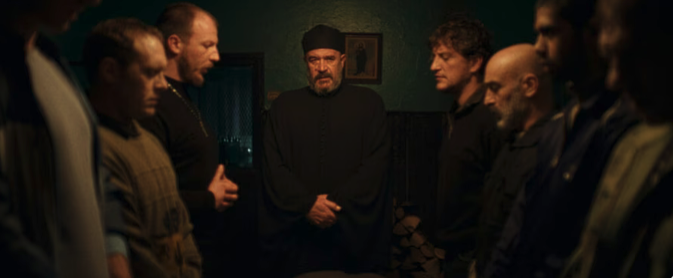
At evening meals with Father Branko, one man is selected to read a favorite passage from the Bible and eventually Dejan is called on to read the one he selected. Branko manages to ask deep questions about the chosen passage and how it is relevant to the man’s current condition. His towering presence is always intimidating. As Dejan adjusts to the routine at the monastery, he begins to attend morning Mass in the chapel. Since Dejan used to work as a barber, Father Branko has him cut the hair of other rehab patients. It seems that Branko knows everything about him already and his young son who Dejan misses. He is caught off guard to learn that his “mentor” Mionica will be leaving the monastery to go back to life in the city.
Based on his good behavior and internalizing the thinking of Father Branko, he is “promoted” to the role of mentoring others. He sees any infraction of the rules. But he is stunned to be called in by Branko who shows him on his computer a video of beating at the monastery. Apparently, this video was leaked and it is all over the internet where social concern has been raised about practices at the monastery. As Branko needs Dejan’s fervent support, he allows Dejan to make a phone call to his young son and discovers that his wife has left him and taken his son with her – although he stays with Dejan’s mother most of the time.
After the video goes viral, Dejan’s mother visits, concerned about his wellbeing, and asks about his assault. “It had to be done,” he says. It’s those five, plain words that mark the horrifically low estimation he has of his own worth, and Father Branko’s hold on those in his care. He comes to realize that it was his own mother who sent him of to this rehab monastery. She has seen the surreptitious video and knows that the man beaten with the shovel was indeed her own son Dejan. He does not want to leave because he feels this extreme rehab “routine” is what keeps him in good stead.
Things get very rough when Father Branko reveals to Dejan that he is going to Belgrade to be on a television show about the monastery and its practices in rehabilitation of drug addicts. There are many questions about the role of the Romanian Orthodox Church is running such rehab facilities upon church auspices. That night a series of incidents occur with Branko’s absence and things get worse. In the third act of the film, Dejan has to deal with the harsh truth about the failure of this rehab system.
Director Stanković explained: “I hope the film will spark conversations not only about the boundaries between help and control, but also about how power operates in the spaces we least expect.” Stanković, who wrote the script with Ognjen Svilićić, Maja Pelević and Dejan Prćcić, developed the film through years of research and interviews. Based on a true incident, Stankovic offers a surprisingly complex blend of empathy and measured indictment of Branko’s methods. Our Father offers a stark and perceptive study of the mental, emotional, and spiritual battle that marks addiction. However, as it turns out, just as Dejan was addicted to heroin, Father Branko is drawn to something as nefarious: power — power, under the guise of the righteous. And there’s no rehab facility for that.
Branko’s cruelty is rooted in a genuine desire to help the addicts in his care, who have often been dropped at his doorstep by exasperated family members. The Father’s extreme methods are a last resort for those who can’t break the vicious cycle of addiction. However, there is a fine line between being stern and authoritarian, and it’s falling on the right side of humility and humanity that turns out to be the breaking point. As Dejan becomes one of Branko’s favored disciples, his own behavior begins to shift toward the tyrannical, leading to a brutal tragedy.
Back in 2009, a very real controversy erupted in Serbia. After a few leaked videos, showing recovering drug addicts being beaten in a church-operated rehabilitation center, the unorthodox methods of the Orthodox priest Branislav Peranović came to light. The center concerned, on the grounds of the Crna Reka monastery, was closed, but Peranović continued his work by founding another rehab clinic on the premises of another monastery. Only after one of his patients was killed by a severe beating at his hands in 2012 was Peranović arrested and stripped of his priesthood. Finally, this spring, he was sentenced to 20 years in prison, although this punishment is not yet final.
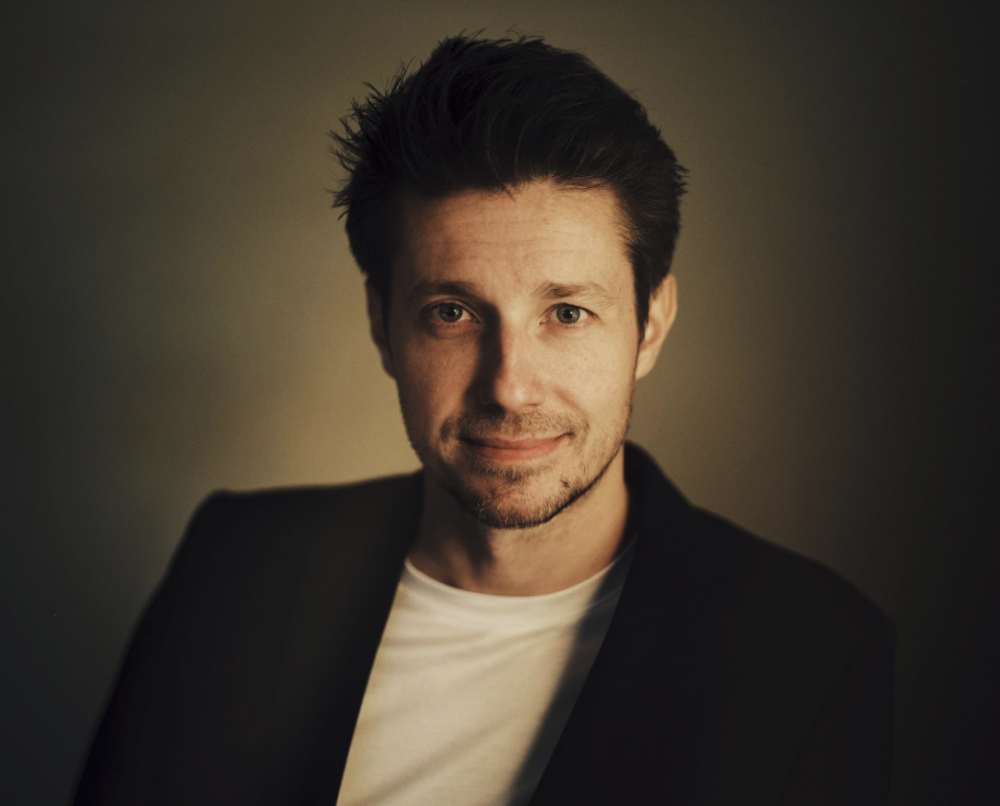
Filmmaker Stanković is a recognized figure in Serbian television with his recent TV series Operation Sabre, created and directed with Vladimir Tagić, and a prize winner at Canneseries. His feature documentary In the Dark world premiered at IDFA. Stanković’s plays, directed by Vladimir Tagić have been featured in the radio series Jutro će promeniti sve and Sablja. Actor Vućić Perović is known from his role in Mother Mara, the account of a successful businesswoman and single mother, who is heartbroken after her son Nemanja’s untimely death. That film was included in last year’s SEEfest.