The Actors’ Gang and Sonder Theatre Company present Deborah Brevoort’s devastating inquiry into healing from a collective shattering that lingers.
By John Lavitt
Culver City, CA (The Hollywood Times) 09-22-2026
Since the pandemic, I have been writing about plays and performances that directly confront the haunting legacy of trauma in all its forms and guises. It is not surprising that a global event defined by fear and isolation would open the door to such artistic excavations. What is surprising is how these excavations reveal the complexity of traumatic experience.
Although these works examine a wide array of traumatic events, each seeks a path to healing, whether on stage or in text. Perhaps theater has become one of the primary avenues for collective connection, a place where the darkest corners of the human soul can be illuminated, revealed, touched, and forgiven.
When I arrived at The Actors’ Gang Theatre in Culver City, I knew we would delve deeply into trauma once more, but I did not realize we were approaching a culmination of this journey. Not that trauma would cease to be a subject, but The Women of Lockerbie offers revelatory insight into it. Rather than examining trauma from a single perspective, playwright Deborah Brevoort draws on the tropes and conventions of Greek tragedy and pushes them further. She lets individual experience reshape the construction of the chorus.
By reimagining these classical tragedies, the play shifts trauma from a singular focus to a multitude of rivers pouring into the same dark sea. People do not experience traumatic events in the same way, and the play underscores the need to care for and respect the diversity of those experiences. Whether we weep uncontrollably, become consumed by anger, or repress our feelings to maintain control, the pain we experience is equally real and valid.

Director Christina Harris, who also plays Olive, one of the Lockerbie women who holds a harrowing secret, gives her cast the emotional space to explore and reveal. Trauma refuses to be contained by the ticking hands of a clock, and each character’s journey must find its own rhythm and pace. What is truly beautiful about the chorus of Lockerbie women is how their care and compassion extend beyond their own circle.
Although each of them was traumatized by the terrorist bombing of Pan Am Flight 103 on December 21, 1988, they do not isolate themselves or surrender to bitterness. Instead, they tirelessly seek a path to healing and release. Although they have done nothing wrong, extreme trauma can feel like imprisonment, in which a person longs to be freed from an unjust sentence. Only by taking actions that honor those lost can the living begin to move forward.
Despite their efforts, the pain of this collective trauma refuses to fade, even seven years after the bombing. In the play, families, still drowning in the black waves of this tragedy, continue to come to Lockerbie and wander the hills, searching for any sign of their loved ones. Madeline (Libby Baker) and Bill (Scott Harris), a New Jersey couple who lost their son, are a heartbreaking example. Divided and hurt, Bill watches his tormented wife scour the hills for any trace of her son that would allow her to stop mourning and find rest.
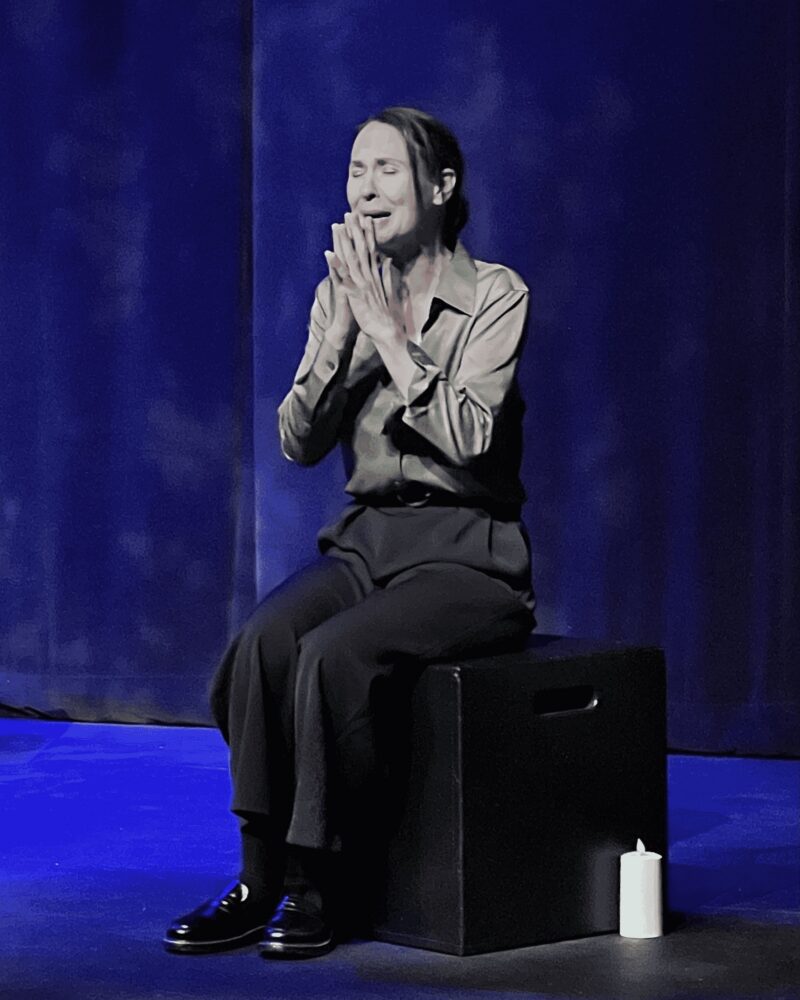
As Madeline, Libby Baker achieves a depth of sorrow that is palpable to the audience. It takes over the vast space of The Actors’ Gang, and this precise simulacrum of unforgiving grief is like Godzilla trampling Tokyo. There is no way to stop it or her.
But extreme grief isn’t the only kind that takes center stage. Some forms of grief cannot be mentioned here because of how they appear in the narrative. To reveal them would be a kind of betrayal.
The restrained grief of her husband, held under tight control no matter what, also takes center stage. With Madeline overwhelmed and overcome, Bill knew that someone had to take care of everything that happens when a loved one dies. Someone had to keep it all together.
Madeline accuses him of not caring enough because he did not cry or rage over the loss of their beloved son. He defends himself, explaining that he had to do everything while she let sorrow swallow her whole. He had to keep his family going. He had to honor his son’s memory by not giving up, even if it numbed his feelings and wracked his soul.

In the end, there is no lasting resolution to such collective trauma. The pain will never go away, and the loss will remain in the depths of the human heart. However, the actions of the Lockerbie women help move the healing process forward. Nothing is more powerful than seeing Bill finally allowed to relinquish control and grieve openly for his dead son. As he finally expresses his grief, tears stream down my face.
The triumph of The Women of Lockerbie lies in its ability to reveal the complexity of traumatic experience. Trauma takes many forms and follows many paths, and no individual journey is the same. However, by coming together and loving one another, healing can be found, even when the losses inflicted by such tragedy can never be reconciled or made right.