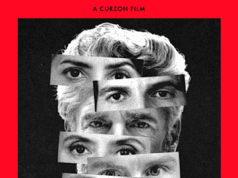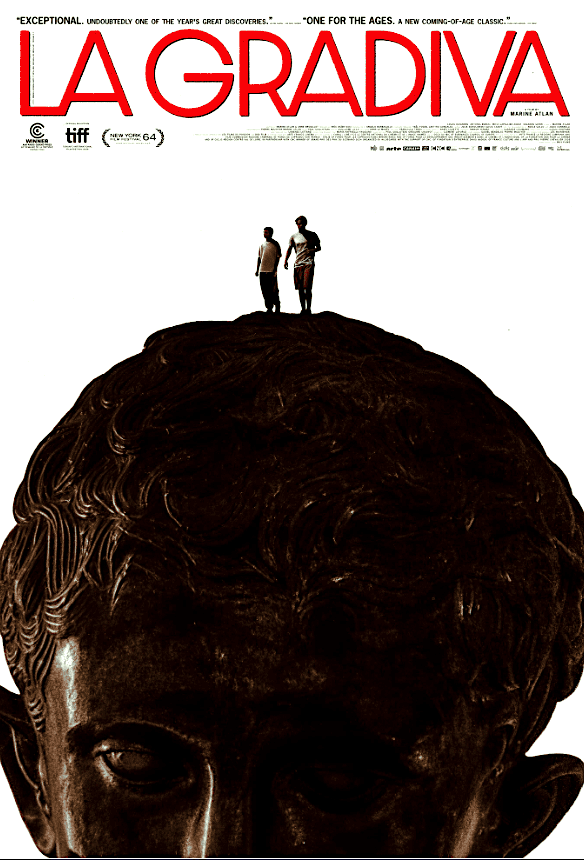
One of the best films at both the recent AFI FEST in Hollywood and The American French Film Festival this past week is Marine Atlan’s film La Gradiva. Cinematographer turned director Marine Atlan’s beautiful debut film about young love is superbly acted and directed. It follows a group of French high-school kids and their long-suffering teacher on a visit to Pompeii and Naples. They are seized by a sense of vertigo. They allow themselves to be overwhelmed by desire and anger, until they surrender completely to feelings that this trip evokes.
The film’s title is a reference to Wilhelm Jensen’s 1902 novella Gradiva, which was admired by Sigmund Freud. In that story, an archaeologist is transfixed by the image he sees in a Roman museum of a woman he names “Gradiva”, or “she who walks”, and imagines that she existed in Pompeii in AD 79, the time of the great Vesuvius eruption. That man believed that transplanting an image to a time of such a catastrophe could bringhim to an understanding of his own lost love.
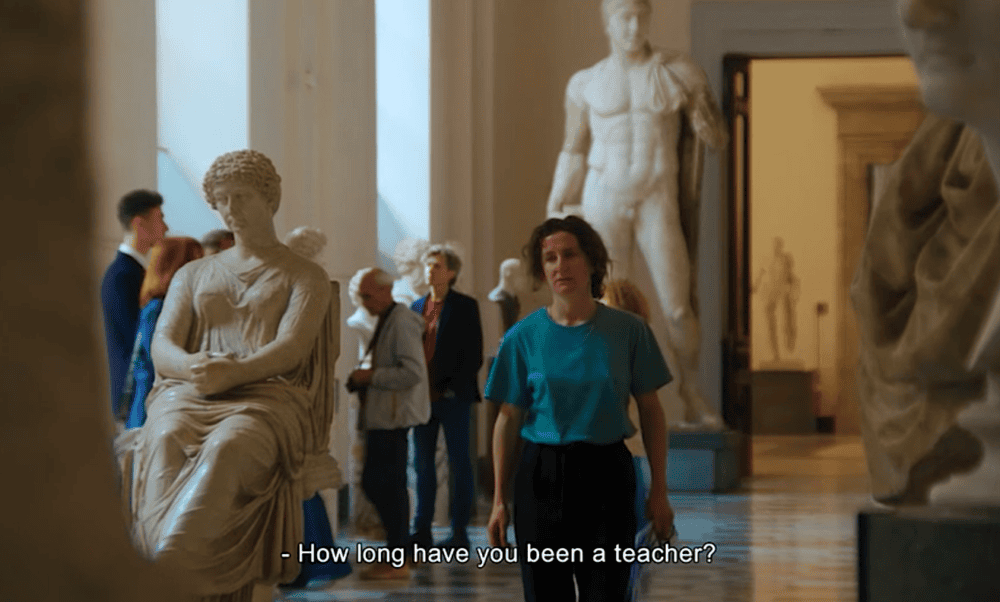
Atlan and her co-writer, Anne Brouillet, imagine a lively class of talented French teenagers being led on a stressful but exciting school trip to Pompeii and Naples by their high school Latin teacher, Mercier, played with superb intelligence and sympathy by Antonia Buresi. She has been brought to the verge of quiet breakdown by emotional frustration and the thankless task of keeping these teenagers in line. There is a funny and heartbreaking moment when she is asked by the Italian coach driver if she is “on her own,” and embarks on a thoughtful monologue about being without a partner or children – before she realizes he was asking if she was leading this class with or without a colleague.

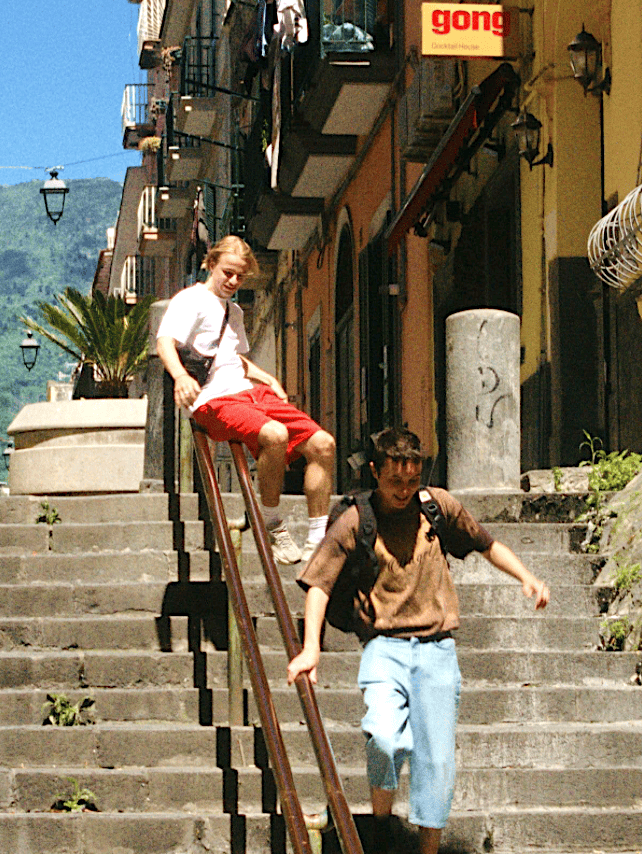
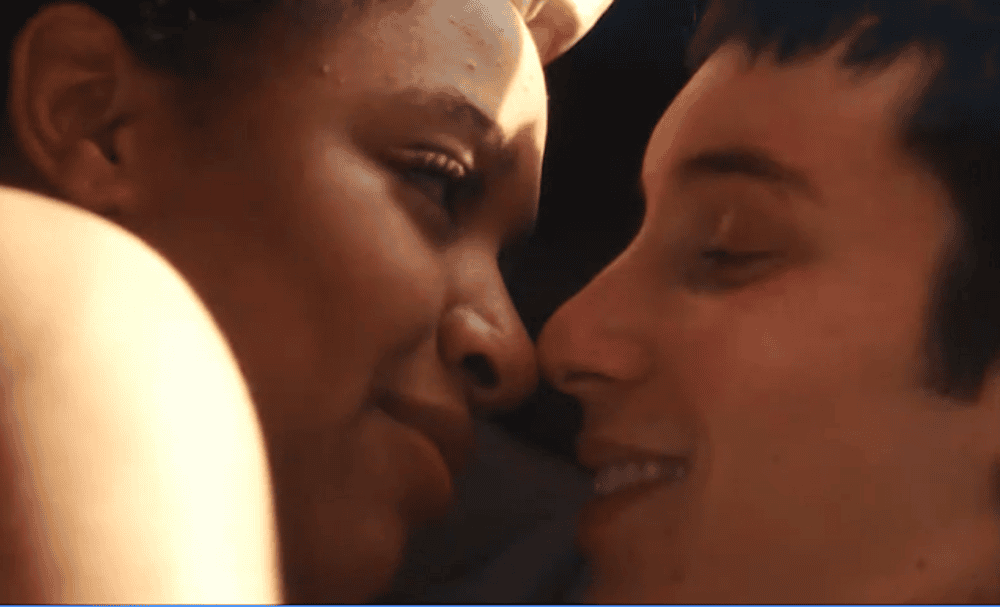
There is one particular student who droves Mercier crazy. He is Toni (Colas Quignard), who plays his music annoyingly loudly on the train heading to Italy and and has failed to get his essay assignment in, despite endless extensions. And it is Toni whom Atlan puts at the center of the film’s opening tableau on the train in a mysterious, potent nexus of sexual tension. Toni is just outside the door of a couchette, secretly staring in with unreadable voyeurism at his handsome friend James (Mitia Capellier-Audat) and Angela (Hadya Fofana) who have just had sex in their compartment on the train. Later, James will casually reveal to Toni that random sex means nothing to him.
At the same time, secretly watching Toni from the end of the train corridor is Suzanne (Suzanne Gerin), a smart, disaffected girl who is fascinated by Toni and James, and who feels herself the least attractive of the class. She is much given to morosely reading Agatha Christie’s The Body in the Library. She probably reads too much into the apparent association of victimhood and cleverness in the title.
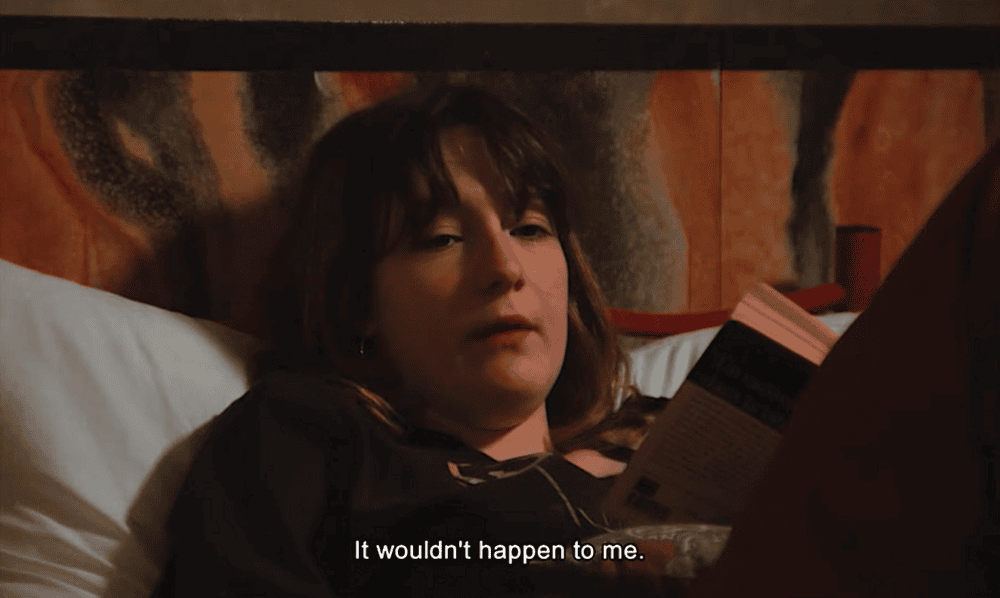
In the girls’ dorm, Suzanne listens with angry lack of empathy to Angela (who has just had sex with James) when she complains that James is now cruelly refusing to answer her texts. In Suzanne’s mind, these are problems she wishes she had but she is grateful for not being considered “hot.” “Some women have to be unfuckable for others to be fuckable,” she says. Atlan creates a vividly intense dream sequence for the unhappy, self-important Suzanne in which she appears as the Gravida in Pompeii and also has sex with Angela.
As for Toni, he considers his problems and his own backstory to be the most important of all. He is electrified by the personal significance of this trip to Pompeii. His mother has always told him that her mother, Toni’s grandmother, was a maid in a grand castle in Pompeii having a tragic love affair with the aristocratic master, and had to leave when the castle was reduced to rubble and chaos by the 1980 earthquake in southern Italy. On the basis of a few photographs and the story of his grandmother’s love affair with an aristocrat, he searches for traces of the family from whom he believes he’s descended.
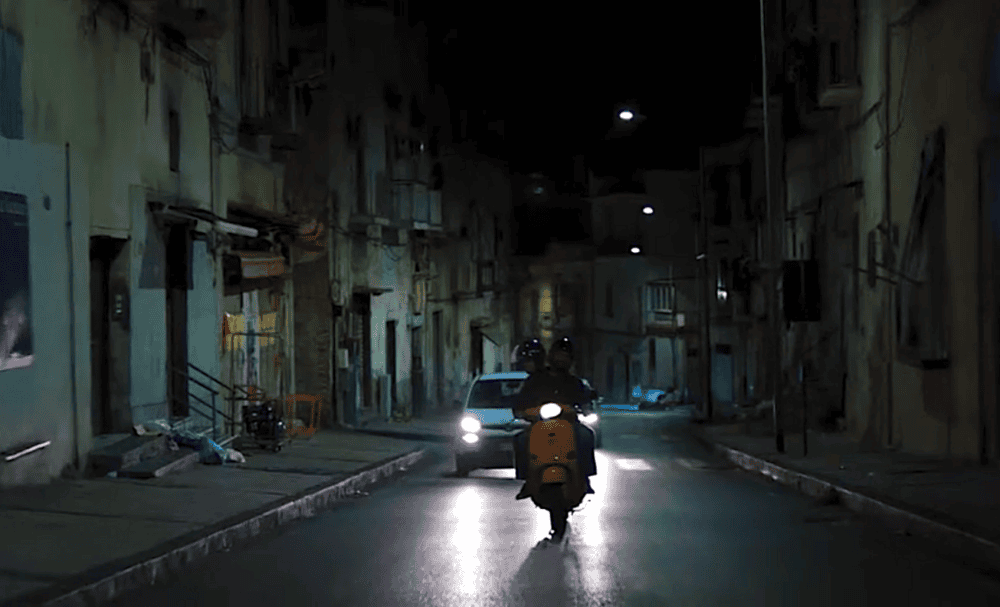
In Toni’s mind, it was this poignantly forbidden love affair that caused his grandmother to get pregnant. Toni believes that the earthquake, so thrillingly analogous to the Vesuvius eruption, seems to explain her departure for France. Toni likes to get high in Pompeii and manages to hook up with local Italian guys he meets online, but his main mission is to discover the truth about his supposed noble lineage.
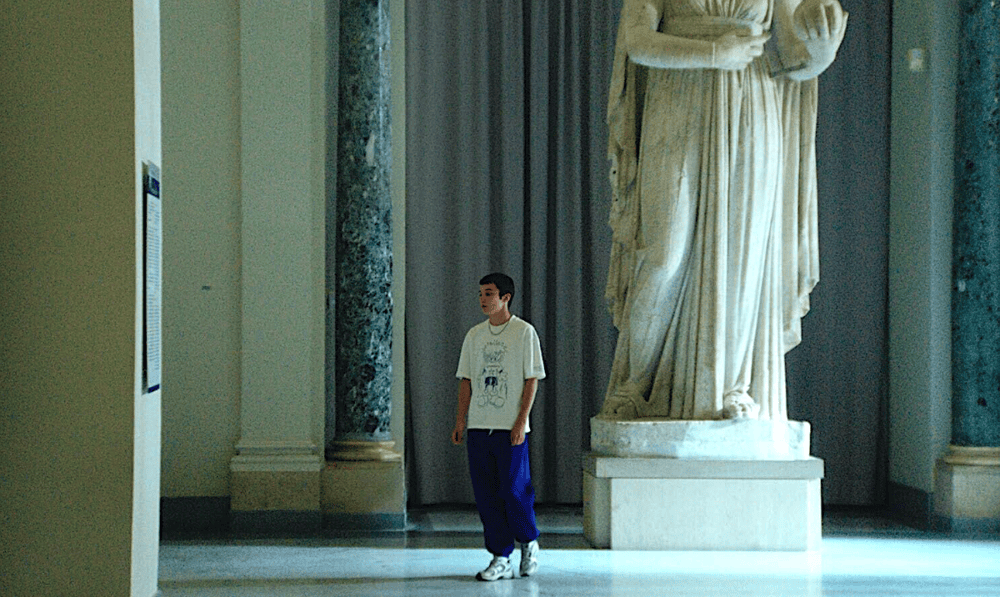
Toni plays the sidekick to James (Mitia Capellier-Audat), who takes advantage of his beauty and charisma to skip blithely from one sexual encounter to another. Theirs is a complicated friendship. While Toni makes no secret of his love and desire for James, James brushes off his sexual advances. At times, he seems to keep Toni around for the validation and the influence he can exert over him. At others, his love for him appears no less intimate for existing outside of a sexual realm.
Pivotal to La Gradiva’s narrative are Suzanne (Suzanne Gerin), an academically gifted loner who castigates herself as too ugly to inspire affection, and the class’s Latin teacher, Madame Mercier (Antonia Buresi). Already exhausted by trying to get her students to explore their intellectual curiosity, her patience with Toni eventually runs out. Atlan takes the time to develop even ancillary characters, often long before their importance to the story becomes clear.
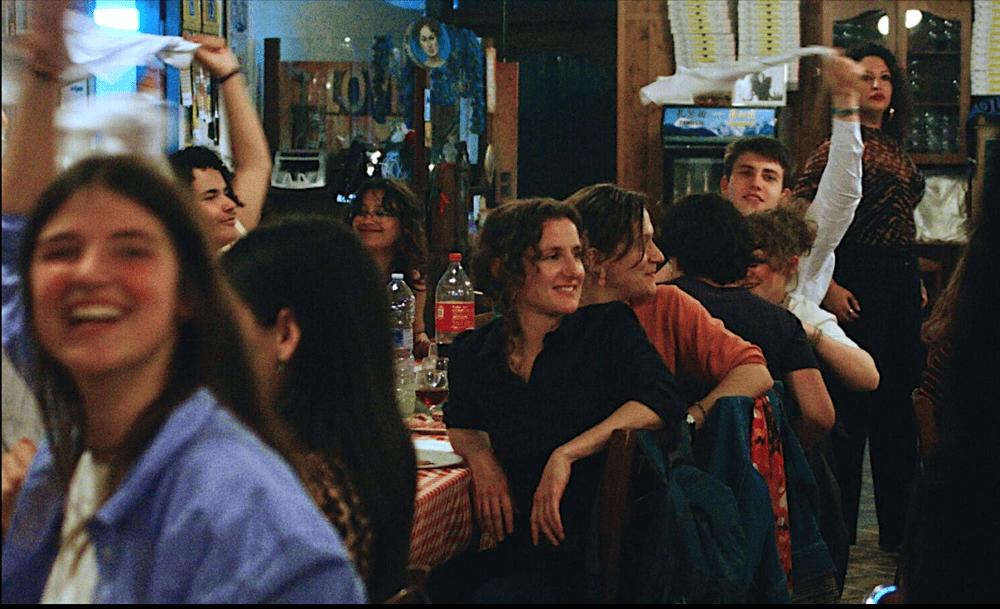
Suzanne, for one, initially floats around the margins of La Gradiva as something of an archetype, but the film’s only dream sequence grants us more access to her interiority than anyone else’s. In a moment of strife between Toni and James, it’s she who accompanies Toni on what promises to be a cathartic detour to the candy-striped villa he recognizes from photos, and it’s she who ends up puncturing his illusions. But whether this is a gesture of friendship or revenge for Toni and James’s relentless teasing and disruptive ways is left for us to decide.
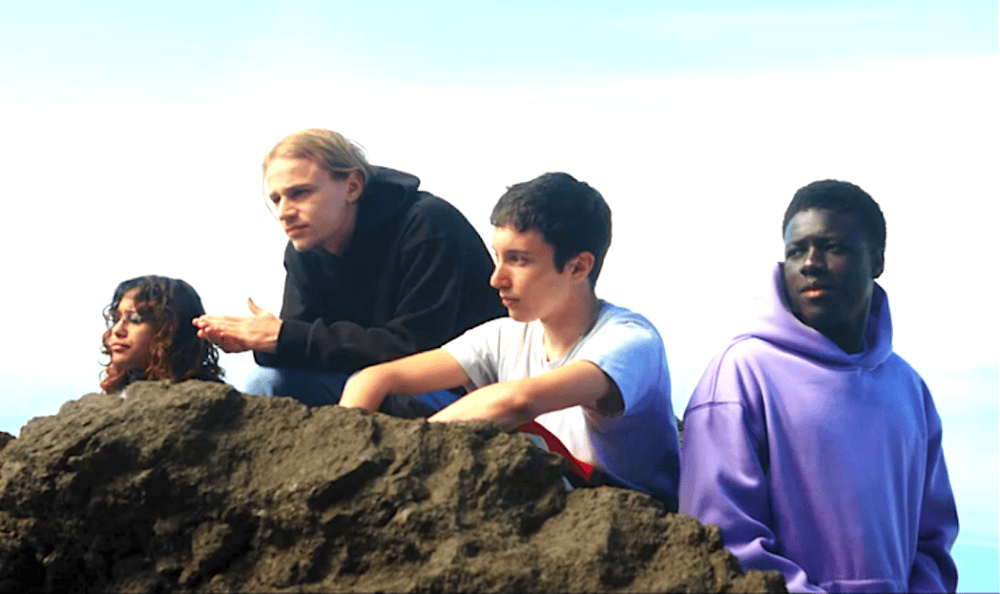
During the class hikes up Mount Vesuvius to the crater’s rim, Mercier struggles at first to engage her distracted students on the subject of plate tectonics. When she mentions seismic activity, though, Toni perks up, knowing that his then-pregnant grandmother fled from Naples to France in 1980, after her aristocratic lover was supposedly killed in the devastating earthquake of that year. Then Mercier enthralls her students, retelling Pliny’s account of the eruption that destroyed Pompeii in 79 A.D. As she describes the pyroclastic flow, Atlan’s camera pans over Naples and the surrounding countryside, capturing the precarious location of the metropolis and setting the teenagers against a vertiginous panorama, before a startling cut to the noise and chaos of street level.
There’s a touching irony to the students’ earlier inattention, as plate tectonics mirror the friction between desire and loneliness that distracts them from Mercier’s lectures. Subduction, the process of one plate slipping beneath another to melt into the magma that will explode through the overlying plate, is a handy metaphor for Toni’s subservience to James, which is, of course, bound to come to a head.
In a few scenes, Mercier asks her students to interpret, or at least find some emotional connection with, traces of the distant past, whether they’re studying mosaics (ironically preserved by the eruption), nude statues in an art museum, or the plaster mold of a woman who died in agony during the Pompeii eruption. In these remnants, the students see their own anxieties and desires reflected. For Atlan, this isn’t mere projection. The ancients were just as disquieted by the mysteries unleashed by desire.
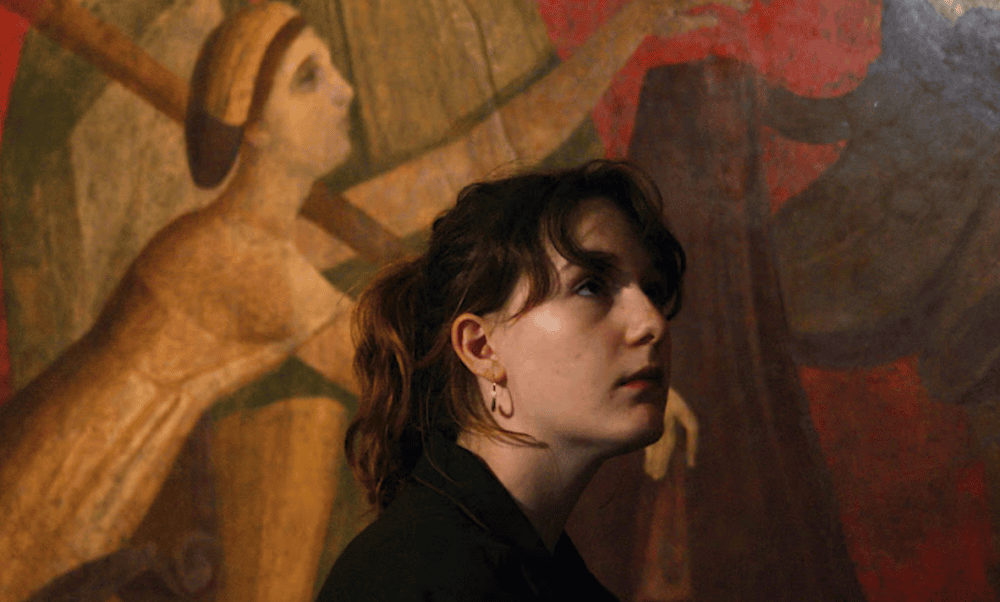
In another moment, the class observes frescos amidst another set of ruins at Pompeii. What follows is one of the film’s best sequences, one that puts the youthful actors’ talents on full display as they flit between dialogue-heavy moments and powerful silences. As the class moves from simply spewing their initial observations of the painting to understanding the historical exegesis, they learn that the painting, which seems to depict women in the throes of celebration, is actually a picture of a sinister indoctrination into a Dionysian cult. “I don’t think it’s a celebration, I think it’s a catastrophe,” Angela says.
It is the weightier counterpoints in Atlan’s film that make it more than a coming-of-age tale. 2000 years after the Pompeii was buried in pumice, people experience the same emotions, desires, superstitions and personal confusions as those ancient Romans. Despite the film’s tragic yet ambiguous ending, life and love and death remain part of the human experience. Atlan asks us to ponder whether our understanding of human nature has improved over thousands of years.