Almodóvar’s latest film Bitter Christmas wrestles with the weight of writing auto-fiction in a rather self-conscious way. Almodóvar sets his film in 2004 where a fictional female ad director faces a turbulent Christmas weekend. We soon realize that this story is a film within a film – and the screenplay being written in 2026 by an older male filmmaker. Almodóvar blurs the lines between reality, fiction, and the lives of the people closest to him.

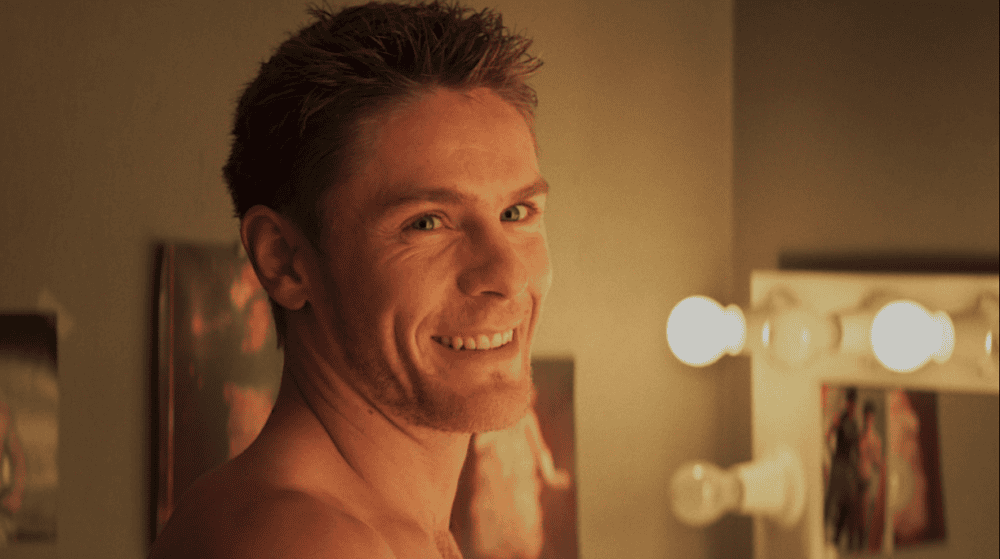
We get a multi-pronged tale of artistic frustration, centered on a migraine-addled director in 2004 named Elsa (Bárbara Lennie), who makes her living in advertising (including underwear ads) after directing two failed films that nonetheless have a cult following. Her commercial work is obviously lucrative. She has a lovely home, decked out in typical Almodóvar fashion with brightly colored mid-century modern furniture, but her lack of artistic success eats away at her, despite the warmth and support of her attractive firefighter/stripper boyfriend, Beau (Patrick Criado).

The migraines even get so bad that she checks herself into a hospital she once shot a film in; naturally, she asks the doctors to put her in the hospital room of the character in the film who lived.
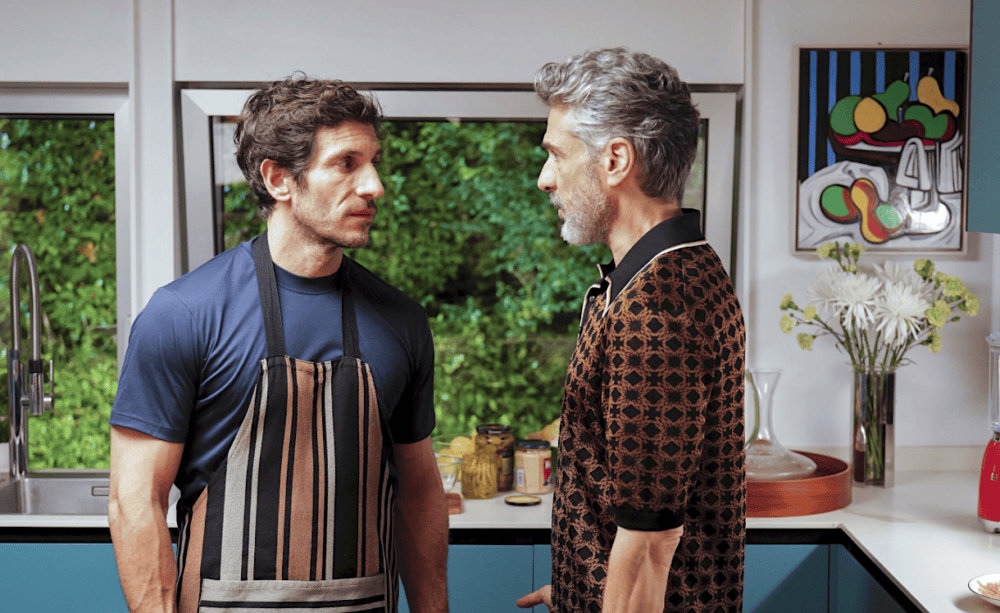
We see Elsa for what she truly is: The 2026 invention of another writer-director, Raúl (Leonardo Sbaraglia), who’s channeling his own self-critique into the screenplay we’ve been watching unfold. Like Almodóvar, he’s older and successful, living with a young, ruggedly handsome boyfriend named Santi (Quim Gutiérrez), whom he insists is nothing like the screenplay’s Beau, despite being inspired by him. All this is being imagined in the present day by a grey-haired film director Raúl (Leonardo Sbaraglia), who is working on an autobiographical script of his own called “Bitter Christmas.” Elsa would appear to be a version of him while his boyfriend Santi (Quim Gutiérrez) is clearly the model for Bonifacio (who goes by Beau).
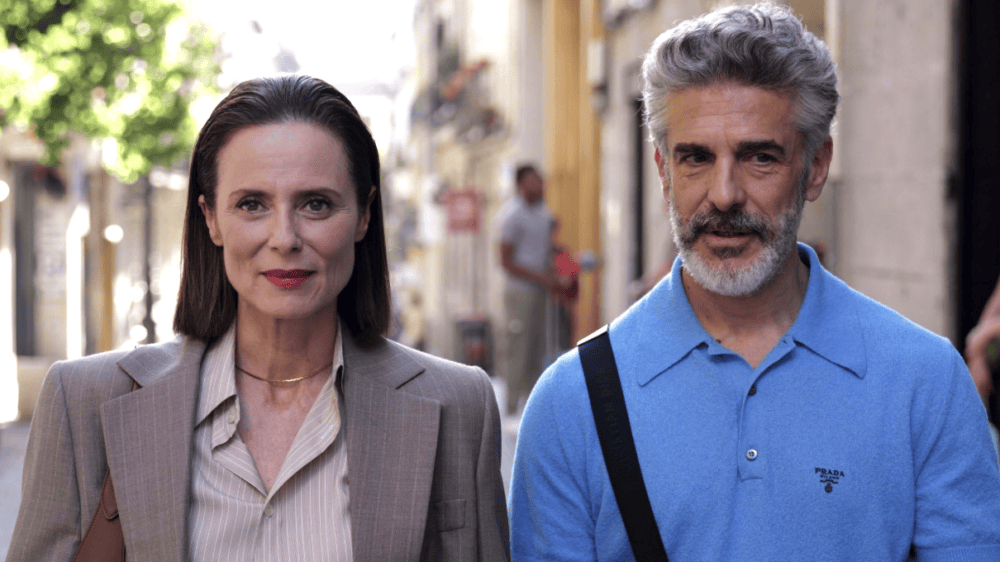
Unlike Elsa, Raúl is a celebrated filmmaker, though he can feel his creative juices starting to run out. That is why he finds himself using the lives of those around him in his screenplay – not just himself, but his assistant of twenty years, Mónica (Aitana Sánchez-Gijón), whose personal trials involving ex-girlfriends, suicide attempts, and dead sons find their way into Elsa’s fictional journey to revive herself in a long-overdue getaway on the volcanic island of Lanzarote in the Canaries.
The black-sand beaches, the cacti, and the dry-stone walls (or “zocos”) that protect crops from wind, are just some of the visual delights Almodóvar offers us. Beyond the predictably flamboyant decor, the characters sport exceedingly cozy sweaters while lying on their lime-green couches to listen to a record of Chavela Vargas croaking out “La Llorona” in the last days of her failing singing voice; it’s all charmingly diverting from scene to scene.

Bitter Christmas waits till its final act to truly turn the screws on Raúl and his self-delusions about using his friend’s lives to fuel his art. When Mónica learns of the similarities between her and Elsa’s friends Patricia (Victoria Luengo) and Natalia (Milena Smit), both women Elsa needs to support or save in some way, she confronts Raúl about such blatant theft. “It’s hard to write a story that fits,” he complains, which doesn’t excuse him from accusations of “vampir[ing]” his loved ones into his scripts.
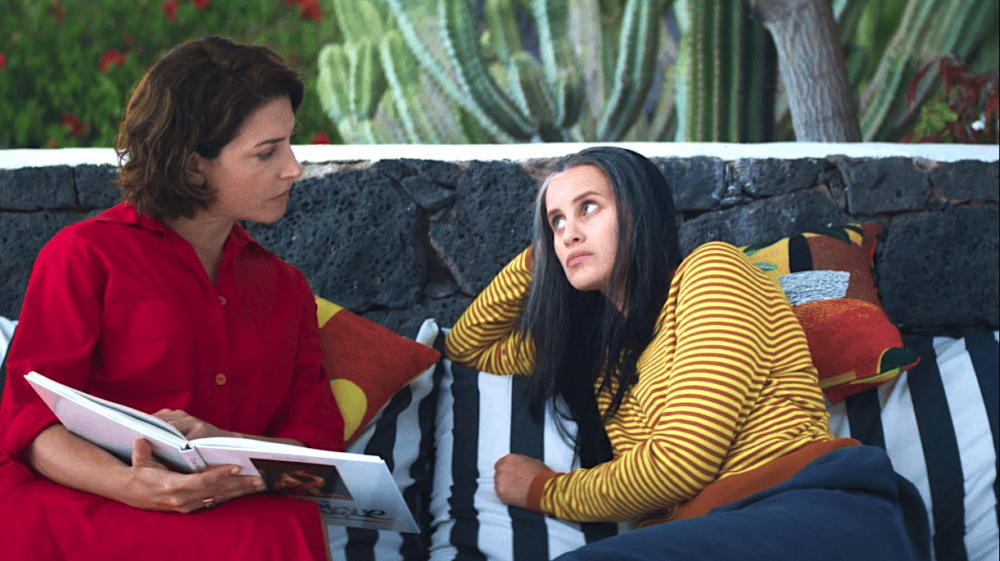
Bitter Christmasis a double-layered creation by Almodóvar, a kind of movie auto-metafiction of the sort that he has virtually invented, a life-v-art dialectical process. Like his recent Pain and Glory, Bitter Christmas is a candidly personal movie, circling around ideas like grief, loss, the vampirism of art and the betrayal involved in basing fictional characters on real people.
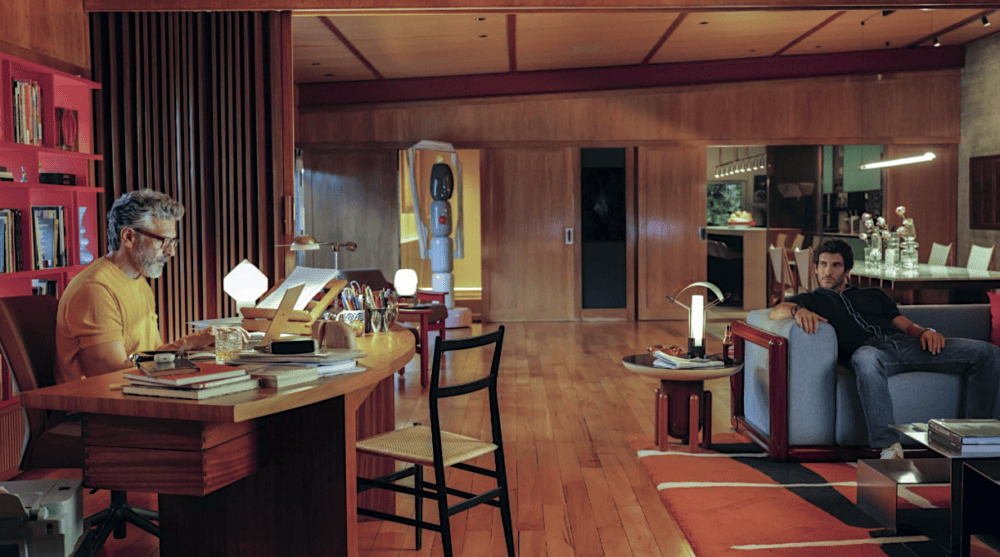
Perhaps by emphasizing this last point, Almodóvar is pre-empting a crisis in his own life, showing us a gay male artist’s perspective on the question of whether women are not being given enough credit as the wellspring for inspiration or indeed as artists themselves.
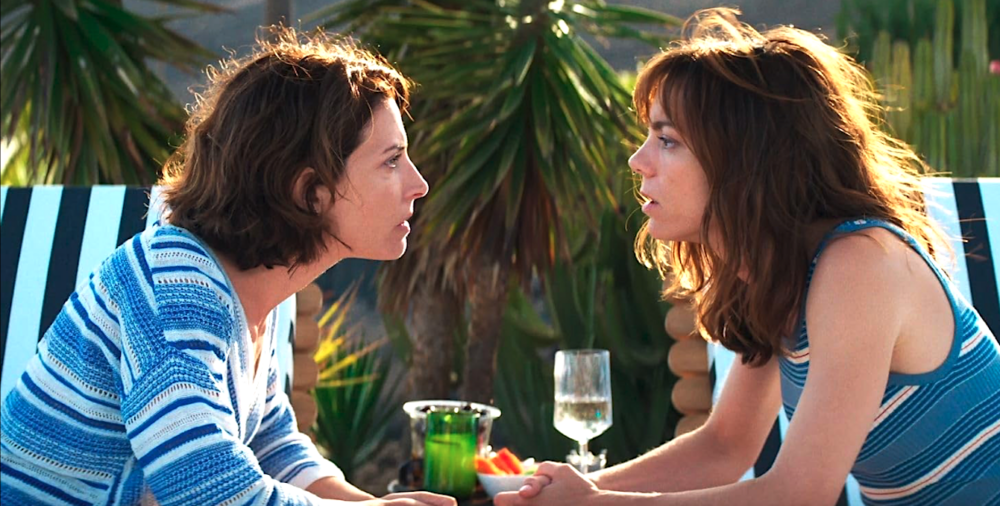
The entire action of the film seems to be projected from the complex relationship of Raul with his friend and producing partner Mónica (Aitana Sánchez-Gijón), who is leaving him at a difficult time for a three-month sabbatical to be with her friend Elena whose son is desperately ill. Mónica is furious with Raúl for effectively fictionalizing this last situation in his script, an eruption of rage which feels almost dreamlike in its unreality.
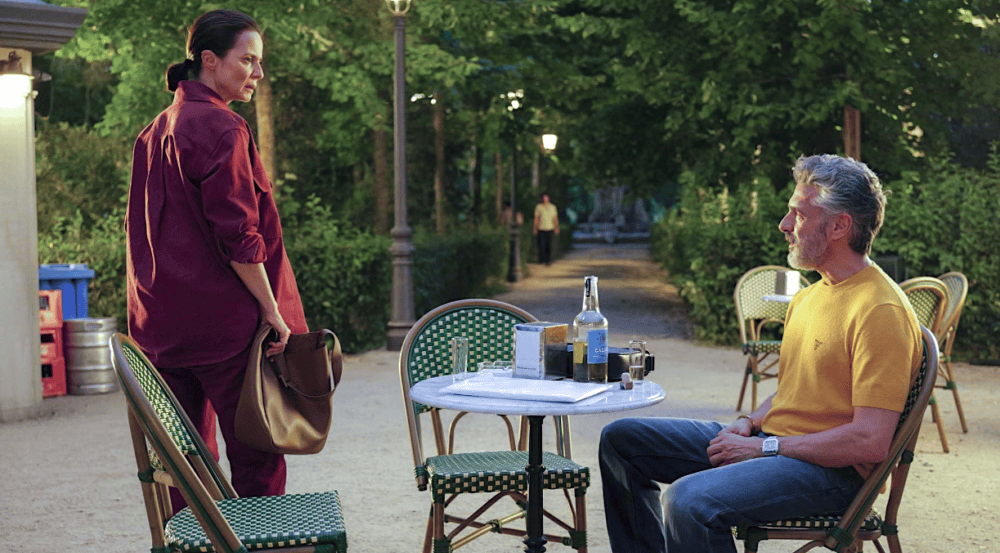
Raúl has to eventually face the truth about himself as an artist and his understanding of friendship. Elsa is not based on him; he, Raúl, is not the center of things. In fact, Elsa is his friend and ally Mónica, whom he has been taking for granted. That is the real parallel and it is Mónica’s feelings and Mónica’s identity who should be the central inspiration of his script and indeed the central point of his life right now. This is the enlightenment which he arguably approaches when he erases “The End” on his screenplay and begins adding to the first draft, as Elsa appears to be coming to terms with the loss of her mother.