

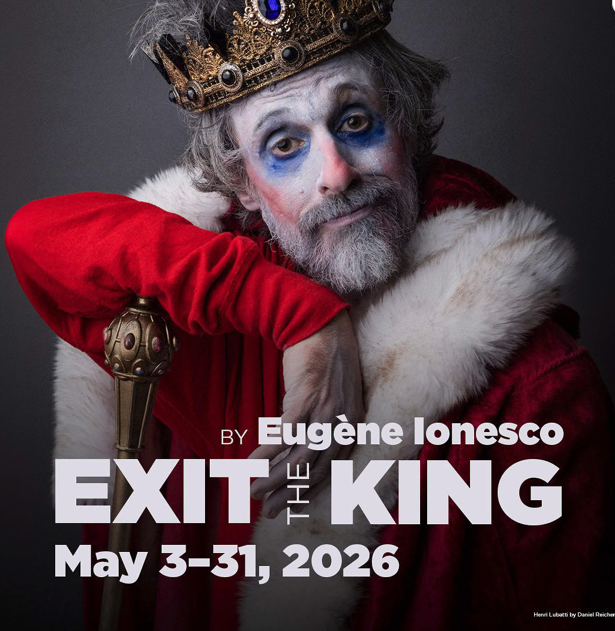
Currently on stage at A Noise Within Theater in Pasadena is a production of Eugène Ionesco’s Exit the King,a darkly comic piece representative of the Theatre of the Absurd. The tale focuses on King Berenger’s last day on Earth, as he struggles to exit this earthly existence in a wildly funny meditation on mortality. Translated by Donald Watson and directed brilliantly by Michael Michetti, this 90-minute production offers an interesting perspective on mortality and ego, as the 400-year-old monarch King Berenger the First refuses to face his inevitable death and the collapse of his kingdom. Romanian-French playwright Eugène Ionesco wrote Exit the King originally in French as Le Roi se meurt in 1962 and it resonates powerfully with themes appropriate for the time in which we are now living with aging world leaders on the edge of dementia.
Rising to prominence with his “anti-plays” such as The Bald Soprano and The Lesson, Ionesco used surreal humor, illogical dialogue and bizarre situations to explore the absurdity of the human condition and the fragility of communication. Much of his work wrestles with themes of loneliness, mortality and the search for meaning. Ionesco’s blend of comic irony and existential dread pervades most of his works. Unsettling and exhilarating, Exit the King is an allegory, a dark comedy and a surprisingly life-affirming work. Play director Michetti shared this thought: “I love this play’s cheeky, quirky dark humor, and that the thing it appears to be at the beginning is not what it reveals itself to be by the end.”
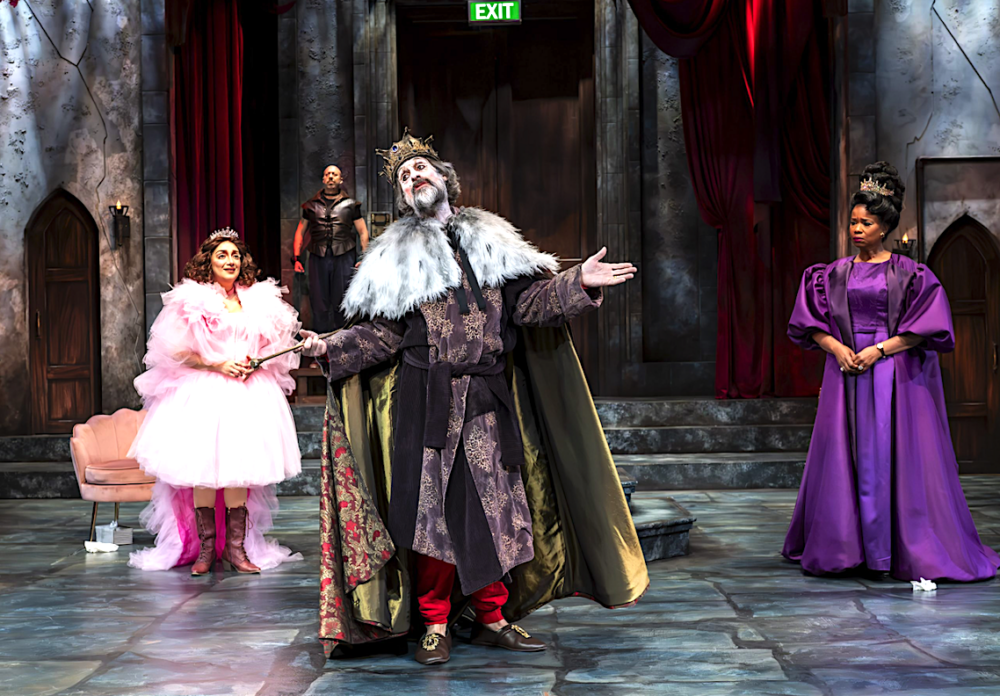
With a spare throne room centered around King Berenger’s royal dais, the king arrives as announced by town crier – stumbling in unremarkably and finally with much assistance from his few surviving subjects lands on his throne after his legs seem to fail him. His doctor has confirmed by the King will die within 90 minutes. King Berenger refuses to accept it. As the king stubbornly denies the inevitable, his crumbling kingdom is held together by an eccentric court: his formidable first wife, his devoted second wife, and a band of increasingly bewildered attendants.
In a physically demanding role of King Berenger, Henri Lubatti provides the portrait of an old man in serious decline. Having ruled with absolute power for years that seem centuries, he refuses to believe that the rules of death apply to him. His formidable first wife, Queen Marguerite (played superbly by Joy DeMichelle), is quite aware of the collapse of Berenger’s Kingdom. As the king clings to power, his kingdom physically disintegrates, with borders shrinking, seasons changing, and his army falling. Spring only lasts a day and the borders of the Kingdom have been reduced to the walls of the Castle itself. There are no children left and those who are 40 suddenly seem 90.

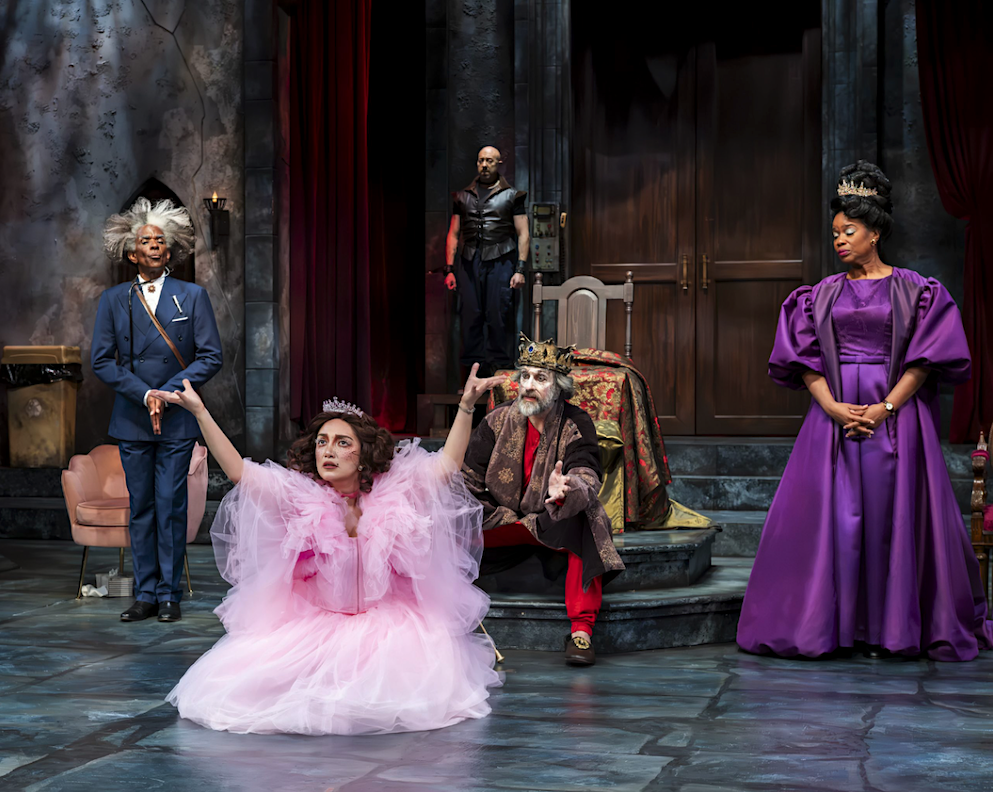
In “Exit the King, the solipsistic and belligerent King Berenger the First was apparently at one point able to command nature and force others to obey his will. According to his first wife Queen Marguerite, he is now over four hundred years old. He is informed early in the play by his strange little house Doctor (Ralph Cole Jr.) that he is dying, and the kingdom is likewise crumbling around him. He has lost the power to control his surroundings and is slowly losing his physical capabilities as well. Through much of the play, he is in denial of his death and refuses to give up power. Berenger’s first wife, Marguerite, along with the Doctor, tries to make Berenger face the reality of his impending death. Berenger’s second wife, Marie (Erika Soto), sympathetically attempts to keep Berenger from the pain of knowing his death is imminent. Meanwhile the Nurse Juliette (KT Vogt) (attempts to meet all the demands of the King as he rants and rails about trivial things. She is a most humorous character who reminds the King that she keeps the whole operation of the Castle functioning as Housekeeper, Cook, Dishwasher, and Nurse.
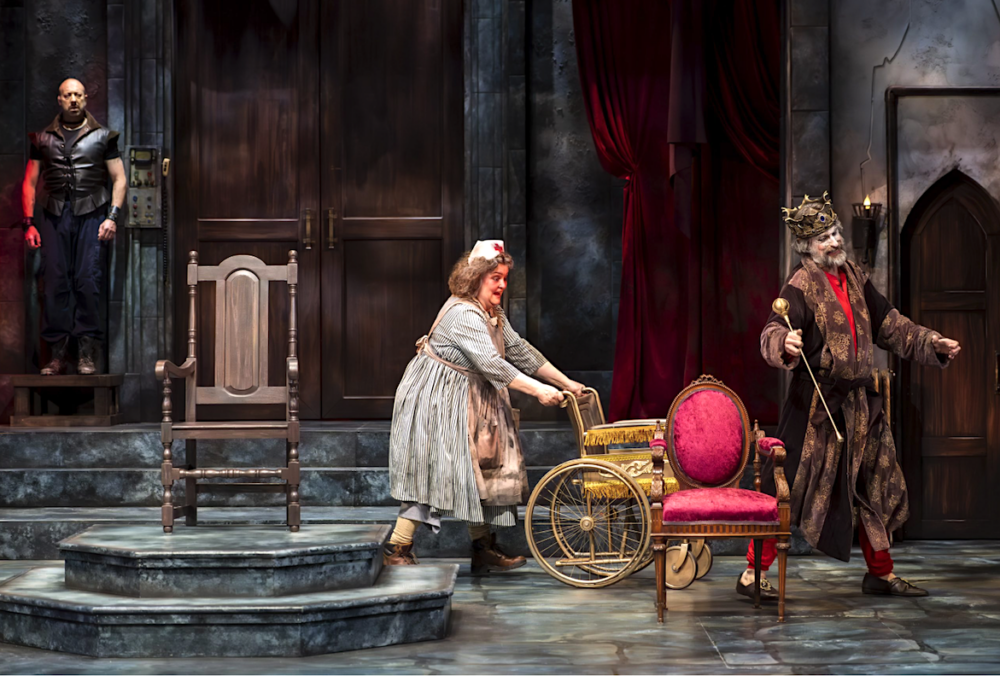
After fighting to assert his strength and virility, King Berenger slowly discovers that his commands do not produce the results he used to expect from royal pronouncements. Queen Marie, the second wife who is young and flighty, discovers that she cannot move to embrace the king when he beckons her to approach him. She finds her body frozen in place. However, the formidable first wife, Queen Marguerite with her still queenly airs, is the realist who know the king is able to die and she still maintains a certain power over the others with her commands.
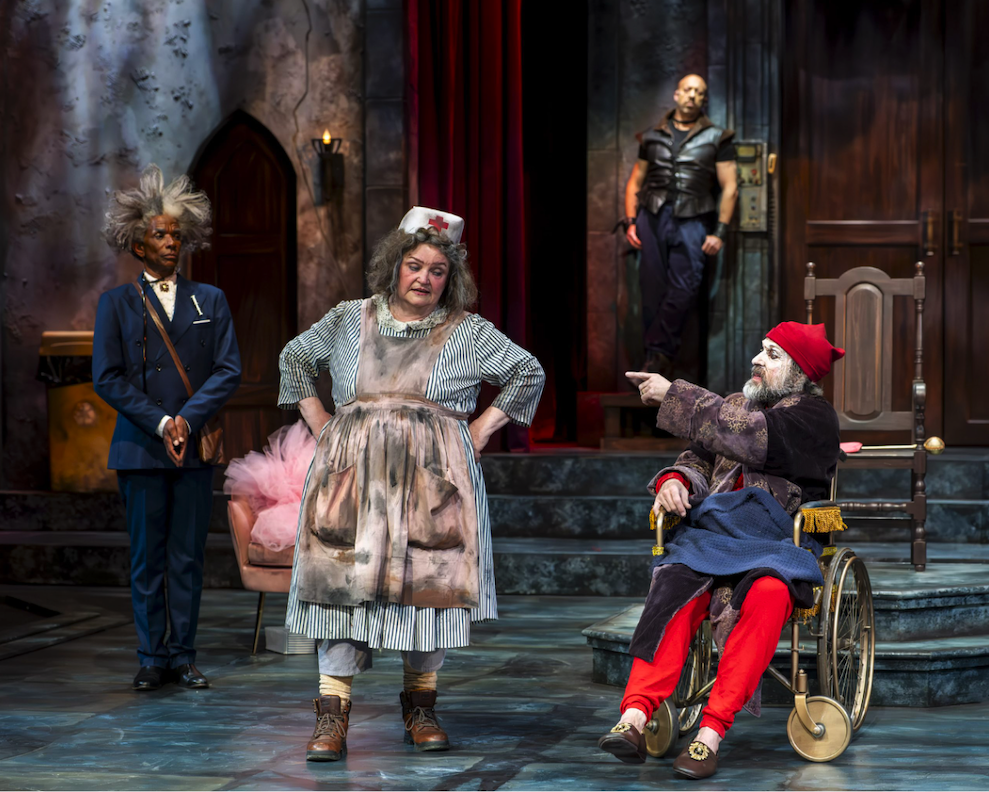
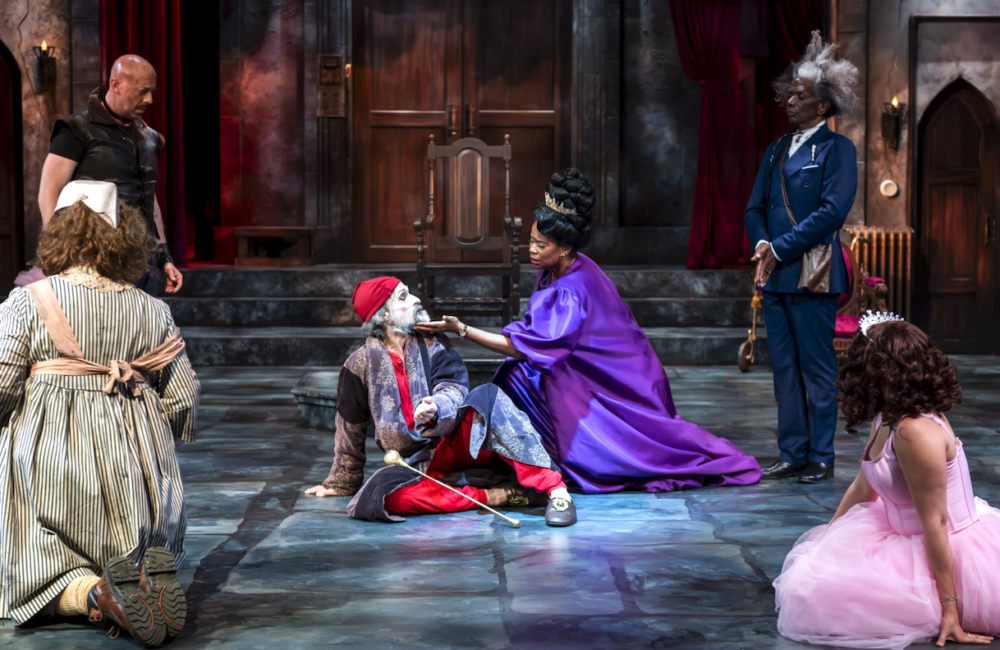
The king lapses into rather silly sentimentality and eventually accepts that he is going to die. The Doctor and Queen Marguerite have been tracking time and know the end is near. Hearing Marguerite’s judgment of the impending event, the town crier (Lynn Robert Berg) rushes to announce to the world outside the castle: “The King is dead.” Marguerite quickly shuts him off by pulling the plug on his loud speaker. His usual announcement: “Long Live the King” eventually is no longer heard, as Queen Marguerite silences his voice. As the devoted Queen Marie ceases to have any impact on the King’s health, her sad attempts to rekindle a sense of desire in him completely fail. The Nurse eventually forces the King into a wheelchair with assistance from the others.
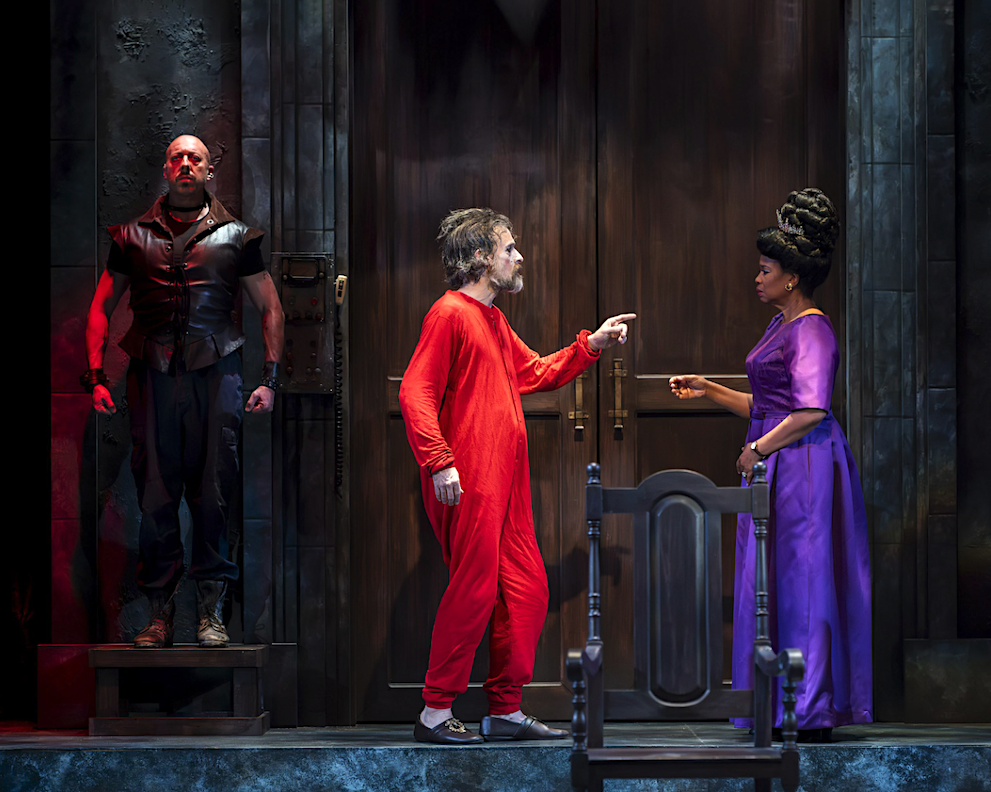
Queen Marguerite removes his crown and sceptre, saying that he has no more need of them. Without his symbols of power and authority, King Berenger becomes just an old man on his way to a grave. His language becomes increasingly incoherent and Queen Marguerite takes charge of him in his ultimate decline. She speaks for him, as he becomes speechless. The characters disappear one by one, eventually leaving the king, now speechless, alone with Marguerite. It is she who prepares him for the end. There is a kind of apotheosis, as Marguerite explains the process of leaving the world behind: She forces the King to let go of all the burdens he was bearing and makes him stands tall in only his red long underwear as the doors into some nebulous future open. Marguerite and then the king disappear into darkness as the play ends.
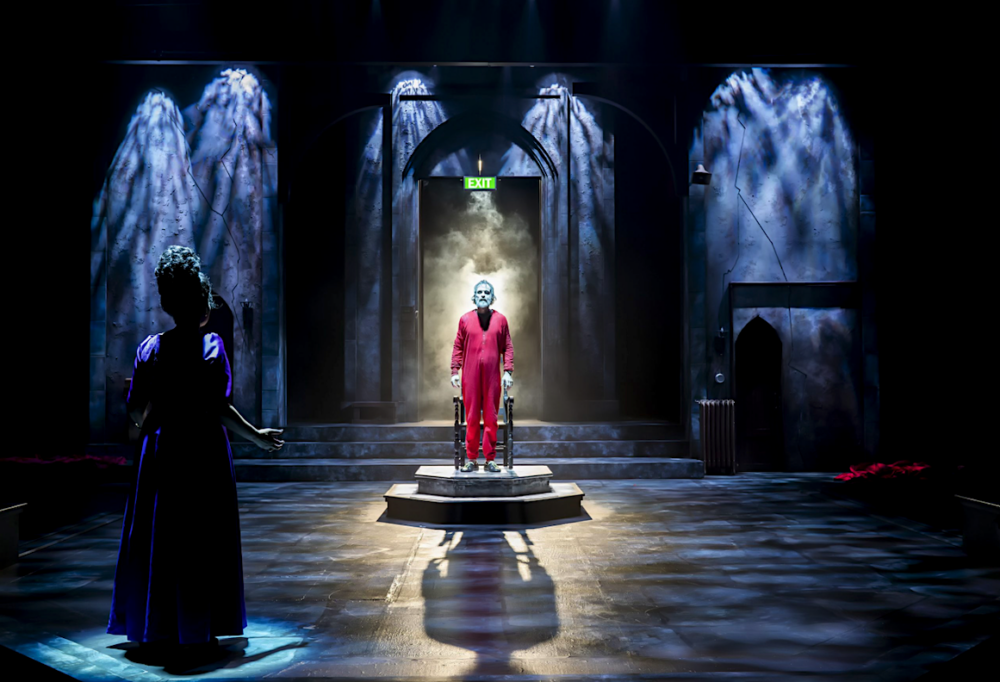
Ionesco one said that Exit the King was written to be a kind of lesson in death: “I told myself that one could learn to die, that I could learn to die, that one can also help other people to die. This seems to me to be the most important thing we can do, since we’re all of us dying men who refuse to die. This play is an attempt at an apprenticeship in dying.” What is apparent in the play is the protagonist’s surrender to the interiority of his consciousness. He can only talk about himself; the others no longer seem to matter. As the external world slips away, all King Berenger can think about is his own mortality.
In watching Exit the King, I found myself immersed in the unstated parallels to our current issues of leadership in the United States with an aged leader who cannot deal with his waning health and power. In our media-saturated world, it is hard to avoid noticing similarities but also way those few still around King Berenger attempt to humor his whim as others try to spell out the very human “exit” of the King from the stage of life. This fine production of a very important piece of absurdist theatre needs to be seen and appreciated at an antidote for our time.
Exit the King plays May 3 through May 31 at A Noise Within in Pasadena. Performances are Sunday at 2 p.m. / Wednesday, Thursday and Friday at 7:30 p.m.; Thursdays, Fridays and Saturdays at 7: 30 p.m. / Saturdays and Sundays at 2 p.m. Location: A Noise Within, 3352 E. Foothill Blvd., Pasadena 91107. Tickets start at $41.75; student tickets at $20. Box Office: www.anoisewithin.org or (626) 356-3100.


