Singaporean filmmaker Vivian Ip brings a deeply personal story of identity, family and finding yourself far from home to the Hollywood Queer Shorts Film Festival
Hollywood, CA (The Hollywood Times) 9/18/26 – There are coming-of-age films that announce every emotional revelation with a flourish, and then there are films like Bobo In Bliss, which understand that some of the most important discoveries happen quietly.
Writer-director Vivian Ip’s short film is gentle, wistful and deeply observant, exploring what happens when a young person begins discovering who she is while living far from the expectations, familiarity and watchful eyes of home.
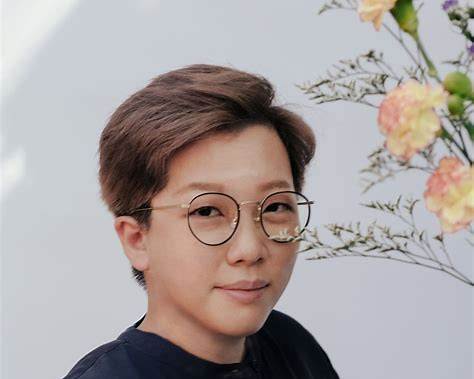
Ip, a Singaporean filmmaker based in Los Angeles, told The Hollywood Times that she is especially drawn to Asian third-culture stories and characters discovering themselves while confronting difficult circumstances.
That sensibility is at the heart of Bobo In Bliss.
Rather than treating identity as something that can be neatly resolved in a single dramatic moment, Ip allows her protagonist to inhabit the uncertainty. She is a teenager finding herself in circumstances very different from those in which she was raised, while also confronting the question of how much of her identity she feels comfortable sharing with her family.
Ip describes the film herself as “gentle and melancholic,” and those words capture its emotional character beautifully. There is tenderness here, but also the quiet loneliness that can accompany realizing that becoming yourself may create distance between who you are and who others expect you to be.
Click below for our exclusive interview:
The intimacy of the film makes sense when Ip explains its origins.
Asked where the idea came from, she resisted pointing to one specific autobiographical incident. Instead, she said different pieces of the story were drawn from experiences throughout her life, her teenage years at boarding school, attending university overseas and her relationship with her family.
All of those memories, she explained, found their way into the film “to varying degrees.”
That combination gives Bobo In Bliss the feeling of remembered experience rather than manufactured drama. It is less concerned with delivering a grand declaration than with capturing the emotional texture of being young, geographically displaced and uncertain about how the person you are becoming fits with the world you came from.
For queer audiences in particular, that conflict can be instantly recognizable: the growing understanding of oneself coupled with the harder question of whether, and how, that self can be brought home.
One of Ip’s greatest challenges was casting.
Making the film in Los Angeles while trying to populate it authentically with Singaporean characters proved considerably more difficult than she anticipated.
“Finding a Singaporean cast is extremely tough,” Ip said, explaining that preserving the authenticity of the accents and cultural backgrounds mattered tremendously to her.
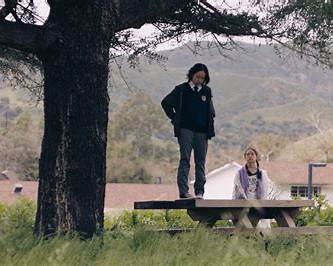
The search became what she called a “painstakingly long but rewarding process,” ultimately resulting in four actors whom she felt genuinely embodied their roles and brought authenticity to the film.
Los Angeles itself became more than simply a convenient filming location.
The decision to shoot away from Singapore reinforced the story. Ip wanted her protagonist to be a “fish out of water,” physically separated from her family and upbringing while discovering who she might become in a different environment.
That geographical displacement works naturally with the movie’s larger ideas. Sometimes distance from home does not simply change where we live. It changes what we are able to see about ourselves.
What makes Bobo In Bliss particularly affecting is its restraint.
Ip is interested in the complicated territory between cultures, generations, family expectations and individual identity, but she does not need to turn those subjects into speeches. Her approach allows vulnerability to do much of the storytelling.
The result is a short film with a surprisingly long emotional afterlife.
 Bobo In Bliss is screening as part of the Special and General Relativity program at the Hollywood Queer Shorts Film Festival, where its intimate story feels particularly well placed among films expanding the range of queer experiences represented on screen.
Ip is already moving on to another story. During our conversation, she was actually sitting in her editor’s workspace as her next film was being exported. Titled A Story She Told, she described it as a “spiritual successor” to Bobo In Bliss and said it will next screen at a showcase at NewFest.
If Bobo In Bliss is an indication of the filmmaker Vivian Ip is becoming, there is good reason to keep watching.
Her strength is not simply in telling queer or Asian stories. It is in recognizing the small, often unspoken emotional moments within them — the distance between home and independence, between what family understands and what remains unsaid, and between the person we were expected to become and the person we quietly discover ourselves to be.
In Bobo In Bliss, that space is where the film finds its greatest beauty.
By Valerie Milano
The Hollywood Times