By Sarah A. Spitz
Beverly Hills, CA (The Hollywood Times) 4/10/26
It is 2008 in a classroom in Iran. Five people — a teacher and four adult students — are practicing and perfecting their English language skills, so that the students can pass the TOEFL, the Test of English as a Foreign Language. There are various reasons why each of these people have been driven to learn a language that could alter their identities.
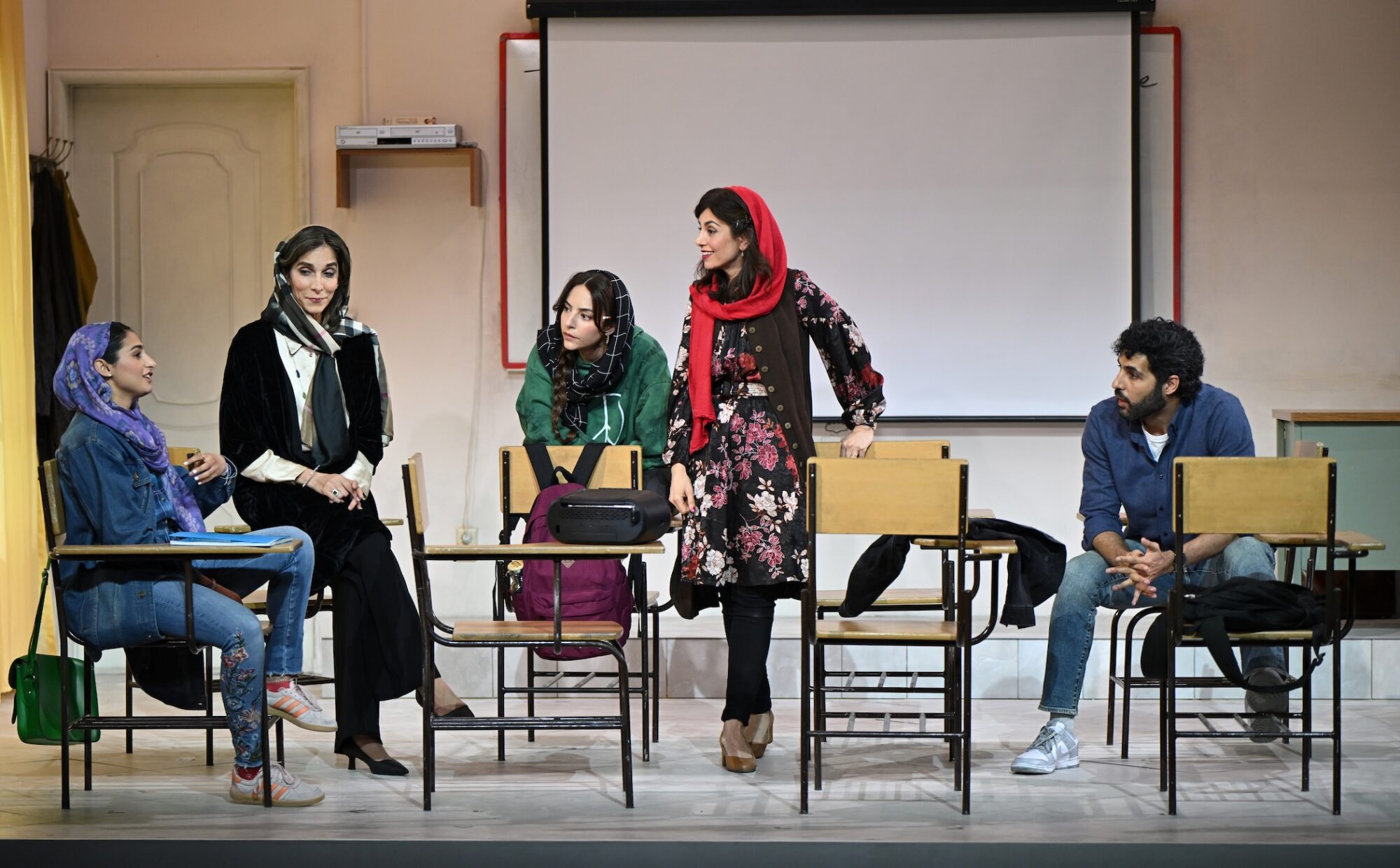
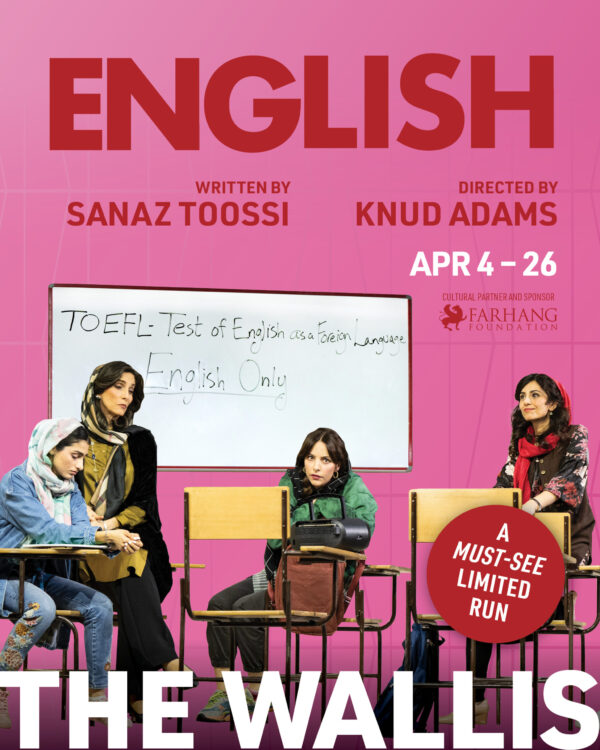
That is the premise of English, the Pulitzer Prize-winning play by Sanaz Toossi, now arriving in Beverly Hills following its acclaimed Broadway run. Directed by Knud Adams, the Atlantic Theater Company and Roundabout Theatre Company production plays a strictly limited engagement — onstage now through April 26, 2026 — at the Bram Goldsmith Theater at the Wallis Annenberg Center for the Performing Arts.
Since its Off-Broadway debut in 2022 and Broadway run in 2025, English has become one of the most celebrated plays of the decade, winning the 2023 Pulitzer Prize for Drama and earning five Tony Award nominations. Its power lies in its intimacy: a single classroom, a handful of lives, and the quiet, often comedic but poignant effort to learn how to communicate in a new language, and what that communication means.
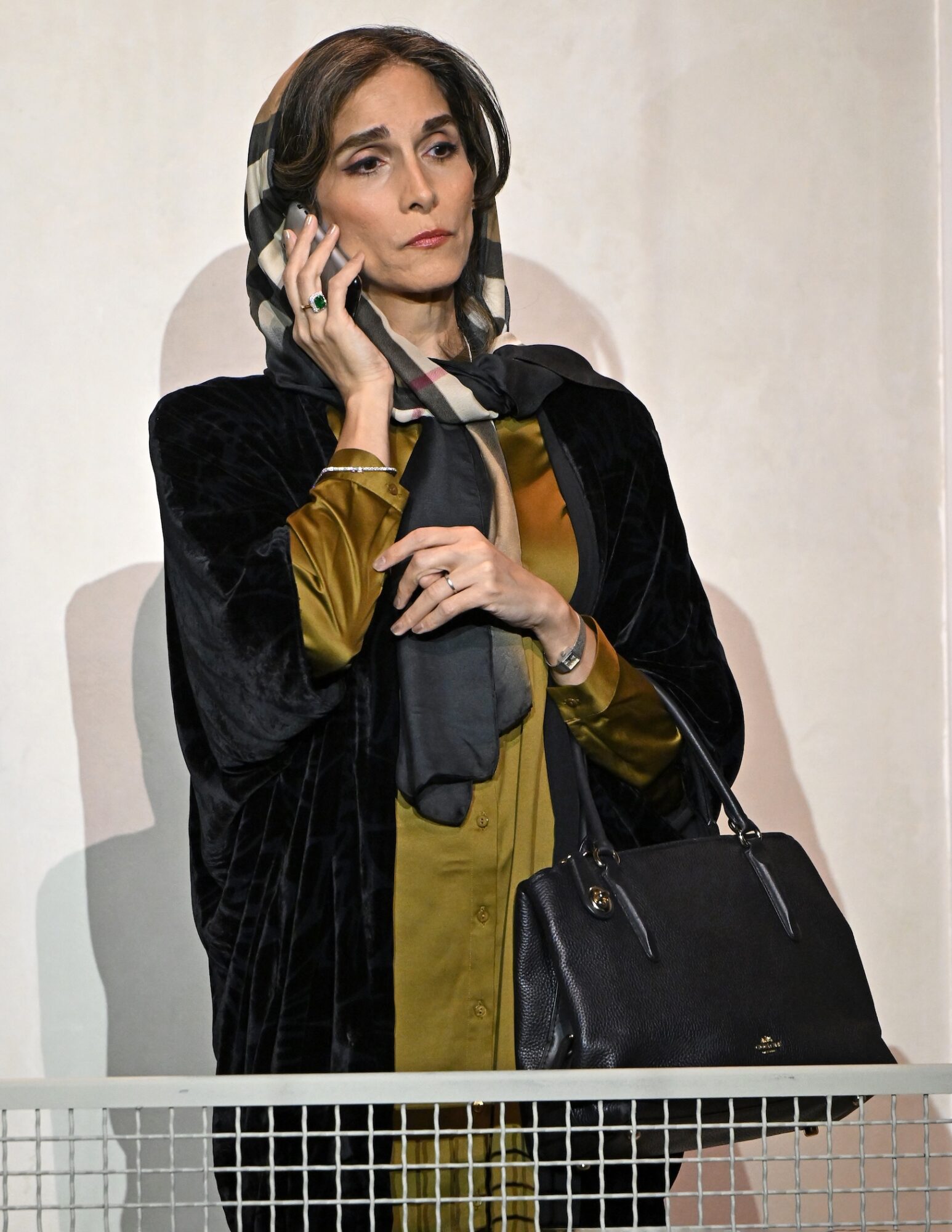
Trailblazing Iranian trans actress, Pooya Mohseni, plays Roya — the proud mother of a son now living in Canada. Roya dreams of living there with his family but to do so, she must learn English. It’s a heart-wrenching role.
Although Toossi wrote the play in response to Trump’s 2017 Muslim ban, today’s events make this an even more poignant time to stage it.
“There are moments that it feels insane,” Pooya says. “We’re doing a play, and the world is kind of up in arms, set to burn itself to smithereens. So maybe this is exactly the right moment to keep telling a story about people — their dreams, their heartaches, their joy,” she says. “When the universe is trying to erase your humanity, is that not the moment to try to yell louder about the humanity that exists?”
Her character, Roya, is not a symbol. She is a woman with an urgent desire: to reunite with her family. The characters represent a spectrum of lives shaped by age, class, and circumstance. They hope that one day, English will make them whole — but it might be splitting each of them in half.
There is a teenage girl graduating high school and on the cusp of adulthood. A pre-med student in her twenties who needs to pass the test to become a teaching assistant in Australia. A man in his 30s is trying to get a green card. Roya, the grandmother, is in her mid-50s. And their teacher, Marjan, who has already achieved fluency through living abroad— and understands what it costs. She has returned to live in Iran.
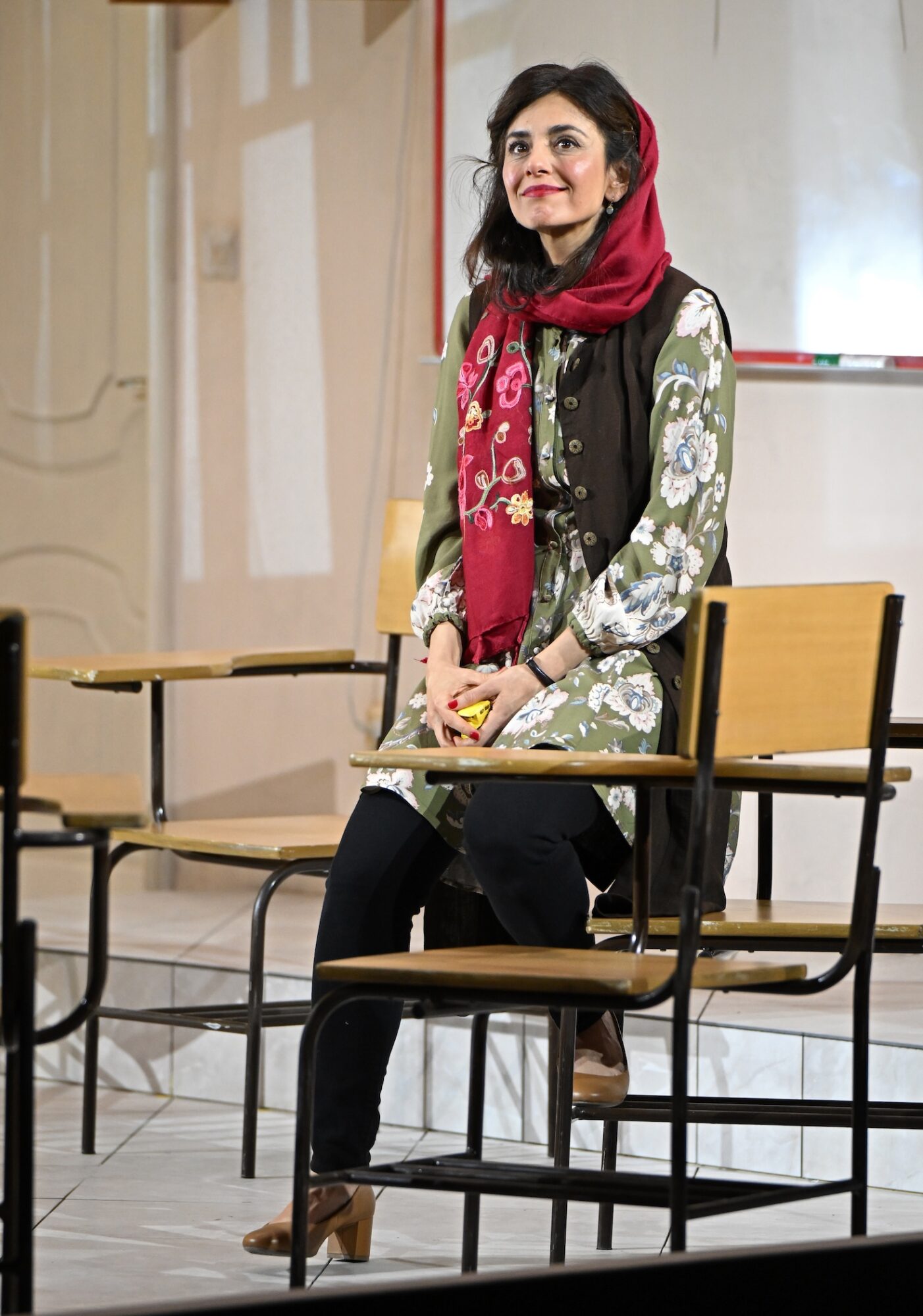
“They represent different lives, different places in society,” Mohseni explains. “But they’re not monoliths. There could be ten more variations of Iranian culture, existence, privilege, ambition.”
Language acquisition studies have demonstrated that humans are hard-wired for language, but that they lose their innate ability to learn a new one after the age of 11. For these characters, learning English is bigger than learning to speak without an accent. Farsi is a more poetic language than English. “It’s one thing to learn words,” Mohseni says. “It’s another to embody the rhythm of a language that isn’t yours.”
Mohseni was raised in Tehran by a university professor mother who taught English, so she began absorbing the language at a young age. “I knew English words before I knew what they meant,” she says. “It was just around me.”
That early exposure made fluency possible. But for the characters in English, who begin learning in adulthood, the struggle is steeper — and more emotionally fraught.
Roya’s son in Canada has told her he wants to raise his daughter to speak English only. To be present in her grandchild’s life, she must learn a language that will never feel like home. Pooya herself had a loving relationship with her grandparents. “I can just imagine how devastating it would be,” she says, “to not be able to express your love and affection for a grandchild in your own language.”
What’s lost is not just vocabulary, but immediacy. “You can’t be in the moment,” she says. “You always have to think and translate. You can’t be your full self.” She pauses, then reaches for a parallel from her own life as the first Iranian trans actor on Broadway.
“It’s like being a queer person around people who don’t know who you truly are,” she says. “You’re always at an arm’s length.”
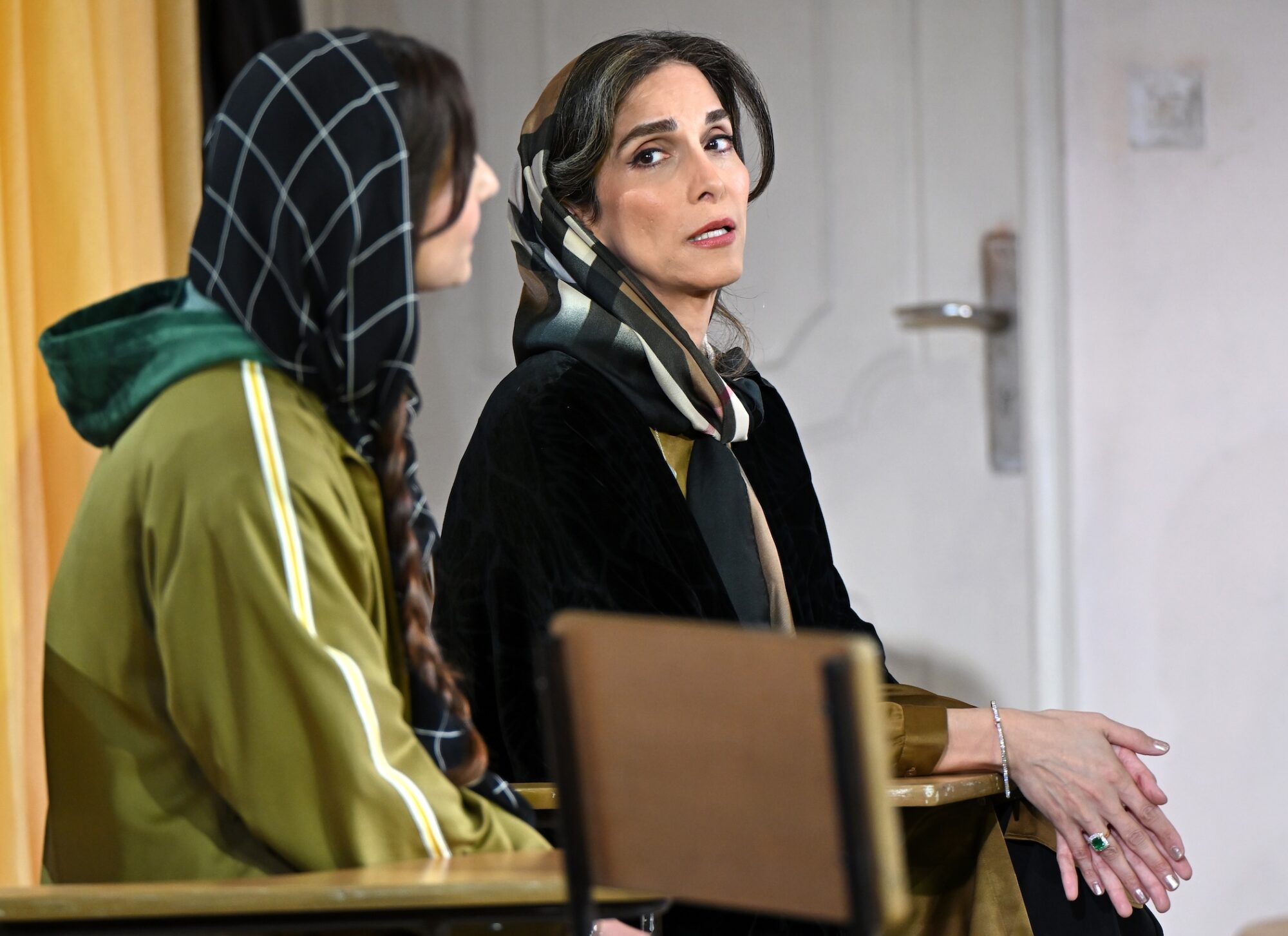
That tension — between who you are and who you must become — runs through English. It also runs through Mohseni’s life. She left Iran at 18, knowing that as a trans person, her future depended on it.
“To have a life where I had autonomy, where I could be myself, I had to leave,” she says.
What followed was a disorienting convergence of firsts: a new country, college, physical and hormonal transitioning, and a political asylum process — all at once.
“How did I do it?” she says now, nearly 30 years later. “It’s terrifying to think about.”
Leaving meant opportunity. It also meant loss. “I had to leave my friends, my environment, the life that I had,” she says. “You put blinders on and you move forward. But that also means you leave things behind.”
That experience — of negotiating identity, belonging, and sacrifice — shapes her portrayal of Roya in profound ways. “Roya is caught between how much of her culture and language she can keep,” Mohseni says, “and what she has to give up to have a relationship with her grandchild.”
For Mohseni, English is also about preservation — of memory, of culture, of lives that risk being flattened or forgotten.
“I want to honor the generation of my grandparents,” she says. “Their stories were rich, and so much of that got washed away by history and political upheaval.”
Members of Mohseni’s extended family still live in Iran. In recent months, as violence has escalated, communication has been sporadic. Some relatives have relocated to safer regions. Others remain in places she knows intimately — streets she walked as a child, neighborhoods now damaged or destroyed.
“I watched home videos of my brother riding his bicycle on those streets. When I see them getting pummeled, it feels like somebody is taking a little ice pick to my soul,” she says. Her voice catches. “It doesn’t even matter if I have family there,” she adds. “I have my heart there.”
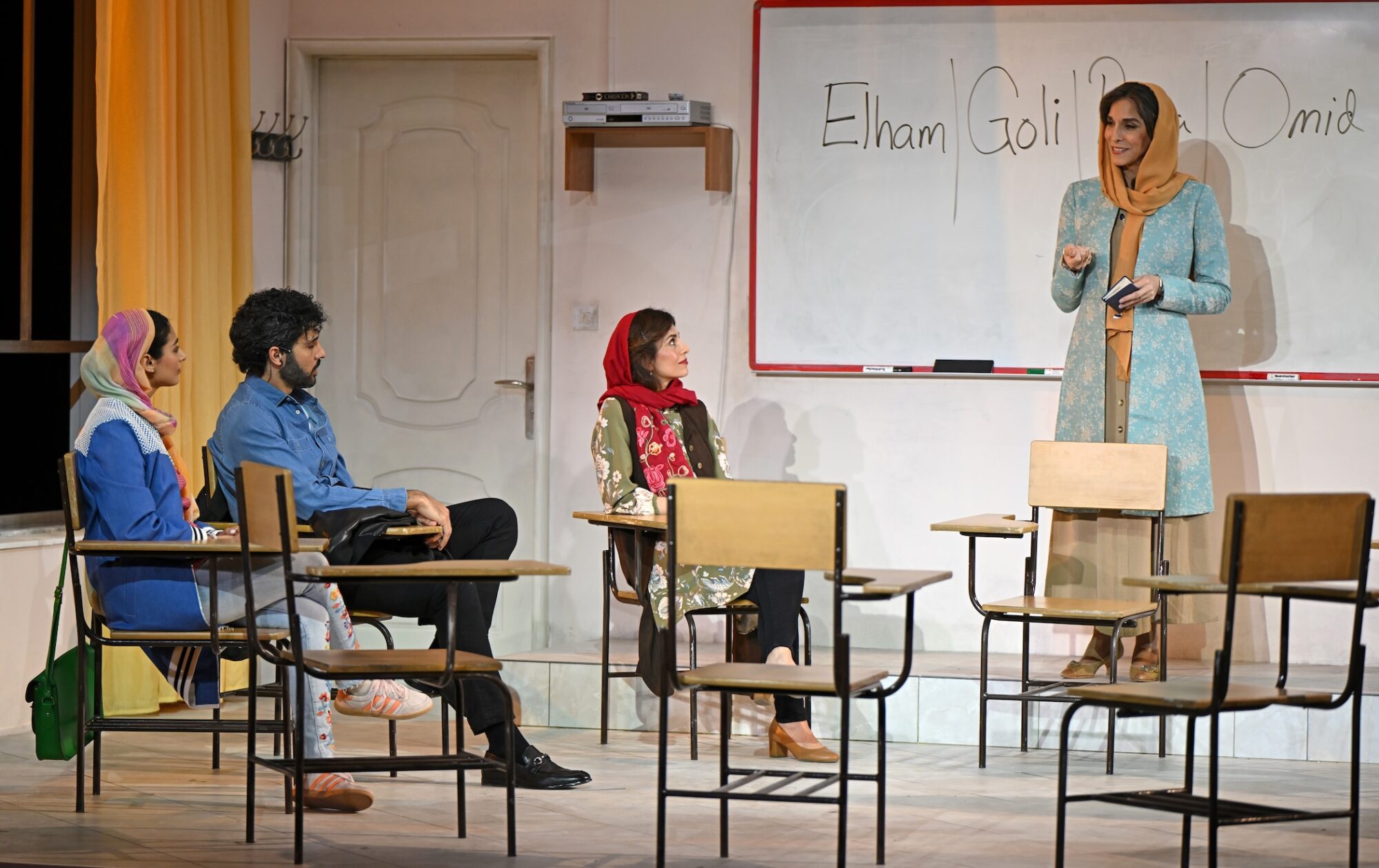
In a world that asks — Who are you? Where are you from? What do you believe? — English offers the characters the chance to re-examine their relationship to their culture measured against their potential futures. It asks audiences to sit with its characters. To laugh with them. To feel the small humiliations and triumphs of learning. To recognize the gap between what we mean and what we can say.
For Mohseni, who has performed the play more than 200 times across multiple productions, that impact never diminishes.
“The play lingers,” she says. “People laugh, and then there are these deeper moments that make them think about themselves, or how they relate to the world.”
In Los Angeles — home to one of the largest Iranian diasporas in the world — that resonance feels especially close to home.
While the theatrical run is short, the story it tells — about language, love and the stubborn, necessary act of being understood — feels enduring. It is a play not to be missed.