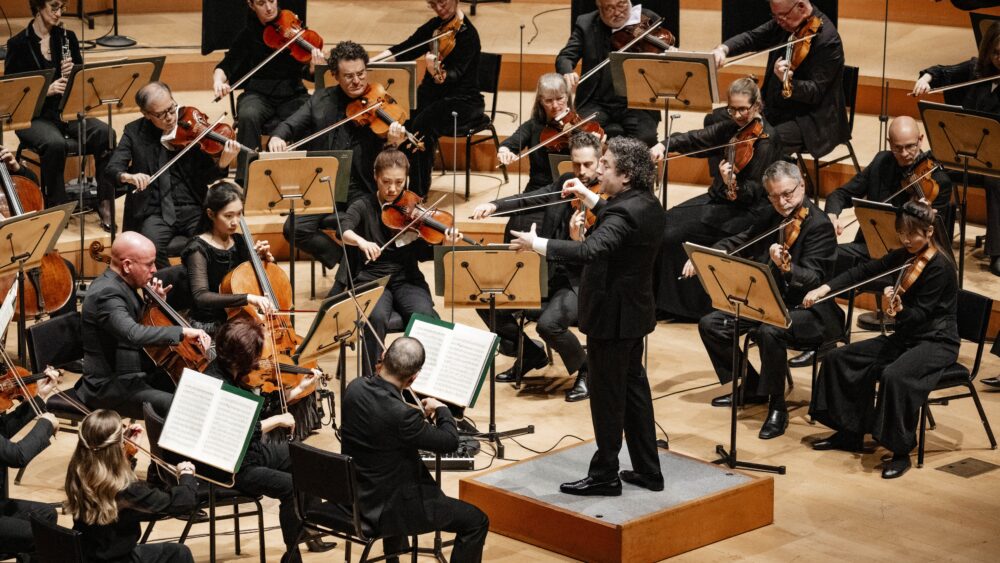
As Gustavo Dudamel approaches the final curtain of his transformative tenure with the Los Angeles Philharmonic, his programming has begun to feel like a summation of everything he has championed during his time in Los Angeles. These concerts are not simply performances — they are statements about the orchestra’s extraordinary range.
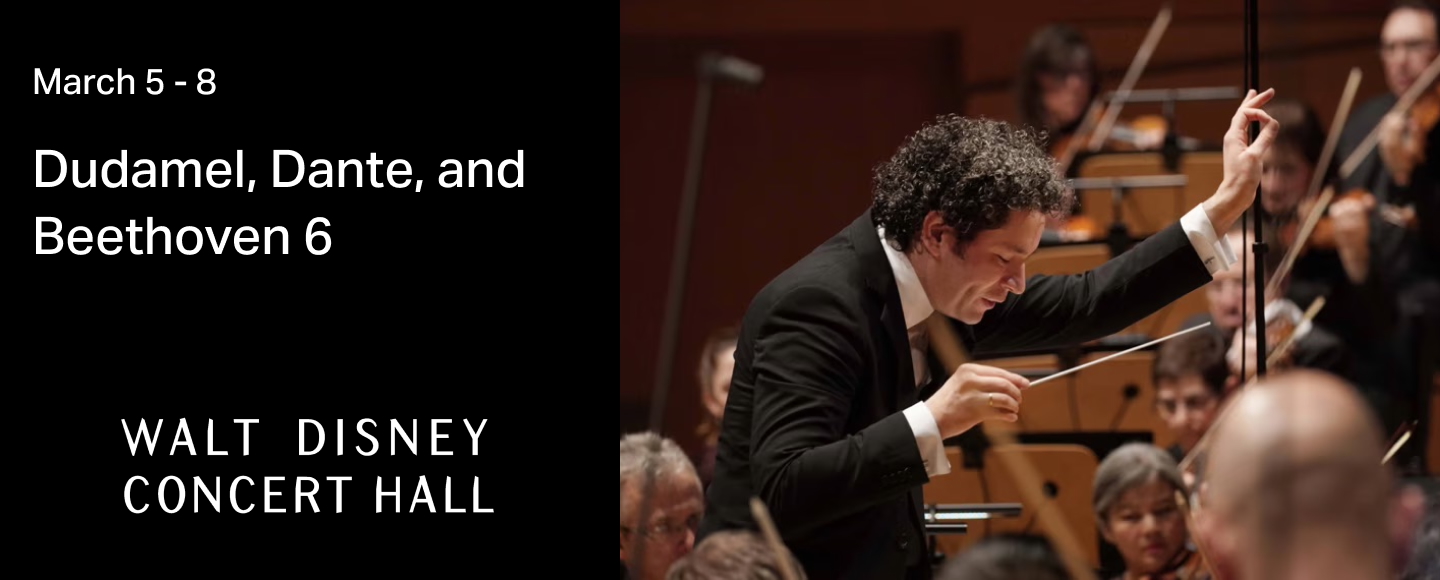
At Walt Disney Concert Hall, Dudamel delivered one of his most striking juxtapositions yet: the serene, organic expansiveness of Beethoven’s Symphony No. 6, the “Pastoral,” paired with the jagged torment of Thomas Adès’ Inferno.
The result was electrifying. Within a single evening, the orchestra traveled from the peaceful indifference of nature to the desperate cries of the damned.
The program began with Beethoven’s Pastoral, and Dudamel allowed the music to breathe with luminous patience. Rather than presenting the symphony as a charming countryside narrative, he treated it as something larger and more elemental.
Under his baton, the LA Phil did not merely depict nature — they seemed to inhabit the sweep of the composition. The winds murmured with birdsong that felt spontaneous rather than decorative, while the strings moved with the gentle inevitability of flowing water. Even the famous storm sequence emerged less as theatrical drama than as a natural force. Here, thunder rolled across distant hills before giving way to the quiet calm that follows.
In this interpretation, humanity is not the protagonist, but a mere witness to the vast, Arcadian sweep of the seasons and the wind. After the intermission, that sense of equilibrium vanished. No, it was more than a vanishing. After intermission, that sense of equilibrium didn’t just vanish — it was incinerated in the fires of the Inferno.