
By Tom Wright
West Hollywood, CA (The Hollywood Times) 8/3/26 – As local events highlight extraordinary community leaders, West Hollywood’s own resident Sarah stands at the singular intersection of groundbreaking medical technology, global culture, and landmark civil advocacy.
Long before neural interfaces entered mainstream public debate, Sarah was on the front lines developing chip implants designed to bypass spinal cord damage in paralyzed individuals and manage the debilitating symptoms of Parkinson’s disease. Working side-by-side with prominent tech executives, her engineering work helped establish key foundations in modern bio-medical technology.
 Yet, her journey in deep tech took a critical turn when she faced corporate discrimination. Refusing to step down or be silenced, Sarah filed a lawsuit against the corporation and won. Her legal victory set a crucial precedent for trans representation, proving that technical expertise and professional standing must be protected against gender-identity discrimination without compromise.
Beyond the laboratory, Sarah’s perspective is shaped by a life spent exploring the globe. A seasoned world traveler who has circled the globe multiple times, her favorite destination remains Japan. Over decades of travel, she has curated a striking collection of traditional, large-format kimono wrappings, a vivid, elegant style that has become her signature visual trademark.
The Mind, the Machine, and the Ethics of Human Upgrade
Long before the internet gave language to the disconnects between mind and body, I was navigating a unique internal landscape. Beyond early questions of identity, I experienced a rare sensory-motor phenomenon where my limbs didn’t map to my internal neurological schema. Driven to understand this sensory-motor integration, I later collaborated with leading neuroscientists and the editorial team of the Diagnostic and Statistical Manual (DSM). Together, our research into how the brain constructs its internal sense of self validated theories I had developed through personal observation: the relationship between physical hardware and mental representation is fundamentally dynamic.
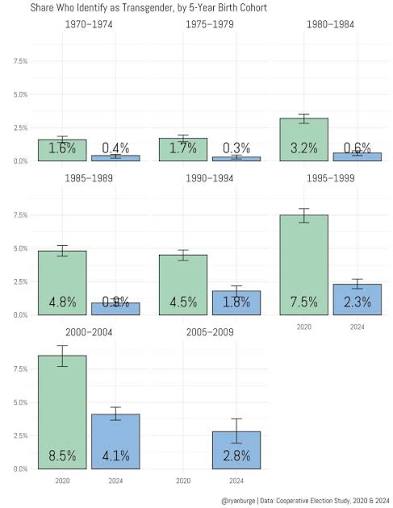
In 2024, that had dropped to 2.3%.
For those born between 2000 and 2004, the share went from 8.5% to 4.1% during the same time period.
Parallel to this inquiry was a lifetime in technical engineering. Coding and tinkering with computer hardware by age eight, I anticipated early on that physical limitations would eventually necessitate adaptive technology. Decades later, discovering Brain-Computer Interface (BCI) technology revealed the missing link. BCI represents a profound intersection between neuroscience and software architecture, offering transformative potential for individuals navigating severe physical disabilities.
Translating that potential into stable technology, however, requires rigorous engineering and absolute ethical responsibility. Emerging tech spaces are often volatile, and scaling core BCI architecture demands solving deep-seated system vulnerabilities rather than masking them.
Yet, as neural interfacing transitions from theoretical science to commercial enterprise, the primary risk moves from technical failure to systemic misuse. When powerful biological interfaces are developed under high-stakes corporate models, often backed by unchecked capital and ideological motives, the risk of exploitation far outweighs the promise of clinical rehabilitation.
Human autonomy depends on keeping neural architecture out of the hands of those who view neurotechnology merely as a tool for control or commercial leverage. Protecting the integrity of the mind requires holding the line on engineering ethics, ensuring that tools designed to restore human capability remain grounded in-patient protection rather than absolute power.