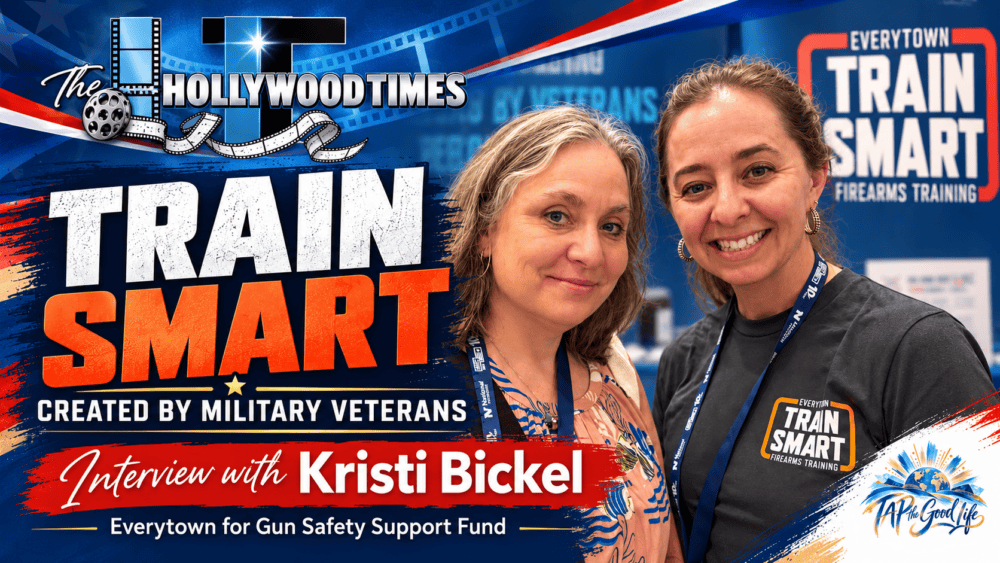
 At the Military Influencer Conference, I spoke with Kristi Bickel about Train SMART, a firearm education program created by military veterans and built around principles that will feel familiar to many who have served: repetition, discipline, responsibility, and accountability.
During my own military service, I qualified with a 9mm, and later, while working for the Marines, I had responsibility for an armory. I still remember that simply walking into the armory to oversee inventory could create a rush in my heart. It reminded me that comfort around weapons does not come from pretending they are ordinary objects. It comes from familiarity, repetition, and ongoing training that helps us handle them competently and responsibly. That is one of the things Train SMART appears to understand especially well.
The program was created by veterans to bring military-informed principles of firearm training and responsibility into civilian gun ownership. Their approach includes secure storage, universal firearm safety rules, situational awareness, de-escalation, suicide prevention, and marksmanship.
The training is also designed to meet people where they are. Participants do not have to own their own firearm; firearms can be provided for the training. The in-person experience progresses from instruction to range-based dry fire and then to live fire. The approximately eight-hour training is paced to the individual, giving participants time to build familiarity and competence step by step rather than moving through a one-size-fits-all experience.
That progression makes sense to me. Handling a firearm responsibly requires more than hearing the rules once. It requires practice, repetition, and enough familiarity for those rules to become part of how you move, think, and respond.
One of the more sensitive subjects included in the curriculum is suicide prevention. Understanding the relationship between firearm access and suicide risk is statistically sound, but it can still be difficult to discuss. Avoiding the subject does not reduce the risk. Talking about it, learning secure-storage practices, and understanding how access to a firearm can affect a moment of crisis are all part of responsible ownership.
What also stood out during my conversation with Bickel was the emphasis on who does the teaching. Train SMART is deliberate about selecting instructors, who are certified and undergo background checks. The organization looks for people with the right combination of firearm knowledge, instructional ability, judgment, and responsibility. That matters because knowing how to use a firearm and knowing how to teach someone else to use one safely are not the same skill.
According to Bickel, Train SMART’s current in-person training locations are in Salt Lake City, Utah, and Raleigh, North Carolina. The organization also offers online instruction, but expanding the in-person program will depend in part on identifying additional qualified instructors who can meet those standards.
**For people with substantial firearm experience, strong instructional skills, and an interest in teaching responsible gun ownership, that may create an opportunity to help the program grow into additional communities.**
For me, the larger takeaway is the importance of regular exposure, education, and best practices. Familiarity with a firearm matters. So does understanding secure storage, recognizing risk, and having the right trainers in place. These are instruments that require skill, respect, and preparation.
Talking about sensitive issues such as firearm-related suicide can be uncomfortable, but understanding the statistics, following best practices, and learning how to handle and secure weapons responsibly gives people more tools to make informed decisions.
Watch my interview with Kristi Bickel of Train SMART:
https://youtu.be/cUSQzXdRd0g
To discuss customized training options (EMail): hello@trainsmartgunsafety.org
Learn more about Train SMART and its courses:
https://trainsmartgunsafety.org/courses/