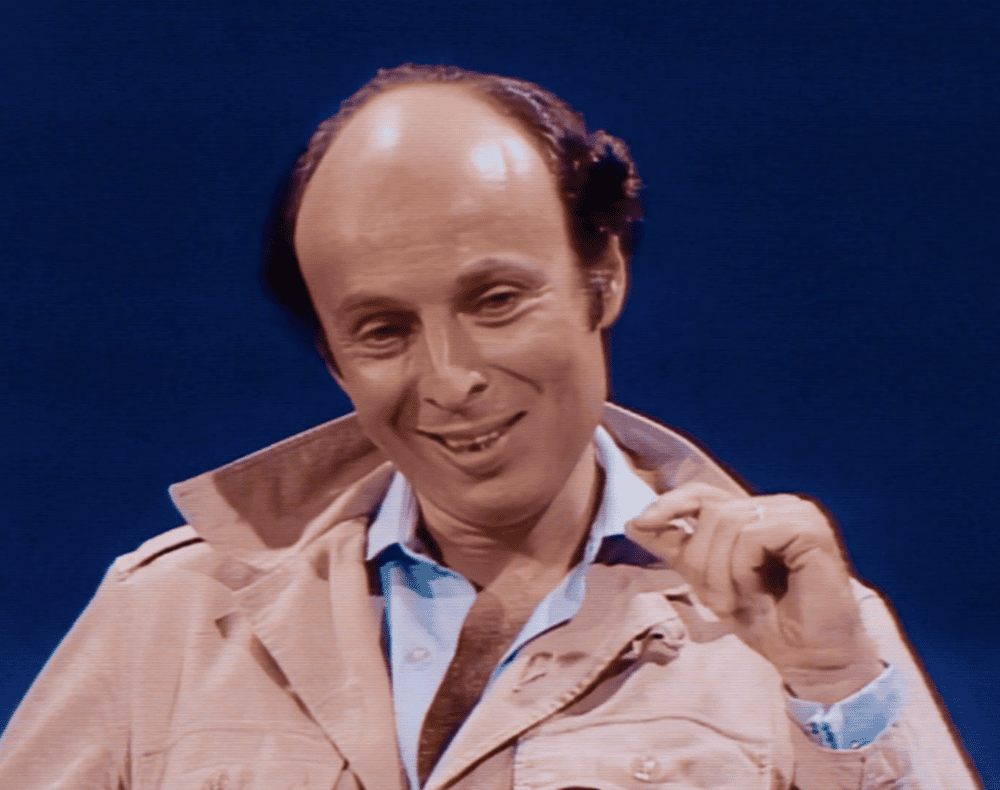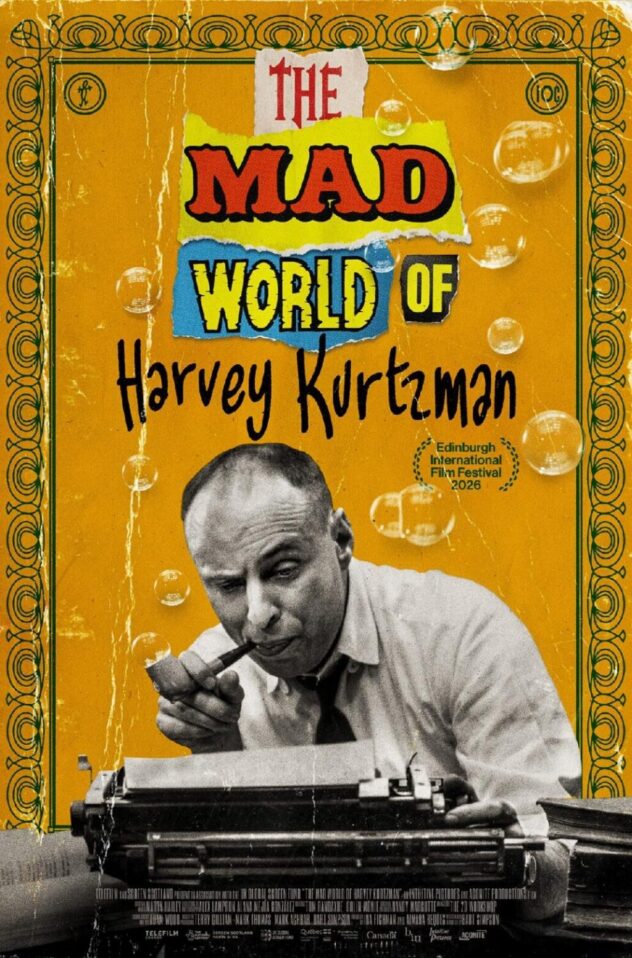
The title The Mad World of Harvey Kurtzman intrigued me because it offered an opportunity to discover the man behind cartoons that had lingered in my memory since childhood. My affinity for those early images, my Jewish faith and community, and the curiosity that first drew me toward journalism made me want to understand the autobiographical and cultural world from which they emerged. As a young girl, I could not have understood the intentions behind much of the humor. Some of the imagery seemed obscure, yet it remained vividly imprinted in my mind. Decades later, I wanted to connect those remembered illustrations with the life of the person who helped create them.
Written and directed by Bart Simpson, The Mad World of Harvey Kurtzman brings that curiosity to life through archival footage, original artwork, animation, and recollections from his family and artistic collaborators. Produced by Ina Fichman and Aimara Reques, with Terry Gilliam among its executive producers, the documentary led me into unexpected connections with military history, Jewish cultural identity, childhood memory, art therapy, and the power of visual storytelling.
A Childhood Rediscovered Through Art
There are moments when an image reaches somewhere deep within us, awakening a memory before we can consciously identify its origin. As vintage New York streetscapes unfolded across the screen, something struck my childhood core. Growing up in Brooklyn during the 1970s, I recognized an atmosphere, a timeframe, a feeling of place that I could scarcely articulate, yet somehow knew. The architecture, the streets, the children playing, all stirred a familiarity that transcended the decades separating my childhood from the footage. It was as though my memories recognized the imagery before my mind could explain why.
An autobiographical associative memory, overlaid with implicit memory, awakened something deeply familiar. The streets had struck my childhood core, stirring a recognition that seemed to emerge from somewhere beyond conscious recollection.
Art Spiegelman’s reflections introduce another profound dimension to the documentary: the unassimilated trauma carried by immigrants arriving in an unfamiliar American culture. Their experiences traveled across generations through family relationships, the cadence of Yiddish, and the cultural sensibilities their children inherited. I found myself contemplating how memory, displacement, humor, and trauma could coexist within the same artistic tradition, shaping the voices of those who would eventually transform American cartooning.
The Early World of American Comics
The documentary transports us into the bustling comic-book industry of the 1940s, where young artists and writers, many barely into their twenties, worked within an ever-changing creative factory. Freelancers came and went, publications evolved, and artistic collaborations flourished. Amid this constant transition, Harvey Kurtzman’s arrival was apparently cause for celebration. As one contemporary recalls, “Oh, Christmas is here!” The affectionate recollection captures the camaraderie, enthusiasm, and creative energy of an industry still discovering its potential.
Long before Harvey Kurtzman became a defining voice in American cartooning, his artistic talent was already stirring up friendly competition. Fellow cartoonist Al Jaffee recalls being warned to “look to your laurels” after a newcomer displayed an impressive cartoon on the school bulletin board. What began as an artistic challenge at New York City’s High School of Music & Art blossomed into a lifelong friendship, offering a delightful glimpse into the formative years of artists who would eventually help shape an entire generation of American humor.
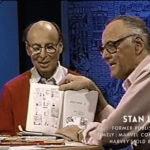
The documentary brings together remarkable voices from the formative years of American comic books, including Stan Lee, whose professional relationship with Harvey Kurtzman reaches back to the industry’s early decades. Archival footage of the two examining comic-book pages offers an intimate glimpse into the creative relationships behind an art form that would eventually become a worldwide cultural phenomenon.
Military Service and the Realities of War
Just when I thought I was beginning to understand Harvey Kurtzman’s artistic universe, the documentary revealed another dimension that resonated deeply with my own life. As a retired United States Navy officer, I found myself unexpectedly connecting with his military service and, perhaps even more profoundly, his dedication to telling the stories of those who experienced war firsthand. Through Two-Fisted Tales and Frontline Combat, Kurtzman transformed the comic-book page into a vehicle for historical inquiry, confronting the realities of combat through research, firsthand testimony, and an extraordinary commitment to authenticity. I was struck by the ethical responsibility embedded in his work, his willingness to portray the humanity of servicemen beyond the familiar narratives of heroism and patriotic spectacle. Here was an artist who understood that illustrations could entertain, educate, challenge, and bear witness. His work has awakened in me a desire to read these stories for myself, to discover how another veteran used his artistic voice to honor experiences that deserved to be understood.
Having served in the United States Navy for more than three decades, I found myself reflecting on a military culture deeply ingrained in those of us who wore the uniform. “Loose lips sink ships” was a lesson that followed us long after World War II, reinforced through operational security, military discipline, and an understanding that certain experiences were never meant for public consumption. Yet here was Harvey Kurtzman, another veteran, interviewing servicemen and illustrating the realities of war with an authenticity that challenged the boundaries of what military authorities wanted portrayed. I began wondering whether these stories offered veterans something profoundly meaningful: the recognition of experiences they had been conditioned to keep silent. Perhaps the reluctance of veterans to share their stories extends beyond trauma or fear of judgment. Sometimes silence is learned through service itself. Kurtzman’s illustrations invite us to consider what happens when those unspoken experiences finally find a voice.
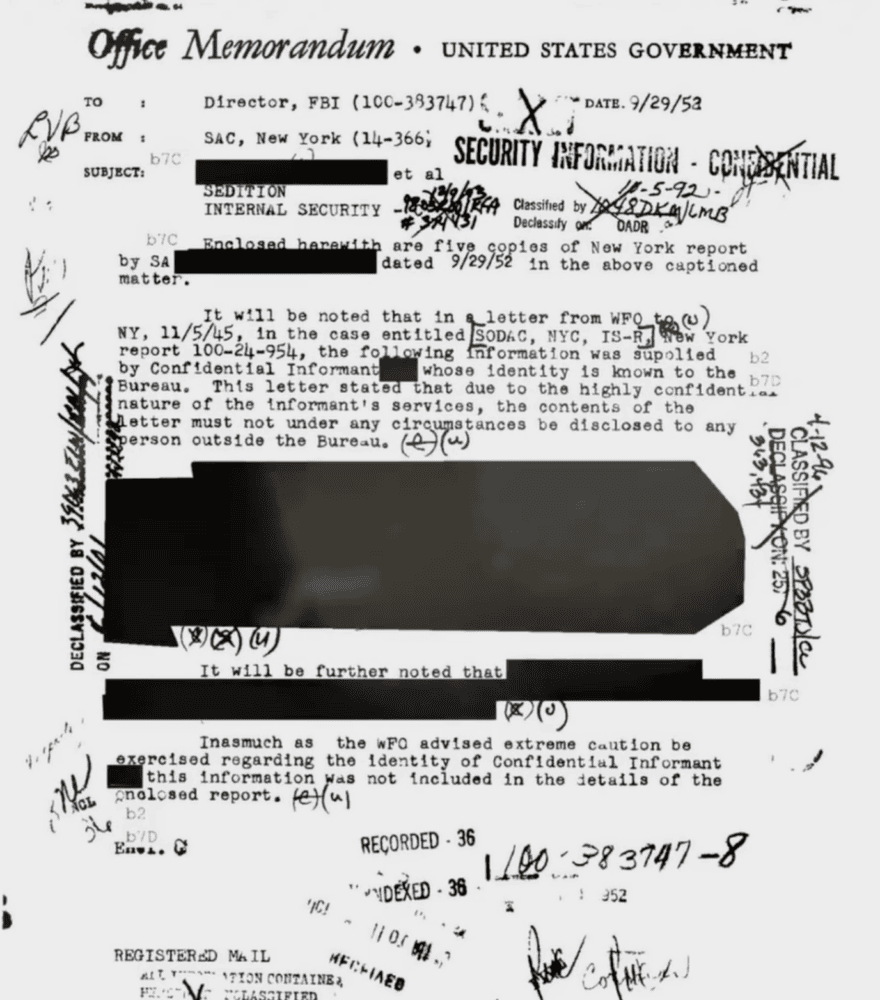
Among the images described in the documentary, one particularly poignant Korean War illustration remains with me: a baby abandoned amid the ruins, crying as soldiers march past. Here, the familiar language of comic-book onomatopoeia takes on an entirely different resonance. The baby’s cries become a haunting expression of the human suffering that survives beyond the battlefield. I found myself reflecting on the byproducts of war, the innocent lives disrupted, the children left vulnerable, and the devastation that continues long after military objectives have been pursued. Kurtzman’s illustrations reveal the extraordinary capacity of sequential art to confront realities that patriotic narratives can so easily overlook.
The Birth of MAD and a Revolution in Humor
Kurtzman’s partnership with publisher William Gaines at EC Comics led to the creation of MAD in 1952. Its irreverent approach invited readers to question advertising, television, politics, popular entertainment, and the assumptions embedded in everyday American life.
As the documentary turns toward the nationwide controversy surrounding comic books, I found myself contemplating the cultural expectations imposed upon children during the 1950s. Boys were pictured immersing themselves in illustrated adventures while girls were being prepared for lives shaped by domestic conventions. Yet even the boys’ reading material became a source of public anxiety. What began as concern over childhood behavior evolved into a national debate about morality, intellectual development, and the boundaries of artistic expression. Eventually, the government became involved, and the comic-book industry established a censorship system that restricted the very irreverence and social criticism Kurtzman had helped cultivate. I was struck by the contradiction of a society celebrating American freedom while simultaneously attempting to regulate the imagination of its young readers.
From the Yellow Kid of the 1890s, whose popularity became entangled with the origins of yellow journalism, to Harvey Kurtzman’s revolutionary approach to satire in the 1950s, illustrated storytelling has long occupied a fascinating intersection of art, journalism, commerce, and cultural criticism. Watching Kurtzman’s work come alive on screen, I found myself tracing that lineage, recognizing how generations of artists have transformed the way we see, question, and laugh at the world.
The Extraordinary Art of Visual Storytelling
Kurtzman’s illustrations explode with visual onomatopoeia, expressive typography, and comic-book sound lettering. The exaggerated gestures, distorted expressions, and poppy, eye-catching words create a dramatically chaotic, multiphasic experience. As the filmmakers layer movement, sound design, and jazz over these illustrations, the storytelling becomes a cascading spectacle of visual comedy. Every POW!, WHAM!, and GUNK! UNK! UNK! contributes to a playful sensory symphony, where the illustrations practically leap from the page and demand to be heard.
The documentary becomes a multisensory spectacle, almost overwhelming in its exuberance. As “NEIGH” appears across the screen, the braying of a donkey joins the jazzy soundtrack, while my eyes race to absorb the illustrations and read the accompanying dialogue. Each written word creates its own imagined sound within my mind, competing with the auditory layers already unfolding. The result is a dramatically chaotic orchestration of sight, sound, and storytelling. I found myself wanting to pause, to read, to listen, and to appreciate each artistic element individually, while the film enthusiastically carried me forward.
The original music by Marty Hailey and sound design by Adam Wood contribute to this sensory experience. At times, the playful jazz atmosphere reminded me of Vince Guaraldi’s music for the Peanuts television specials, particularly the familiar piano melodies associated with Schroeder.
There is something profoundly satisfying about witnessing the pureness of Kurtzman’s artistic process. Every pen stroke, every hand-lettered word, every brush of diluted ink belongs to him. Through a deceptively simple technique of varying ink concentrations across three cups of water, he creates an extraordinary tonal spectrum. Black, white, and several gradations of gray give his illustrations a richness that approaches the dimensionality of full color. The craftsmanship is mesmerizing, revealing an artist whose imagination and technical precision coexist beautifully on every page.
Watching Harvey Kurtzman sketch while narrating his own artistic process feels almost as though he created this documentary himself. His drawings emerge through successive layers, each building upon the anatomy and structure beneath. I found myself transported to what I had learned about Disney’s early animators, who used translucent sheets and sequential drawings to bring illustrated characters into motion. There’s something captivating about witnessing the foundations of animation through the hands of an artist whose own creations are now being animated for a new generation.
Harvey Kurtzman emerges as a visionary whose artistic instincts anticipated the evolution of his own profession. Long before the language of modern comic-book art direction became commonplace, he was approaching each illustrated page with the sensibility of an art director, carefully orchestrating composition, movement, expression, and narrative rhythm. His pictorial imagination extended beyond the boundaries of conventional cartooning, laying the groundwork for artistic approaches that would influence generations of illustrators, animators, and visual storytellers. Here was a man whose creative vision seemed perpetually ahead of its time.
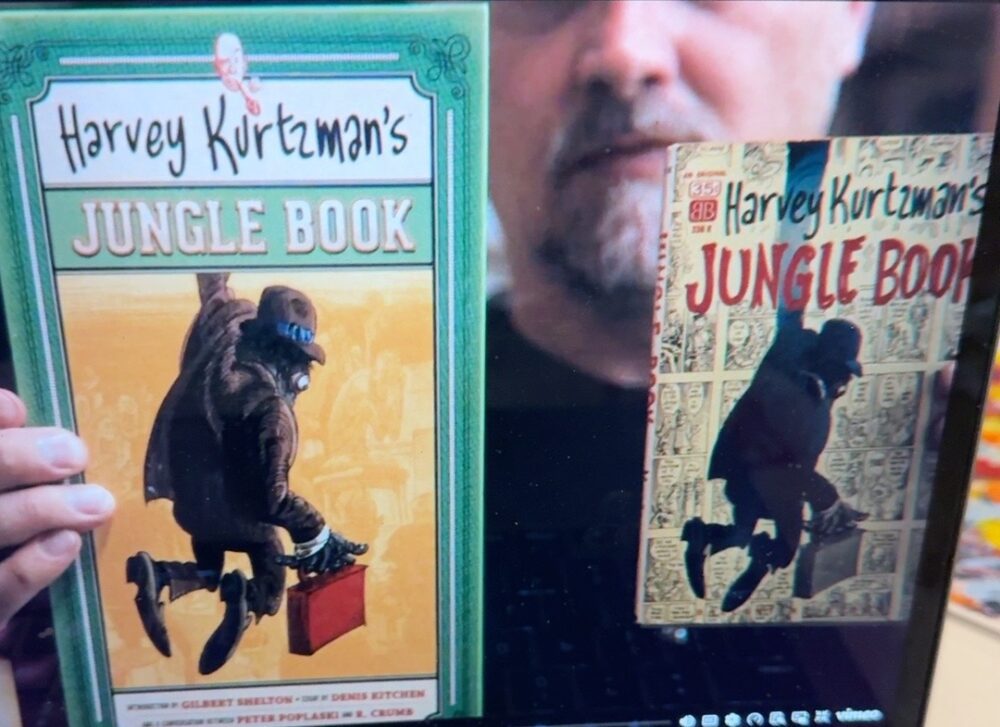
As the documentary turns the pages of Harvey Kurtzman’s Jungle Book, considered a pioneering work in the development of the American graphic novel, the illustrations reveal an extraordinary command of sequential storytelling. Distorted facial expressions, theatrical gestures, and exuberant lettering transform the printed page into a performance of its own. Even before the filmmakers introduce movement and sound, Kurtzman’s characters seem ready to burst beyond the boundaries of their panels.
Looking Beyond the Surface
As an art therapist, I found myself increasingly drawn to the metaphors and psychological dimensions of Kurtzman’s illustrations. Every object, facial expression, gesture, and background detail offers an opportunity for interpretation.
One illustration particularly captured my attention. At the center of a densely populated urban scene, a character reflects: “He’s wrong. If only I could have shown him not everybody is rotten.” Surrounding him is an extraordinary collection of meticulously illustrated details: an overturned automobile, children rummaging through refuse, crowded tenements, and people navigating the hardships of everyday life.
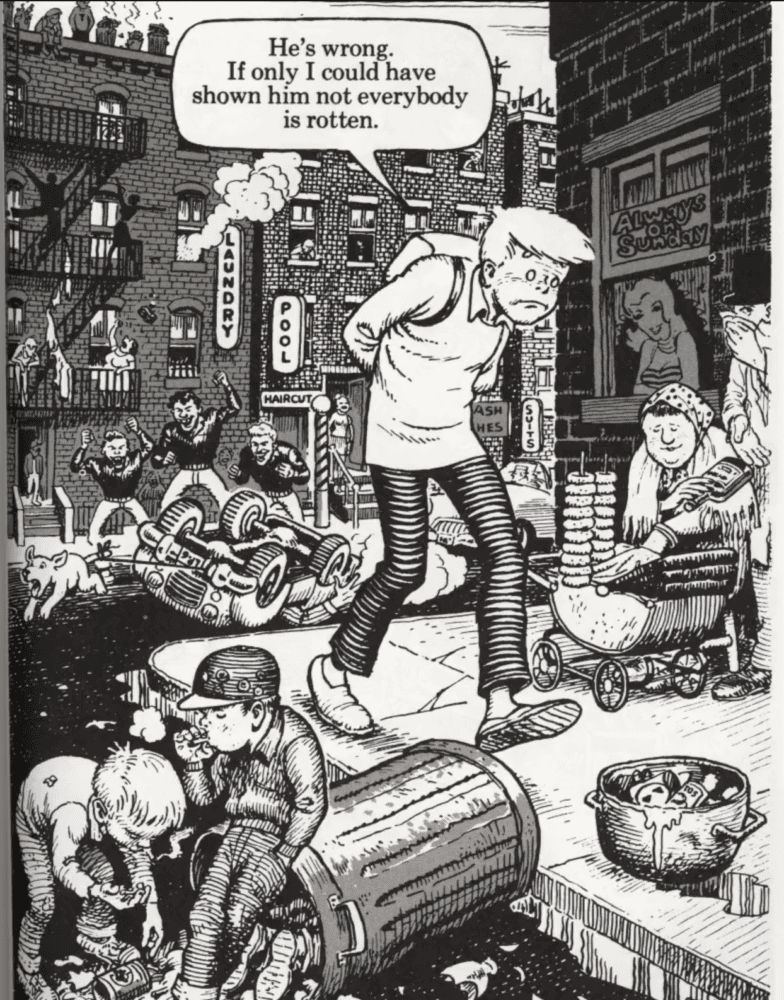
I found myself studying the relationship between the character’s internal dialogue and the world the artist constructed around him. Was his expression one of disappointment, compassion, or an enduring belief in humanity? Was the surrounding chaos intended to contradict his words, or to challenge us to look beyond appearances?
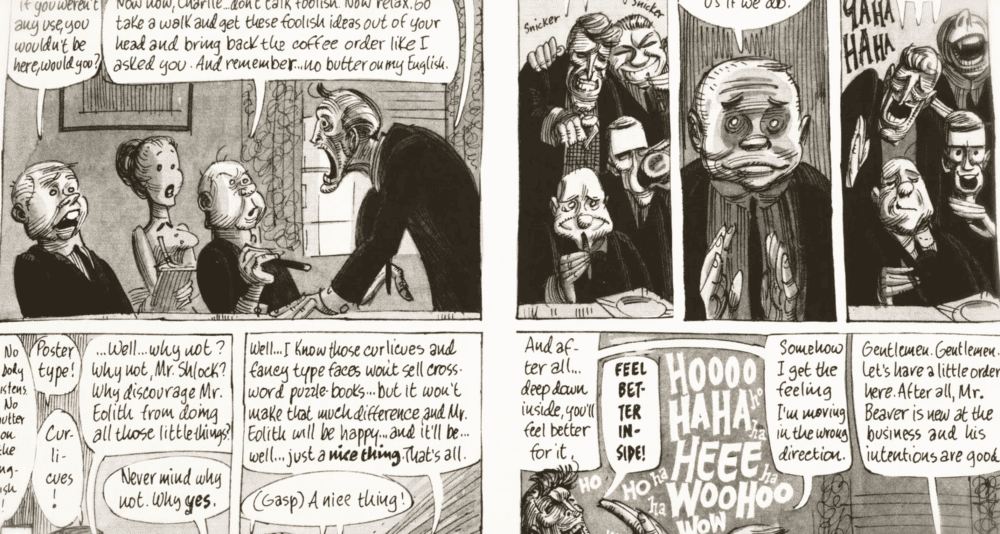
Another illustration, associated with Goodman Beaver, depicts an older observer imagining teenagers enjoying milkshakes, discussing school dances, and participating in the wholesome pursuits of his own youth. Yet the details reveal a changing cultural landscape filled with references to alcohol, drugs, jazz, and shifting social attitudes. Perhaps the observer remembers the excitement of his own adolescence, projecting those experiences onto young people whose expressions of independence and belonging have evolved. The contrast between his nostalgic assumptions and the world unfolding before him becomes a study of perception, memory, and generational identity.
I believe we owe artists the opportunity to have their work examined with this degree of attention. Their illustrations deserve more than a passing glance. Each panel can become a world unto itself, revealing new meanings as we allow ourselves the time to explore it.
The Little Girl Who Never Stopped Playing
As the documentary explores how MAD became a creative refuge for young readers, I found myself remembering my own childhood. Living with my great-grandmother, I had very few toys. My mother had left behind a single 45 rpm record, and I would play it repeatedly, choreographing dances and creating performances in the living room. My friend Marisol and I invented games, played hide-and-seek, and found ways to entertain ourselves with whatever our surroundings provided.
My great-grandmother would complain that all I ever did was play. I remember wondering, as a young child, what else she expected me to do. Similarly, My mother believed that activities should primarily serve an educational purpose. Yet looking back, I recognize how much I was learning through those hours of imagination, movement, and creative exploration.
Decades later, here I am, watching a documentary about a cartoonist and discovering connections to history, psychology, journalism, art, and my own childhood. The girl who was criticized for playing grew into a woman who is learning through the very act of creative exploration. The little girl with one record never stopped dancing. She simply found more ways to tell her stories. Perhaps she was already learning something essential about storytelling, even when the adults around her saw only play.
The Artist, the Businessman, and the Price of Creativity
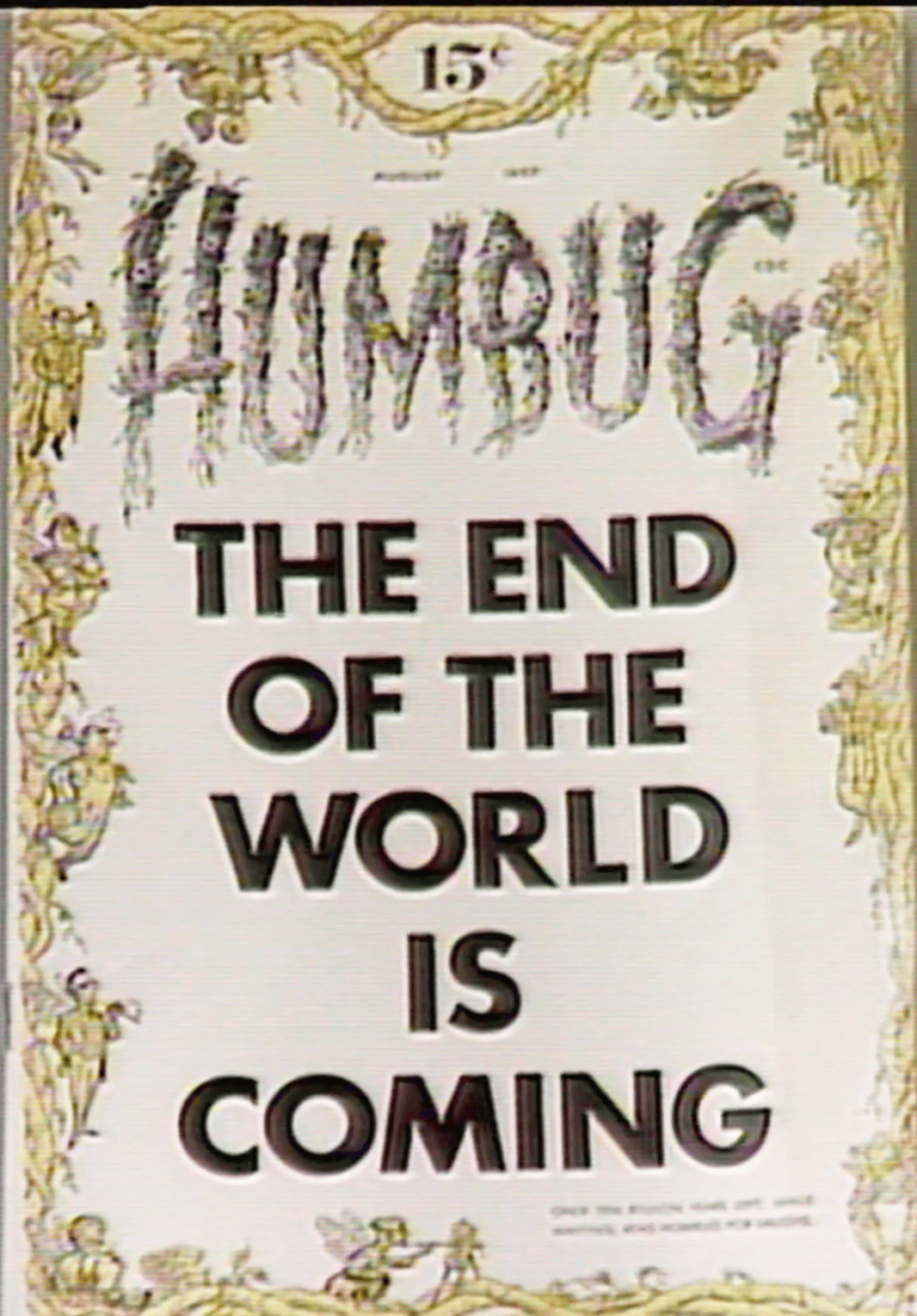
Although MAD became an extraordinary publishing success, Kurtzman did not enjoy the same lasting financial rewards as its publisher, William Gaines. His subsequent ventures, including Trump, Humbug, and Help!, demonstrated his willingness to experiment, assemble talented collaborators, and pursue new creative possibilities, even when those publications struggled commercially.
Among the documentary’s more endearing archival discoveries is a handwritten letter from a young R. Crumb, expressing concern about the future of Help! magazine while encouraging Harvey Kurtzman to persevere. The affectionate message offers a glimpse into the admiration Kurtzman inspired among emerging cartoonists. There is something profoundly moving about witnessing a future artistic legend reassuring an established pioneer that his greatest success might still lie ahead.
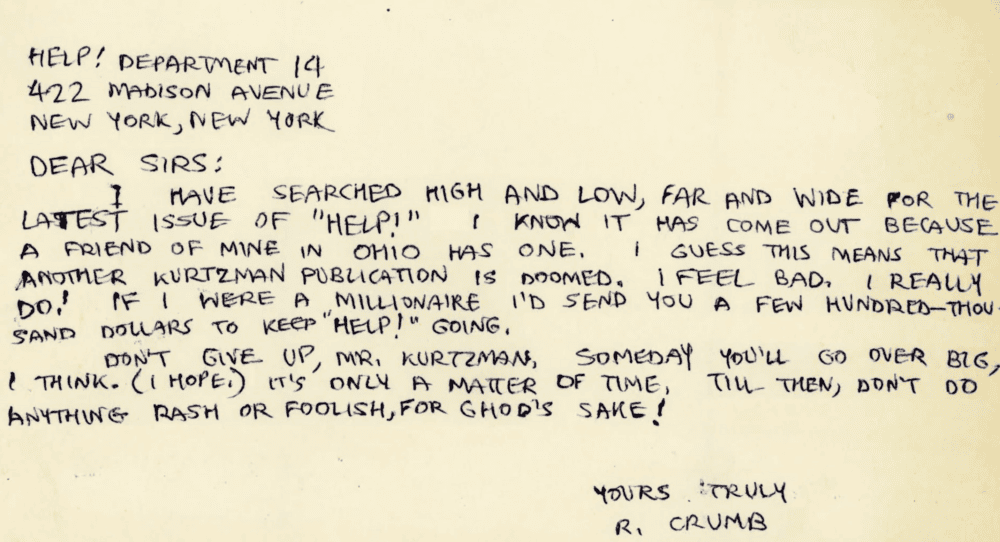
As Help! emerged during the turbulent years of the civil rights movement, the documentary reveals another dimension of Harvey Kurtzman’s artistic ethos. His work reflected a concern for humanity, an awareness of oppression, and a willingness to challenge prevailing attitudes through intelligent, powerful satire. Against the historical backdrop of Martin Luther King Jr. and the struggle for civil rights, Kurtzman’s creative sensibility takes on a deeper significance. The humor that had entertained generations was also capable of confronting uncomfortable social realities, giving artistic expression to questions of dignity, justice, and the human condition.
As the documentary follows Kurtzman’s reception in France, another striking cultural contrast emerges. There, he and his fellow cartoonists were celebrated as artists, while in America, they were expected to function as businessmen. I found myself contemplating how often society measures an artist’s success through financial achievement, while the enduring significance of their work reveals itself across generations.
Playboy, Little Annie Fanny, and the Cultural Image of Women
When the documentary introduces Little Annie Fanny and Kurtzman’s work for Playboy, another unexpected childhood memory surfaces. As a teenager, I remember my father buying Playboy magazines, and I would open them to read the cartoons. Long before I understood the artists behind those illustrations, I was drawn to their humor and visual storytelling.
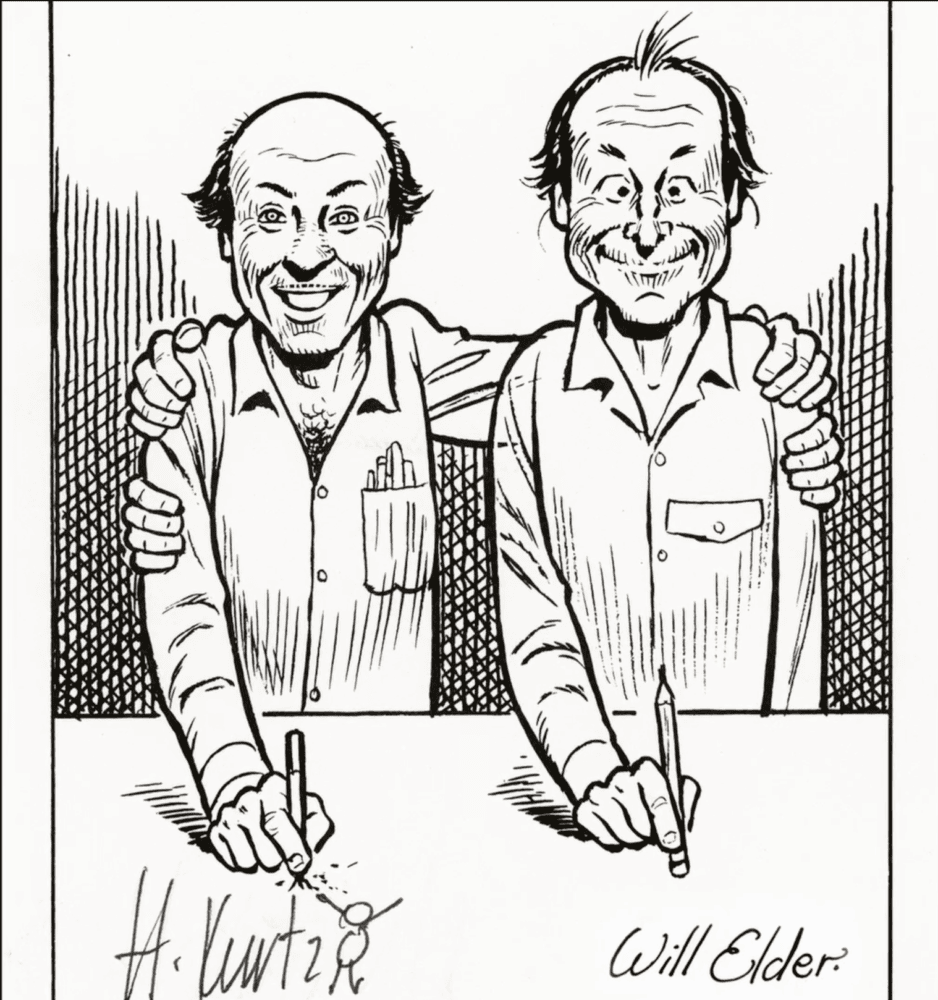
The documentary’s exploration of Kurtzman’s collaboration with Will Elder reveals the painstaking demands of translating artistic vision into a finished illustration. Small preliminary drawings, repeated exchanges, and meticulous revisions made the creative process extraordinarily laborious. Kurtzman’s perfectionism becomes particularly apparent within this collaborative relationship, where every detail required communication, interpretation, and refinement. Watching this process, I couldn’t help drawing a connection to contemporary creative collaboration with artificial intelligence. Today, we can describe an image, evaluate its interpretation, and request revisions almost instantaneously. Kurtzman and Elder engaged in a similarly iterative process, although each adjustment demanded human craftsmanship, time, and negotiation.
Artist Sarah Downs, who worked as Kurtzman’s assistant on Little Annie Fanny, offers a matter-of-fact perspective on the collaboration. Having aspired to become an illustrator, she welcomed the opportunity to work with Kurtzman while remaining critical of the material itself. She recalls finding Annie’s exaggerated proportions objectionable and characterizes both the comic’s humor and Hugh Hefner as sophomoric.
Through Kurtzman’s illustrations, another characterization of the times emerges: the portrayal of women, gender roles, and the dynamics of masculine dominance. Bikini-clad figures, exaggerated femininity, and moments of apparent female defiance invite a closer examination of the male gaze, misogyny, and the evolving expression of female agency. Beneath the playful illustrations and comedic exaggerations lies an intriguing reflection of the social attitudes that shaped their creation.
As I watched the documentary’s exploration of Hugh Hefner’s world, an unexpected association emerged from my studies of art and sculpture. Throughout history, cultures have represented fertility through sculpted female figures, often emphasizing the physical characteristics associated with femininity and reproduction. Suddenly, I found myself looking at the Playboy Bunnies through an entirely different lens. They were, in my interpretation, the fertility goddesses of Hefner’s modern world.
The documentary introduces another revealing dimension to Kurtzman’s relationship with Hugh Hefner through their contrasting sensibilities. Kurtzman describes Hefner as a romantic and himself as a realist, recognizing the difficulty of reconciling those perspectives. His observation prompted me to reconsider my earlier impression of his participation in Hefner’s world. Kurtzman understood the environment in which he worked, even as loyalty, affection, professional opportunity, and artistic ambition complicated the relationship.
I also found myself reflecting on the objectification of women, particularly as the idealized female figures of Playboy became symbols of a commercialized sexual culture that later generations of women would challenge. The dynamic reminded me of my years in the military, when socializing within a predominantly male culture sometimes involved an expectation of participating in activities such as visiting strip clubs. Whether one personally embraced that environment was almost secondary to the unspoken expectations of belonging.
The Man Behind the Illustrations
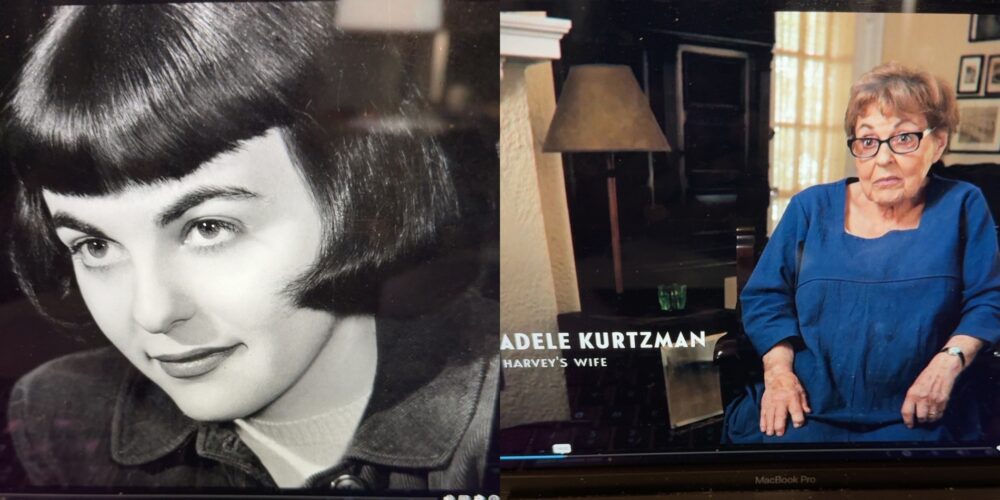
The documentary introduces Adele Kurtzman through a beautiful black-and-white portrait before bringing us into the present of her recorded recollections. Her stories of inexpensive dates spent listening to records, Harvey’s almost inaudible attempts to hail a taxi, and the simplicity of their courtship transported me into another era. I found myself nostalgic for a time I never personally experienced, drawn to the intimacy of everyday encounters and the connections formed through life’s simplest pleasures. There is something wonderfully endearing about discovering that the man whose illustrations practically shouted from the page was, in person, remarkably soft-spoken.
As Nellie reads love letters she had never encountered before, another dimension of Harvey Kurtzman emerges. Here was a man seemingly madly in love, determined to sustain a romance across the miles through handwritten correspondence. While Adele pursued her college education, Harvey continued writing, gently and persistently wooing the woman who would become his wife. Adele recalls caring little about his employment prospects, confident that he would eventually find his way. What captivated her was his humor, his gentlemanly nature, and his consistency. Their courtship unfolds as a tender reminder of an era when affection traveled through envelopes, and devotion was expressed one letter at a time.
As vintage black-and-white footage carries us into the rhythms of suburban life, Meredith Kurtzman recalls how her father, once a city boy, became enamored with the possibilities of raising a family beyond the city. The images awaken a nostalgia that extends beyond the documentary itself. I find myself reflecting on the evolving roles of women, the freedoms generations fought to secure, and the personal longing for companionship that can coexist with a lifetime of independence and professional accomplishment. There is something bittersweet about witnessing these seemingly simpler days, when relationships unfolded through handwritten letters, shared records, neighborhood encounters, and family routines. Today, as I watch this history through a digital screen and reflect upon it through technology, I am reminded of how profoundly our methods of connecting have changed, even as our human desire for belonging endures.
A Folk Hero Discovers His Audience
As comic conventions began celebrating Harvey Kurtzman as something of a folk hero, another touching dimension of his life emerged. Cartoonists, unlike performers, rarely experience the immediate reactions of their audiences. Their laughter, admiration, and emotional responses remain largely invisible to the artist working alone at the drawing table. Kurtzman began encountering the very people whose imaginations he had helped shape.
Here was a man who had stood firmly behind his artistic sensibility, sometimes stubbornly, without necessarily knowing the magnitude of his influence. To finally witness that appreciation firsthand must have offered an extraordinary opportunity for connection, perhaps even a deeply personal sense of fulfillment. Recognition doesn’t always create confidence. Sometimes it simply reveals the impact of something a person already believed in.
From Sesame Street to the Classroom
From Sesame Street to the penthouse world of Playboy, Harvey Kurtzman’s imagination became embedded in the cultural fabric of American life. His creative reach extended across generations, artistic disciplines, and audiences, connecting him with some of the most influential minds of his era.
Yet what increasingly captured my attention was his unassuming nature, his openness to creative opportunities, and his willingness to share what he knew. His professional journey suggested a man whose ambitions extended beyond financial reward, driven by the possibilities of artistic expression and the relationships cultivated through creativity.
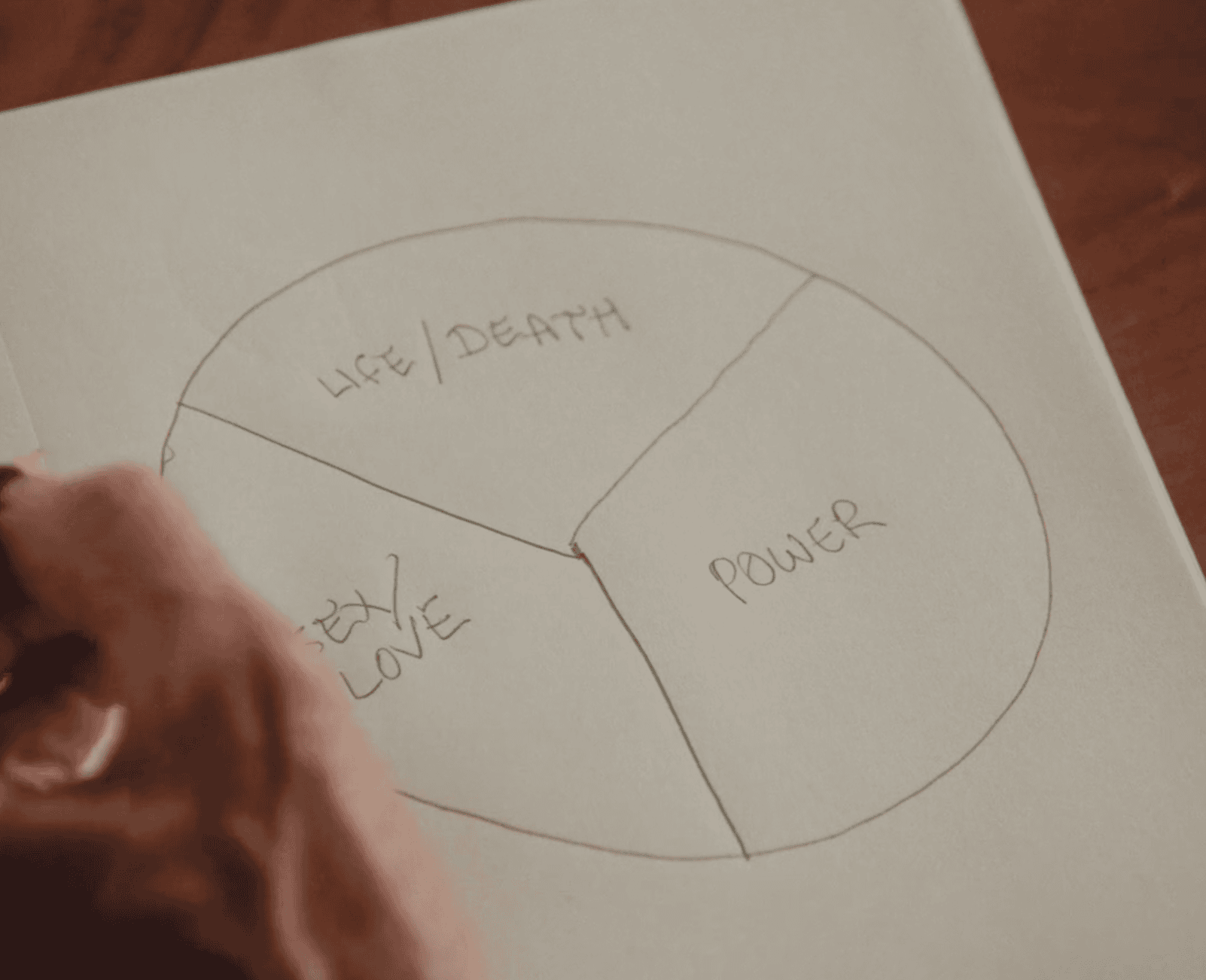
The documentary introduces another dimension of his legacy through his teaching at New York’s School of Visual Arts. In one particularly revealing moment, a simple circle divided into three themes, life and death, sex and love, and power, becomes a lesson in the foundations of storytelling. I found myself appreciating how an artist capable of constructing extraordinarily complex visual narratives could distill the human experience into such an accessible teaching tool.
When the Body Changes but the Imagination Endures
As The Mad World of Harvey Kurtzman approaches its conclusion, the documentary reveals the physical challenges he faced while living with Parkinson’s disease. His symptoms were characterized more by rigidity than the familiar tremors many of us associate with the condition. Watching his struggle awakened a deeply personal memory of my grandfather, who also lived with Parkinson’s.
Although I had witnessed the disease within my own family, I found myself reconsidering the experience of someone whose physical abilities diminish while so much of their awareness and identity may remain intact. There is something profoundly moving about witnessing an artist whose imagination once filled pages with explosive movement, exaggerated gestures, and exuberant expression gradually lose the physical freedom that helped bring those creations into existence.
During a classroom visit by Art Spiegelman, Kurtzman appears genuinely delighted, asking whether he might return the following week. I was touched by that simple request. Here was a man whose influence had already reached generations of artists, still finding pleasure in the exchange of ideas and the opportunity to learn alongside his students.
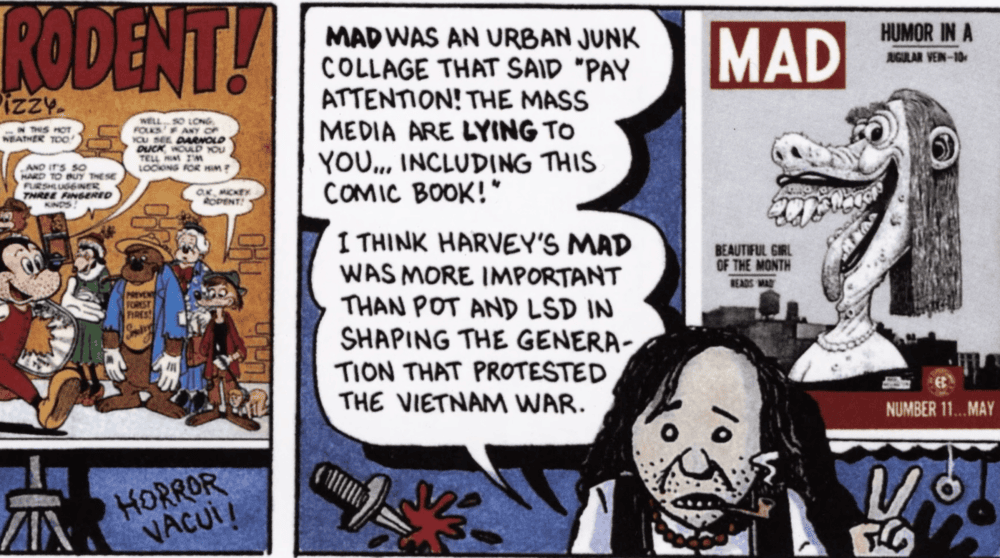
The documentary suggests that MAD played an important role in shaping the questioning sensibilities of the generation that challenged the Vietnam War. One commentator even suggests that Harvey’s MAD may have been more influential than marijuana or LSD in shaping that generation. I found myself contemplating how much further that influence has traveled. How many contemporary filmmakers, animators, illustrators, and digital artists continue to draw upon a creative vocabulary that Kurtzman helped establish, perhaps without ever knowing his name?
As the documentary concludes, we encounter Kurtzman through the enduring affection of those who knew and loved him. More than three decades after his death, his absence remains deeply felt by his family. Yet his creative presence continues to flourish in a world profoundly influenced by his imagination. Perhaps one of the most extraordinary aspects of his legacy is that his artistic innovations became so thoroughly absorbed into popular culture that younger generations could experience their influence without recognizing their origin.
A Dream Realized Beyond a Lifetime
Harvey Kurtzman spent his life bringing stories to life through illustrations, all while dreaming of becoming a filmmaker. Decades after his passing, the very art form he helped shape has returned to tell his story, bringing his drawings, imagination, and extraordinary legacy to the screen.
Posthumously, Harvey Kurtzman’s lifelong dream of filmmaking finds its fulfillment through the artists he inspired. And perhaps, from heaven, he finally gets to watch his own imagination come alive on screen.