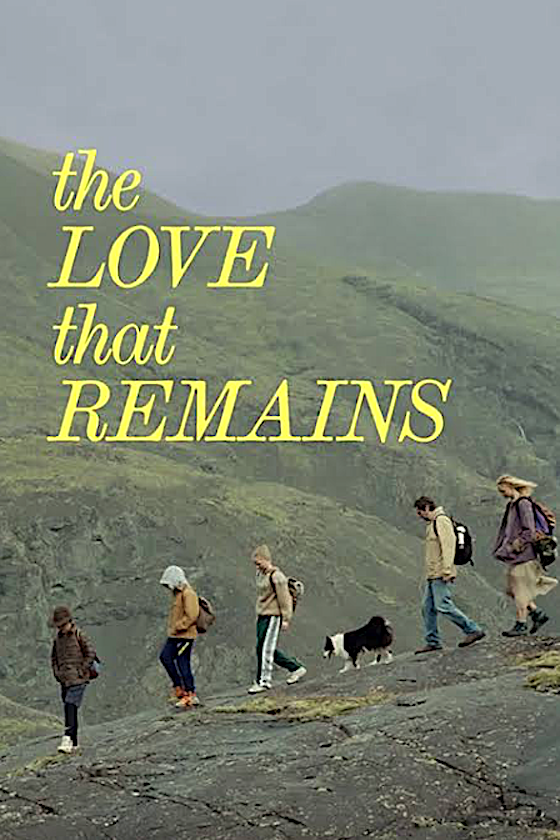
On Sunday, October 26 at the AFI FEST 2025 was a screeing of Hlynur Pálmason’s latest film The Love That Remains (Ástin Sem Eftor Er) – a meditative study of a marriage that is falling apart in rural Iceland. What was a loving famly is on the verge of collapse. Fisherman Magnús (Sverrir Guðnason) has just moved out of the house he shares with his visual artist wife Anna (Saga Garðarsdóttir) and their three children, Ída and twins Þorgils and Grímur (all three played by the real children of filmmaker Hlynur Pálmason, who previous film Godland (2022) received many critical awards. Pálmason’s The Love That Remains is Iceland’s submission for Best International Feature Film at the 2026 Academy Awards.
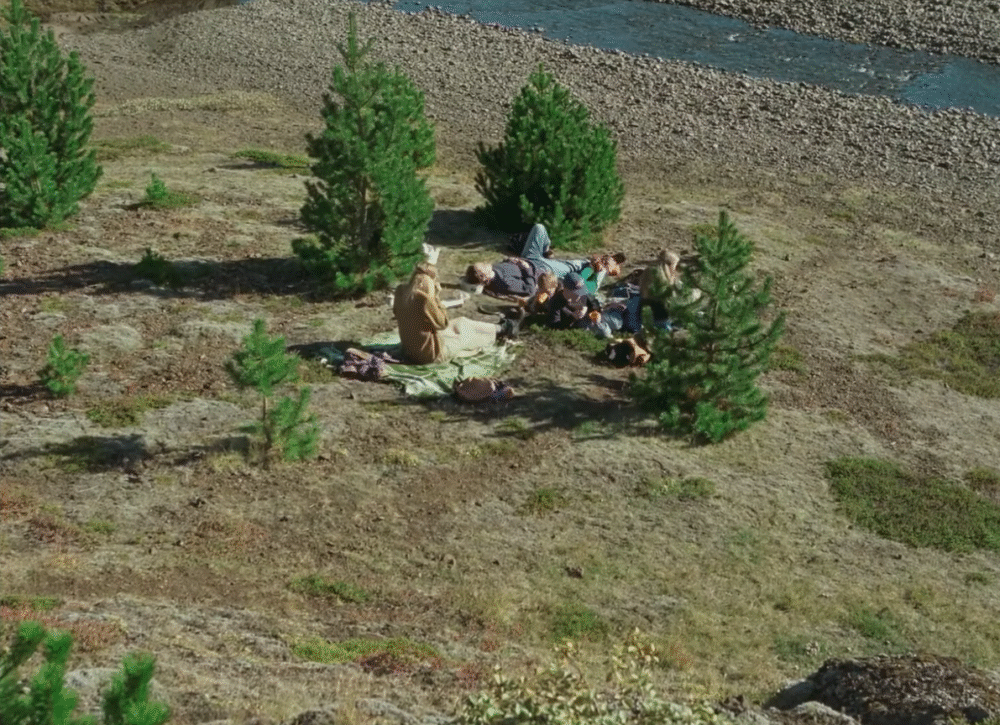
Mangús and Anna were high school sweethearts but have drifted apart. Despite Magnús’ hope for reconciliation, things are not getting better event though they still spend time together for the sake of the children. Pálmason investigates the ties that still bind the family together. The story is immersed in the landscape of Iceland and also focuses on the importance of animals to the family – chickens, cows, horses, and a sheepdog named Panda. The Love That Remains was awarded the Palme Dog award at this year’s Cannes Film Festival – thanks to the remarkable role of Panda in the film.
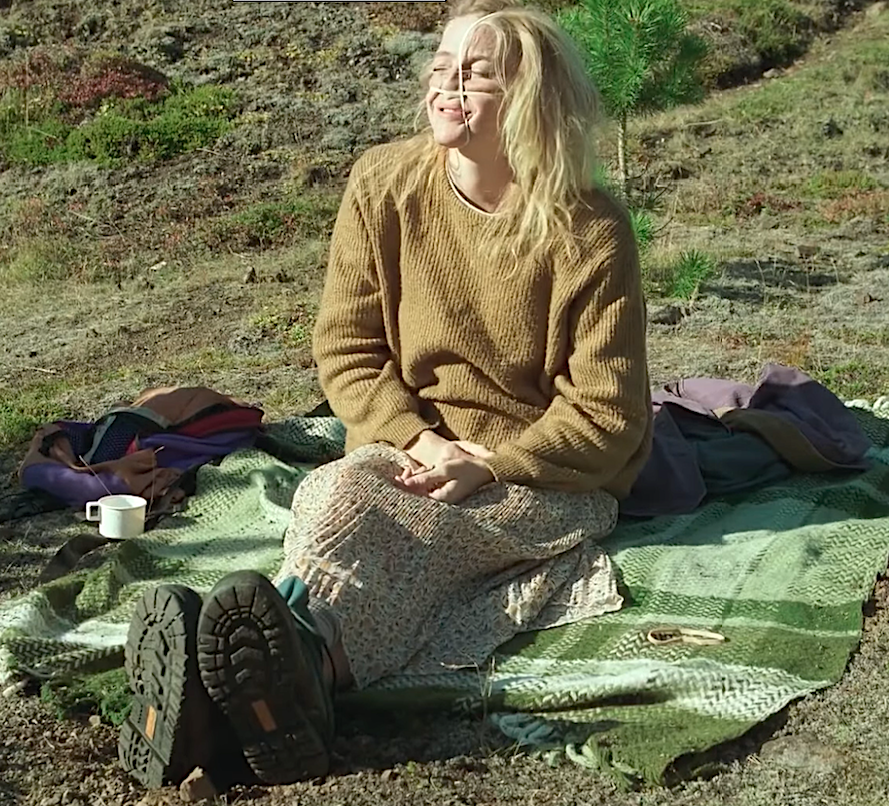
Pálmason is a remarkable director who captures in the film the increasingly fragments collage of juxta posed surreal and everyday vignettes as the emotional ties that hold the family together begin to unwind. It is curious that Pálmason, much like Mexican director Carlos Reygadas in Our Time, casts members of his own family. The director has always been less interested in plot than character, mood and atmosphere, and this movie’s idiosyncratic storytelling goes a long way toward papering over its flaws. Even if it’s sometimes the cause of them.
The film opens with the startling image of a roof being crumpled and lifted off an empty warehouse building by crane, hovering in the air briefly like a UFO before being swung around out of the frame. The building is the former studio of visual artist Anna (Saga Gardarsdottir) and its demolition by developers provides an apt metaphor for the lid being lifted off her world.
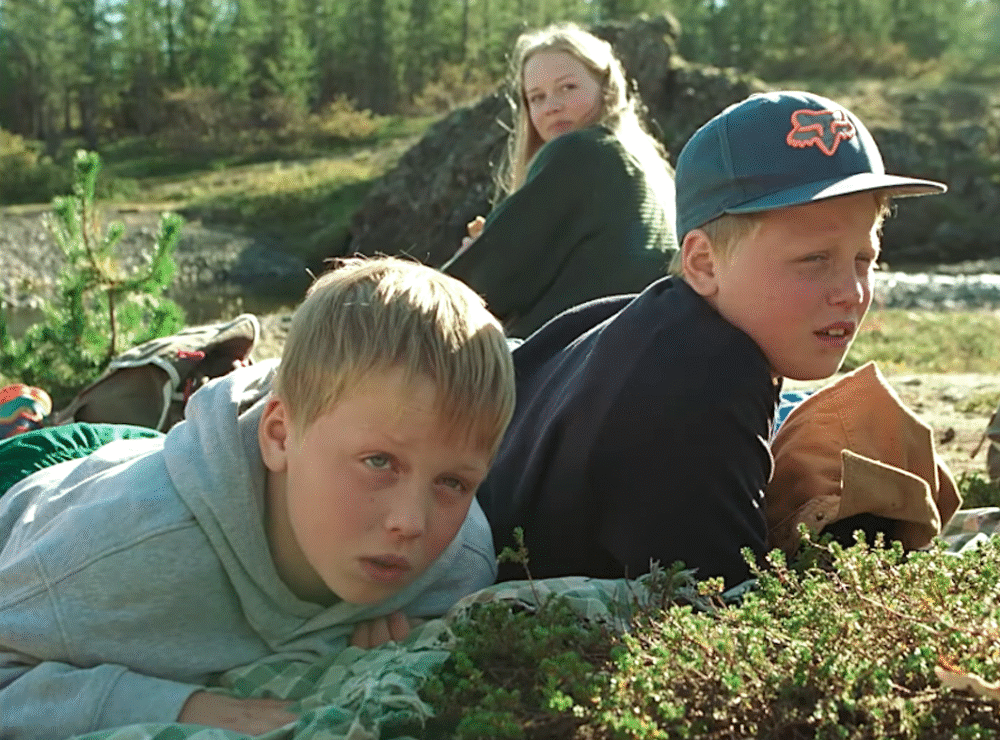
Anna works hard to balance her life as a caring mother with three spirited children – teenage Ída (Ída Mekkín Hlynsdóttir) and her tow-headed preteen brothers Grímur and Porgils (Grímur and Porgils Hlynsson) — with chasing the elusive next step to gallery representation and wider recognition. Anna is a painter and her method of painting is highly physical. Working in a field, she arranged large iron cutout shapes on raw canvases, weighting them down with wood or stones and leaving them exposed to the elements through the winter, allowing rust and dirt, rain and snow to “paint” them.
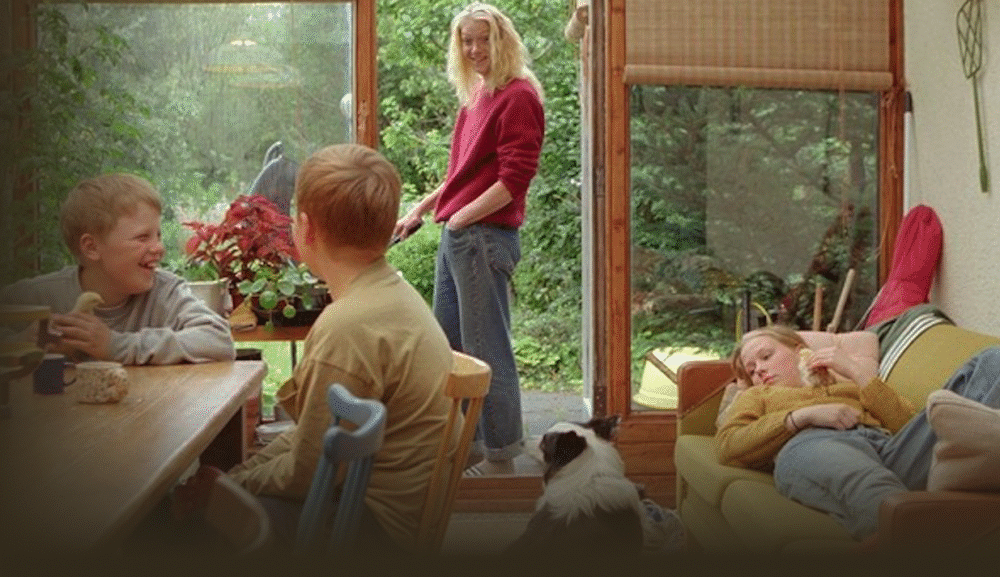
Anna’s breakup with Magnús (Sverrir Gudnason), the father of the children, has led to them already living separately at the start of the film. Magnús, as a fisherman, is away at sea for long stretches on an industrial fishing trawler during herring season.
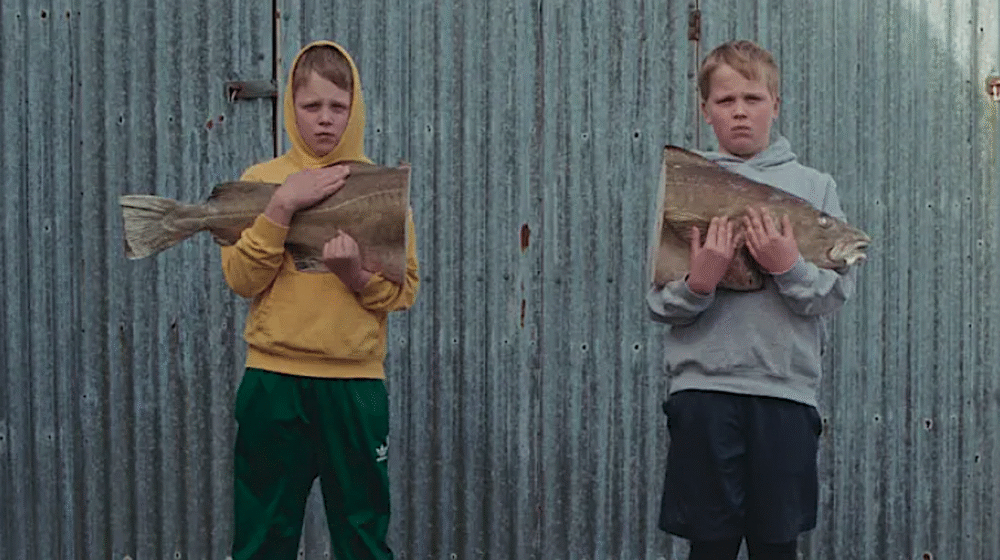
We get a sense of the uneasy coexistence of man and nature in scenes with massive nets being hauled in by a mechanized winch and a silver blur of fish by the hundreds funneled into storage while an orca bobs around nearby, looking to get a taste of the catch. Magnús seems increasingly alone – lost in his solitude. Yet back on land, he keeps dropping by the family home unannounced, staying for a meal or just a beer with Anna.
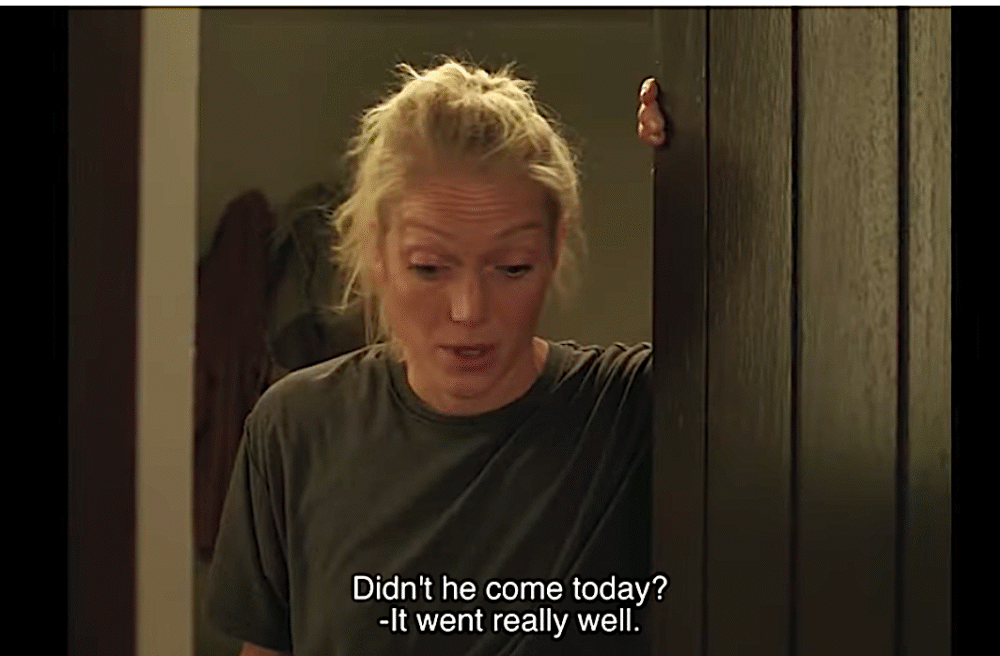
Anna is impatient and ready to move on with her life. She clings like a puppy, refusing to go. The emotions portrayed seem so convincing. The boys have grown accustomed to their father being gone most of the time and they respond automatically to their mother’s requests for chores to be done. He has become an outsider in his own home.
Anna is trying to move on with her life and make professional inroads with her art. A Swedish gallerist (Aners Mossling) comes to visit but show little interest in her work. When she shows him her works-in-progress laid out in an open field, he is more attentive to the beauty of the hilltop coastal setting than her work. He tells her he has no space for her work and patronizes her with empty assurances that she will find the right gallery, or the right gallery will find her.
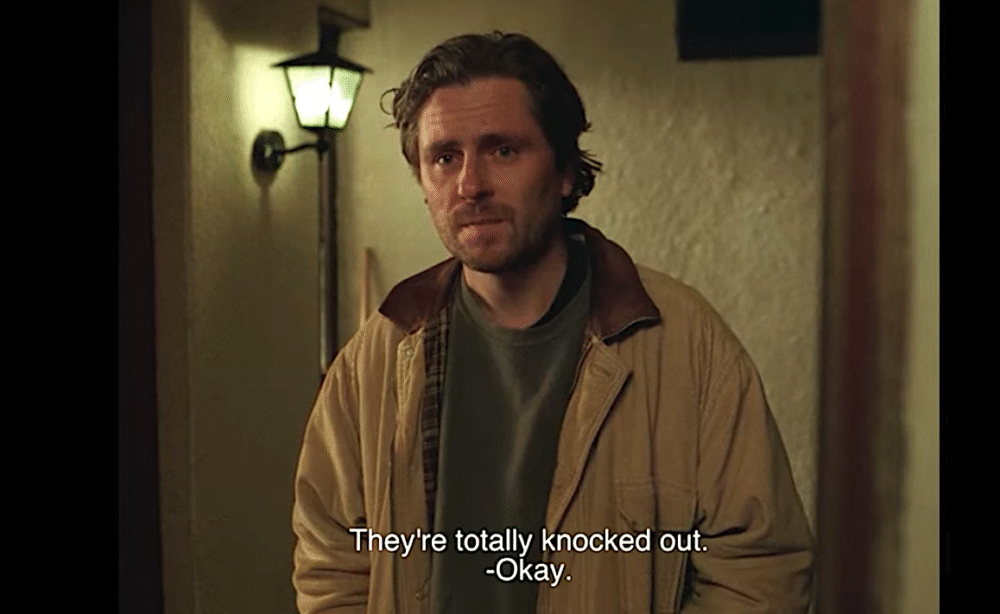
Anna first lies to Magnús about the gallerist’s visit being a success, then opens up about her soul-crushing day, venting her anger about the man’s self-absorbed tediousness. But even in those moments of closeness, it’s clear that while Magnús wants to go back to the way things were, that time has passed for Anna, who discourages him from spending the night and confusing the children.
As the film progresses, the children emerge as more prominent characters. The daughter Ida is old enough to drive and on a car trip with her father, she emerges as a strong young woman with her own sense of male/female relationships as they disagree about an aggressive rooster in the family chicken house. The twin boys Þorgils and Grímur horseplay frequently but eventually become preoccupied with archery practice on a scarecrow that Anna has put up at the bottom of the property. They are not sure if the scarecrow is male or female.
The film wanders into magical realism with the scarecrow that the boys assembled on the edge of the field. The scarecrow resembled an armored knight and the boys used it for archery practice. Magnús has strange dreams and he seems to confuse fantasy and reality. This is a film about the weary sadness of separation which is underscored by endearing affections. As the film inclines toward dream states, the rooster and scarecrow will become the embodiment of the very metaphors they suggest. The final scenes are a puzzling enactment of the complete disintegration of the relationship between Anna and Magnús – and we see Magnús literally floating in his own isolation.