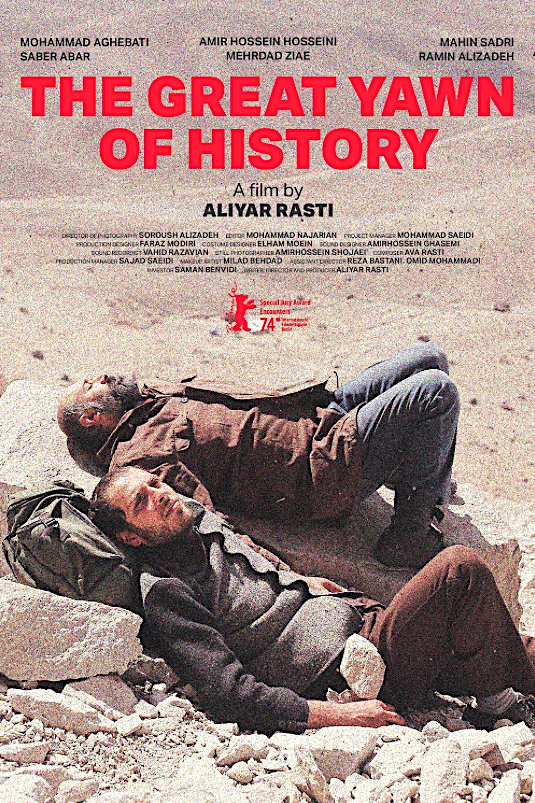
Iranian filmmakers are gifted story-tellers and one recent example just screened at UCLA Hammer as part of the annual “Celebration of Iranian Cinema” which began Friday, July 5 and runs for two more weeks. The film I am referring to Aliyar Rasti’s debut film The Great Yawn of History (2024), which garnered the Special Jury Prize at the 2024 Berlin Film Festival. This tale is one of a surreal and mystical odyssey reminiscent of Jodorowski, Luis Bunuel and Howard Hawks. Yet it has its own inimitable style and seems to evoke the moral dilemmas addressed in Poland’s philosophical films of the 1990s. This allegorical tale wrestles with faith and disillusionment during a seemingly impossible treasure hunt for a box of gold coins. Pious, middle-aged Beitollah (Mohammad Aghebati) believes his recurring dreams of finding gold coins at the end of a dark cave. But since picking up lost money is haram or religiously forbidden in Islam — he employs a world-weary young agnostic, Shoja (Amirhossein Hosseini), to accompany him on his journey.
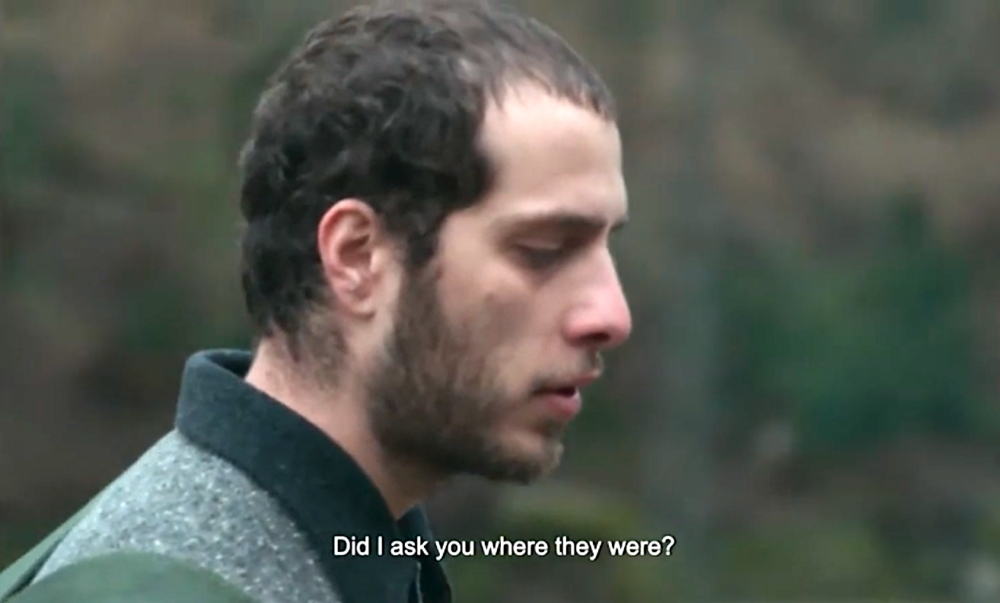
This modern-day tale is set against the specter of Iran’s staggering youth unemployment problem which looms large over the story, right from the moment Beitollah begins luring in wayward young men for a job interview by dropping counterfeit American $100 bills on the ground. While he doesn’t reveal the specifics of the job up front, his probing questions about the candidates’ respective beliefs paint a portrait of desperation, and he seems to pick the most desperate and cynical of them in Shoja, despite the job’s religious nature.
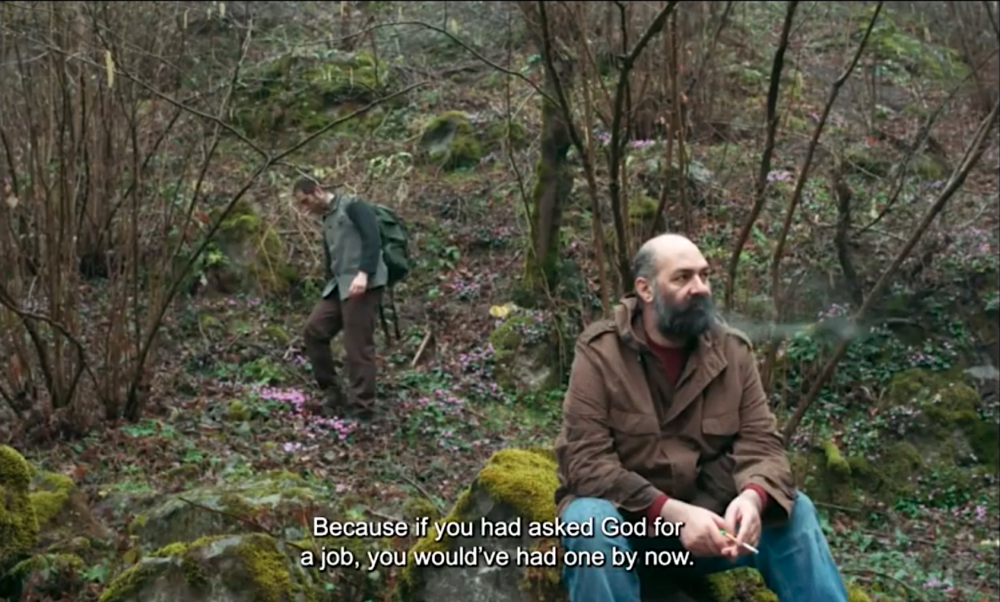
Beitollah (Mohammed Aghebati), a self-described man of faith, tosses and turns in bed. He is mesmerized by a dream about a box of gold coins in a cave. He decides to take action but know his beliefs forbid him to retrieve the treasure. From the get-go, the director Rasti cleverly sets up the exploration of money and faith, showing the middle-aged man scribbling on take dollar bills and scattering them around the market. Only unbelievers would pick up the money. Soon, a group of men knock on his door, having read on the bills that he is looking for a hired hand. Shoia (Amirhossein Hosseini), a slender young man, stands out, fitting Beitollah’s criteria of unfaithfulness. Embarking on their search for the treasure, they rely on the man’s vague dream to the find the cave.
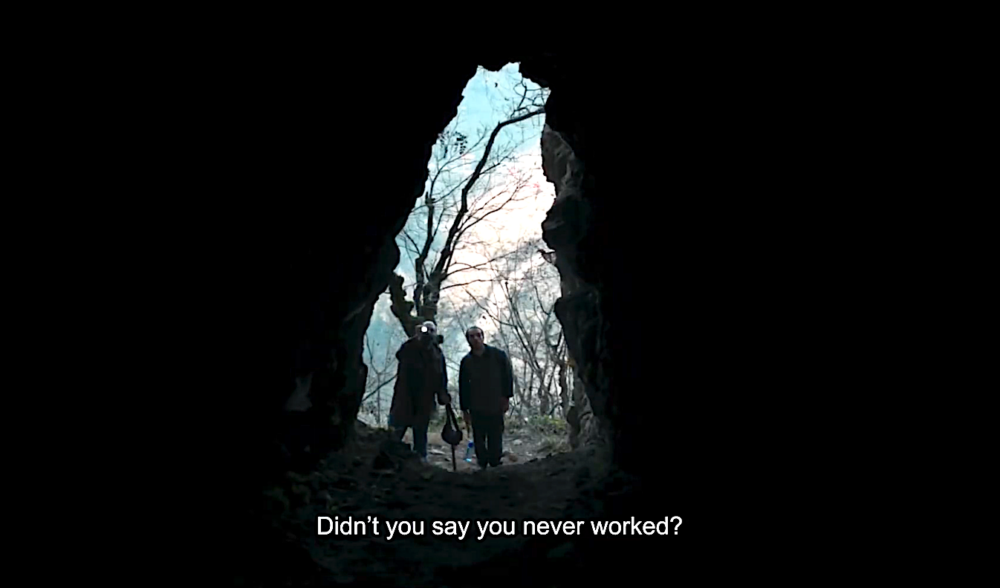
Beitollah is a man who was married but estranged from his wife and worked most of his life. On the other hand, young Shoja is an unemployable wastrel who is penniless and sleeps in the basement utility room of a parking garage in Tehran. Beitollah selects Shoja as his assistant on his madcap search for a treasure precisely because Shoja has nothing to his name and no beliefs.
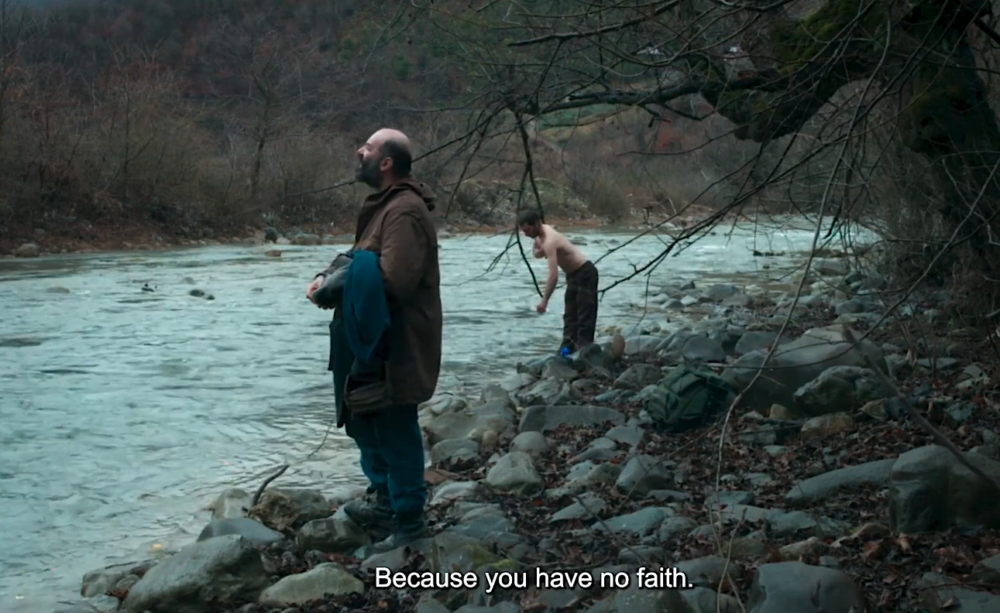
The paradox at the heart of this dynamic of faith vs. disbelief is matched by an uncurrent of paternal disconnection and disapproval. By the nature of Beitollah’s plan, the two men must exist on opposite ends of a moral spectrum if they’re to succeed. However, believing in this scheme in the first place is a conundrum unto itself, one that pulls them both from their respective extremes toward a murkier moral center. At first, they both seem convinced of a common goal of searching for the cave that the elder Beitollah has seen in his dreams.
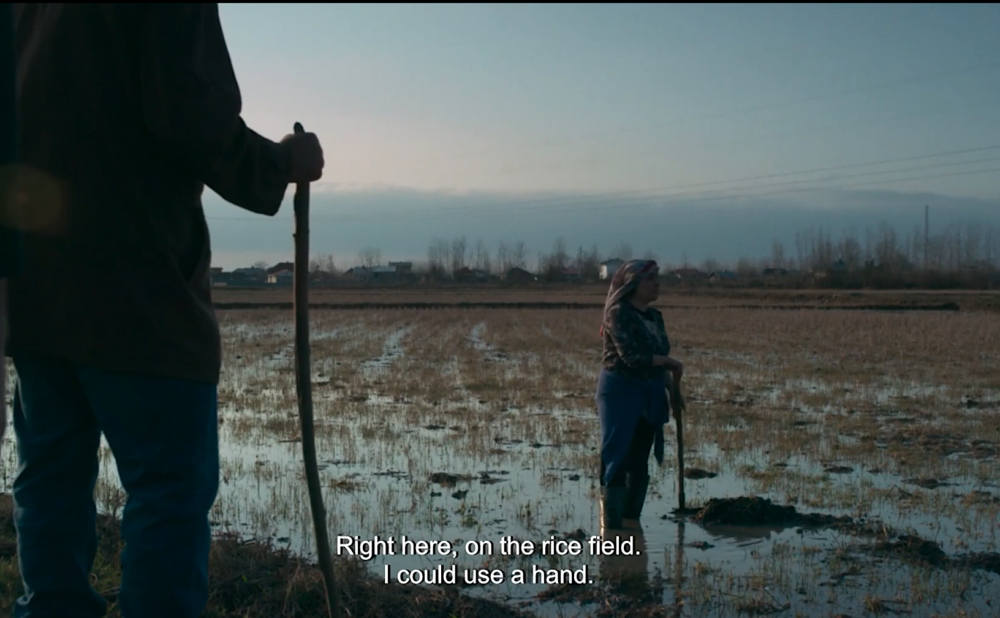
They make their way to various crevices, embedded in dangerously vertical hillsides. Rasti and cinematographer Soroush Alizadeh create a hazy atmosphere that casts the two men’s endeavor in uncertainty during the day, while enveloping them in shadow and dim gaslight during nighttime conversations with local villagers, as they suss out info on local caves. Each encounter feels dreamlike. Their journey might seem ill-fated, though a slim possibility of finding the treasure always remains.
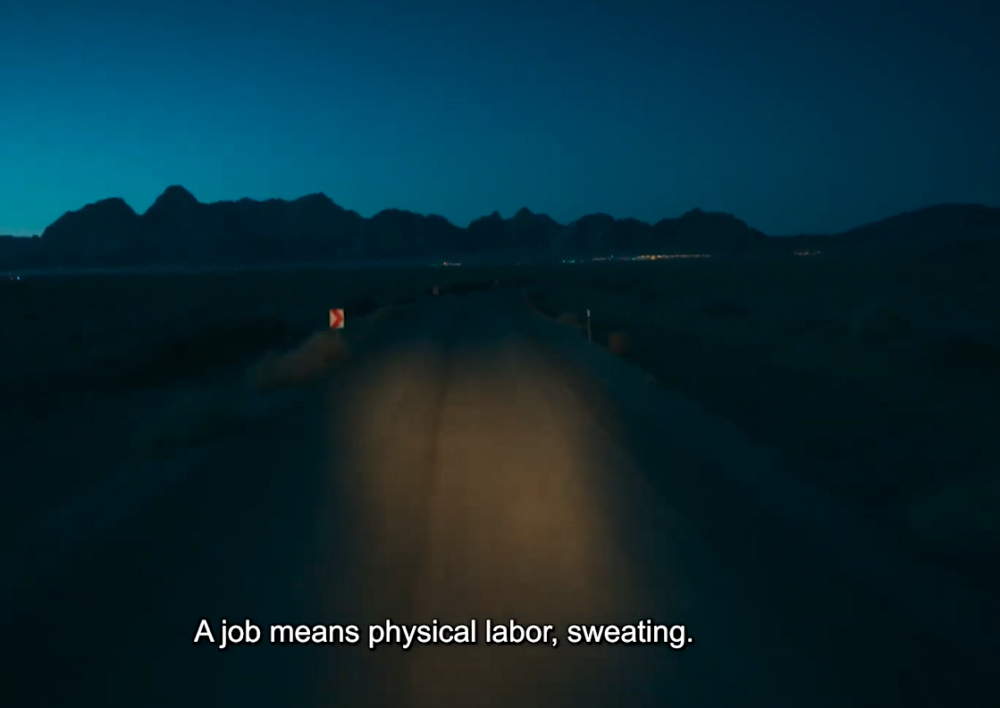
As the characters’ vulnerabilities and self-doubts grow more distinct, their interactions become simultaneously funnier and more despairing — all in all, they grow more familiar. The visual framing goes to great lengths to enhance these shifting, overlapping tones, whether in wide shots that capture Beitollah and Shoja’s insignificance against the natural landscape or in tight close ups in profile that track them as they move, making the backdrop whiz by, imbuing the frame with momentum as they bicker over what to do next.
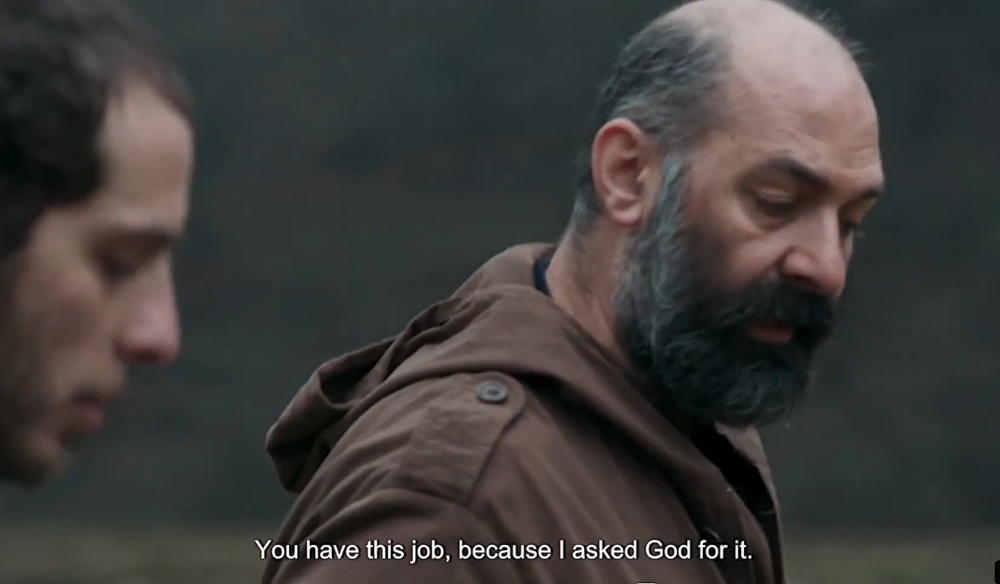
Shoja slowly become the central figure, with the viewer discovering what he is hiding from his fellow traveler. Beitollah is oblivious to the young man’s painful background, perhaps having no interest in understanding an unbeliever’s story. The older man’s arrogance shines a light on Shoja’s quiet demeaner, Hosseini showing defiance and resilience simply with his eyes. He is not really interested in the promised wealth of the treasure. He is searching for a sense of identity – one which is free from dogma and perceived miracles.
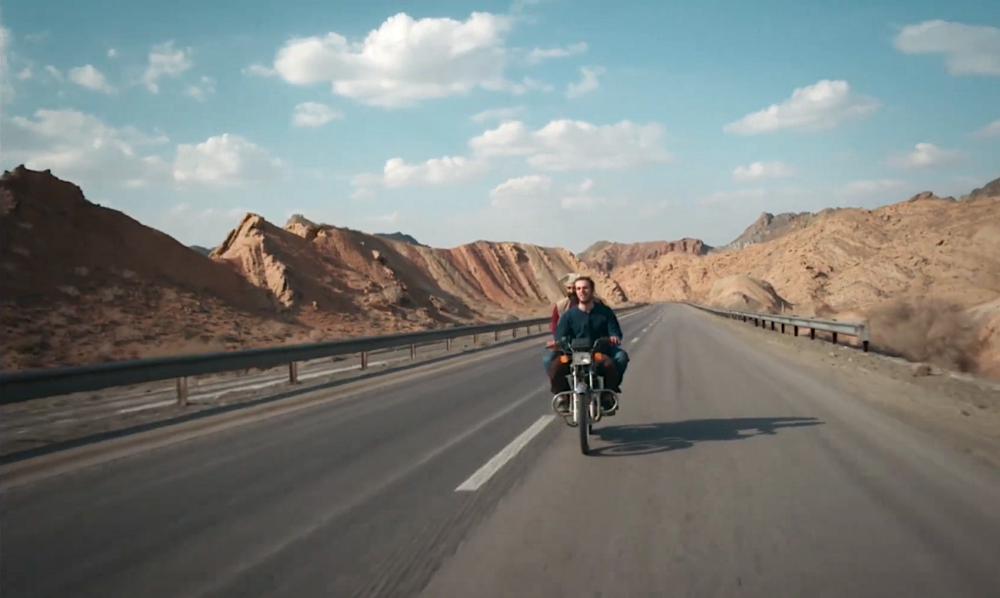
The more despondent the details we learn about them, the funnier become their snappy interactions. Is Shoja really an orphan or, as he later claims, the only one of his family left in Iran after his parents moved to Germany? Is he even Iranian, given his blonde hair and European looks? Is Bitollah really as desperately poor as he claims or does he have relatives with money? Their “cover” of being father and son unravels while staying with the innkeeper (Mehrdad Ziaie) who does not charge them because he is “in” with the motorcyclist on the scent of trail to money. Shoja takes pity on a young orphan boy he meets in a town in the desert – and ends up believing the boy that they can find the Cave of Jacob that that the boy describes. As the story unfolds, the characters of the two men seem to bottom out in the desert, as the harsh reality of the desert has no pity for their illusions.
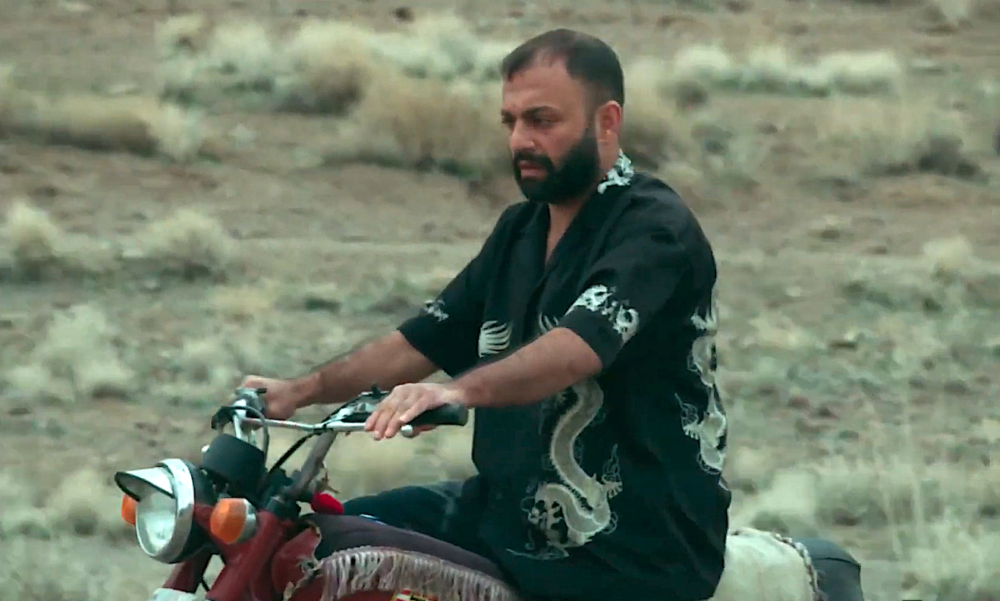
They wander through forlorn desert landscapes and an abandoned village only to find these places a metaphor for their own desperate hopes. Their encounter with a conman with a motorcyclist (Ramin Alizadeh) and his interest in a 30% take on a treasure saves them from certain death but shapes the destiny of both. Rasti combines the worlds of faith and superstition with desperate negotiations rooted in economic downturn.
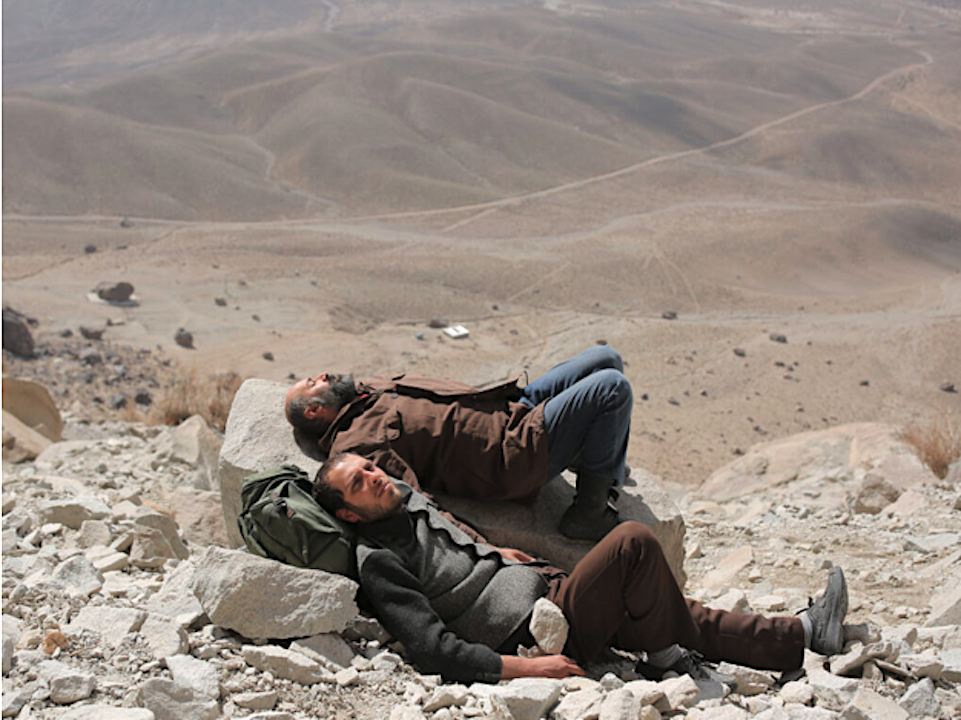
The director fittingly captures Beitollah’s meltdown as he loses faith in a divine sign while surrounded by an environment known for its illusory nature. Rasti makes a compelling point, not about the nature of faith, which the man undoubtedly has, but about greed, which surpasses kindness and leaves the heart vulnerable and barren.
The film is sold first and foremost by its precise performances. Both leading men appear to conform to specific types, between the overbearing Mohmmed Aghebati’s sharp, to-the-point delivery as the middle-aged Bitollah and Amirhossein Hosseini’s worn-out demeanor, burdened posture and sunken eyes. This is a fascinating role for Hosseini whose handsome looks dominate his previous performance as an avid bicyclist in Amir Azizi’s Inside Amir (2025), which also screened his past weekend at the UCLA Hammer.
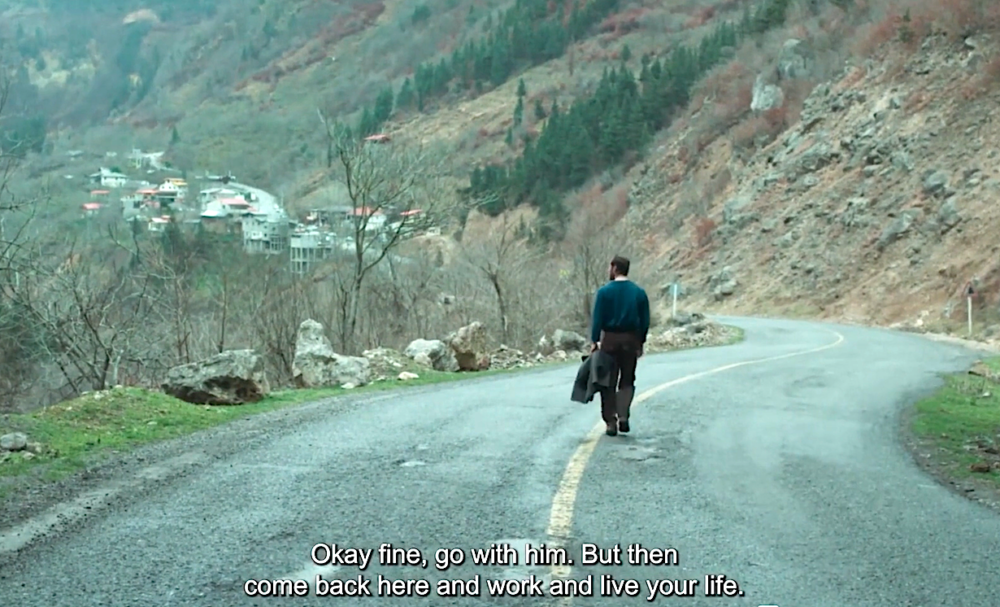
Rasti never loses sight of the spiritual questions in the characters’ peripheries and their contrasting energies in their trip from Tehran to the rural landscapes of Iran. We come to see the unlaying doubts in Beitollah’s own faith and convictions. We also come to understand Shoja’s detachment form the modern world where, as a young man, there is little hope and being so desperate for work, he is willing to go along with this superstitious scheme (short of murder). In the final scene at Jacob’s Cave, we are left to wonder that Shoja actually saw inside: Was there a treasure or not? Did he find nothing or did he lie about it?
The Great Yawn of History masterfully explores the tension between Beitollah’s unwavering faither and Shoja’s hidden pain. Their constant back and forth guides the viewer through a desolate landscape that might hide both riches and dangers. Ultimately, Rasi invites reflection on the nature of obsessive belief which pushes younger people way and creates great “yawning” chasms between generations.