By Teri Kinne
Los Angeles, CA (The Hollywood Times) 12/9/25
I attended an advance screening of Merrily We Roll Along with members of the Alliance of Women Directors, and the experience felt like rediscovering a story we all thought we already knew. I brought along a seasibed stage-actor friend to hear her perspective. She has always appreciated Stephen Sondheim’s famously misunderstood musical, beloved by loyalists yet elusive to me and many broader audiences, and she was hopeful that this new interpretation would reveal the piece anew. What unfolded was an intimate cinematic reimagining that did exactly that.
Fresh off its official selections pick at AFI FEST and the 2025 Hamptons International Film Festival, the film will now reach viewers who may have never set foot inside a live theater.
Courtesy of Sony Pictures Classics
Director Maria Friedman has lived with the material for decades, yet her version feels fresh.
The 1981 Broadway production of Merrily We Roll Along famously closed after only sixteen performances, in part because audiences found the reverse chronology confusing, distancing, or emotionally difficult to track. Sondheim himself spoke openly about this structural challenge, as did Harold Prince, the original director, and it has since become part of the musical’s core lore.
Now, Friedman embraces the camera as a way to finally resolve those barriers. “We all broke quite a few rules in the way we filmed,” Friedman explained in a production interview. “We dissected every moment to decide whose reaction mattered most.” The result is a version of Merrily that uses the language of cinema to illuminate the interior lives Sondheim wrote about so effectively.
A Story That Deepens as It Rewinds
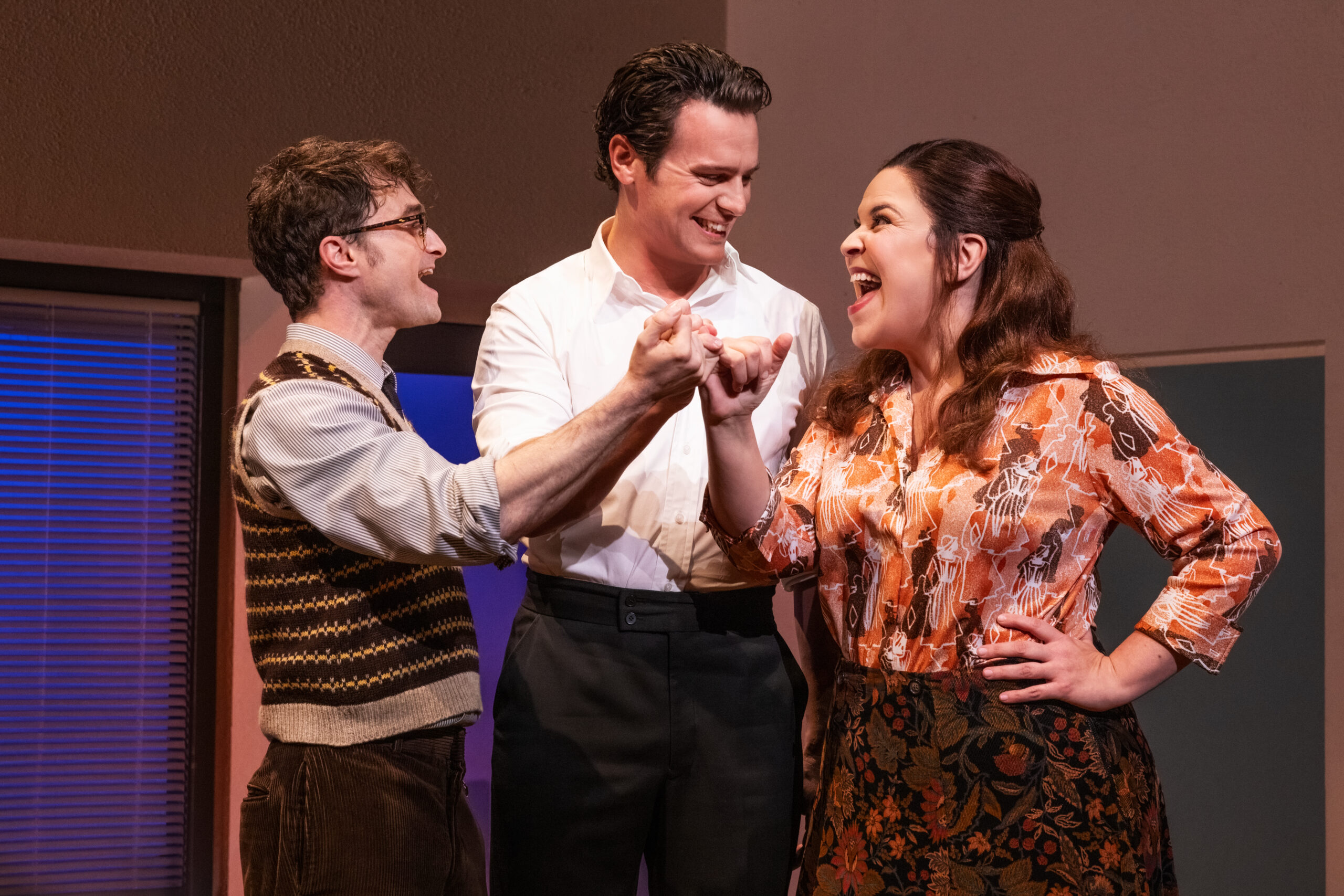
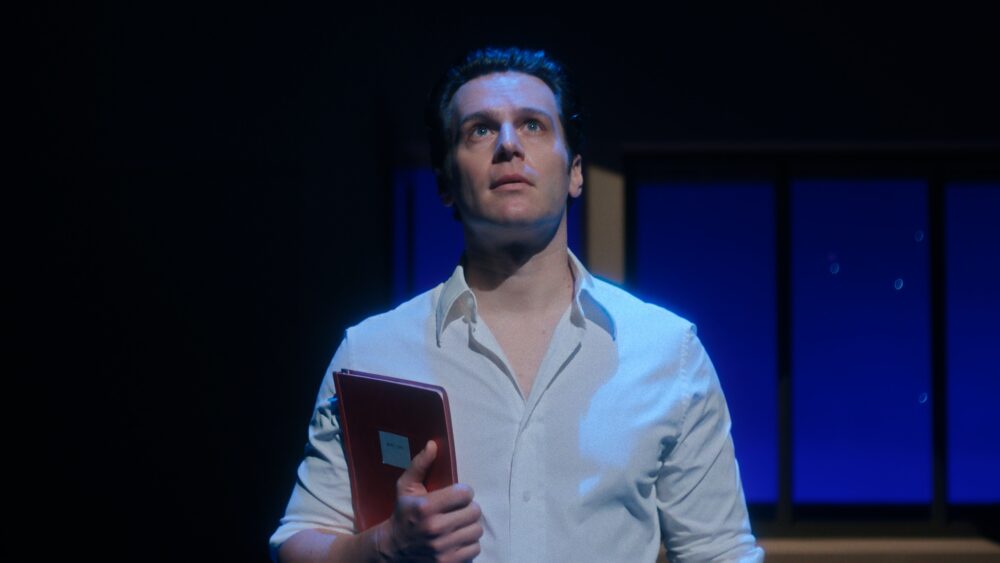
The film begins in 1978 at a chaotic Bel-Air party thrown by composer Franklin Shepard, played with magnetic ache by Jonathan Groff. His success has come at a cost. In close-up, his eyes reveal everything he cannot say. As Friedman notes, “Jonathan’s heart is enormous, and he plays Frank with internal agonies that flash through his eyes.” It is this microscopic access to emotion that gives the film its strength.
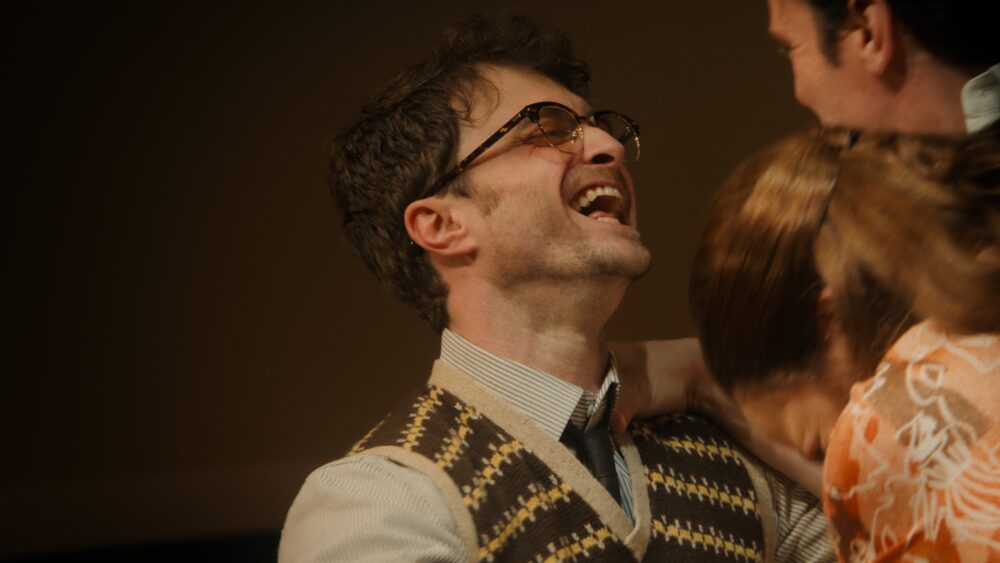
Daniel Radcliffe brings a beautifully calibrated performance as Charley Kringas, the playwright whose creative partnership with Frank will eventually fracture. Friedman described him as “absolutely about the details. He listens, absorbs, and constantly builds that exquisite performance.” Radcliffe’s precision pays off in the film’s most devastating moments.
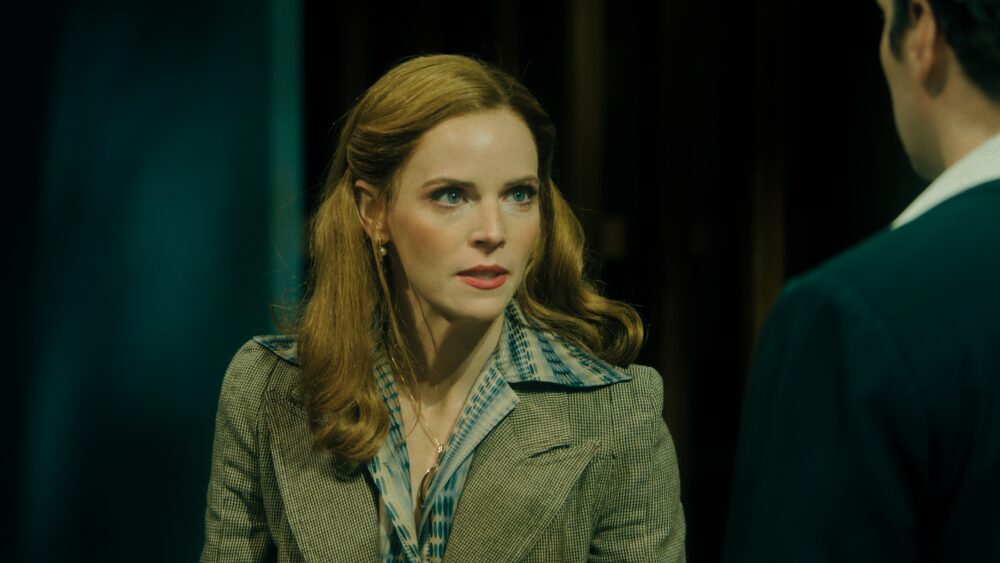
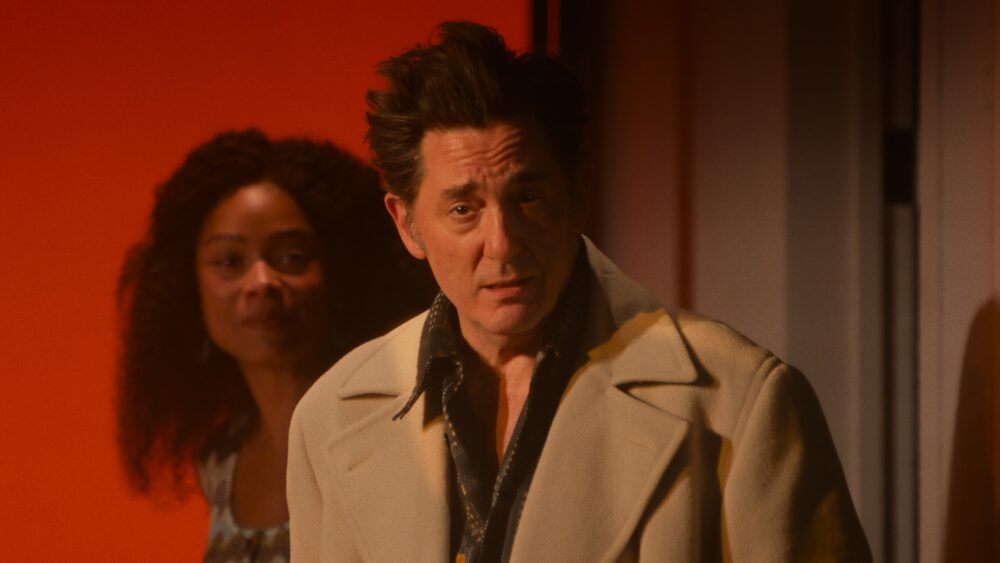
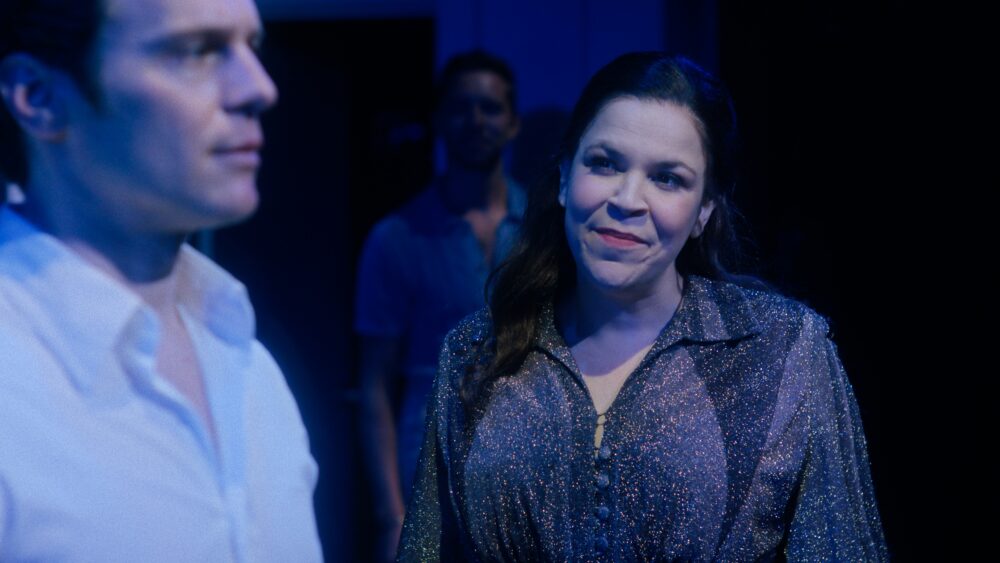
REG ROGERS as Joe Josephson. KATIE ROSE CLARKE as Beth Shepard. Courtesy of Sony Pictures ClassicsAs Mary Flynn, Lindsay Mendez delivers a portrayal of longing so understated that it takes hold quietly and then refuses to let go. Friedman observed, “Lindsay finds every shade of Mary in the smallest glances and moments. Those choices show us how heartbreaking her longing is.” On screen, these micro-gestures become magnified, creating a portrait of unspoken love that lingers long after the scene ends.
The Camera as a Confidante
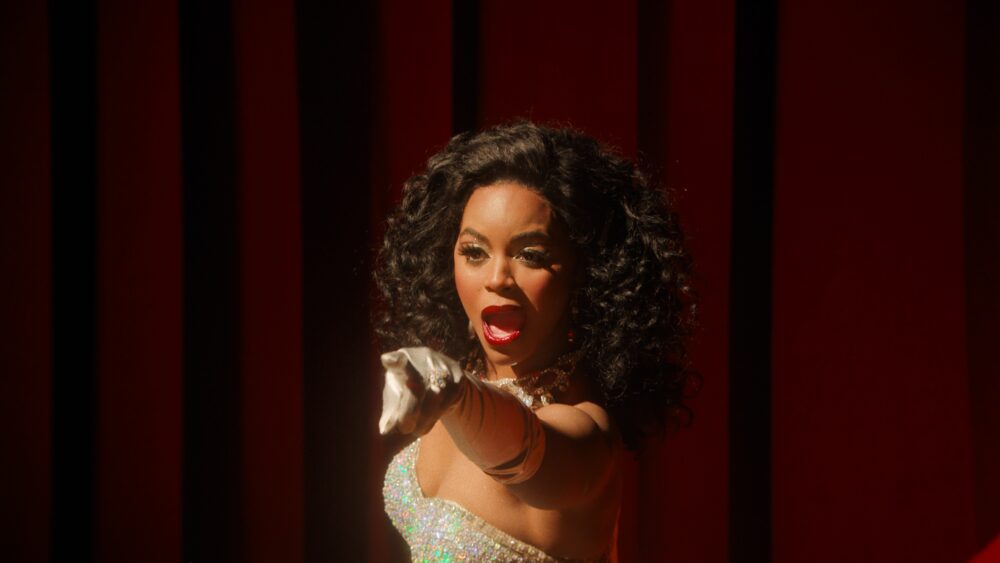
My stage actor companion for the film commented on the “almost claustrophobic” close range of the camera. It must be noted that we did sit uncomfortably close the screen due to the full theater. Later, upon research, I discovered that Friedman and cinematographer Sam Levy wanted to avoid the wide, detached framing typical of filmed stage musicals. Instead, they guide us as an audience into the emotion of the story. By keeping the lens close, they allow the audience to understand the cost of each character’s choices, even before the characters understand them themselves. The intimacy feels deliberate, strategic, and empathetic.
Courtesy of Sony Pictures Classics
The film’s backward movement through time allows the story to gather emotional resonance. As the characters grow younger, their decisions reverberate more sharply. According to Friedman, this elasticity is the heart of the piece. “This show grows with you depending on the age you are when you’re watching it. It morphs because we are changing.” That truth is felt with each reverse step the film takes.
Later, she adds what may be the clearest articulation of why Merrily We Roll Along endures: “It is the only piece I know that makes you ask the essential question: How did I get to be here?” In the film, that question is not just philosophical. It becomes emotional, lived experience.
A Legacy Reclaimed
For decades, Merrily We Roll Along has carried the complicated reputation of a brilliant work trapped inside an imperfect shell. Friedman’s film frees it. It allows the audience to feel the marrow of the story rather than track it from afar. And with a trio of actors performing at their artistic peak, the themes of friendship, ambition, compromise, and hope rise to the surface with clarity.
The film is not just a filmed musical. It gives audiences a story and a theatrical experience and vantage point. A way of seeing these characters, and perhaps themselves, with greater compassion.
Merrily We Roll Along has opened by December 6th in a limited release nationwide.