Thursday, June 25, 2026
Festival Theaters 5
By Valerie Milano
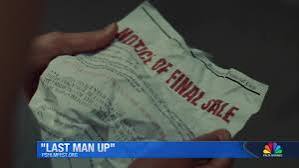
Palm Springs, CA (The Hollywood Times) 6/24/26 – Premiering at the Palm Springs International ShortFest, Last Man Up is a tense, kinetic 12-minute drama that explores male friendship, toxic masculinity, and the consequences of avoiding difficult truths. Co-written by Robert R. Palmer and directed by Hazel McKibbin, the film throws viewers into the chaotic final day of a group of lifelong friends whose world begins to collapse after they discover their home is headed for foreclosure.
McKibbin, whose previous work has largely centered on women, deliberately challenged herself by stepping into an all-male story. “The power struggles are genderless,” she explained during our interview. “What is unsaid is kind of universal.” That philosophy is evident throughout the film as these young men struggle to express love, fear, and vulnerability without resorting to anger or violence.
For Palmer, the screenplay grew out of a long-standing fascination with masculinity. “My work thematically has always lived in this world of exploring the masculine binaries and the rules that men are expected to live by,” he said. He wanted to tell the story of “a group of boys that didn’t have any role models and didn’t have anything to look up to.” Those themes give Last Man Up emotional depth beyond its brief runtime.
Visually, the film is one of the stronger entries at ShortFest. Cinematographer Bradley Credit creates an immediate sense of urgency, while an in-story Handycam adds an intimate, documentary-like realism. McKibbin revealed that the footage wasn’t even monitored during production, allowing unexpected moments to emerge in the editing room. The goal, she said, was “to make it as intimate as possible,” while Palmer hoped audiences would feel “like nobody’s acting.” The result is an immersive viewing experience that often feels startlingly authentic.
 Robert R. Palmer delivers a committed performance as Ty, a young man desperately trying to maintain control while hiding the truth from those closest to him. Armando Rivera and Joseph Basquill round out the central trio with believable chemistry that sells the complicated bond between these friends.
McKibbin also made a deliberate storytelling choice by compressing the narrative into nearly real time. “When you compress the time, you compress the conflict… it makes it more combustible,” she explained. That decision pays off, as the tension escalates almost minute by minute, never allowing either the characters or the audience a chance to breathe.
One of the film’s strongest ideas is emotional avoidance. The characters are constantly running, partying, and distracting themselves because, as McKibbin observed, “if they stop moving, then they have to reckon with the truth of what is going on.” That insight becomes the emotional engine driving every decision the characters make.
Where the film ultimately lost me, however, was its ending.

Without revealing every plot detail, the story culminates in a tragic accident after one friend fatally strikes another. Rather than confronting what has happened, the surviving friends simply leave him behind. For me, this wasn’t merely an example of toxic masculinity or emotional avoidance—it felt like a profound absence of accountability. I kept asking myself whether this reflected the characters’ complete lack of a moral compass or whether the film intentionally wanted audiences to wrestle with that uncomfortable question.
Ironically, Palmer himself described the healthier version of this story during our conversation. “The world in which this film doesn’t take place,” he said, “is Ty going to them and saying, ‘Look, man, the house is getting foreclosed upon. I love you guys so much. I don’t know what to do. Can you help me?’ There’s no film then—but that’s probably how it should go.”
That quote perfectly illustrates what left me unsatisfied. I wasn’t expecting a happy ending, but I did hope to see some acknowledgment of responsibility, remorse, or the devastating consequences of leaving a friend behind. Instead, the abrupt conclusion left me emotionally disconnected from characters I had spent the previous ten minutes trying to understand.
 Even so, Last Man Up succeeds as an energetic and technically accomplished short film. The performances are authentic, the cinematography is immersive, and its examination of unhealthy masculinity is timely. As McKibbin hopes, audiences will likely leave discussing “what it means to be the man of the house” and the ways toxic masculinity shapes young men. Palmer’s hope is even simpler: “Young men see it… and they just tell their friends they love them, and they don’t have to resort to anything else to solve their issues.”
Whether viewers embrace or reject its ending, Last Man Up is certain to spark conversation, and perhaps that’s exactly what its filmmakers intended.
⭐️⭐️⭐️☆☆ (3/5 Stars)