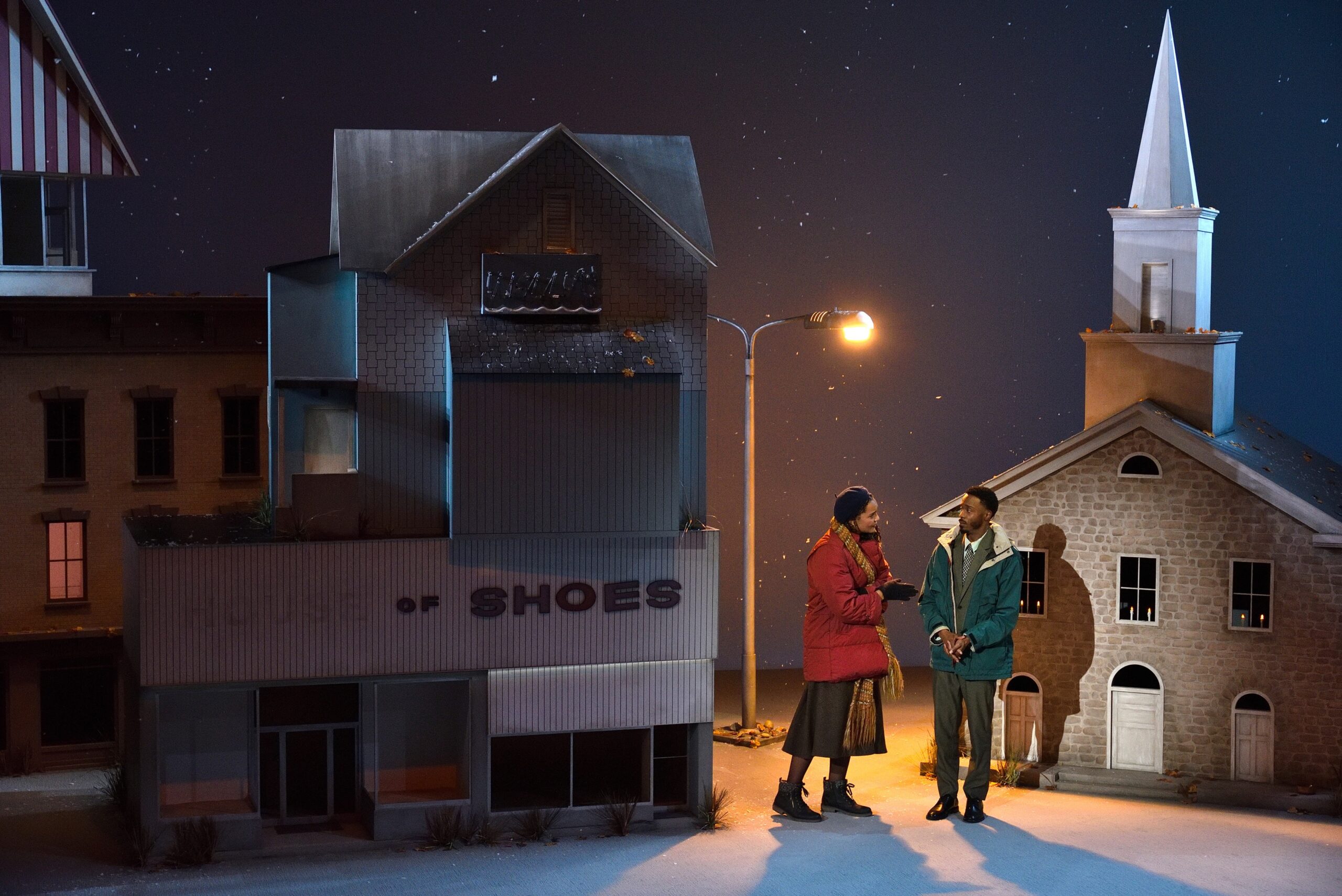
In a startling production at the Mark Taper Forum, a superb cast and nuanced direction bring extraordinary emotional depth to Eboni Booth’s Pulitzer Prize-winning drama.
By John Lavitt
Los Angeles, CA (The Hollywood Times) 06-02-2026
Every so often, a theatrical experience refuses to end when the curtain falls.
As a reviewer, I generally prefer to stay out of the story. The focus should remain on the work itself rather than the critic experiencing it. Yet PRIMARY TRUST at the Mark Taper Forum leaves me little choice.
This review arrives later than intended because Eboni Booth’s Pulitzer Prize-winning drama affected me more deeply than I anticipated. The play’s exploration of childhood trauma, loneliness, memory, and emotional survival lingered long after I left the theater, demanding reflection before criticism. Some productions entertain. Some impress. A rare few disturb and move us so profoundly that they cannot be processed immediately.
That delay turned out to be a gift because PRIMARY TRUST rewards contemplation. Beneath its gentle surface lies a profound examination of what it means to endure devastating loss and somehow continue living.
That tension between safety and confinement permeates every aspect of the production. Scenic designer Marsha Ginsberg creates a small-town world that feels like an enlarged version of Mister Rogers’ Neighborhood, simultaneously comforting and confining. The storefronts, church, and quiet streets possess a storybook charm that initially feels comforting and familiar. Yet as the evening unfolds, the set reveals something more complicated.
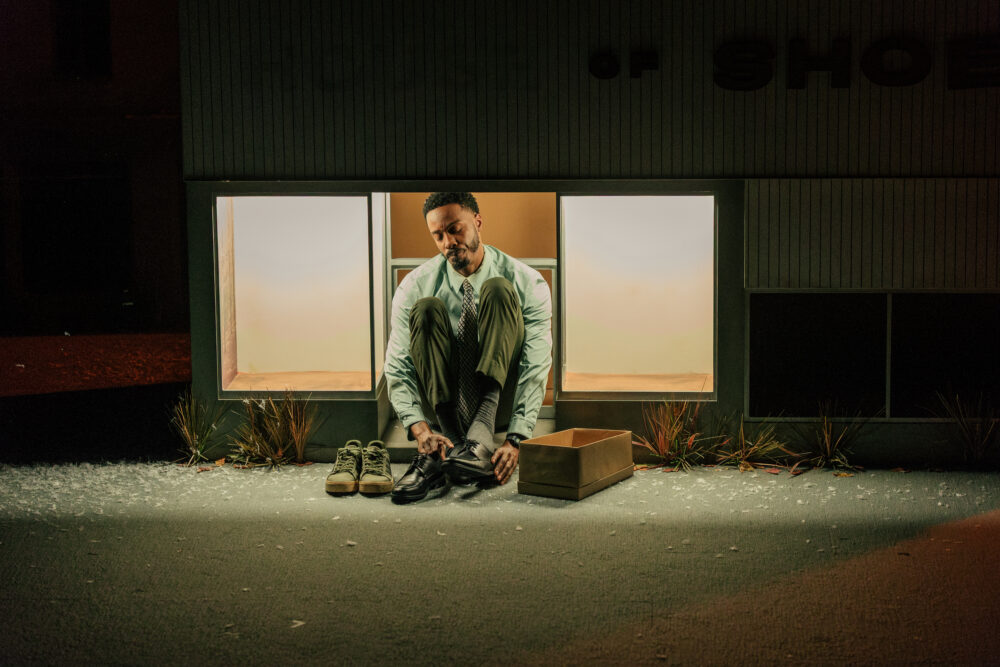
Like Kenneth himself, the town exists within carefully defined boundaries. It offers security and predictability while simultaneously restricting growth and connection. The result is a striking visual metaphor for the lingering effects of childhood trauma, where the structures built to protect us can eventually become the very walls that isolate us from the world.
At the center of this carefully constructed world stands Petey McGee in a remarkable performance as Kenneth. What makes McGee’s work so extraordinary is his understanding that trauma rarely manifests as simple vulnerability. Instead, he gradually reveals how closely intertwined fragility and anger can become.
Kenneth’s routines, awkward social interactions, and desperate yearning for connection are often heartbreaking. Yet beneath them lies a reservoir of frustration, fear, and unresolved pain that McGee uncovers with extraordinary patience and precision. The performance never asks for sympathy. It earns something far more meaningful: genuine empathy.
Rebecca S’Manga Frank delivers an equally impressive performance as Corrina, one of the few people capable of helping Kenneth step beyond the confines of his carefully controlled existence. Frank brings warmth, intelligence, humor, and emotional authenticity to the role, allowing the relationship to develop organically without sentimentality.

At the same time, she executes a dazzling series of transformations, stepping into a seemingly endless parade of additional characters, including numerous waiters and waitresses who populate Kenneth’s world. Yet no matter how many transitions she performs, Frank never loses sight of the emotional truth at the heart of Corrina. She ensures that the character remains the play’s essential anchor to reality and possibility.
The supporting performances are equally vital to the production’s success. James Urbaniak slips effortlessly among multiple roles, helping to create the town’s rich social fabric while maintaining the production’s delicate balance between humor and pathos. Each appearance feels distinct and fully realized, adding texture and depth to Kenneth’s increasingly complicated journey.
Ugo Chukwu faces a different challenge as Burt, Kenneth’s imaginary best friend and constant companion. Rather than treating the role as a whimsical theatrical device, Chukwu imbues Burt with warmth, charm, and surprising emotional complexity. His performance makes it easy to understand why Kenneth clings so fiercely to Burt’s companionship. In doing so, Chukwu reveals how difficult it can be to relinquish coping mechanisms born of trauma, even when they begin to hinder growth.
As the embodiment of a coping mechanism born of loneliness and trauma, Burt represents both refuge and limitation. He provides companionship while insulating Kenneth from the risks inherent in genuine human relationships. Chukwu’s nuanced performance ensures that Burt remains deeply likable and quietly heartbreaking, embodying the contradictions at the center of Kenneth’s struggle.
Knud Adams’s remarkably assured direction guides the entire production. His work is defined by restraint, precision, and trust in Booth’s script and his performers. Adams understands that PRIMARY TRUST at the Mark Taper Forum achieves its greatest power not through theatrical spectacle but through carefully observed human moments. He allows humor, fantasy, grief, and hope to coexist naturally, creating a production that feels both intimate and universal.
The result is a startlingly powerful evening of theater that lingers long after the curtain falls. PRIMARY TRUST confronts an uncomfortable truth many would rather avoid. Childhood trauma does not simply disappear with time. Yet Booth’s play also offers something equally important. Through connection, vulnerability, and the courage to step beyond the protective walls we build around ourselves, healing remains possible. In a world increasingly defined by isolation and disconnection, that message feels both timely and profoundly necessary.