An interesting and somewhat challenging film from Argentina at this year’s AFI FEST 2025 is Alejo Moguillansky’s Pin de Fartie (English: Endgame). Adapting Samuel Beckett’s iconic 1957 play Endgame with gleeful, reckless abandon, maverick Argentine filmmaker Alejo Moguillansky returns to AFI FEST for the first time since he last adapted the Irish master with his breakthrough film Castro(AFI FEST 2009). While Beckett’s original work contained just four characters trapped on stage in a bleak far-off future, Moguillansky changes the basic situation. In Samuel Beckett’s one-act classic, Endgame.

Beckett’s play follows Hamm, a blind man who is unable to stand, and his servant, Clov, who is unable to sit. Hamm’s parents have no legs and live in dustbins nearby. As humanity is coming to an end, four characters play out their own games of manipulation just to pass the time. The play’s title refers to chess and frames the characters as acting out a losing battle with each other or their fate.
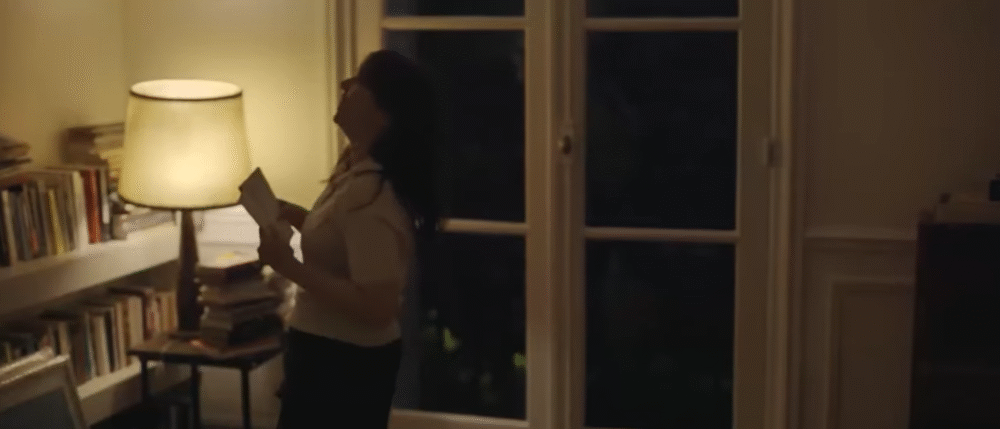
Moguillanksy’s Pin de Fartie unfolds as an experiment in character dynamics. The film charts three relationships defined by Samuel Beckett’s play: One between a blin man and his daughter; another concerning two actors rehearsing the same text; the third following a man who reads his blind mother Beckett’s paly and discovers that it reflects their lives. In the film, the blind man Otto (Santiago Gobernori) banters endless set against Swiss mountain scenery with his young domestic workers Cleo (Cleo Moguillanksy). Meanwhile in Buenos Aires a pair of actors (Laura Paredes and Marcos Ferrante) meet every week to rehearse scenes from Beckett’s play. There seems to be a romance brewing between them. At the same time, a tennis-loving young man (played by director Alejo Mogilllansky) reads Beckett’s Endgame to his blind mother.

This complex palimpsest of textual repetition is given moments of magic with refractions, suic and dance. The film was produced by Laura Citarella, who is also a filmmaker an had her film Trenque Lauquen at AFI FEST in 2022. Since the early 2000s, the fiercely independent Argentine filmmaking collective El Pampero Cine has built a sui generis filmography by shirking conventions. A catalogue that includes Mariano Llinás’ 13.5-hour La Flor and Laura Citarella’s 4.5-hour Trenque Lauquendoesn’t exactly make it easy. Pin de Fartie, the latest from co-founder Alejo Moguillansky, clocks in at a mere 106 minutes. How it expands on and deconstructs one of the 20th century’s defining absurdist plays will force one to think deeply about the parameters of absurdist theatre.
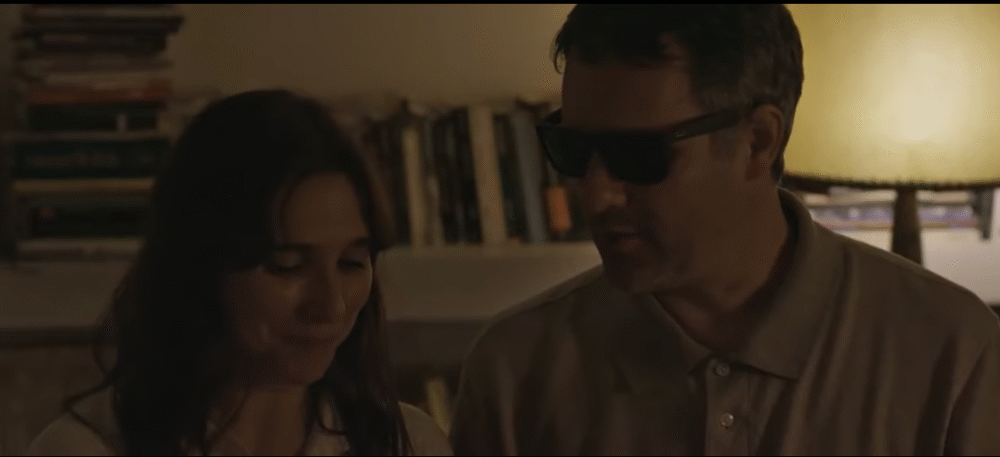
Samuel Beckett’s Fin de Partie (Endgame) is a highly experimental, one-act tragicomedy is set in a single room featuring four characters who banter while contending with the bleakness and meaninglessness of existence. Pin de Fartie opens on a scene meant to immediately remind one of the play’s setting: A blind man Otto bosses his servant / caretaker Cleo around, while exchanging a series of mundane, repetitive questions and answers – except here the recipient of the blind man’s (Otto) petty rage is a girl (Cleo).
This isn’t just an updated reenactment of the source material. We realize this when the camera cuts to a team of people providing narration and sound effects. Things get more complicated when the same team starts narrating “variants” of Beckett’s story: One in which two actors meet weekly to rehearse Fin de Partie, and another where a blind woman asks her son to read her the play. In addition to the meta quality of the whole construction, the fates of characters begin diverging from their literary counterparts in unexpected ways.

There is no question that the film is rather esoteric in conception and execution. Viewers unfamiliar with Beckett’s philosophical leanings about existential despair would have a harder time finding their way into it. The obsessively wordy script (featuring entire passages lifted verbatim from the original play) doesn’t make it any easily more accessible.
The inherent silliness of Otto and Cleo’s situation is underscored to bring out the comedy in Beckett’s words. While you still sense the frustration of the characters who feel trapped and unable to change anything around them, the sheer banality of their quick-fire back-and-forth (“What time is it?” “The usual.”) exposes the artificiality of the world they inhabit and injects sharp comedic relief.
What is new in Moguilllansky’s version of Pin de Fartie is the segment about rehearsals. The two actors begin to doubt whether the feelings they have for each other are their own or all pre-written. This is truly the theatre of the absurd: Their weekly meetings turn into an examination of performance and authenticity.
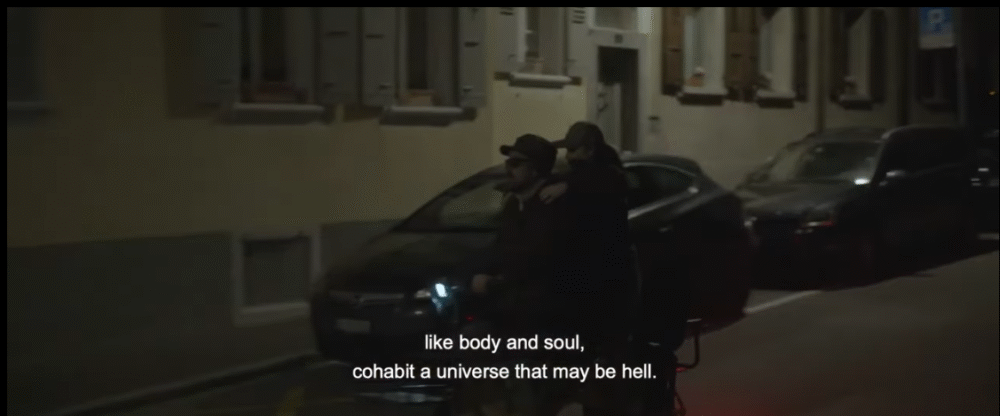
The oddest section of the film is that of the blind woman and her son. The doubling up and overlay of his reading the Beckett play aloud to his blind mother serves to draw attention to his own life. Is his mother trying to tell him something through the requested reading of Beckett’s play to her? Is he being forced to question his own being? This is certainly the most disturbing aspect of the film. From the young man’s discovery of a tennis player who looks just like him to decoding the phrase tattooed on his doppelganger’s arm, the story takes such a strange turn as to suggest a whole different movie.
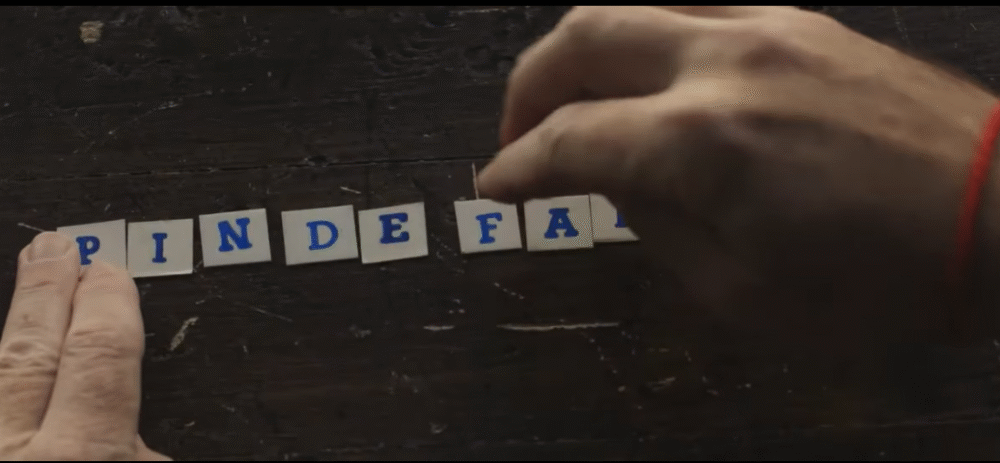
It has been pointed out that this kind of abandonment of logic and traditional narrative is typical of the work of El Pampero Cine in Argentina. This is perhaps a new twist to what was previously known as the Theatre of the Absurd. The omniscient narrator seems to control the storytellers and we seem powerless to change the narrative. Interestingly enough, the whole film seems to take place in a recording studio, suggesting that it is all pre-scripted. Are any of the characters able to break free from the cycle of their established roles? By consigning its characters to a world envisioned by Beckett but giving them the agency to go off-script, Pin de Fartie becomes an uplifting, quietly profound rebuttal of a text it deftly reimagines for the screen