By Tobe Pilato
(The Hollywood Times) 2/23/26 – As the great-granddaughter of a Holocaust survivor from Poland, I grew up inside the mandate to never forget. The exposure, history and sorrow are not new.
What is new is this medium.
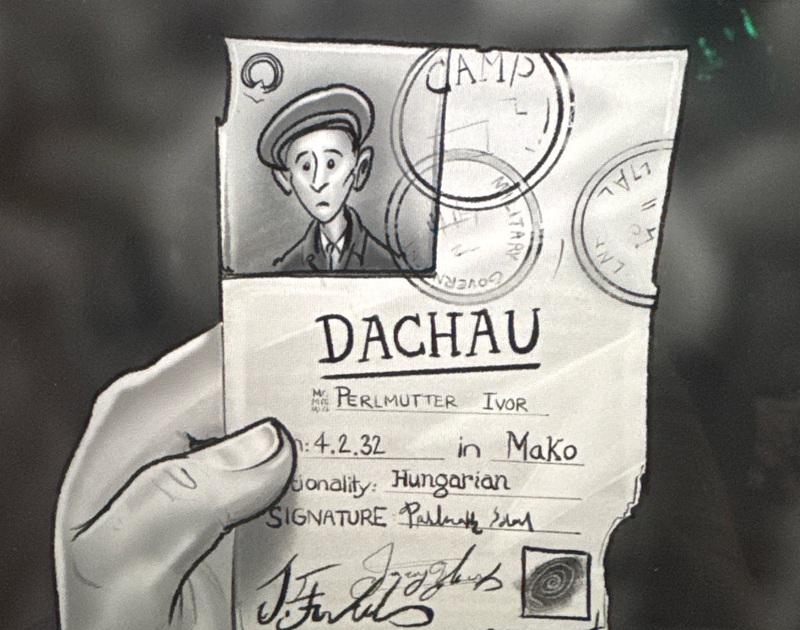
This is not a fictionalized Holocaust narrative. It is the testimony of Ivor Perlmutter, a real boy from Mako, Hungary, whose family was torn apart in 1944. The film exists to memorialize them, his parents, his brother, and the community that did not survive. The animation is drawn from real photographs, real names, real archival record. The paper bodies are not abstraction; they are remembrance rendered in a new visual language.
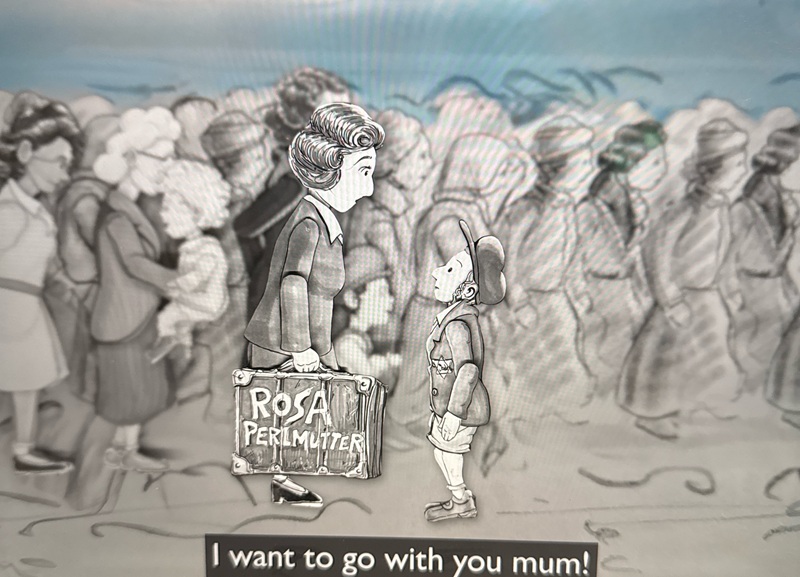
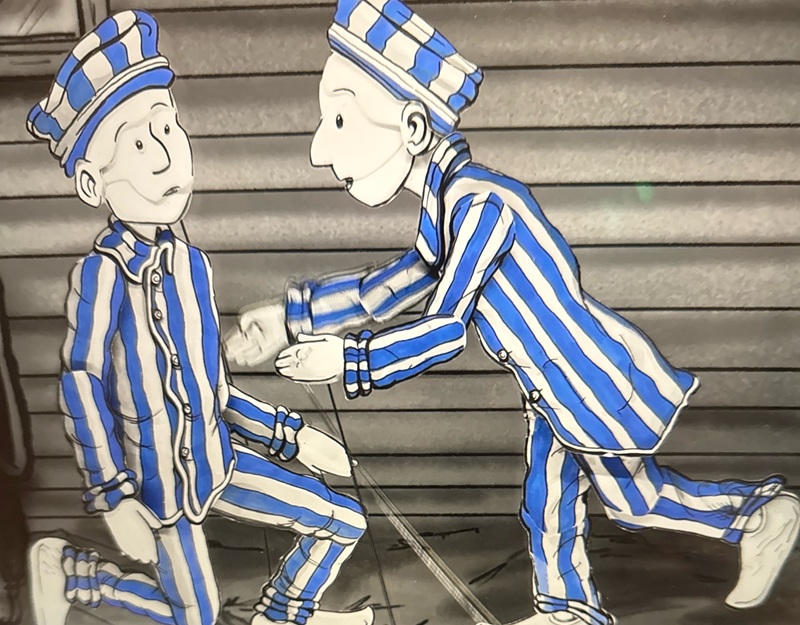
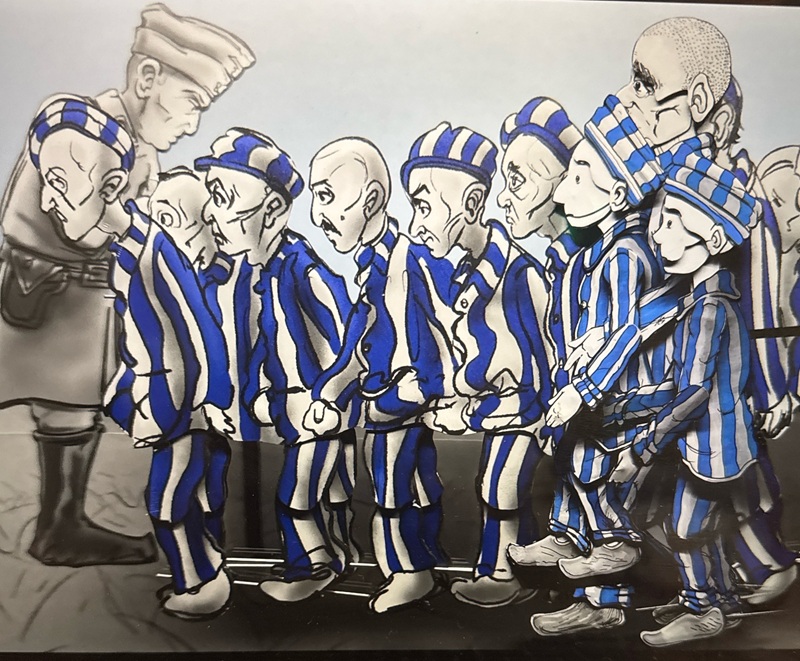
Survivor tells the story of Ivor Perlmutter, beginning in Mako, Hungary, 1944, not through documentary footage, but through restrained, black-and-white animation. The figures move like paper cutouts. At times they glide together as if one sheet. Occasionally thin wires appear on wrists and ankles, visible strings suggesting manipulation. It feels like puppetry, and that is precisely the point.
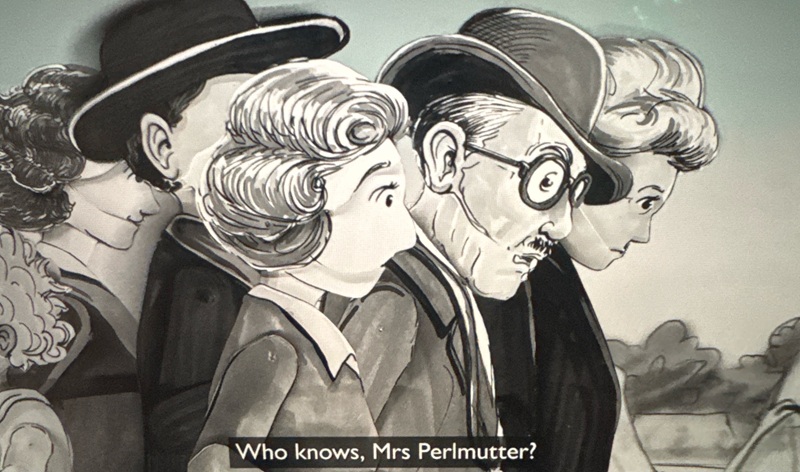
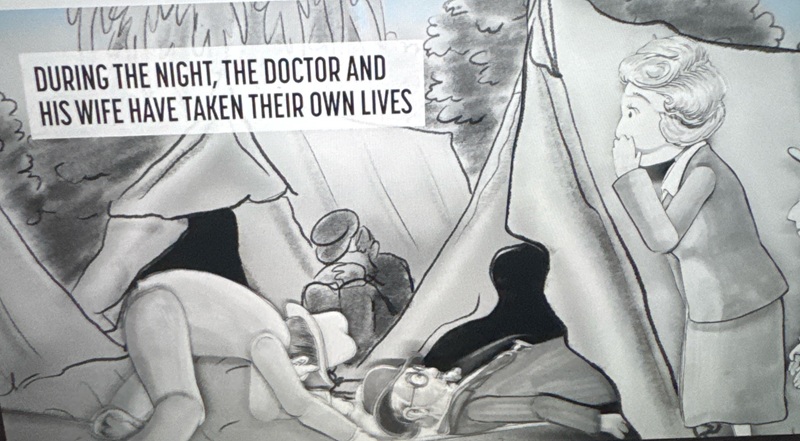
The first death we are exposed to is preemptive despair. Mrs. Perlmutter, walking beside her husband, says, “Surely wherever we are going must be better than this.” There is still hope in her tone. By morning, the doctor and his wife have taken their own lives. And through it, the cantor’s chanting, spiritual and unwavering, overlaying the scene like a tether to something eternal.
The animation is almost entirely monochrome. Only one color consistently interrupts the black and white: blue. Blue in the sky. Blue in the uniforms. Blue returning in different forms throughout the film. It becomes symbolic without ever announcing itself, heaven and captivity sharing the same palette.
The personalization of the Perlmutter family anchors the narrative. The tragic loss of the mother. The older brother trying to get bread thrown over the fence. The bread arriving. The bread stopping. The waiting. The not knowing. At one point, a single tear rolls down a cardboard face capturing his aloneness for the first time the moment he believes he has lost everything and everyone. It is brief but piercing. And then, unexpectedly, he finds his brother again, nearly unrecognizable to each other.
The film’s most devastating moments are not graphic; they are structural. When the boys are forced to slap each other, forced to fight, the strings on their hands are visible. They are not acting freely. They are being manipulated. The visual metaphor is simple and unforgettable. Sound is where the immersion deepens.
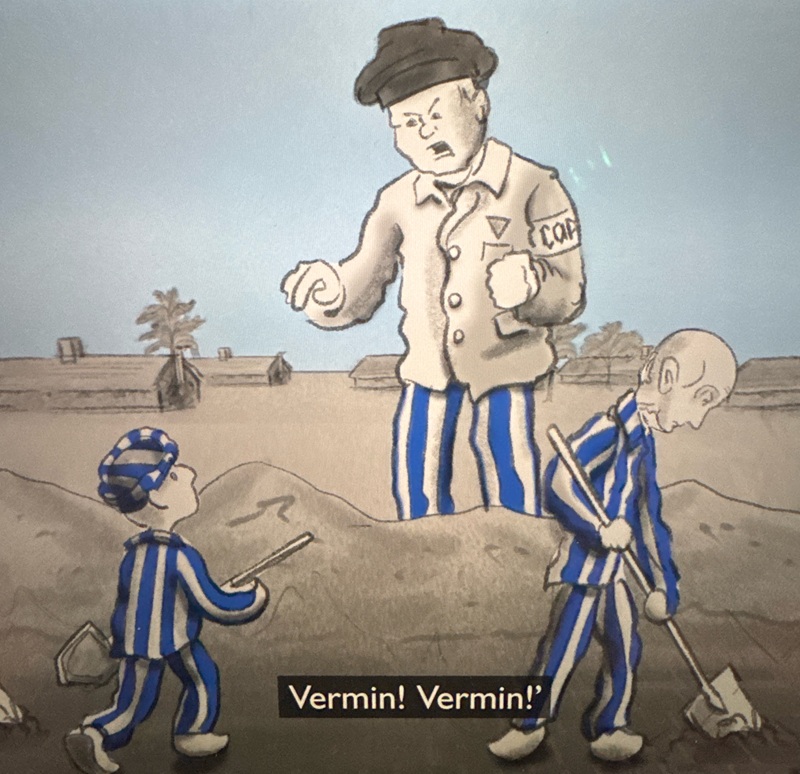
Behind the animation, a synagogue cantor chants. The spiritual resonance of prayer, ancient, trembling, rooted, collides with the mechanical sounds of trains, planes, marching. Industrial recordings layer beneath sacred liturgy. We are watching drawings, yet we are submerged. The sensory design makes it physical.
Yiddish dialogue threads against German commands. Identity against authority. Soul against system.
I was in Hungary in January 2025. I visited one of the only synagogues not torn down during the war. The air was heavy with memory. Hungarian Jews produced Nobel laureates, scholars, musicians, so much intellectual and spiritual richness, and yet were deported, displaced, erased. Watching Mako, Munich, Dachau, Feldafing unfold on screen felt layered. Geographic memory met personal presence.
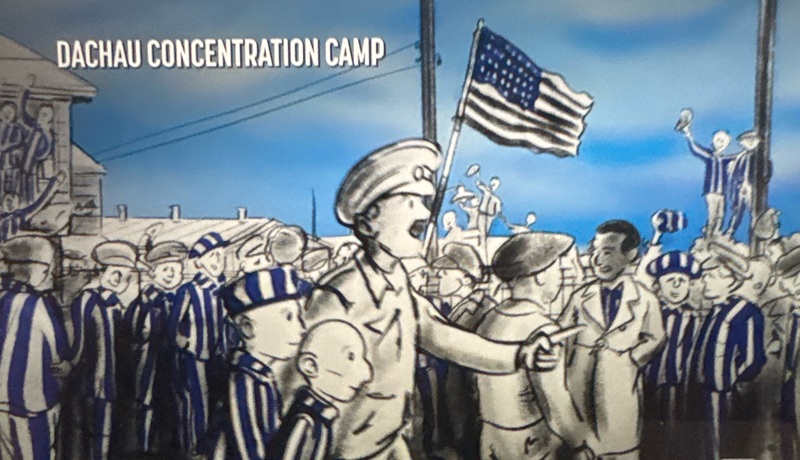
Throughout the film, synagogue tones and Hebrew prayer intertwine with the industrial sounds of trains, planes, boots, and breath. We are watching animation, paper bodies, drawn faces, and yet we are completely submerged in a multi-sensory reality. The film tracks movement relentlessly: cattle cars, death marches, displacement camps. And then liberation. The door breaks. Silence. American voices. Chocolate offered to skeletal boys. Swing music rises. The tonal shift is jarring, and human.
Later, in London. Saint James’s Palace. Marriage. A medal awarded decades later. A family gathered in 2023 at the launch of a book. The arc from annihilation to continuity refuses to end in smoke.
The film closes with names. Real photographs beside drawn faces. Archival acknowledgments. It insists this was not allegory. These were people.
What remains with me is the mixture, dread and uplift intertwined. The recognition that survival is not triumph over suffering, but life carried forward despite it. The chant of “Oseh Shalom”, He who makes peace, lingering as the story transitions from camp to covenant.
Survivor does not offer comfort. It offers witness.
And somehow, through paper bodies, blue sky, and the sound of prayer layered against industry, whimpers and horror, it makes that witness immersive.