By Valerie Milano
Palm Springs, CA (The Hollywood Times) 7/21/26 – The Hollywood Times generally focuses on entertainment, arts and culture rather than local politics. However, when an issue directly affects the future of Palm Springs, and when a longtime community leader takes the time to explain the process clearly, it deserves attention.
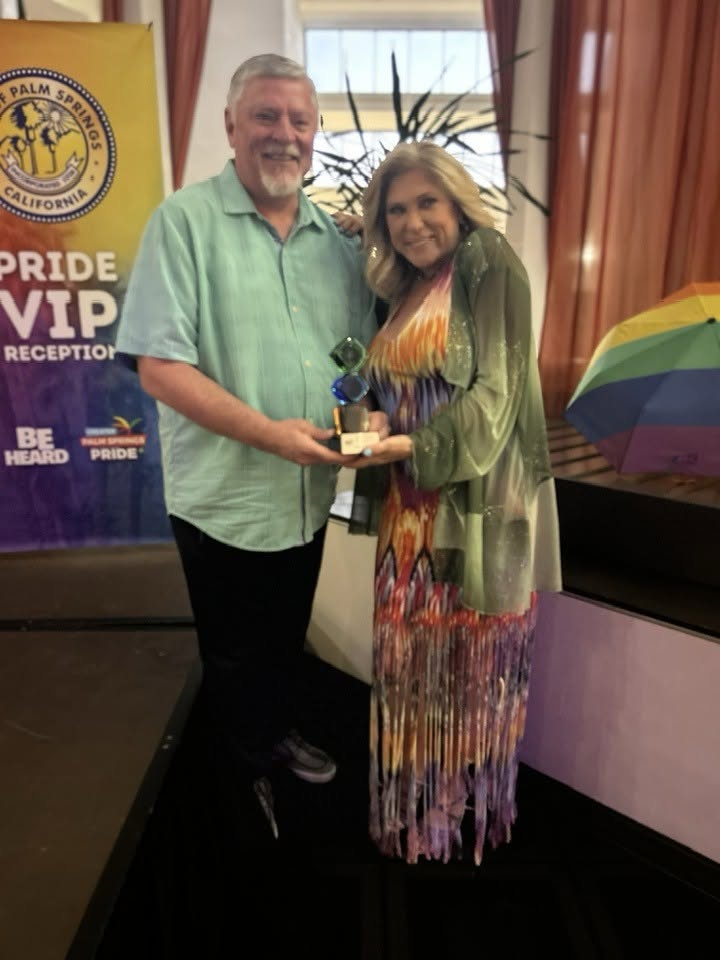
Palm Springs City Councilmember Ron deHarte is also a friend who presented me with the Palm Springs Pride Arts & Culture Award in 2025, during his time as mayor. I recently spoke with him via Zoom about a series of community meetings that could help determine whether Palm Springs continues its current rotating mayor system or returns to electing a mayor citywide.
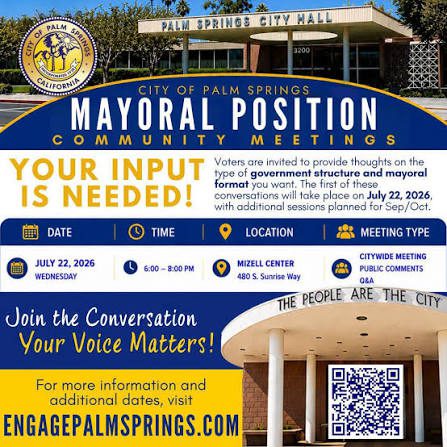
The city is holding seven meetings through the end of October to hear directly from residents about what they want from the mayoral position, not only how the mayor should be selected, but also what responsibilities and authority the office should carry.
“The primary goal is to get input from the community on what they want their mayor to be and what they want their mayor to do,” deHarte explained.
Click below to see our exclusive interview:
Palm Springs previously elected its mayor citywide. That changed when the city moved to district-based City Council elections, and the mayoral title began rotating among the five district-elected councilmembers.
“It’s only been a few years that we have not been electing our mayor,” deHarte said. “The mayor has been rotated between the City Council members who have been elected by districts.”
The community discussion is not limited to a simple yes-or-no question.
Residents may support retaining the current rotating system, returning to a directly elected citywide mayor or considering another governance model. The meetings will also explore what powers an elected mayor should have.
Possible models could give the mayor powers equal to those of other councilmembers, allow the mayor to break tie votes or provide veto authority. Residents will effectively be asked to help create a job description for the position.
“What do you want the mayor’s job description to be?” deHarte asked. “What should the mayor’s role be? What power should the mayor have?”
That distinction is important because electing a mayor citywide does not automatically determine whether Palm Springs would have a ceremonial mayor, a stronger executive figure or something in between.
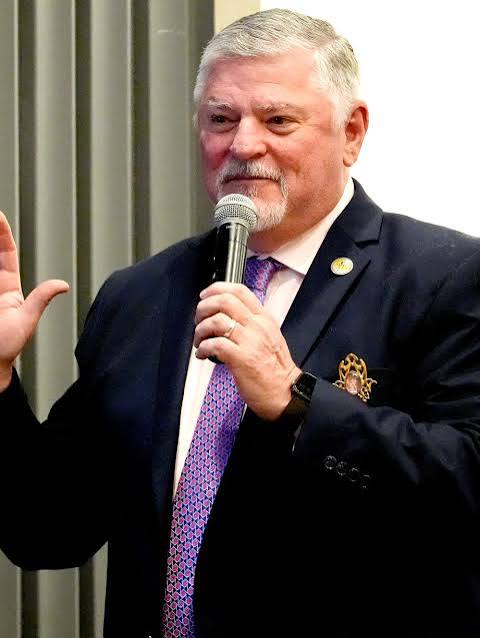 DeHarte said supporters of a citywide election argue that residents should be able to vote directly for the person who represents Palm Springs as mayor.
Under the rotating system, a councilmember may be elected by voters in only one district before later serving as mayor of the entire city.
“Right now, the mayor is somebody who could be elected by less than a thousand votes in a district,” deHarte said. “That’s leaving out 44,000 people in the city who didn’t pick that mayor to be sitting in a rotational spot.”
Supporters of the rotating model, however, believe it creates more opportunities for councilmembers from underrepresented communities to serve in the leadership position.
DeHarte said the experience of other California cities suggests district elections can also create a pipeline for candidates who later seek citywide office. By serving first as district representatives, candidates can build experience, visibility and a record that voters throughout the city can evaluate.
“When you get into that leadership role as a councilmember, you get to prove to the community you have the skills, the ability and the vision to lead the city,” he said.
A six-resident working group is conducting the public process. Three members were selected by deHarte and three by Councilmember Grace Garner.
DeHarte emphasized that neither councilmember asked the residents they selected to declare a position in advance. He and Garner serve only as liaisons between the working group and the full City Council.
 “We are not sitting on the working group as members,” he said. “We are at arm’s length from the actions that they take.”
The working group is responsible for hosting the meetings, collecting public comments, considering possible governance models and eventually presenting its findings to the City Council.
How the group will organize, score or summarize the public feedback has not yet been finalized. However, every meeting will be videotaped, and transcripts will be available so the public can review the discussions.
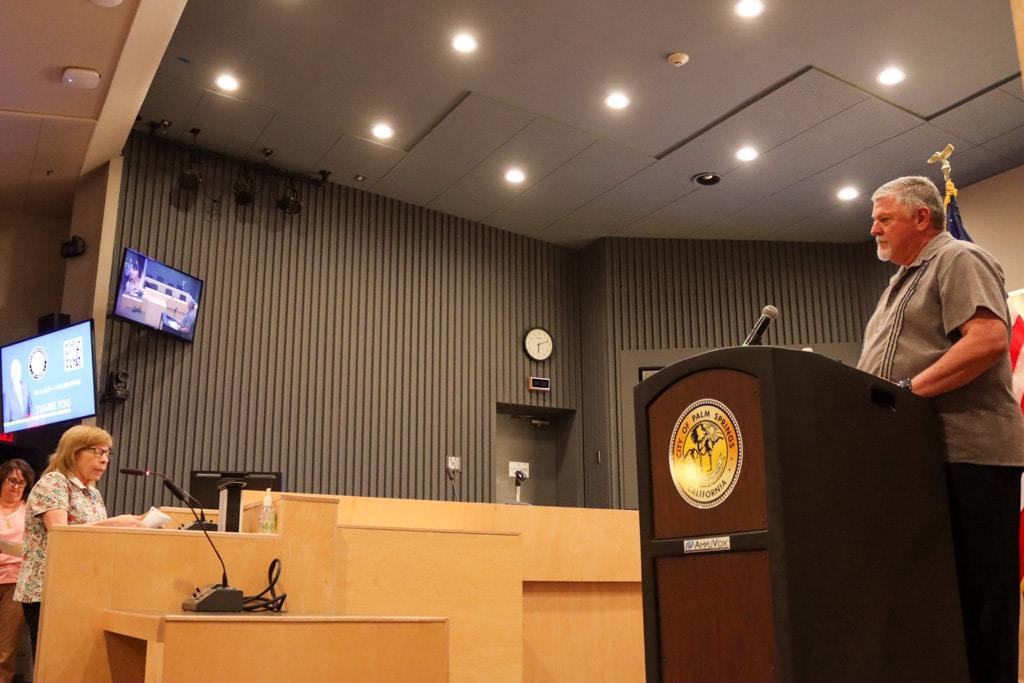
The seven meetings are being held at different times and locations, with a meeting planned in every Palm Springs district. One complete session will also be conducted in Spanish.
“We want to be able to make the conversation accessible to everybody,” deHarte said. “Every district will have a meeting in their district. People can feel comfortable going to their own neighborhood meeting.”
The goal, he added, is to bring together a broad and diverse group of residents.
Those who do not wish to speak are still encouraged to attend. Residents may listen, learn about the available options and hear perspectives from others in the community.
“These are conversations,” deHarte said. “Maybe you’re not going to make a comment. Maybe you just want to go and listen, and that’s perfectly fine too.”
 Any proposed change must comply with the California Voting Rights Act, the law that helped drive Palm Springs’ transition to district-based council elections.
The working group is expected to consult with attorneys before presenting any governance proposal to the City Council. That review will examine whether a citywide mayoral election can coexist legally with the district system and whether the proposed structure protects fair representation.
By the time the recommendations reach the council, deHarte said officials should have both a clear understanding of public sentiment and legal guidance concerning the available options.
The working group is aiming to present its findings around November, although the final timing could depend on the volume of community feedback and the legal review.
The community meetings do not mean Palm Springs has already decided to change its system.
One of the working group’s responsibilities is to determine whether there is enough public interest to justify placing the matter before voters. After reviewing the report, the City Council could request additional legal analysis, consider a ballot measure or decide not to move forward.
If a ballot measure is ultimately pursued, the earliest likely opportunity would be the March 2028 presidential primary election.
DeHarte said a separate special election would likely be considered too expensive. Combining the question with an already scheduled election would be more practical for the city.
“This isn’t a rushed process,” he said. “We’ll get the pulse from the community on what they would like to see, and then council will review.”
For now, the most important step is participation.
“I encourage everybody, if you’re able to, to attend at least one of the meetings,” deHarte said. “Every time we can hear community feedback, it’s valuable.”
Palm Springs residents have through the end of October to join the conversation, listen to their neighbors and help define what they want the city’s mayoral position to become.