Showtimes
Festival Theaters 6
By Robert St. Martin
Palm Springs, CA (The Hollywood Times) 1/1/25 –
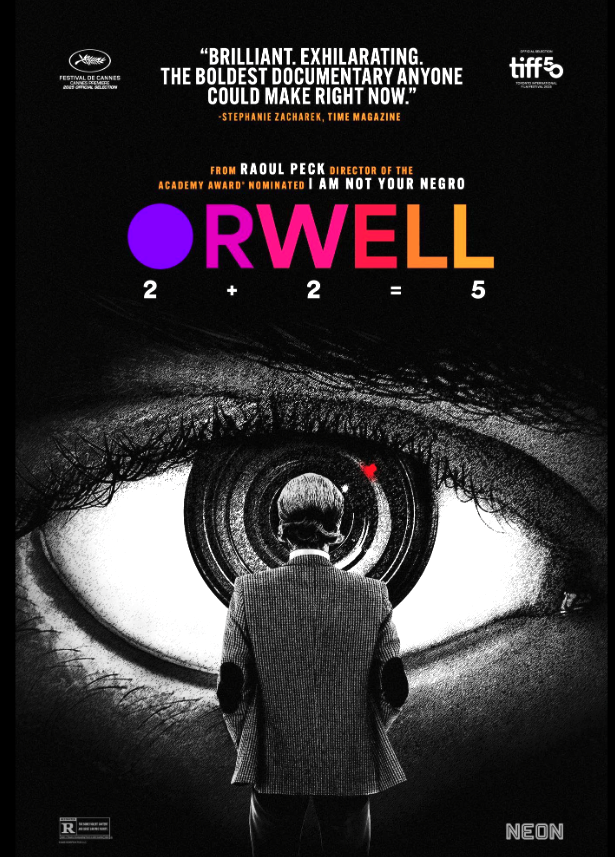
This new documentary Orwell: 2 + 2 = 5 by acclaimed director Raoul Peck has brought back interest in Nineteen Eighty-Four, the seminal work of writer George Orwell, as surveillance culture and fascism loom large in the minds of people today. The director Raoul Peck is a Haitian filmmaker and director known for his films The Young Marx (2017) and the Oscar-nominated I Am Not Your Negro (2016). Peck collaborated with the Orwell estate to retell the story behind the man who gave the world Nineteen Eighty-Four and Animal Farm. This powerful documentary is featured at the Palm Springs International Film Festival with three screenings, with the first being on Saturday, January 3, 5:00 PM, at the Palm Springs Cultural Center. For the dates, times, venues, and tickets of the other two showings, see below.
In his documentary, Peck explores the themes illustrated in those works and connects them to current events to show how Orwell’s warnings have gone unheeded through the years. Orwell: 2 + 2 = 5 is a complex and provocative work but seems to weave together four different films within is sometimes convoluted structure: Orwell’s life, the origins of the novel Nineteen Eighty-Four, the predominant themes of that dystopian novel and the political use of “doublespeak,” and current examples of authoritarian and fascist governments.

As I said, Peck’s film is a complex and somewhat confusing composite which purports to be a biography of Orwell, but has several other analytical and polemical strands that are interwoven into that biography. In his dystopian novel Nineteen Eighty-Four, the main character Winston Smith endures a squalid existence in the totalitarian superstate of Oceania under the control surveillance of the Thought Police.
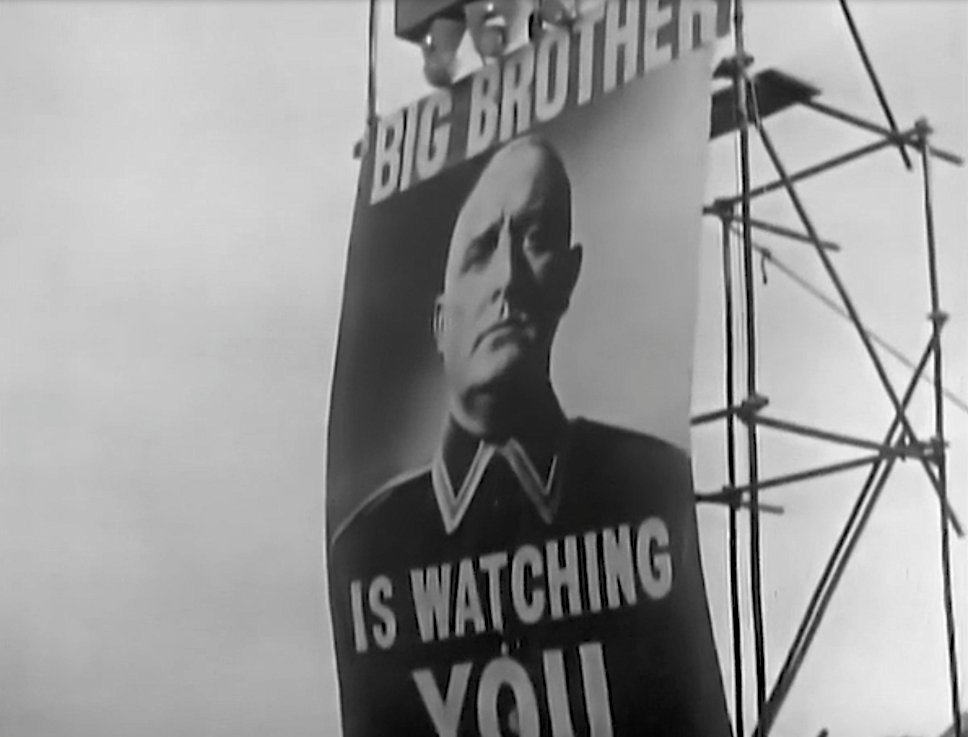
This character resides in London, the capital city of the territory of Airstrip One, formerly Britain, and working a small office cubicle at the Ministry of Truth, rewriting history as dictated by the Party and its supreme leader, Big Brother, who never appears publicly but instead only on propaganda posters, advertising billboards and television monitors.
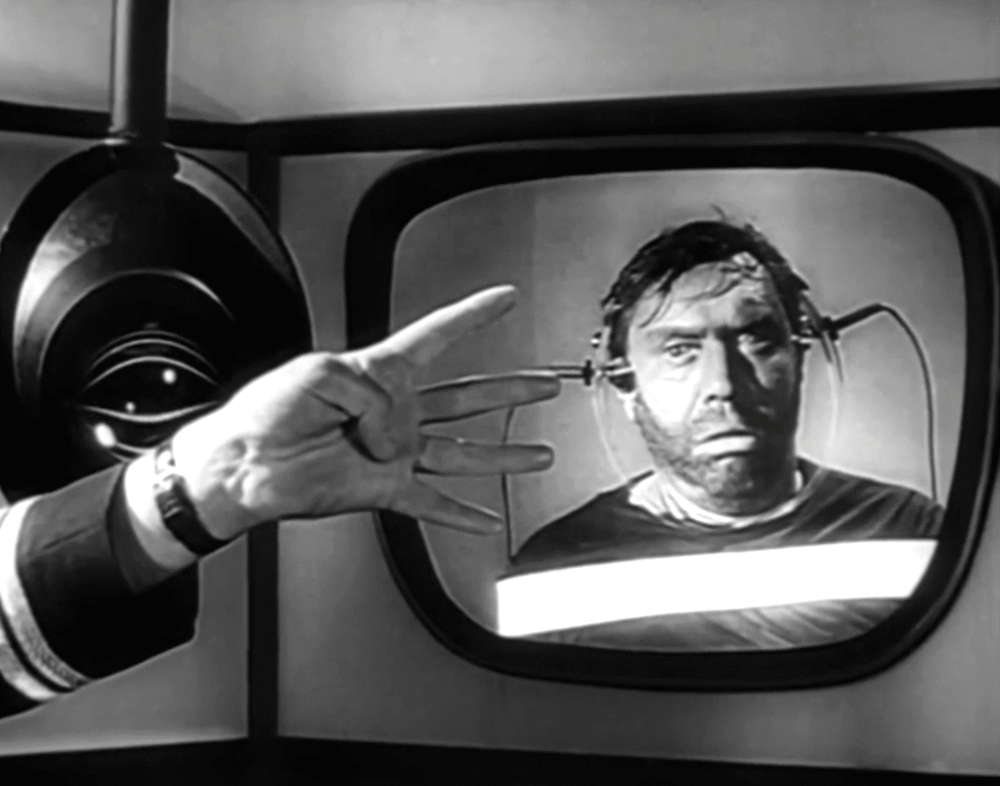
Scenes from the 1984 film version of the novel written and directed by Michael Radford featured John Hurt as Winston Smith, with Suzanna Hamilton as his female love interest. Smith struggles to maintain his sanity and his grip on reality as the regime’s overwhelming power and influence persecute individualism and individual thinking on both a political and a personal level. The propaganda machine is designed to mirror the thinking of the totalitarian superstate where 2 + 2 do not equal 4, but 5, as designated as the new “truth.”

To this mix is added a plethora of analogies to totalitarian governments and their authoritarian leaders – from Adolph Hitler and Benito Mussolini to Fernando Marcos of the Philippines, Vladmir Putin, Xi Jinping of China, Military leader Miin Aung Hlaling of Myanmar, Viktor Orbán of Hungary, Benjamin Netanyahu of Israel, and presently Donald Trump.
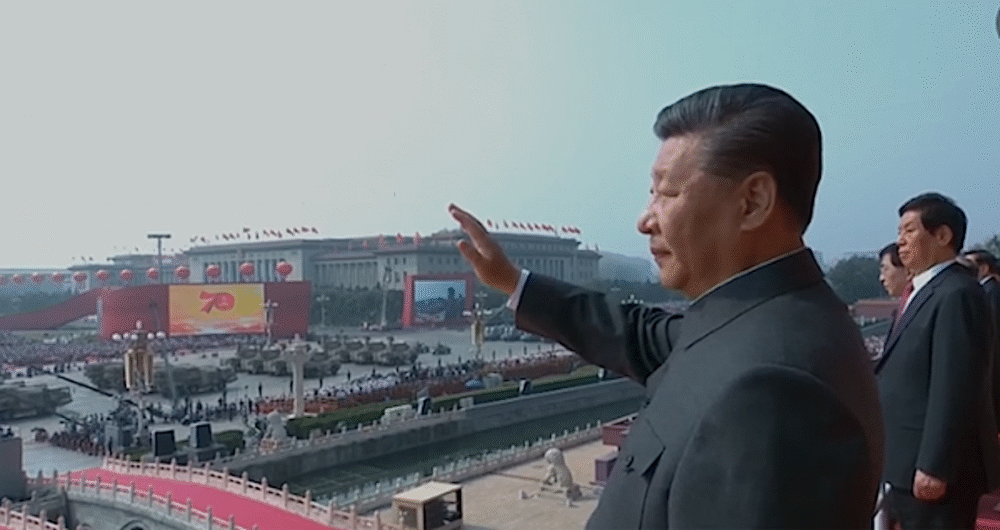
These follow a pattern of illustrating specific aspects of Orwell’s “doublespeak” found in Nineteen Eighty-Four: “Who controls the past controls the future. Who controls the present controls the past”: In Orwell’s dystopian state, the Ministry of Peace concerns itself with war, Ministry of Truth with lies, Ministry of Love with torture and the Ministry of Plenty with starvation.

Orwell is best known for his allegorical novella Animal Farm (1945) and the dystopian novel Nineteen Eighty-Four (1948), although his works also encompass literary criticism, poetry, fiction, and polemical journalism. His non-fiction works include The Road to Wigan Pier (1937), documenting his experience of working-class life in industrial Northern England and Homage to 1938, an account of his experiences soldiering for the Republican faction of the Spanish Civil (1936–1939) – from which he barely escaped across the French border. It was during his time in Spain that he met and married Eileen Blair O’Shaughnessy, a psychologist and poet.
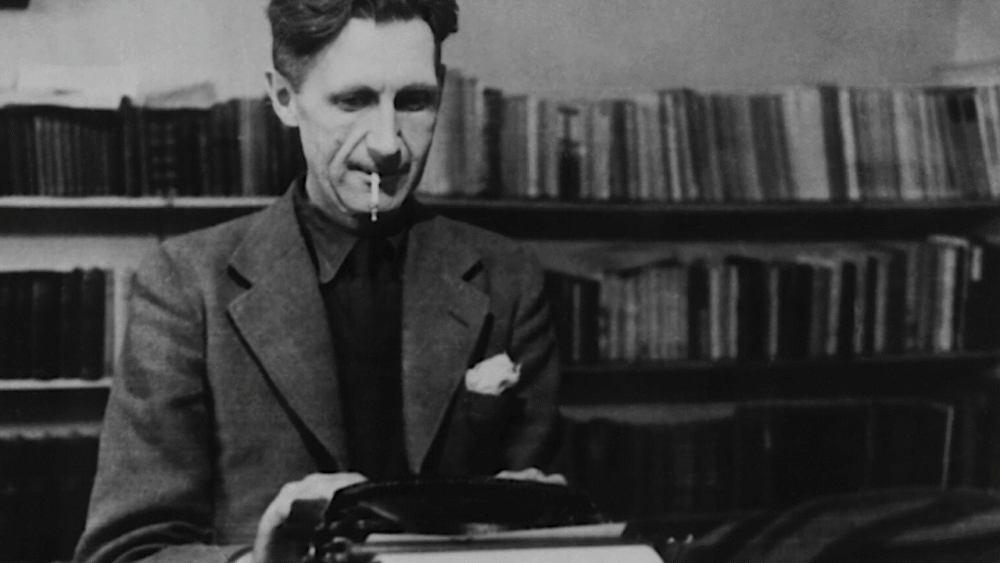
 Actor Damian Lewis brings Orwell’s voice to life, as he reads from Orwell’s Diaries and Letters. The film opens on the beautiful Inner Hebrides island of Jura in Scotland, where Orwell spent the last years of his life and writing his final book Nineteen Eighty-Four before we encounter him in a sanatorium dying of tuberculosis. Using voice-over Damian Lewis recounts the early days of George Orwell, born Eric Arthur Blair, in Motihari, Bengal (now Bihar) in British India in 1903. He described his background a “lower-upper-middle class” because he came from the large group of British denizens who filled the ranks of the civil service and military in the vast colonial empire of Great Britain. In India or Burma or Kenya, a person from his social class could live the comfortable life of a gentleman with servants and horses in these British colonies. (The film does not mention that his great-great-grandfather was a wealthy slave-owning country gentleman and absentee landlord of two Jamaican plantations.) Orwell’s father was Richard Walmesley Blair, who worked as a Sub-Deputy Opium Agent in the Indian Civil Service, overseeing the production and storage of opium for sale to China.
Eventually Blair’s mother returned to England with her young children. There at age, Eric was sent as a day student to a convent school in Henley-on-Thames. It was a Catholic convent run by French Ursuline nuns. His mother wanted him to have a public school education, but his family could not afford it. Through the social connections of Ida’s brother Charles Limouzin, Blair gained a scholarship to St. Cyprian’s School in Eastbourne, East Sussex, where he boarded for five years. While at St Cyprian’s, Blair wrote two poems that were published and later he received a scholarship to Eton College. Blair remained at Eton until December 1921, when he left midway between his 18th and 19th birthdays. Blair was taught French by Aldous Huxley. Steven Runciman, who was at Eton with Blair, noted that he and his contemporaries appreciated Huxley’s linguistic flair. His parents could not afford to send him to university without another scholarship, and they concluded from his poor results he would not be able to win one. Runciman noted he had a romantic idea about the East, and the family decided Blair should join the Imperial Police, the precursor of the Indian Police Service.
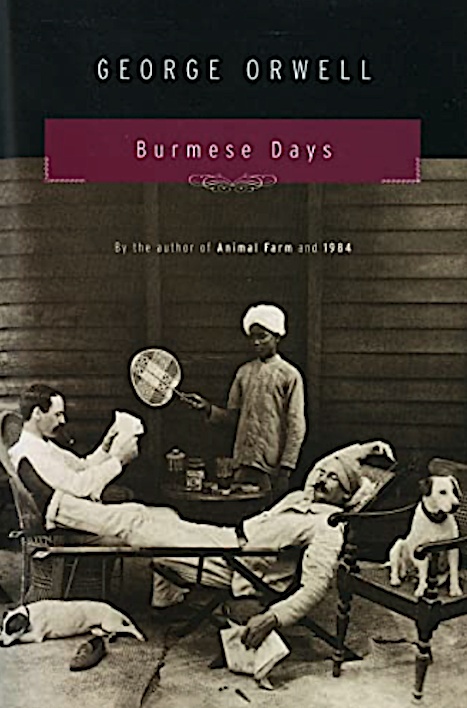
Working as an imperial police officer gave him considerable responsibility while most of his contemporaries were still at university in England. When he was posted farther east in the Delta at Twante as a sub-divisional officer, he was responsible for the security of some 200,000 people. Blair recalled he faced hostility from the Burmese, “in the end the sneering yellow faces of young men that met me everywhere, the insults hooted after me when I was at a safe distance, got badly on my nerves”. He recalled that “I was stuck between my hatred of the empire I served and my rage against the evil-spirited little beasts who tried to make my job impossible.”
 In Burma, Blair acquired a reputation as an outsider. He spent much of his time alone, reading or pursuing non-pukka such as attending the churches of the Karen ethnic group. A colleague, Roger Beadon, recalled that Blair was fast to learn the language and that before he left Burma, “was able to speak fluently with Burmese priests in very high-flown Burmese. While in Burma, he acquired a moustache similar to those worn by officers of the British regiments stationed there. He also acquired some tattoos; on each knuckle he had a small untidy blue circle. Many Burmese living in rural areas still sport tattoos like this—they are believed to protect against bullets and snake bites.'”
In Upper Burma, Blair contracted dengue fever in 1927 and was entitled to a leave in England, provided he returned to his position in July of that year. While on holiday with his family in Cornwall in September 1927, he reappraised his life. Deciding against returning to Burma, he resigned from the Indian Imperial Police to become a writer. He drew on his experiences in the Burma police for the novel Burmese Days (1934) and the essays “A Hanging” (1931) and “Shooting an Elephant” (1936). In the Raoul Peck’s film, we see celluloid footage of public hangings in Burma and the hardened faces of the locals.
Reflecting on his novel Burmese Days, Orwell described the British colonial government in Burma and India: “The government of all the Indian provinces under the control of the British Empire is of necessity despotic, because only the threat of force can subdue a population of several million subjects. But this despotism is latent. It hides behind a mask of democracy… Care is taken to avoid technical and industrial training. This rule, observed throughout India, aims to stop India from becoming an industrial country capable of competing with England … Foreign competition is prevented by an insuperable barrier of prohibitive customs tariffs. And so the English factory-owners, with nothing to fear, control the markets absolutely and reap exorbitant profits.”
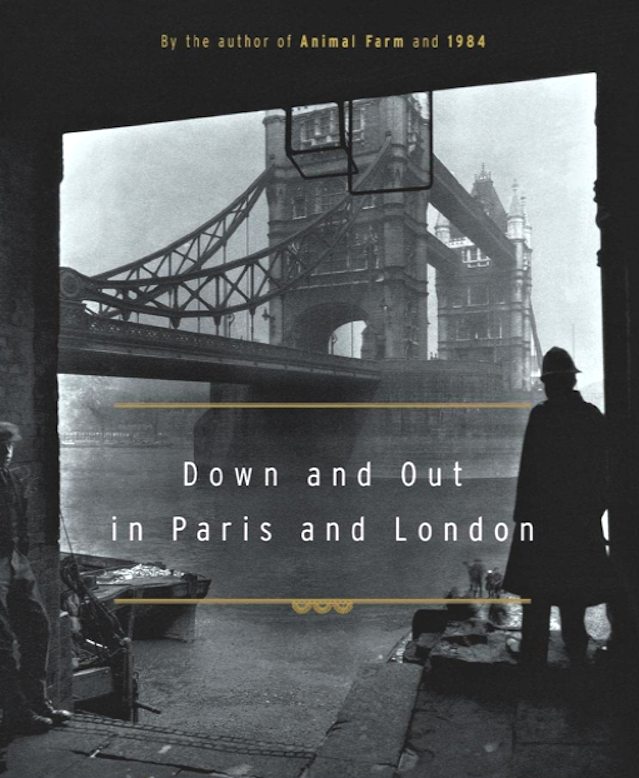
Living in England, Blair decided to write of “certain aspects of the present that he set out to know” and ventured into the impoverished East End of London – the first of the occasional sorties he would make intermittently over a period of five years to discover the world of poverty and the down-and-outers who inhabit it. In imitation of Jack London, whose writing he admired, Blair started to explore the poorer parts of London – and Raoul Peck includes images of life from those times. For a while he “went native” in his own country, dressing like a tramp, adopting the name P.S. Burton; he recorded his experiences of the low life for use in “The Spike,” his first published essay in English, and in the second half of his first book, Down and Out in Paris and London (1933).
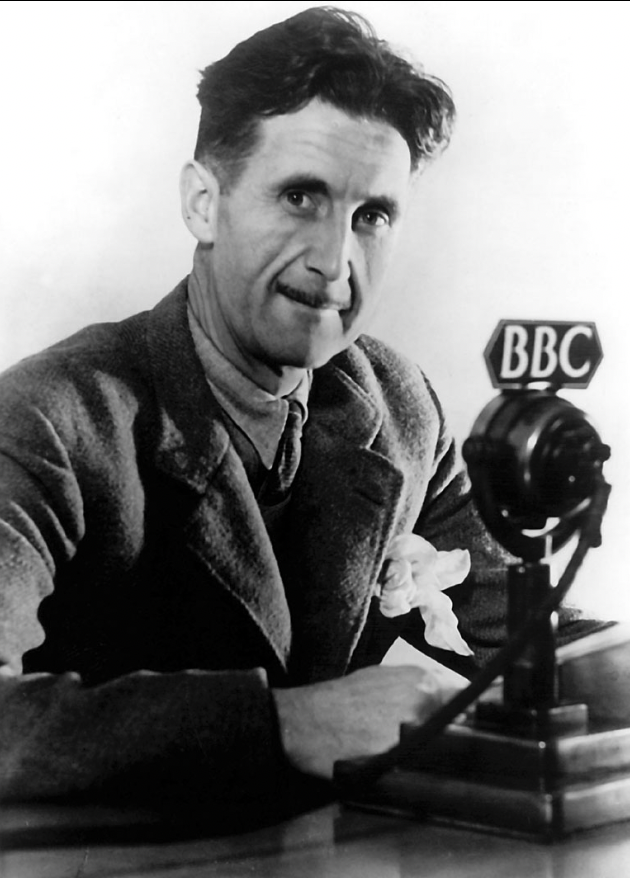
Later Blair worked at a teacher at various private schools for boys. At the outbreak of the Second World War, Orwell’s wife Eileen started working in the Censorship Department of the Ministry of Information in central London, staying during the week with her family in Greenwich. Blair himself soon began doing literary broadcasts for the BBC in London that were broadcast in India. He was also concentrating on writing Animal Farm. In September 1943, Orwell resigned from the BBC following a report confirming his fears that few Indians listened to the broadcasts. In November 1943, Orwell was appointed literary editor at Tribune, where his assistant was his friend Jon Kimche. Orwell was on the staff until early 1945, writing over 80 book reviews, and on 3 December 1943 started his regular personal column “As I Please.”
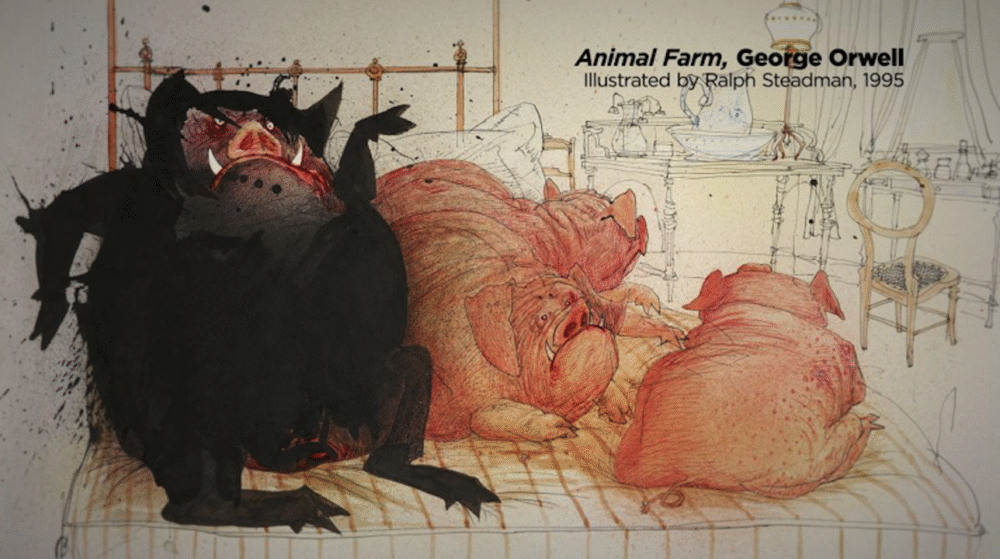
Orwell and Eileen wanted children, but he was sterile and she may also have been infertile due to uterine cancer In May the Orwells had the opportunity to adopt a nine-month-old child – a baby boy they named Richard Horatio Blair. While Orwell was in Europe covering the end of the Second World War in Paris and Germany, Eileen went into hospital for a hysterectomy. She had not given Orwell much notice about the operation because of worries about the cost, and because she expected to make a speedy recovery; however, she died on 29 March 1945 of an allergic reaction to the anesthetic she was given. Animal Farm: A Fair Story was published in Britain on 17 August 1945, and in America on 26 August 1946. In September of 1946, he visited the island of Jura in the Inner Hebrides of Scotland and saw it as a place to escape from the hassle of London literary life.
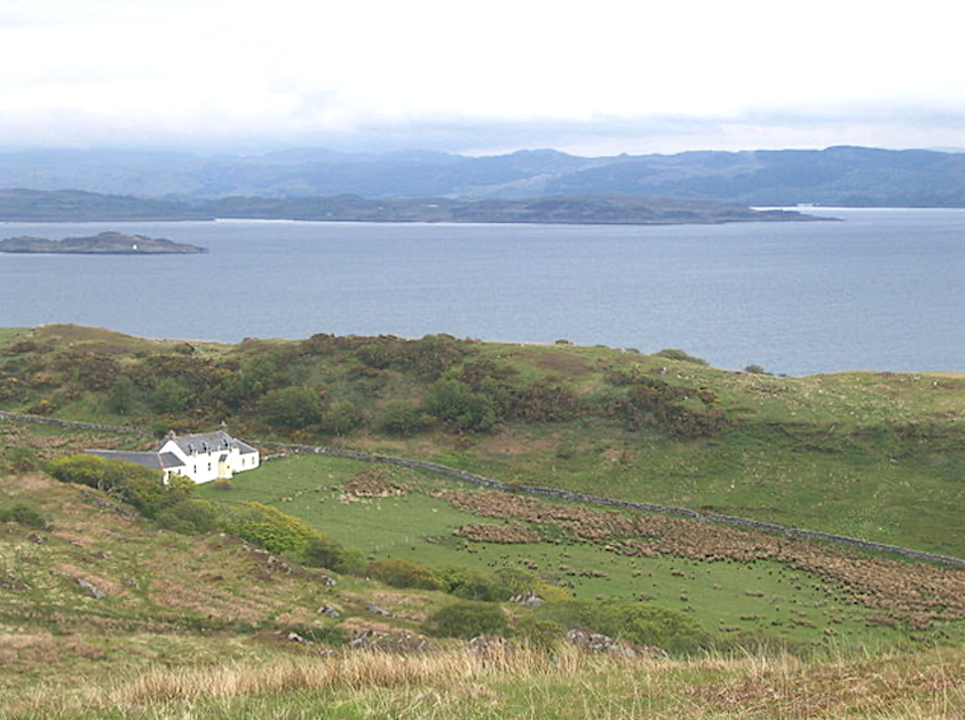
The literary success of Animal Farm brought in a decent income for Orwell. He began working on Nineteen Eighty-Four while living on the island of Jura. He suffered greatly in breathing and the thick smog of industrial England was not helping. In December of 1947, a chest specialist was summoned from Glasgow who pronounced Orwell seriously ill, and a week before Christmas 1947 he was in diagnosed with tuberculosis in Glasgow. His doctor requested permission for the Minister of Health to import a new medicine streptomycin to treat the disease. By the end of July 1948 Orwell was able to return to Jura and by December he had finished the manuscript of Nineteen Eighty-Four. In January 1949, in a very weak condition, he set off for a sanatorium at Cranham, Gloucestershire. However, streptomycin could not be continued, as he developed toxic epidermal necrolysis, a rare side effect led to his death. The AI-generated image of tuberculosis bacteria that opens the film returns to haunt us at the film’s end as we view Orwell’s tombstone in a local cemetery. The closing image of a contemporary mall with AI-generated “doublespeak” slogans is emblazoned at the very end: War is Peace, Freedom is Slavery, Ignorance is Strength. Is that 1984 or perhaps 2025?
For screenings of Orwell: 2 + 2 = 5 at the Palm Springs International Film Festival: SATURDAY, JANUARY 3, 2026, at 5:00 PM, at the Palm Springs Cultural Center 2/3; MONDAY, JANUARY 5, 2026, at 2:00 PM, at the Festival Theatres 2; and WEDNESDAY, JANUARY 7, 2026, at 8:00 PM, at the Festival Theatres 2. For tickets, go to: https://psfilmfest.org/film-festival-2026/film-finder/orwell-225.