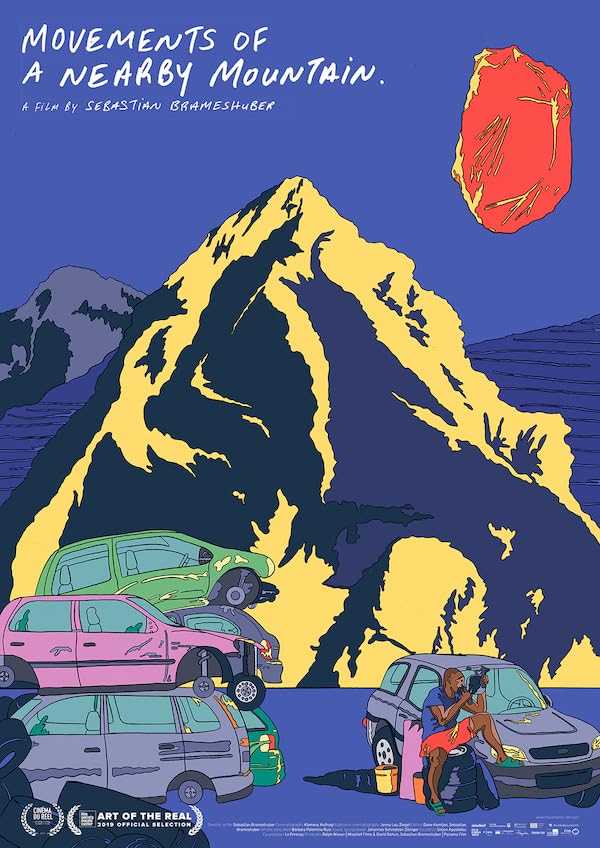
With his Movements of a Nearby Mountain (2019), Sebastian Brameshuber has made a rare documentary using a hyper-realistic approach that captures the quotidian life of a 30-something Nigerian immigrant living in Austria. At the heart of the film is Cliff Agu, a Nigerian man living a solitary life in a scrapyard at the foot of Austria’s Erzberg mountain. He spends his days working with and reselling used car parts– often at rock-bottom prices. Cliff seems to live in near-total isolation in his garage which was once part of a mining operation in Styria, Austria. Cliff has interaction with buyers in Austria, Eastern Europe, and Nigeria. The film screening was presented by Acropolis Cinema on Thursday, September 24, at New Instant Image Hall in Chinatown in Los Angeles, with director Brameshuber present for the Q&A afterwards.
Brameshuber makes a point of sorts with that: Movements of a Nearby Mountain is not a typical social-issues type of documentary, but a profoundly humane one that under the surface of the story about a man and his work implies a whole lot of questions, including such considering race, class, geography, political economics or colonialism. The focus of the work and daily existence of Cliff seems to be in vein of Chantal Ackerman’s critically-acclaimed film, Jeanne Dielman, 23 quai du Commerce, 1080 Bruxelles (1975). The dialogue is often in Igo, one of the native languages of Nigeria, but Cliff speaks German and English with prospective buyers of his salvaged auto parts.
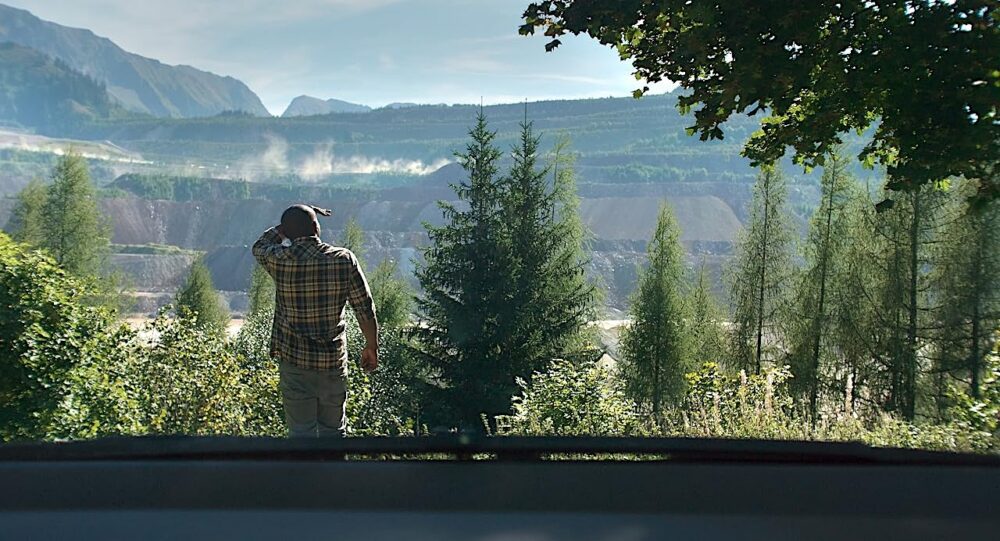
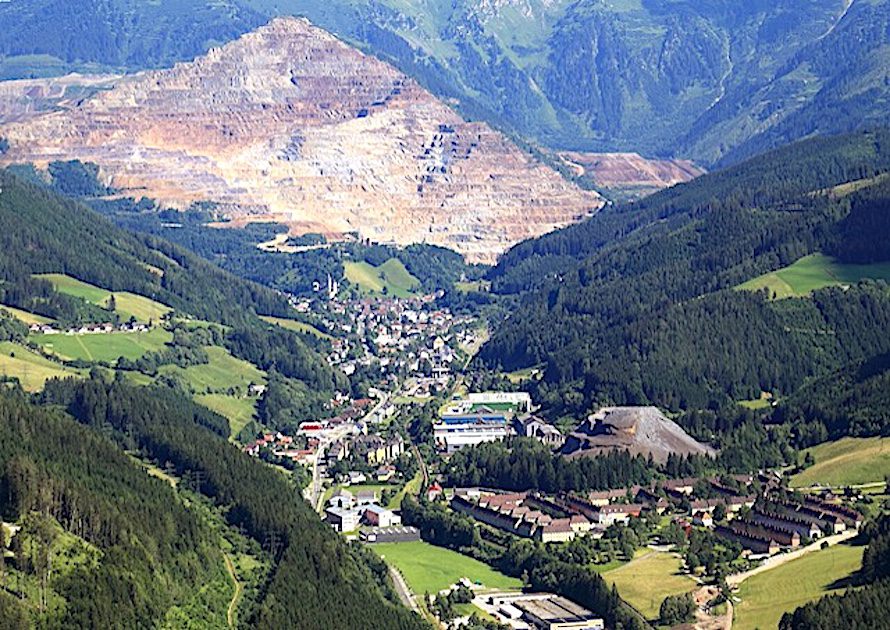
The mountain in the film’s title is Erzberg in the Styrian parts of northeast Austria, already mentioned in Roman times and legendary for its rich iron ore deposits. The Erzberg mine is the largest iron ore deposit in Austria with an enormous multi-level, terraced open-pit, which is gradually eating into an iron-rich mountain that was once mined via the tunnels and galleries. We see images of Ezberg and the mine at the opening and close of Brameshuber’s film, but mining is not the focus of the film. Rather Brameshuber shares with us the life of Cliff, the Nigerian immigrant who deals with the beat-up cars that he buys to resell usable parts to his regular buyers. In terms of the capitalist explanation of his work, he is not an extractor of iron from the earth but a salvage expert at recycling what is not compromised by rust.
It is no coincidence, then, that the story unfolds at the foot of the Erzberg, a mountain linked to a legend strikingly similar to those found in African traditions. Thus, two nations – Nigeria and Austria – converge on two distinct levels: the earthly, through the large number of immigrants from the African nation; and the spiritual, in a ceaseless, desperate race toward immortality, the elevation of the human spirit, and an end to earthly suffering. We also hear in the voice-over by actor Bobbie Sommer a poem by Bertolt Brecht about a water sprit seeking freedom from captivity and the seemingly immortal permanence of iron over gold and silver.
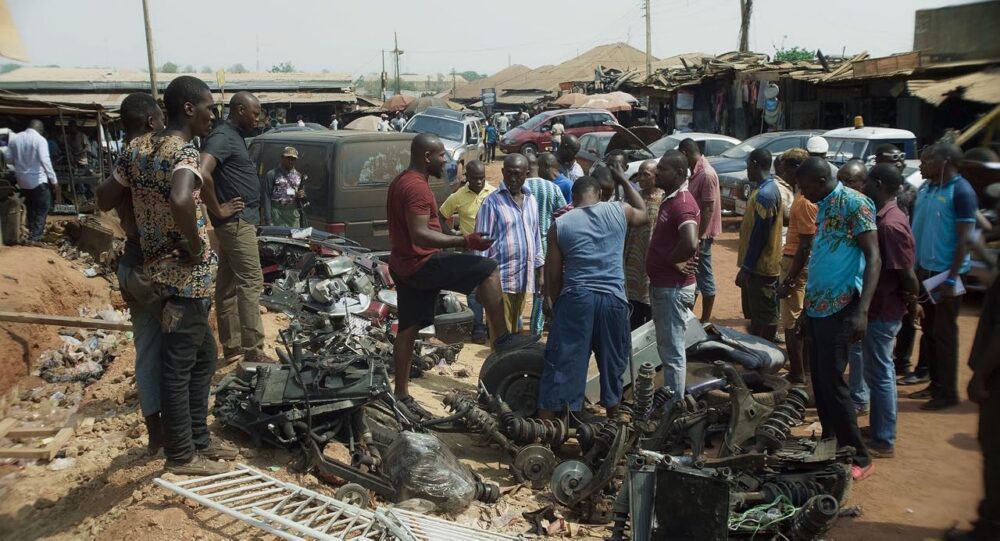
What ties Cliff’s existence to the Austrian mountain is a Nigerian legend in Ibo about the enslavement of mankind and a symbolic race – up a steep mountain – towards eternal wealth and immortality. That race up the mountain finds its corollary in Cliff’s later visit to his homeland in Nigeria where he wanders through the dusty alleys of used car part dealers and ventures along forest path in route to his former village. That walk through the dense forest becomes increasingly uncertain and unpredictable and he never arrives at the village. He cannot go home again because he has remade his life in Austria and no longer fits in the culture his Nigerian birth place.
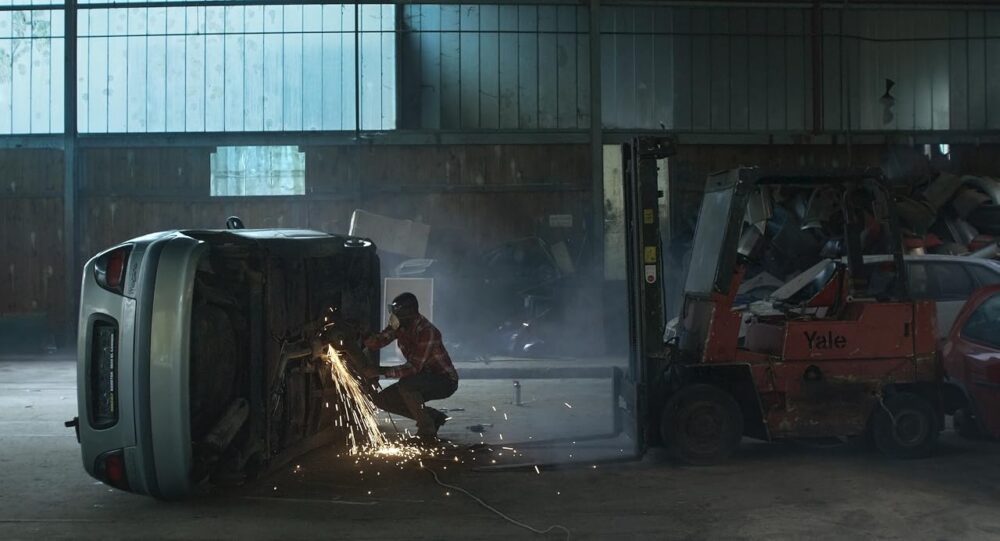
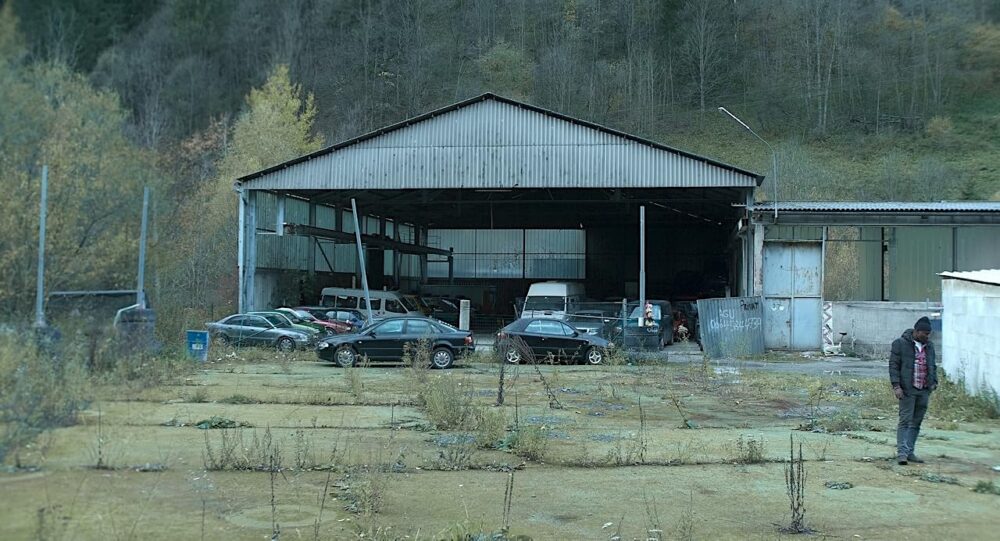
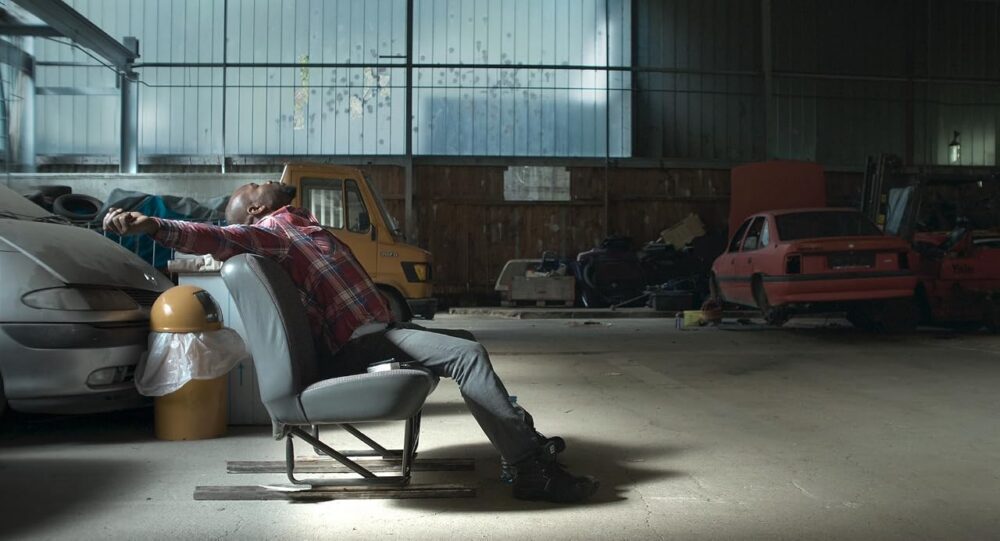
For the most of the time, he is completely alone, surrounded by cars, parts and scraps. Sometimes he sings a tune to himself to have a sense of company. Sometimes he goes for a meditative cigarette break. He cooks his meals, dries his clothes, works and lives at the same secluded compound surrounded by woods, mountain streams and a road. His pace is pretty much always the same, so we do not get a sense that he is ever resting or in a hurry. The only company he gets are his clients and, occasionally, his colleague Magnus who has a simple dream to earn enough money to buy a fleet of used cars and start a taxi business in Nigeria. Cliff has made this mountainous part of Styria, Austria, his home.
Brameschuber is always an observer and never an interpreter. He keeps the distance to his subject, leaving him to interact freely with his surroundings, places, people, cars. We even see Cliff on his scouting rounds, but he never discusses the routines of his trade with the audience.
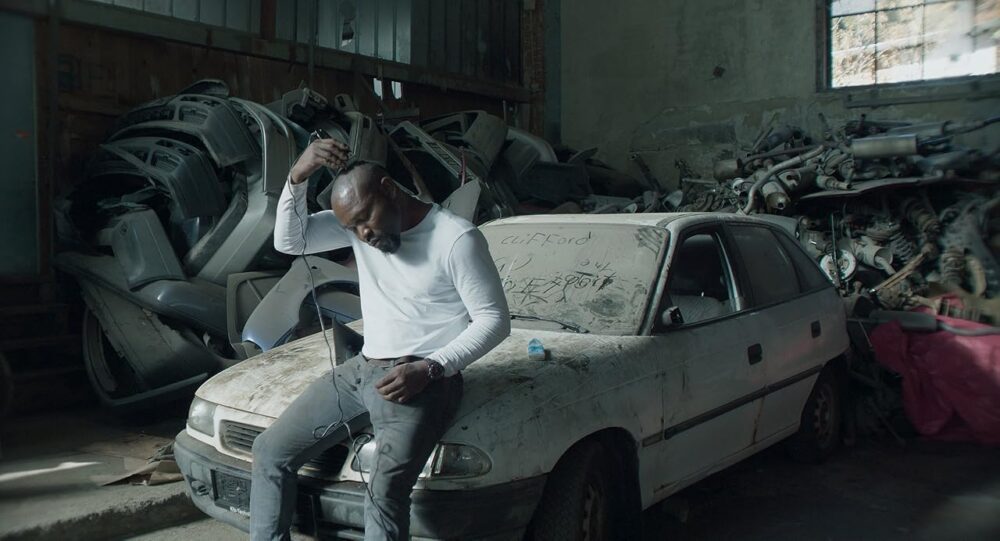
There are piled up outside Cliff’s garage many tires and we see that some young Austrians use that area for paintball battles. In fact, it was the paintball youngsters who led Brameshuber to this particular corner of Styria in the first place and there he discovered Cliff’s auto part salvage garage. Brameschuber made a short film Of Stains, Scrap and Tires in 2014 and that lead to making this feature-length documentary in 2019.
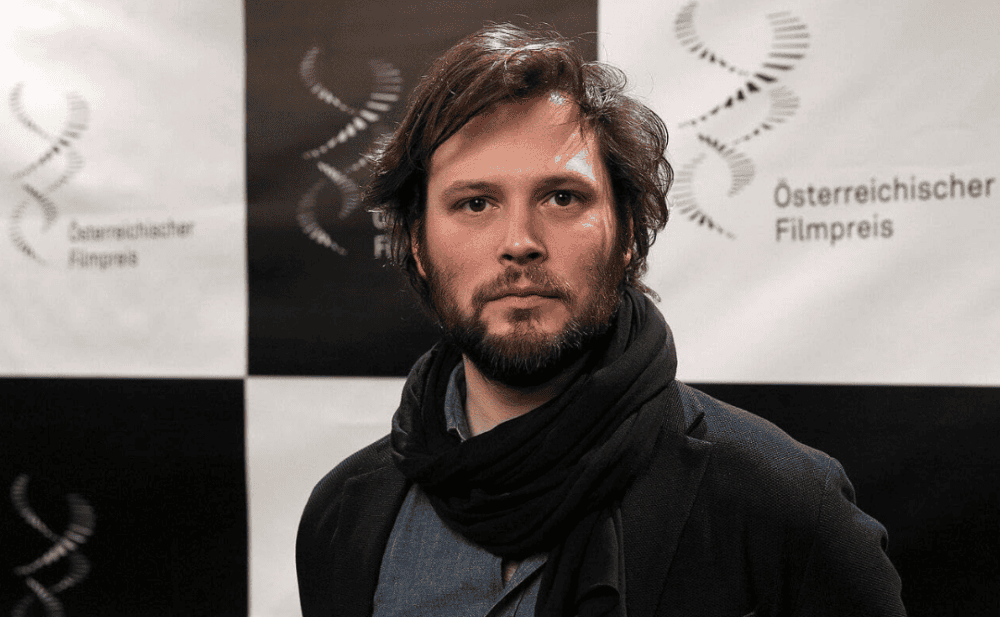
Brameshuber skillfully merges past and present, reality and legend, the material and the spiritual. It is a work distinguished by its delicate lyricism and the director’s masterful use of restraint. Movements of a Nearby Mountain ji a beautiful film to look at, thanks to Klemens Hufnagl’s attractive cinematography usually in wide shots and experiments with different formats and granulation. The editing handled by a Bosnian-Serbian slow cinema docu-fiction auteur Dane Komljen is also one of the film’s strong points. The film is considered one of the best Austrian films of 2019. The film has received a number of awards, including the Vienna Film Award – Special Mention in 2019.