By Patrick Donovan – Author/Screenwriter
US Navy Disabled Veteran – 1980 – 1991
Seattle, WA (The Hollywood Times) 10/04/2026
“Magic comes in all forms. Whether you be a magician, or create magic through the power of the written word. There are people who write stories, and then there are people who understand what stories can do. Linda Oatman High is one of those people!”
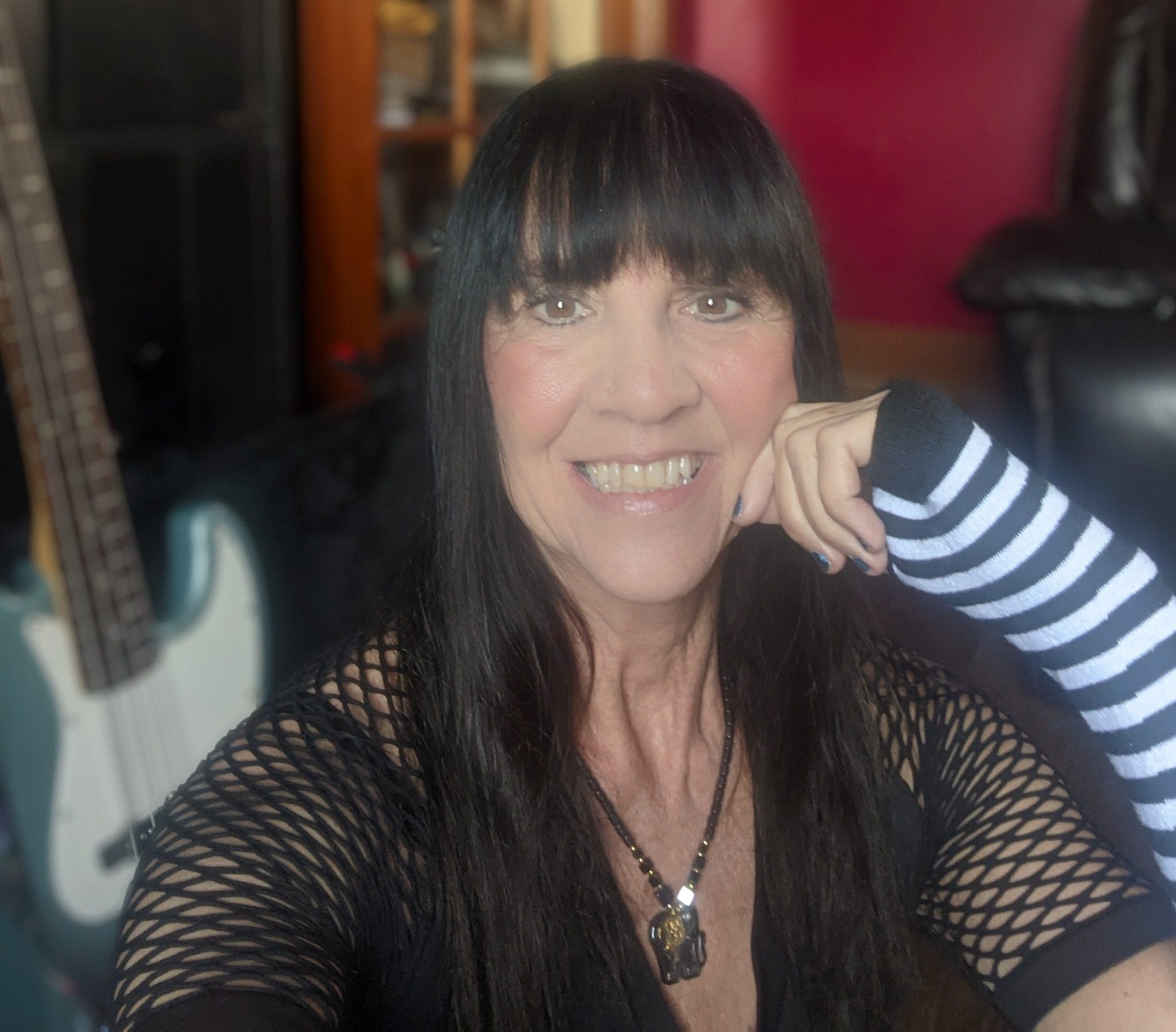
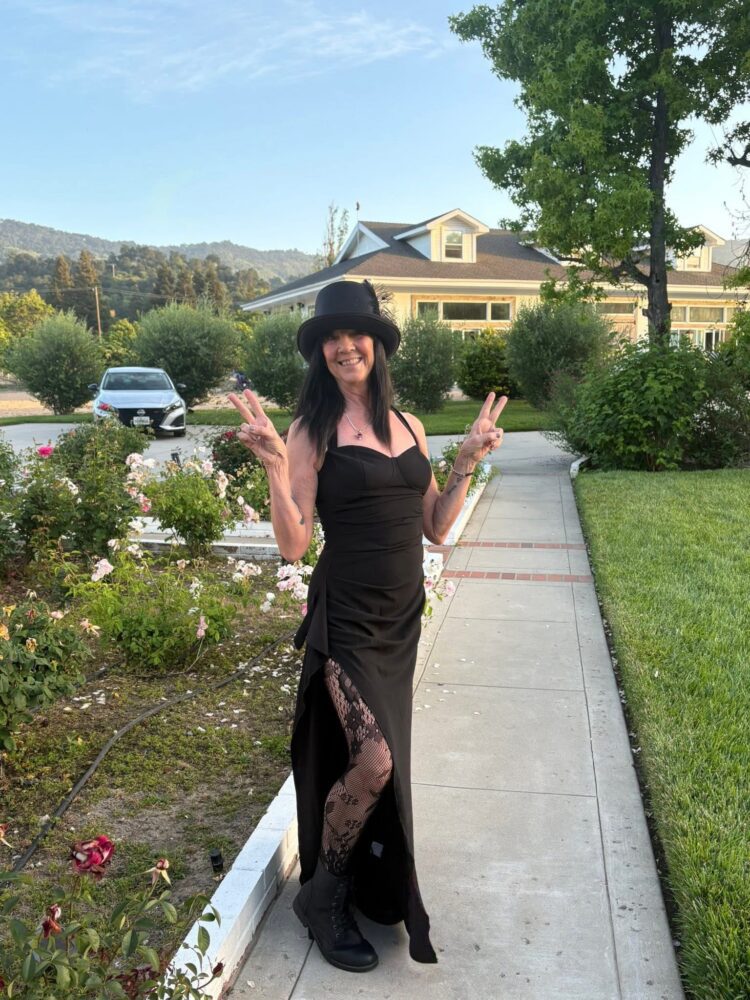
An author of more than 30 books for children and teens, High has spent decades creating everything from picture books to middle-grade and young-adult novels. She is also a journalist, screenwriter, playwright, poet, songwriter and musician. When we spoke, she laughed about having a lot of “slashes” in her job title, and she is right. Underneath all of those titles, however, is something much simpler. Linda Oatman High is a storyteller.
Perhaps even more importantly, she wants children to discover that they can be storytellers too.
High told me she knew from an early age that storytelling was part of who she was. She loved books, comics, television and movies, and she was fascinated by characterization, setting and dialogue. She wrote her own comic books and stories as a child. By the 11th grade, encouragement from a creative-writing teacher planted the idea that writing might actually become a career.
That seed grew. Today, after a career spanning more than three decades, High remains driven by what she described to me as a passion and love for words and story.
That passion eventually led to Script to Screen, an extraordinary program that gives young people something few children ever experience: the opportunity to imagine a story, write it together, perform it, film it and ultimately watch their creation come alive on a real movie screen.
That is where Linda’s work becomes something much larger than writing.
One Small Thing Can Change a Child’s Life
During our conversation, one thing Linda said stayed with me. She remembered visiting her first school as a published author in 1995 and realizing that she now had an opportunity to affect how a child might look at art, storytelling and possibility. As she put it, one small thing can change a child’s life.
That statement really says everything about her.
We sometimes underestimate moments like these. A teacher tells a student, “You can write.” A filmmaker puts a camera in a child’s hand. Someone reads a young person’s story and says, “That’s good. Keep going.” For an adult, it may seem like a passing comment. For a child, it can become a turning point.
Linda understands that because her own journey began partly when a teacher believed there was something inside her worth encouraging. Decades later, she has become the person standing on the other side of that conversation, telling children that their ideas matter and that their imagination has value.
From an Idea to a Movie Theater
The beginning of Script to Screen sounds almost like one of Linda’s stories. She told me that one morning the idea simply arrived: wouldn’t it be wonderful to teach children to write a screenplay, have them act in it, make the movie and then show that finished film at a red-carpet gala inside a real theater?
It was a wonderfully ambitious idea, and instead of saying, “Wouldn’t that be nice someday?” Linda started making it happen.
She approached a local movie theater, where the concept was embraced. Funding was secured through nonprofit support, an elementary school became involved, and her longtime friend Tammy Myers joined the project to help with the logistical side of the program. Then a remarkably talented teenage filmmaker, Dylan Bordner, became part of the team.
Think about that for a moment. Adults are mentoring children, but a teenage filmmaker is also helping bring the children’s work to life. That matters because it demonstrates to every student involved that creativity is not something you need permission to pursue once you reach a certain age. You can start now.
This Isn’t Just a Writing Class
What impressed me most about Script to Screen is that the program is not simply teaching screenplay formatting. The children brainstorm, write, act, memorize dialogue, solve problems, compromise and collaborate. They begin functioning, in their own way, like a miniature writers’ room and production company.
That distinction is important because storytelling for film is collaborative. A novel may begin with one person sitting alone at a keyboard, but a movie requires many individuals working toward the same goal. Linda is introducing children to that lesson at an age when learning to work with other people may be every bit as important as learning where to put a camera.
She compared that process to being part of a sports team. Every player matters. No single person owns the entire victory, and the strongest result comes when everyone contributes.
That may be one of Script to Screen’s most valuable lessons. Someone else’s good idea does not make your idea less important. Together, you can create something neither of you could have created alone.
When the Words Leave the Page
Eventually, the words leave the page and something wonderful happens. The children see themselves on screen.
Linda described watching students suddenly realize that they were now actors in an actual film. One young boy even wanted to know whether their movie would be on Netflix. It is funny, of course, but it is also beautiful because what that child was really asking was whether what they created was real.
The answer is yes.
Linda told me that seeing themselves on screen gives the students an enormous sense of validation. Their confidence grows and their self-esteem changes. They see tangible proof that something which once existed only in their imagination has become visible to everyone else.
As a writer and screenwriter myself, I understand that feeling. I remember hearing actors perform my own words during a table read and experiencing that extraordinary moment when something that had existed only inside my head suddenly became alive. The characters had voices, the dialogue had rhythm, and the story began to breathe.
Adults who have spent years writing can be overwhelmed by that moment. Imagine experiencing it when you are nine or ten years old.
The Red Carpet Belongs to Them
Then comes the payoff. Not a worksheet, not a grade, and not something placed inside a folder and forgotten. A premiere.
The students’ movie is shown on a theater screen, and the children attend their own red-carpet celebration. Linda described seeing them arrive dressed up, walking the carpet while family members applauded and greeted them with flowers. Inside the darkened theater, she watched their faces as the screen illuminated and their own movie began to play.
She described them as glowing with confidence and pride, with faces filled with wonder.
That image stayed with me because, for one evening, these were not simply elementary-school students participating in an after-school program. They were writers, actors, filmmakers and creators. For those few minutes in that theater, the world was not telling them what they could not do. The world was applauding what they had already done.
Confidence May Be the Real Film They Are Making
Children begin doubting themselves much earlier than many adults realize. They wonder whether they are creative enough, smart enough or talented enough. They compare themselves to others and sometimes convince themselves they cannot do something before they ever really try.
Linda has seen those doubts arrive with students, and she has also seen children overcome them. She told me that the transformation can be enormous. Students discover that many of the limits they imagined were not really limits at all. Through the process of creating something together, they begin believing they are capable of things they had not thought possible.
That may ultimately be Script to Screen’s greatest achievement.
The movie is wonderful, but perhaps the movie is not really the final product. The child is.
A child walks into the program wondering whether their ideas matter. Weeks later, that same child walks a red carpet.
That is powerful.
Put Down the Screen and Make Something for the Screen
There is also a wonderful irony here. We hear constantly about children spending too much time looking at screens. Script to Screen asks them to stop passively consuming one and learn how to create something for one.
That process forces them into real rooms with real people. They disagree, laugh, rehearse, make mistakes, try again and create friendships. Linda spoke specifically about how valuable that face-to-face collaboration has become when so many young people spend so much time isolated with phones and other devices.
Technology is not the enemy here. It is simply being put back into its proper place. The camera becomes a tool, the computer becomes an editing room, the screen becomes a canvas, and creativity remains human.
The Ordinary Can Become Extraordinary
Earlier in our conversation, Linda said something else that perfectly describes why she may connect so naturally with young people. She has not lost her sense of wonder.
She spoke about remaining amazed by ordinary things and allowing that sense of wonder to transform the ordinary into something extraordinary.
That is a storyteller’s heart, and children understand it instinctively. A cardboard box is not necessarily a box. It might be a spaceship. A wooded path might lead somewhere impossible. A classroom filled with thirteen kids might become a movie studio.
Perhaps adulthood does not require us to abandon that imagination. Perhaps we simply need someone to remind us where we left it.
Linda Oatman High seems determined to make sure these children never lose theirs.
A Universe of Possibility
Near the end of our interview, I asked Linda to imagine one of these students returning twenty years from now and telling her that Script to Screen had changed the course of their life. Not necessarily because they became a filmmaker or a writer, but because something they learned there stayed with them.
Her answer was beautiful.
She hopes they remember that the universe is a place of possibility.
Linda grew up on a country road near Morgantown, Pennsylvania. Her father worked for Bethlehem Steel, and her mother worked as a store clerk. She was not raised in Hollywood or New York surrounded by publishers, studios and celebrities. She rode bicycles, played in the woods and had what she described as a common country childhood.
She wants children to understand that where you begin does not determine where you are allowed to go. No matter who you are or where you come from, she tells them, you can become something you once only imagined.
I love that because somewhere among the children participating in Script to Screen may be a future writer, director, actor, teacher, engineer, doctor or musician. Maybe none of those, and that is perfectly fine.
Twenty years from now, perhaps one of them will barely remember the screenplay they wrote, but they may remember walking into that theater. They may remember hearing people applaud, seeing their face on a movie screen and realizing that something they helped create had become real.
More importantly, they may remember the moment when an author named Linda Oatman High helped them believe they could do something they had never thought possible.
Sometimes that is all a child needs.
One person. One opportunity. One moment of validation. One small thing that changes a life.
That is the real magic of Linda Oatman High’s Script to Screen.
Here’s the transcript of my interview with Linda. Enjoy and see the magic within!
Patrick Donovan Interviews Linda Oatman-High
Script to Screen
Patrick Donovan: Hi Linda, how are you?
Linda Oatman High: I’m great. How are you?
Patrick Donovan: Good. I’m Patrick Donovan with The Hollywood Times, and today we’re speaking with Linda Oatman High about Script to Screen. If you would be so kind, please introduce yourself and tell our audience a little about what you do.
Linda Oatman High: Most of my work is as an author of books for children and teens. I have over 30 books published since 1995. I’m also a journalist, screenwriter, playwright, poet, songwriter and guitarist. I have a lot of slashes in my job titles.
Patrick Donovan: I’m a trumpet player, screenwriter, novelist and journalist. We both write for the same publication, don’t we?
Linda Oatman High: Yeah.
Patrick Donovan: Cool. Excellent.
Linda, before we talk about Script to Screen, I want to go back to the beginning. When did you first realize that you were a storyteller, and when did writing change from something you loved doing into something you knew you had to pursue?
Linda Oatman High: I think I knew from a very young age that I was a storyteller. I loved story, not only in books and comic books, but also in TV and movies. From the youngest of ages, I loved characterization, setting and dialogue. I would write my own comic books and stories, so I always knew that I was a storyteller.
I think I started realizing probably in 11th grade that I wanted to make a career of it. I had a creative-writing teacher who told me that I should think about writing as a career, and she was the first person who had ever told me that. That planted the seed in my brain about what I really wanted to do. So yes, it began very young.
Patrick Donovan: That’s fantastic. It sounds a lot like me. I started writing in elementary school, so I’m right there with you. It’s an amazing journey, isn’t it?
Linda Oatman High: I am so thankful for this journey. It’s been a long and winding road, and I’m still working just as hard as I did at the age of 24 when I first became a news writer. I’m probably working even harder than I did back then. I’m pretty relentless and driven by passion and a love for words and story.
Patrick Donovan: You’ve now written more than 30 books for children and young adults, from picture books to middle-grade and YA novels. When readers hear the name Linda Oatman High, what do you hope they associate with your work, and is there a thread connecting the stories you’ve told throughout your career?
Linda Oatman High: A great hope of mine is that they connect empathy with my work, because I think empathy for other humans and animals is so important.
As far as a thread, I’ve written so many varied things. I’ve written everything from short picture books for young children, with very sweet, innocent and sparse words, to very edgy, dark, angsty teenage novels.
I don’t think there’s one real common thread because my writing is so varied between picture books, middle-grade novels, YA novels and adult writing. It’s really about things that grab my interest that I think readers would love as well.
Patrick Donovan: I agree with that. There are things I’ve noticed too, even current events or ideas that generate in my head, and suddenly I think, “Wow, that could be a book.” That’s happened with one of the books I’m writing.
But this isn’t about me. It’s about you.
You’ve said that writing is “magic,” and there’s something wonderfully childlike in the way you still talk about stories. After all these years as a professional writer, where does that sense of wonder come from, and how important is it for a writer not to lose that magic?
Linda Oatman High: I think that sense of wonder and magic is just natural within my personality and my soul. My dad, who passed away 11 years ago, used to say that I got stuck in my teenage years or in childhood because I’ve never really lost that sense of adventure, fun and magic.
I think it’s really important to be amazed and astounded by the ordinary things in the world. That’s what makes the ordinary extraordinary. That’s really important.
Patrick Donovan: My late father passed away in 1987, so I empathize with you. Losing your father is really hard.
Linda Oatman High: It is.
Patrick Donovan: I’m with you on that. I’m sorry for your loss.
Linda Oatman High: Thank you.
Patrick Donovan: You’ve spent decades writing for young people and visiting hundreds of schools. Was there a moment when you realized, “I don’t just want to tell stories to kids anymore. I want to give them the tools to tell their own stories”?
Linda Oatman High: I think I probably realized that when I visited my very first school as an author back in 1995. It struck me that I actually had the ability, the capacity and the opportunity to maybe change a child’s life, or change the way they looked at art and story and possibility.
I was really struck by the idea that one small thing can change a child’s life. I don’t consciously think about that all the time, but it’s always in the back of my mind when I’m working with kids.
Patrick Donovan: That’s so important because we do influence them. They look to us as adults and as their guides, and what you’re doing is fantastic.
So, take me to the actual beginning of Script to Screen. Where did the idea come from, and what was missing in traditional writing or arts programs that made you think children needed this particular experience?
Linda Oatman High: I really don’t know where the idea came from. It was one of those magical, serendipitous things where I woke up one morning with the thought, “Hey, wouldn’t it be cool if I could teach kids to write a screenplay, have them act in it, and then show it on the big screen at a red-carpet gala in a movie theater?”
It was just there, like magic.
I really lucked out by quickly acquiring a little team. I had the idea and approached the Strand movie theater. They loved the idea and secured funding from two nonprofits immediately. They also connected me with the local elementary school.
I posted on Facebook about the program, and out of the blue came a phone call from an old friend. We had kind of lost touch over the years. Her name is Tammy Myers. We hung out a lot when we were 18 or 19 and younger, and then life took us in different directions. We were busy raising kids and working.
Out of the blue, Tammy called me and said, “Hey, could I work with you in this program as your assistant?”
Absolutely.
She’s left-brain, pragmatic and common-sense oriented. I’m right-brain, creative and up in the air. She anchors me with the logistical details.
Then my friend’s son, 15-year-old Dylan Bordner, came onboard. He’s a genius filmmaker and editor. I knew I had my filmmaker and I had my assistant, so we were a trio.
Patrick Donovan: That’s amazing. A 15-year-old filmmaker.
Linda Oatman High: He’s a wunderkind. He just turned 16 a few days ago, and he did an amazing job with the movie, Imagine All the History.
The children were third through fifth graders, and we only had a seven-week after-school club. We didn’t have a lot of time. It was very difficult working with a group of 13 young children who were trying to memorize lines very quickly. Dylan did an amazing job editing and putting that movie together.
Patrick Donovan: It is amazing.
What fascinates me about Script to Screen is that you’re not simply teaching kids how to write a screenplay. They brainstorm together, write, memorize lines, act, solve problems, work as a team, almost like a writers’ room for a studio, and eventually make a real film.
What happens to a young person when their words stop being something on a page and suddenly become something they can actually see and hear?
Linda Oatman High: I think it really instills that sense of wonder and magic we talked about before. You see them wide-eyed and astounded by the fact that they are basically actors on a screen.
I had one little boy ask me if it was going to be on Netflix.
They feel so important and validated. It really boosts their self-esteem and their confidence. It really changes who they are, so it’s incredibly rewarding.
Patrick Donovan: That makes me think about the first time I did a table read at Paramount for my project. I sat there while these actors cold-read my script. They were acting out punches and performing while they were sitting there reading, and suddenly I thought, “It’s really alive. Wow, man. This is incredible. Those are my words.”
The actors told me afterward that it was one of the most amazing experiences they’d had and that they loved doing it. That experience changed my life.
Linda Oatman High: Right.
Patrick Donovan: One of the things that struck me most was your emphasis on confidence, empathy, self-expression and real, in-person friendships, not just academic achievement.
Are there kids who arrive believing, “I’m not creative,” or “I could never perform,” and then surprise themselves? Tell me about that transformation.
Linda Oatman High: It’s a huge transformation.
I think we as human beings all walk around with these little devils on our shoulders saying self-deprecating things like, “You’re not that smart. You’re not that creative. You can’t act. Everybody else does it better than you.”
I’ve seen kids arrive with those self-doubts, which are very normal for adults and children. Then they conquer that and begin to see that they truly can be whoever they want to be and do whatever they want to do.
They conquer what is sometimes called the “monkey mind,” all those whispers of self-doubt that we have internally.
Patrick Donovan: We all have that. Growing up, I went through difficult times in elementary school and junior high, and I began to doubt myself. It’s a hard road to come out of.
Storytelling in film is collaborative in a way that writing a book often isn’t. When you’ve got a room full of kids with different personalities, abilities and ideas all trying to create one screenplay, how do you teach them that someone else’s idea doesn’t diminish their own, and that the best story may belong to all of them collectively?
Linda Oatman High: I think that realization comes organically as they work as a team, almost like a team in baseball, football or any other sport.
You realize that you’re not the only player. All the other players matter, and working together really creates the greatest result. I think they realize that very quickly.
It’s also a great thing for them because nowadays kids spend way too much time with technology and devices, as we all do. So often they’re isolated and at home alone looking at a screen.
Kids today really need that in-person contact and collaboration. They need the realization that working as a team, in person, is super cool.
Patrick Donovan: Then comes this extraordinary payoff. These children don’t just finish a project and take it home. Their movie is edited, shown on a big screen, and they attend a red-carpet celebration.
What was it like watching those students see Imagine All the History on a theater screen for the first time, and what did you see on their faces that night?
Linda Oatman High: It was the most miraculous, rewarding, magical time.
I saw these kids walk in and walk the red carpet to applause, with family members waiting with bouquets of flowers. The kids were dressed up, glowing, and full of confidence and pride.
Then, when they got into the theater and the big screen lit up, I tried to look around in the darkness at some of the kids. Their faces were absolutely full of wonder.
They were amazed.
Patrick Donovan: Linda, imagine one of your Script to Screen students comes back to you twenty years from now and says, “That experience changed the course of my life.”
It doesn’t necessarily have to mean they became a writer, actor or filmmaker.
For me, something similar happened when I was pitching to Brannon Braga in September of 1996. I brought up a moment from Star Trek Generations where Kirk was talking to Picard in the Nexus. I’ll never forget the idea behind those lines because it drove me.
Kirk asks Picard whether he’s ready for retirement. Picard says no, and Kirk tells him not to let them retire him, transfer him or do anything that takes him off the bridge of that ship, because while he’s there, he can make a difference.
For me, that meant that while I’m on the bridge of Starship Earth, one man, one person, one woman, one girl or one boy can make a difference.
Being a close-up magician, the same rule applies. I affect people’s lives with magic, and for them it becomes real.
That all being said, what would you hope Script to Screen taught these children that stayed with them for the rest of their lives?
Linda Oatman High: Most of all, I want them to realize that the universe is a place of possibility and that it’s open to them.
If they’re open to the universe and to the idea that they can do anything, they can be anything.
I’ve always tried to instill that in my author visits. I do a PowerPoint that shows pictures from my childhood. I grew up on a back-country road near Morgantown, Pennsylvania. My dad worked for Bethlehem Steel, and my mom was a store clerk.
I didn’t have some amazing life in Hollywood or New York City. I rode bikes and played in the woods. I had a very common country childhood.
A lot of kids think that in order to be a writer, or to do something creative, you have to live in Hollywood, New York City or somewhere exciting.
I’ve always tried to instill in them that no matter who you are or where you’re from, you can do, go and be anything.
Patrick Donovan: Linda, this has been an experience for me. Thank you so much for speaking with me and The Hollywood Times.
Please remind our audience where they can find out more about you and your work.
Linda Oatman High: My website has a Script to Screen section. I also have a YouTube site managed by my filmmaker, Dylan Bordner. If you search my name, Linda Oatman High, on YouTube, you can find the site, and the movie is there as well.
I’m kind of all over the Internet because I’ve been doing this for a long time, so you can find my books in many places.
Patrick Donovan: Thank you so much for joining us. We look forward to sharing this story with our readers.
Linda Oatman High: Thank you so much.
Patrick Donovan: Have a wonderful rest of your day.
Here’s a link to find Linda: http://www.lindahigh.com