 Hollywood Queer Short Film Festival Playing in Dive into the Current block
Date: Saturday, October 4 Time: 2pm Place: Founders MCC Church
Address: 4607 Prospect Ave, Los Angeles, CA 90027
Tickets: $20 at https://hqsff.ticketspice.com/
By Valerie Milano
© 2025 Photos by Chris Chew/Itchy Bee Productions
Hollywood, CA (The Hollywood Times) 9/17/25 – At this year’s Hollywood Queer Film Festival, one documentary stands out for its urgency, heart, and deep sense of place: Lesbians in Boystown, directed by filmmaker and professor Betsy Kalin. The film captures the overlooked history of queer women in West Hollywood, activists, party promoters, politicians, and everyday community builders, whose contributions have long been eclipsed in the broader LGBTQ+ narrative.
For me, this story is personal. Many of the women highlighted, figures such as Sepi Shine, Marna Deitch, Alana Roshay, John Heilman, John Duran, and cultural icons like Robin Gans and Sandy Sachs of Girl Bar, are friends and colleagues I’ve known and celebrated. I’ve even had the joy of honoring Robin and Sandy at Desert Legends, an event I co-produce here in Palm Springs.
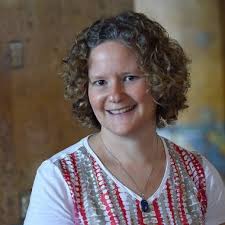
As The Hollywood Times continues our media partnership with HQSFF, I had the honor of speaking with Betsy Kalin via Zoom about her new documentary, the challenges of capturing untold history, and her hopes for the future of queer storytelling.
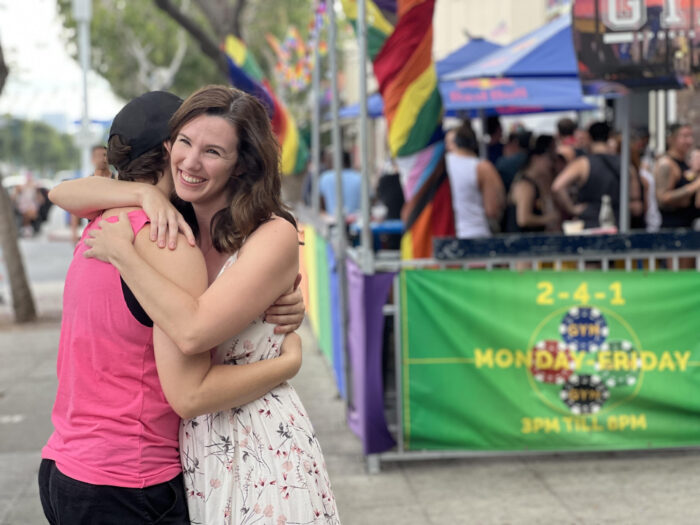
Kalin explained that the inspiration came from her wife and producer, Chris Chew. “We noticed, as some of the few queer women in West Hollywood, that our story really wasn’t being told,” she said. “We suspected there was this long history of queer women doing amazing things in the city, but their contributions weren’t part of the record. So we thought it was important to tell the story.”

The film traces lesbian involvement back to the 1980s, showing how queer women shaped both nightlife and political life in West Hollywood. From coffeehouses like Little Frida’s to iconic clubs like Girl Bar, these spaces weren’t just about fun, they were the foundation of organizing, activism, and mutual support, especially during the AIDS crisis.
Though the documentary includes nostalgic stories about what beloved spaces like The Palms or Girl Bar were like, Kalin emphasized that “it’s mostly about these women telling their own stories, what it meant to be part of a vibrant queer community.” She hopes the film will inspire younger generations: “We’re really under fire right now, and it’s important not just to know our history, but to use it.”
When asked about working with her participants, Kalin said her process was rooted in transparency: “I make it clear what direction the film will take and ask for their input. It’s not me dictating their story, it’s about collaboration and trust.”
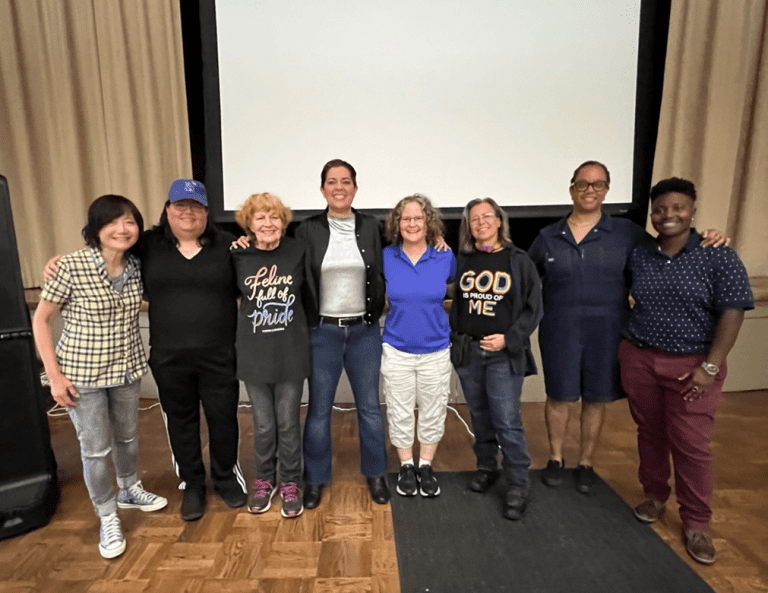
That collaborative spirit extended to documenting nightlife. As she put it, “If you have nightlife, you’re building community. And when you build community, you can organize and take action. Creating those spaces for women to come together was itself a radical act.”
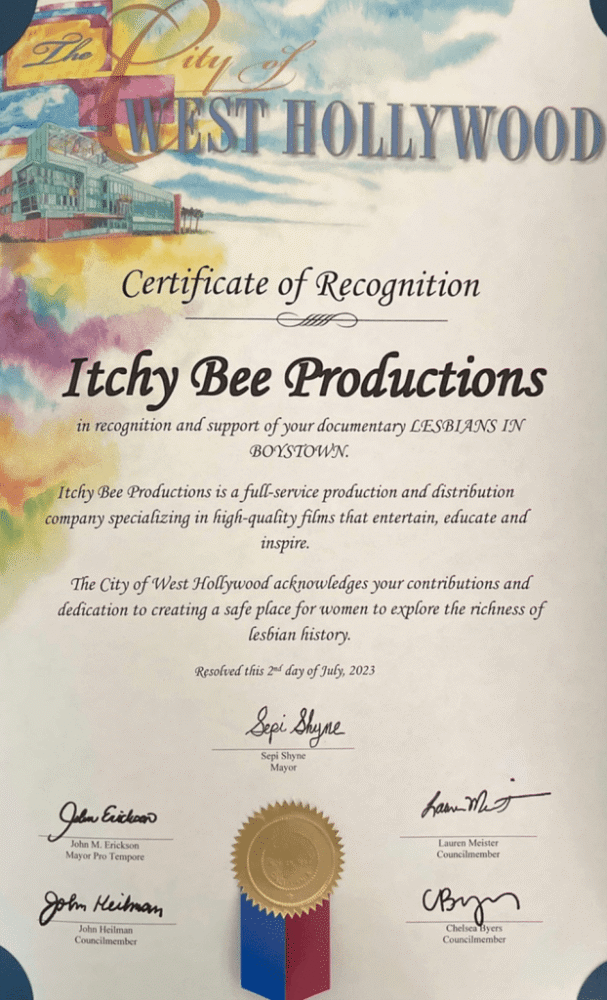
Like many documentary filmmakers, Kalin faced tough editing choices. The project began as a planned 10-minute short but quickly expanded in scope. “There was no way we could tell the story we wanted in that time,” she admitted. Editing became the process of writing the script itself, with hours of footage left on the cutting room floor.
Her wife, Chris Chew, played a crucial role as an editor in shaping the film’s final form. “She was able to see things differently, saying, ‘this goes here, this goes there, this is your message.’ It was incredibly helpful.” Still, Kalin dreams of expanding: “My dream is to make a feature-length film and expand beyond West Hollywood—to Boystown in Chicago, New York, and other lesbian communities whose history hasn’t been told.”
Beyond documenting history, Lesbians in Boystown looks forward. Kalin is using the film as an educational tool, with four screenings scheduled at universities, and she plans to lead workshops on how communities can preserve their own queer histories. The response so far has been overwhelmingly positive. “Everybody’s been very happy with it,” she said. “We’re also hosting a fundraiser at Ruby Fruit on October 5th to support distribution and outreach. The women featured are excited to see their history documented and shared.”
As our conversation closed, I asked what she hoped audiences would take away from the HQSFF screening. Kalin replied, “I want people to be inspired. I want them to feel hopeful. Our existence is under attack, but we have community, and we can take action. I want the film to be celebratory, but also a call to action.”
Lesbians in Boystown is more than a documentary. It’s a living archive, a love letter, and a political act of preservation. By shining light on overlooked stories, Betsy Kalin ensures that the legacies of queer women in West Hollywood are not erased but celebrated, remembered, and carried forward.
As I signed off our interview, I reflected on my own connections to the people and places in this film. Like Kalin, I believe in the power of memory, visibility, and community.
Don’t miss the chance to experience Lesbians in Boystown at the Hollywood Queer Film Festival. It’s a testament to resilience, joy, and the radical act of telling our own stories.