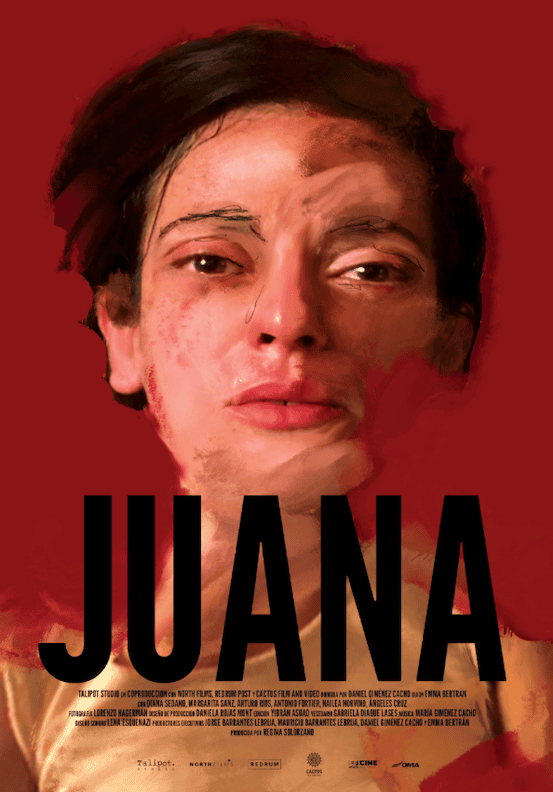
Daniel Giménez Cacho’s feature debut Juana (Mexico, 2025) is a psychological thriller that moves along like a police procedural. However, its real focus is on one woman’s discovery of the cost of her own silence about a time much earlier in her life. The film screened on September 26 at the Hola Mexico Film Festival in the Regal Cinemas L.A. Live in Downtown Los Angeles. Juana, played by Diana Sedano, works as an investigative journalist at the Siglo-XXI newspaper. She had a boyfriend Juan (Jorge León) but he was murdered and the murderer never found. Juana suffers from panic attacks and frequently takes medicine for them. She likes to drink wine and probably far more than she should. Juana lives alone in the same home where she grew up. Her mother Amelia (Margarita Sanz) who suffers from dementia is in a nursing home and Juana arranges to visit her – usually on Sundays.
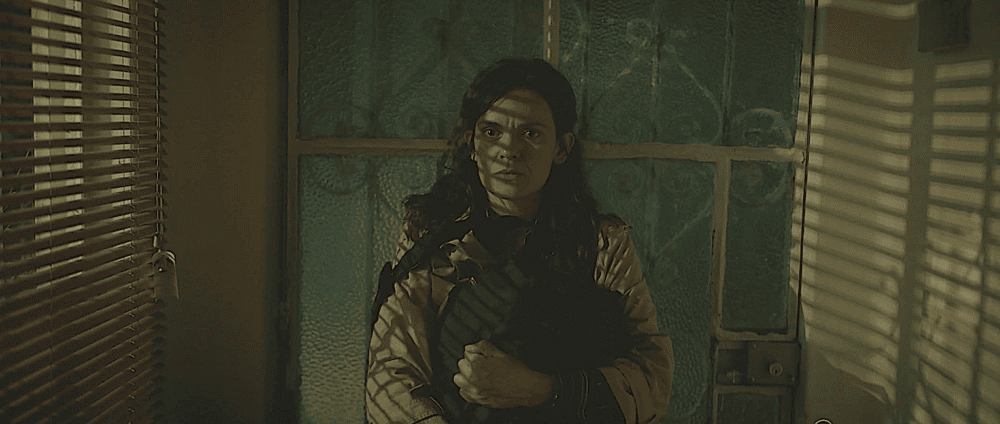
With her work for the newspaper, Juana often handles criminal cases, especially ones effecting women. One assignment brings back to her mind the name of a man named Pedro Núñez, a corrupt politician connected to a criminal network. In digging through old files and newspaper articles, Juana becomes convinced of the similarity of the deaths of a number of young women by a man who has never been found over a 20-year period of time. Despite the warning of her colleagues at the newspaper, Juana continues to investigate the murders and her sense that they are all related this powerful Mexican politician. That process takes a psychological toll on her mind. She becomes haunted by memories of her younger years and abuse by her own deceased father.
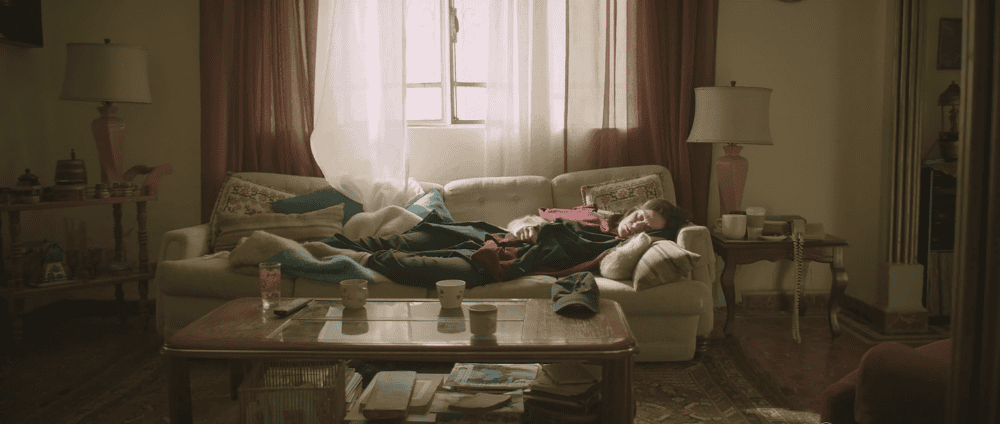
The acting of Diana Sedano is excellent, but she is not exactly a sympathetic character. The film takes us on an intentionally disjointed journey through Juana’s mind and her obsession with investigating the grizzly murders of young women. As viewers of Juana’s investigative work and her own life, we become voyeurs watching her, as she goes about stalking old crime scenes and the man she believes is behind all the murders.
One bizarre scene occurs early in the film, when, after several drinks in a bar, Juana goes up to an older man, offering to buy him a drink and begins to flirt with him. Juana tells him that he looks like her father. The man named Ramon (Jorge Léon) who happens to be a psychiatrist is surprised by her inebriated advances. When she tries to kiss him, he pushes Juana away physically. The physical rejection mirrors the rejection she felt with her own father years before – and she seems to be re-enacting it.
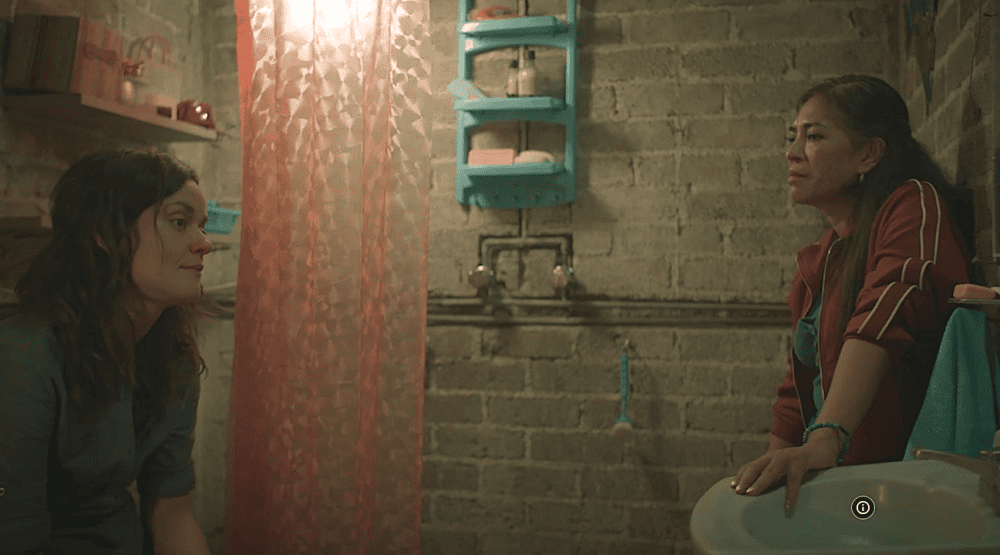
The film opens in a violent scene where a young Juana is running in a local park when she is suddenly grabbed by a man and thrown in the trunk of his car. Later we hear at the newspaper office, that the mangled body of a young woman has been found down by a riverbank. We glimpse at some graphic and disturbing photographs in the police files. To a colleague, Juana explains that the killer was never caught. Juana has been researching a long series of similar murders in hope of finding out the identity of the murderer. In fact, her research so preoccupies her thinking that she lives on pills for stress and drinks wine all too often. It is difficult to determine how much Juana’s interest in the deaths of young women she begins to internalize.
At her workplace at the newspaper, Juana has assembled a chart chart linked all these murders and their commonalities. When other newspaper journalists question the worth of her efforts, she grumbles. She insists on tracking this series of gruesome murders of young women. Her hope is to connect the clues to the identity of the killer. Her friend Julia (Luisa Pardo) suggests that she focus on her own well-being and move on obsessing over this set of cases. Juana seeks out people who were abused or victimized by this Pedro Núñez and his hitmen, including Adriana Núñez (Nailea Norvind), who warns her about death threats.
In flashbacks, we discover the dynamics of Juana’s family, with a disapproving and sometimes violent father and a submissive mother. In one flashback, we see a younger Juana being shamed by her real father for her appearance while she is ironing a blouse in the next room. She walks out into the dining room with iron and hits him over the head. We see the image of his face in smashed into the food on his dinner plate. We are to assume that she killed her own father and her mother sat by numb, without reacting? Did she really do this or is she re-imaging the past to explain her own fear?
The director uses these flashbacks to help us enter into Juana’s delusion-haunted mine. In a scene from her early childhood, she sees her father doing something that we do not get to see on screen. Is she the witness or the victim? Obviously traumatized since her childhood, Juana still bears the scar of her father’s abuse. She has sublimated her fears but her work on the female murders begins to fill her waking hours. The deliberate obfuscation of the background story only emerges in these chaotic, fragments flashbacks. It is rather confusing for the audience viewer, as we are also left trying to justify her work as an investigative journalist stalking a murderer – punctuated by her own hysterical episodes.
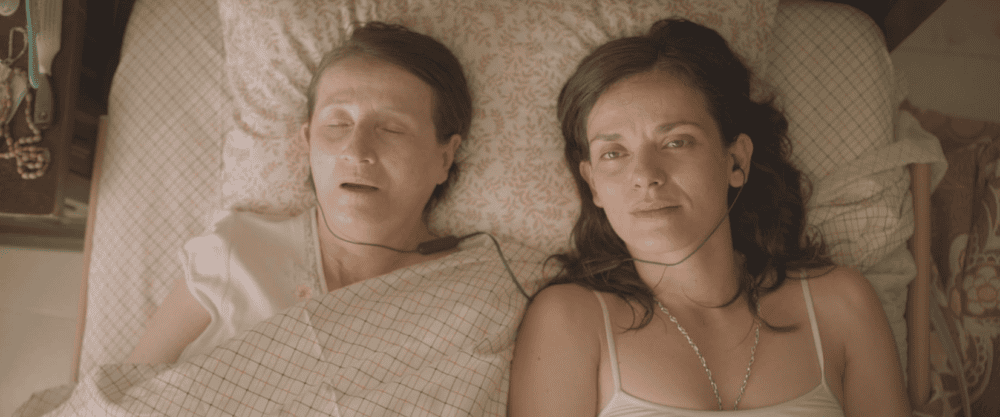
At one flashback in the film, she is seen with her former boyfriend driving on a lonely road past a fruit stand where people have stopped to buy fruit. Aoparently this is where the mangled body of young murder victim had been found. Later, she alone drives past the same fruit stand now abandoned and she stops to walk into the woods from the road. In her paranoia, she thinks that she hears a person following her. There is no explanation offered. Suddenly Juana is back in her car and arriving at the rest home where her mother now stays. She is told by the head of the rest home that her mother’s dementia is getting worse and a kind male nurse suggests bringing some old photos of her father to please Juana’s mother and help her remember things. The suggestion forces Juana to contact her sister with whom she seldom speaks, and her sister decides to give all of their mother’s boxes of memorabilia and photos to Juana. In an awkward meeting in a parking lot, Juan loads several boxes in her car trunk. Back at home, Juana sees photographs of her childhood, her parents’ wedding photos and photos of her parents. In one photo of her parents, Juana had previously folded her father’s figure out of the frame, as if to erase him from memory.
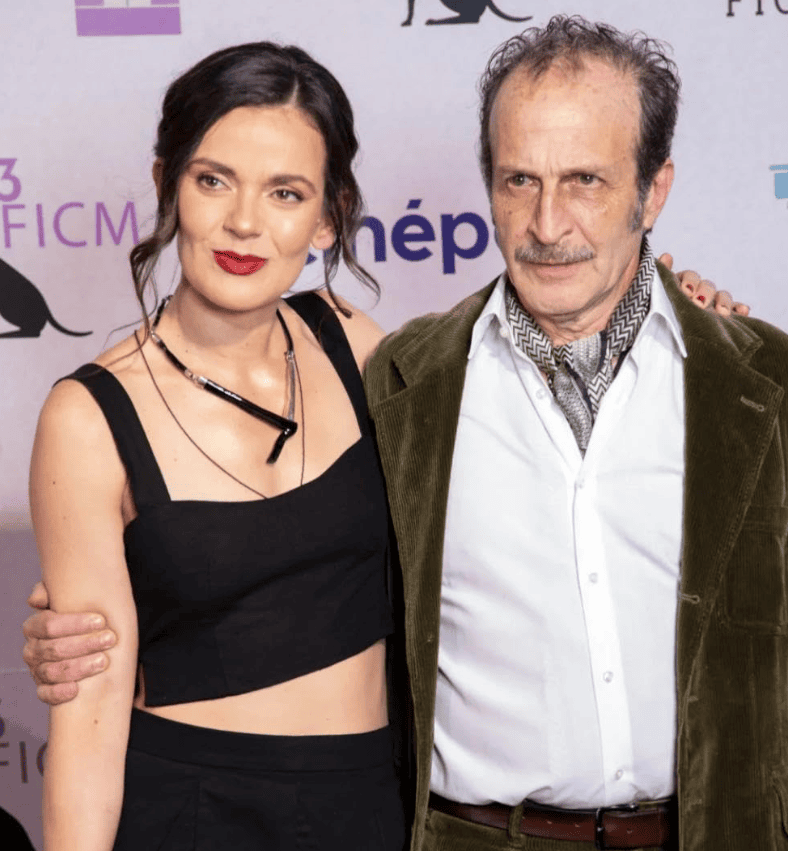
All these scenes point in the direction of a traumatic childhood event for Juana, They add up even more when she inserts a memory stick into her computer at home. What she sees points to conclusion that only intensifies her fears. Every time, she returns to her house, she checks for a possible intruder. If she is one being stalked, she needs to know. The final scenes of the film suggest that Juana is prepared to encounter this man who has been stalking her. Her investigation of a serial killer has landed her as the potential next victim. Juana’s hallucinations eventually reveal and her fear justified: Juana is the hunted one who is haunted by her own memories of abuse and the stories she tells herself to survive.
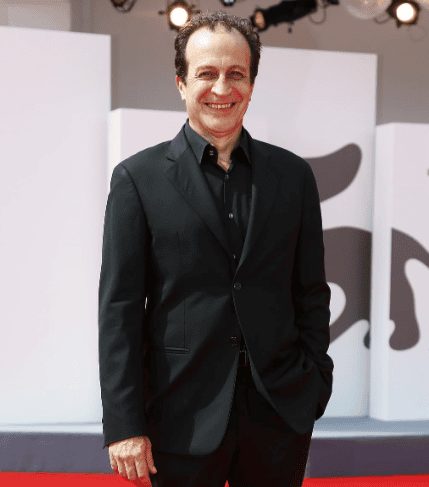
Gimémez Cacho provides Juana with a masterful use of atmosphere and superb cinematography, editing, and sound, although the editing is a bit puzzling. As a journey into the mindset of Juana, we are not permitted to know the real demons that haunt her. We discover the traumatic younger years of Juana and wonder if her abusive father is perhaps this same politician Pedro Núñez who may or may not be her father. We end up as observers viewing only what Juana shows us of her troubled existence, which reaches a climax in the seemingly unreal scene at the film’s close. Is she really waiting for the killer to enter he house and attack her? As a psychological thriller, I am not sure that Juana explains the unraveling of its main character. Her tortured psyche is on full display, although we are never able to determine how much of what she experiences comes from of her own demons.