10-22-26
Interview and Photos by Jimmy Steinfeldt
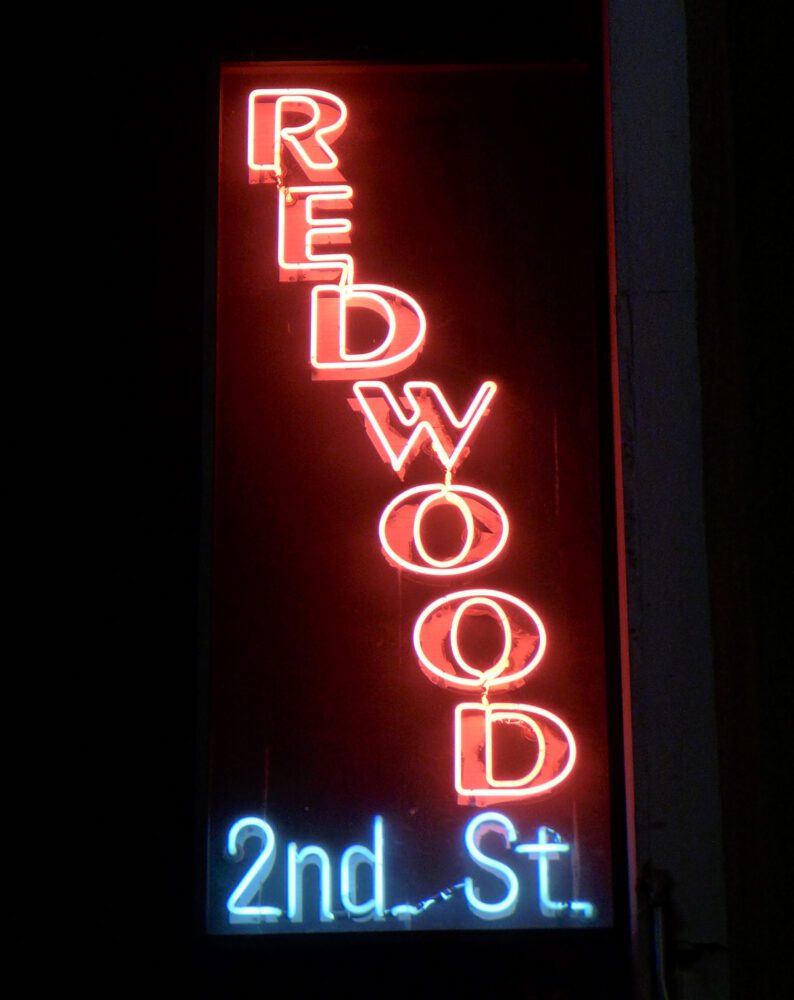
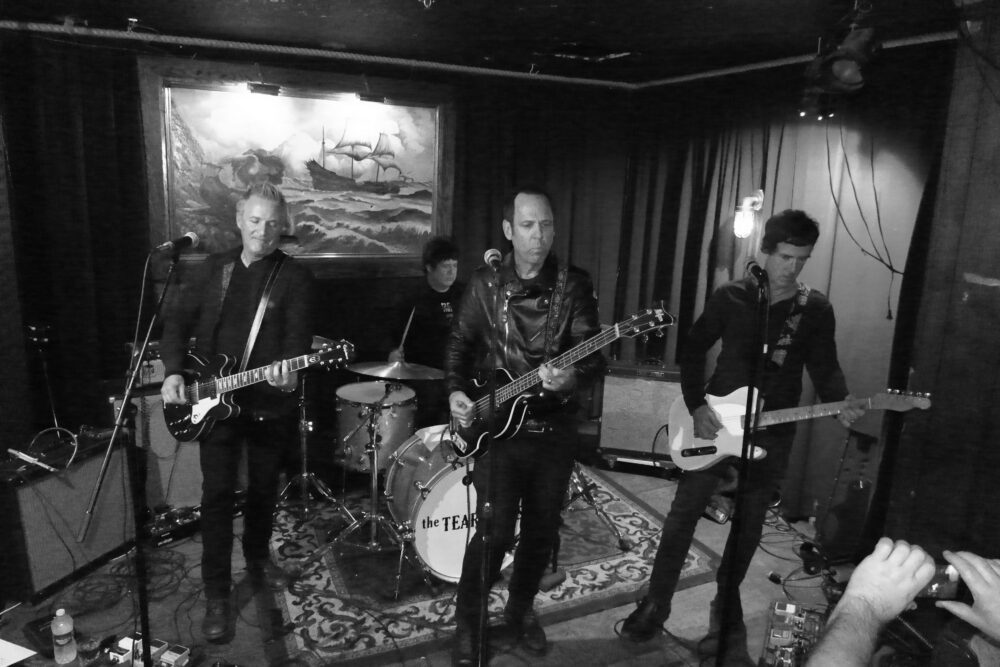
John Finseth: Where was that photo taken?
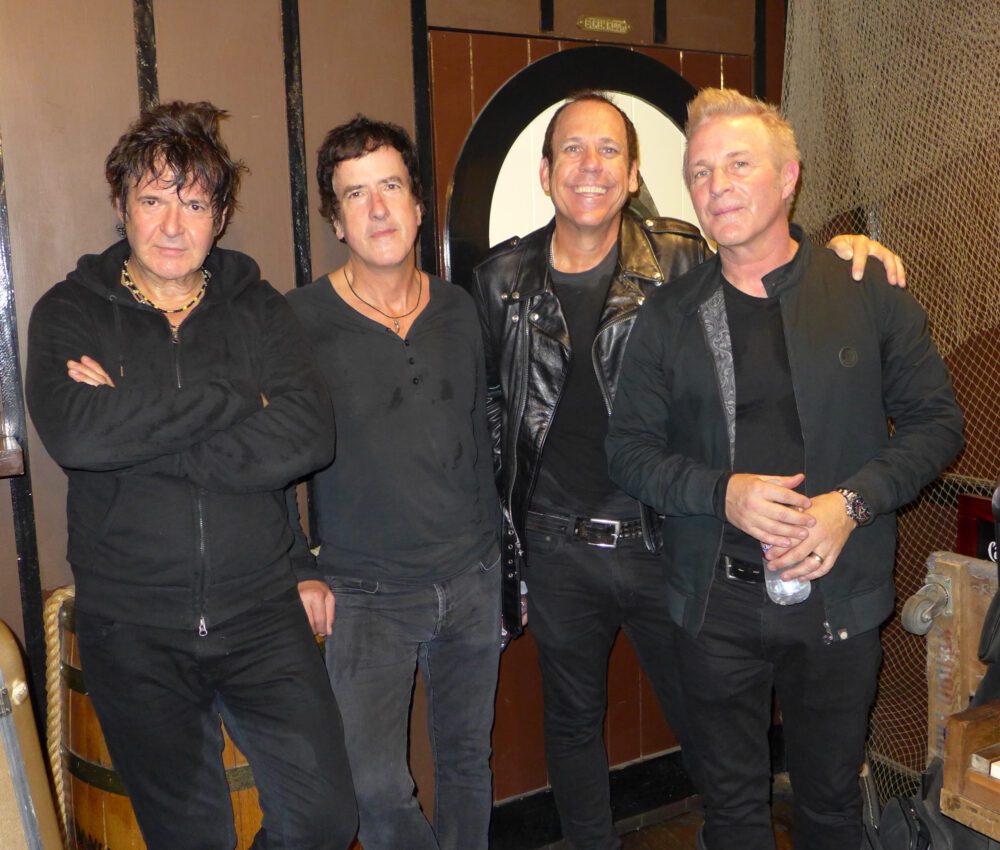
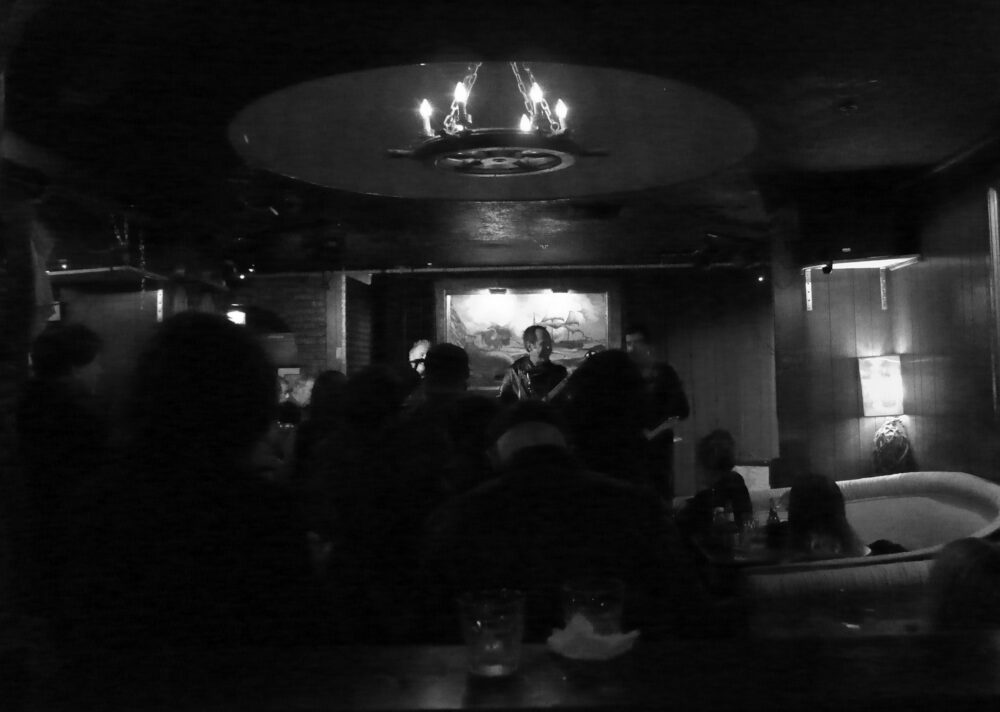
Jimmy Steinfeldt: The Redwood Bar & Grill in Los Angeles.
JF: That must have been New Year’s 2019. How’s everything going for you?
JS: Great. I moved my studio after twenty years from Laurel Canyon to the desert and I just returned from teaching Rock N Roll Photography at the MODE Festival in my hometown of Minneapolis.
JF: I love the desert especially the Joshua Tree Motel. I went there to write songs. I stayed in the Donovan room. One morning I woke up, went to my guitar and my guitar pick wasn’t where I always leave it, in between the guitar strings. I go looking for it and it’s in the kitchen on the counter standing on its end! Weird things were happening there. I asked the maids if there was something strange about the room. They said “Oh, Maria won’t go in there.”
The Tearaways are lucky in our unluckiness. We were booked to play the Playboy Mansion. All our friends thought this was great. We got there, did our set and then heard Hefner hated Rock N Roll. He was a Jazz fan. Another example is the first day we were going to record a new album, we go into Sunset Sound and at that moment the L.A. Riots break out, right after the Laker game. Later we brought the finished record to the record label and then Grunge music hits and THAT becomes the next big thing. The longer you do music or any art you realize the art part and the financial part do not mix. The financial part in fact is a contradiction to the creative process. Concentrate on creating the art. Create songs that are of the moment. Don’t write to impress an audience. We’ve never written and recorded songs to please everyone. That would lead to milquetoast songs. I want our songs to find their way to the ears of those people who will appreciate them.
JS: John, Tell me the origin of the band name.
JF: Around 1980 I read a book called Shout by Ray Coleman. In the book it says so and so was a Teddy Boy. Then that became Tearer. Then that became Tearaway, like a guy with a black leather jacket. A rough and ready kind of guy.
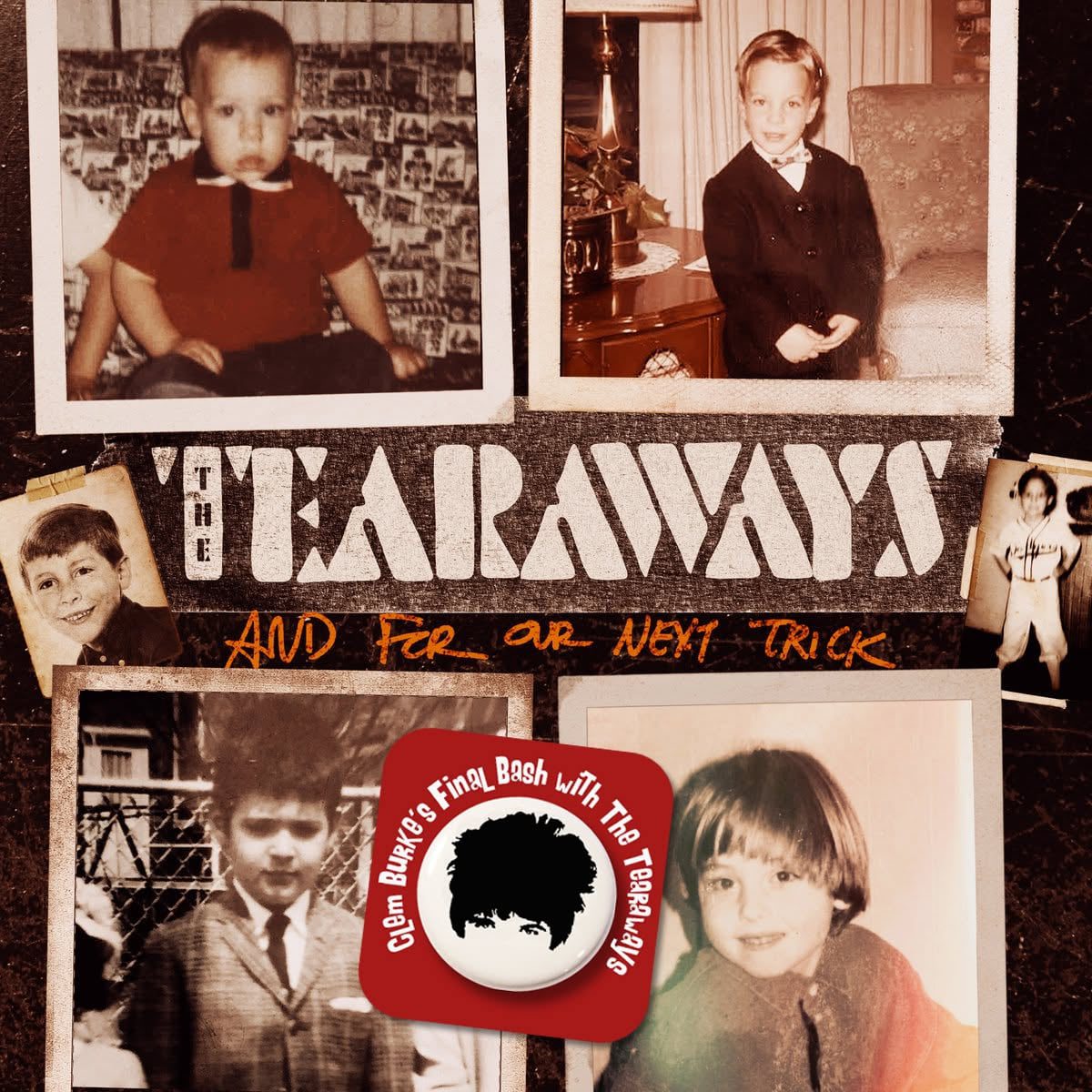
JS: Who came up with the album title For Our Next Trick?
JF: A buddy of mine. Jesse Aldana in Santa Barbara was always using that phrase.
JS: How did the Tearaways get together?
JF: It was originally me and two other guys. Those guys left to do other things and I brought in Greg Brallier. He had been in another band and I liked the way he sang. When we sang together it clicked. Like the Everly Brothers voices clicked. Dave Hekhouse was working at a music store and he joined us as our guitarist. I originally met Clem Burke at the Whisky in 1980. The show was a mod band. I was 16 years old and knew about Clem from Blondie. He was wearing a purple suit and I walked over to him and said I liked his drumming and I’d like to play with him someday. Clem didn’t say a word.
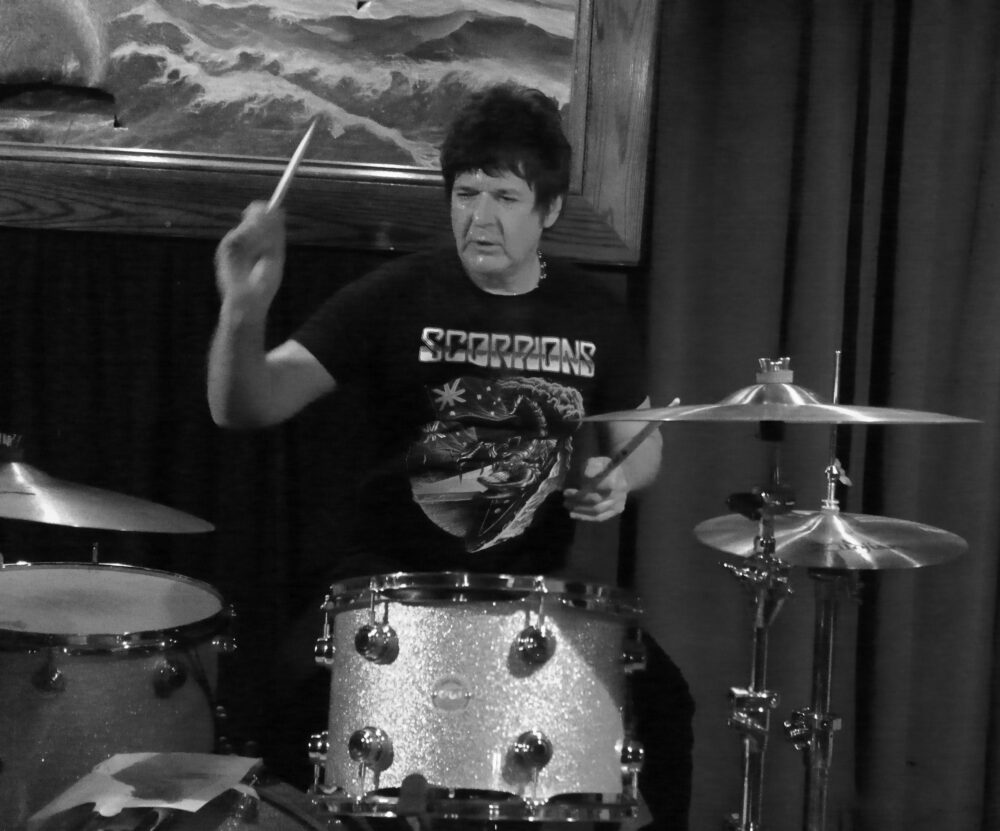
Years later our drummer hurt his hand and we were going to do some shows in England. John Ferriter was in our band and we met Clem through John at a Malibu event. We asked Clem to play with us because our drummer was hurt. He said yes. He also said when your drummer gets better, I don’t want to take his spot. Clem was unique. When we would rehearse, he’d play just as if we were performing on Saturday Night Live. He would say to us “Wanna rehearse longer?” His energy would rub off on us. I also realized he’s left-handed (like Ringo) and that gave a special sound especially when it came to playing the hi-hat. I feel that helped our sound by allowing the hi-hat not to overwhelm our voicings. Clem would bring great people to see us like Bob Geldof who asked us “How can you sing in perfect tune with ‘machine gun Clem’ behind you?” Clem got Carmine Appice to sit in with us and Glen Matlock sat in with us. Finally, Clem told us he would play with us every chance he had but when the call comes from Blondie, he’s back full time with them.
JS: What was it like working with my friend Ed Stasium?
JF: I asked Ed how the Smithereens song “A Girl Like You” got that big drum sound? Ed answered “I don’t know, I just put the thing in!” He is no nonsense and I love that he understands the band element. He doesn’t want it to be an Ed Stasium record he wants it to be the sound of the band. He’s done two records now for us. It’s been a great partnership.
JS: Tell me about the process of writing and recording the album.
JF: For Our Next Trick was recorded during the pandemic. I was at my house on three acres in Los Alamos north of Buellton California all by myself. I would work with our manager Marc Platt on all the lyrics. Then Greg Brallier would come up and we’d work on melodies, chord progression, lyrics and arrange the songs. We did everything acoustic initially. Then I would do a demo. Not recorded but in a notebook. This way when we record the songs for real, we have a fresh sound. None of the lustre of a new song is lost. Then I’d send Ed something very basic done on my iPhone. A few songs at first. He said “These are really good.” Then I sent him some more and he said the same thing. Then I’d send him some more and he’d say “Damn there isn’t a bad song here. You should hear some of the crap that I have listen to.”
Jimmy, we did something original, ha ha. At least for us it was original. We went into an important studio, plugged into amplifiers and counted to four and started playing all together. Wow, what a radical way to make an album! We asked Clem to sing one of the new songs “Charlie, Keith and Ringo” that we wrote for HIM to sing. We even put it in a key he could sing it in. But he said “It’s too good for me to sing and you guys would do a better job.”
Years ago, Rodney Bingenheimer told me we should do a song about the wrecking crew. We recorded the song and Rodney played it on his show. Then Steve Van Zandt heard it and said “What the hell is this? I gotta have it.” He put it in rotation on his show and made it a Coolest Song In The World on The Underground Garage. We then sent the song to Denny Tedesco who was doing the documentary on the wrecking crew. He listened to it only because Clem played on it. He then called us and said “People send me such crap to listen to but I’m putting your song up on our website.”
We went to a wrecking crew event in the valley with about 300 people there including Don Randi, Don Peake and others from the wrecking crew. Clem and I are sitting there and all of a sudden to our surprise Denny stands up and says “There’s this band that wrote a song about us, we want to show their video.” They drop a movie screen and show the video and at the end everyone is clapping. Clem turns to me and says “John, I’ve done some pretty big things but this is one of the best moments of my life, to be respected by the people that I respect.”
JS: What studio did you record at?
JF: The Village Recorder in Studio D. While we were there I ran into Robbie Robertson. He heard us singing our song “Are You Fucking Kidding Me” and asked are we really recording that? I said yes and he said “Clever.” Also, Benmont Tench played on six of the songs. He also liked the title “Are You Fucking Kidding Me”. He played mostly piano but also organ on one song. Stephen McCarthy with the bands The Long Ryders and The Jayhawks played pedal steel guitar. The Jayhawks were from Minneapolis. Jimmy did you photograph them and the Replacements?
JS: I photographed both bands for years. When Paul Westerberg went solo, I did his tour t-shirt and poster and I did a fun session with him in my L.A. studio. Great and talented guy.
JF: I really liked the Replacements and thought they were great. I followed them closely around 1988. Our band had that same sort of moxie. On their albums Paul would sing in tune but in concert they were a mess. All he had to do was sing the melody, hit a note. That’s my only critique.
It’s sort of like when I followed Dylan about 10 years ago. Nothing he sang was audible. A guy I knew lived at Bob’s house in Malibu. He would repair Bob’s amplifiers. He told me that Dylan had a linquist who also lived at the house. This guy would review 2000-year-old books looking for sayings and write them on a board for Bob to check out. He also said Dylan never gave anything away. Bob’s attitude was “Why would I give away a ten-year old TV. It was my TV.” He also told me he was on the road with Tom Petty and the Heartbreakers at the peak of their career. They were huge rock stars. Then one day Dylan and Harrison walk in the room and the whole dynamic changed. It was like two teachers had entered the room and the others were just the students.
After we finished this record we went and toured England. We were going to tour America and Clem got sick. Clem didn’t like anything that resembled Metal. Punk, Disco, Bubblegum all OK. Metal-No.
JS: The Tearaways have been compared to The Clash, the Ramones, Blondie and others. I have photographed these bands and I wonder if you can put your band in a genre or compare it to some other band?
JF: Many influences. The band Law. They have that sort of Donovan vibe. Also, the Bee Gees around 1968-1971. Donovan, the Everly Brothers and the Beatles. Also, Dave Edmunds. There’s even a Phil Seymour element. He played with Dwight Twilley. By the way we once played a gig with Alex Chilton.
JS: Another tie-in with the Replacements.
JF: I always felt the Goo Goo Dolls sounded like The Replacements.
JS: I agree.
JF: Anyway, Alex was sitting at the bar one time and I walked up to him and just said hi. He said “I don’t wanna talk about Big Star!” I said I don’t even care about Big Star and he said “Cool.” Three beers later he’s telling me about doing “The Letter.”
Another interesting thing happened. One night Brian Setzer was sitting at a bar where we were playing here in Santa Barbara. I asked him if he wanted to sit in. He said “I’ll play that acoustic Gibson on two songs but I won’t sing” I said OK. He asked what are we going to play and I said “Long Tall Sally”. We played it and I saw it was in the wrong key for him so I adjusted keys going forward. There were only about a dozen people in the bar but two and a half hours later he’s still playing with us. He’s a great player.
JS: Which bass are you best known for?
JF: I call my Rickenbacker my Fin-In-Backer. I also play a 1964 Hofner violin bass. I’ve probably played 3,000 gigs with it. I will also play a Fender P-Bass. I made a bass for Tom Petty and I also made a silver sparkle Gretsch bass that I believe Tommy Stinson has. When I play guitar, I play a Gibson J-200 and a Martin D-28. They sound great together with low and high voicings. As for electric guitars I like a 60s era Rickenbacker with triple toaster pickups or a 360 12 string playing through old Vox AC30s. We love the Fairchild compressor and we use it a lot. It’s all over this record.
JS: What do you feel is your greatest contribution to the band’s sound?
JF: My soul, my heart. I’m willing to give you anything I can. I commit and give it my all. I tell people don’t try to be someone else. Figure out what makes you tick and develop you. I never took a singing or guitar lesson. I bought an album called Play Guitar with the Ventures. I also learned that art doesn’t have rules.
JS: You are a Santa Barbara cat I wonder if you ever met my friend Jon Shafer from Isla Vista?
JF: I think I remember him. We might have dated the same girl.
JS: Well, it’s a small world. John, can you tell me something about Steven Van Zandt.
JF: He came out to see us play in England at the 100 Club and then said to me “How do you guys sing like that, like the Hollies especially with the intense drumming of Clem behind you” When Willie Aron joins Greg and me on vocals we have a triad. Steven invited us to the Ventura Theater to see him play. I’ve probably seen 1000 gigs of other bands and his show from the very first song was mixed perfectly. It was a huge production with a 20-piece band.
JS: Tell me something about Joey Molland. A new record is coming out featuring my friend Phil Solem along with Joey and Jeff Miller. It’s a Chuck Berry tribute album.
JF: I spent a fair amount of time with Joey. I asked him about the original Apple watch. The Beatles Apple not the computer company. I was at a flea market and saw the square face Apple watch and it was selling for about 2000 pounds. I asked Joey if he remembered those watches. He said they all got them as Christmas presents in 1969. He said when he was down and out, he pawned it, but he did get it back. It was shitty watch but he got it back. He also told me about The Concert for Bangladesh. They did rehearsals for about a week just the rhythm section. He also told me that George Harrison said to him “That song of yours “Come & Get It,” you’re going to have to play that song over and over for the rest of your life!” Joey told me that at the time he couldn’t understand George’s comment but later he came to understand. Joey also told me that the piano you hear by Leon Russell was done in one take.
I also asked him about Todd Rundgren and he said that guy was shit. He said Mal Evans 100 percent produced the album. When we played Liverpool a year ago, we did a tribute to Joey. After the show a lady walks up to me and says “I have to meet you. Your show tonight was unbelievable, Mal Evans was my father. He would have loved your band.”
JS: Anything you want to say about my friend Rodney Bingenheimer. I was at the filming of Mayor of the Sunset Strip. I even appear in it for a moment. He of course is a legend.
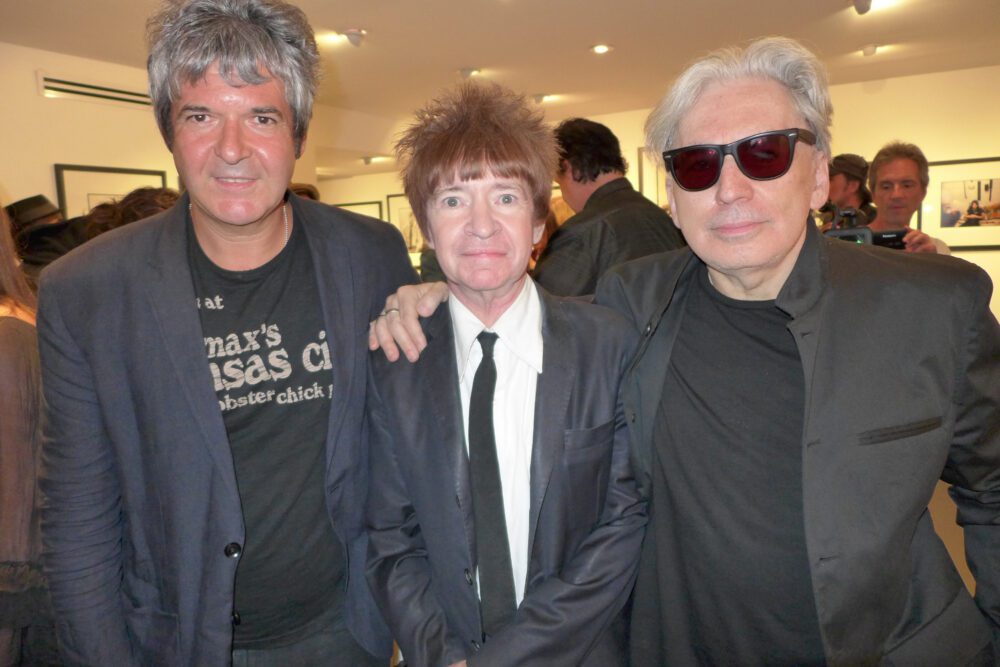
JF: He would always go to Canter’s Deli and when I’d talk to him, I felt as though I was talking to Andy Warhol. I gave him for his birthday a Monkees thermos I got at a swap meet. I told him I saw a picture of him and John Lennon in Toronto and he reminded me of Forest Gump. I said to him you are in these photos, like you are leaning in. What were you doing there? He said “I was writing for Tiger Beat and I went to see Elvis in Vegas. I took my tape recorder and Elvis sang a Beatles song. When I got together with John, I gave him the tape and said this is Elvis doing a Beatles song.”
I asked Rodney if he could tell me about when George Harrison came to L.A. in 1967. Rodney said “George wanted me to take him places for some clothes. We went to Ben Franks and then to Fred Segal” He also said when he had the English Disco the Eagles came in. He hated the Eagles. They were like jocks and didn’t understand androgenous things. Rodney was smart. He didn’t talk much but mostly listened. That way he was able to experience and collect amazing stories others would tell him.
JS: I find that to be a common trait with Warhol, Dylan, and for sure Prince. I was lucky to be in Prince’s orbit for 14 years and he rarely said a word. He would observe.
JF: Most people can’t keep their trap shut.
JS: Tom Hanks is a fan of your band!
JF: You can’t plan this stuff. We were playing a gig in Mammoth. Some people came up to me and said they were with Tom Hanks’ production crew. I was skeptical but I gave them my card. A month later my phone rings and the guy says “Fin” I say yeh. He says “This is Tom” I say Tom who? “Tom Hanks” I say shut up! He says “No, it’s me Tom Hanks.” I say do Forest Gump! He did the Forest Gump voice and then he said he was doing this benefit thing for schools and he’d like our band to play. It was a pretty big event with about 2,000 people near the Riviera Country Club in L.A.
The day of the gig, I was dealing with a lot of people and we were just about to start to play and a lady I’ve never met before comes up to me and says “We have a rule, you will not by any means play any Eagles songs.” The Eagles are not even on our set list but I said to her “You mean no Eagles songs?” She says “Yes, no Eagles songs or I will turn off the P.A.!” I then go over to Greg and say this means we are doing a full Eagles set. The third Eagles song we did was Already Gone and who joins us on stage? Glenn Frey! I look in the crowd and that lady is shouting “More Eagles, More Eagles” I learned that the best attitude is not to give a shit. I think this is the type of thing the Replacements would have done. We ended up doing about a dozen gigs for Tom Hanks. Glenn Frey was at several of them.
JS: Glenn wrote several of his hits with my friend Jack Tempchin.
JF: Jack’s a great songwriter. Peaceful Easy Feeling.
JS: What’s next for John Finseth?
JF: Our next record is called Middle-Age Riot. We just finished it. We did it with Ed Stasium at the Village Recorder. We also have a documentary that we’ve been working on for forty years! It’s being edited now and hopefully will coincide with this record.
JS: When you were at the Village Recorder did you get to visit with Jeff Greenberg?
JF: Nice guy. We are hoping to have a listening party there when the album comes out. I’d love to have you there. The album should come out the end of March 2027. It just got mastered by Bernie Grundman. I asked Bernie if artists would come in during mastering and he said “Not that often but sometimes the artist or producer would come in. Prince came in and I didn’t even know him” I asked Bernie what did Prince do? “He did and said nothing. In fact, the first record I mastered for him I didn’t even know him. There was this guy just sitting there while I’m mastering the record. Then I watched the Grammys and there’s Prince the guy who sat quietly while I mastered his record.” I also asked Bernie what record took the longest to master. He said Thriller.
For more info:https://www.tearaways.com/
Songs/Videos: