By Robert St. Martin
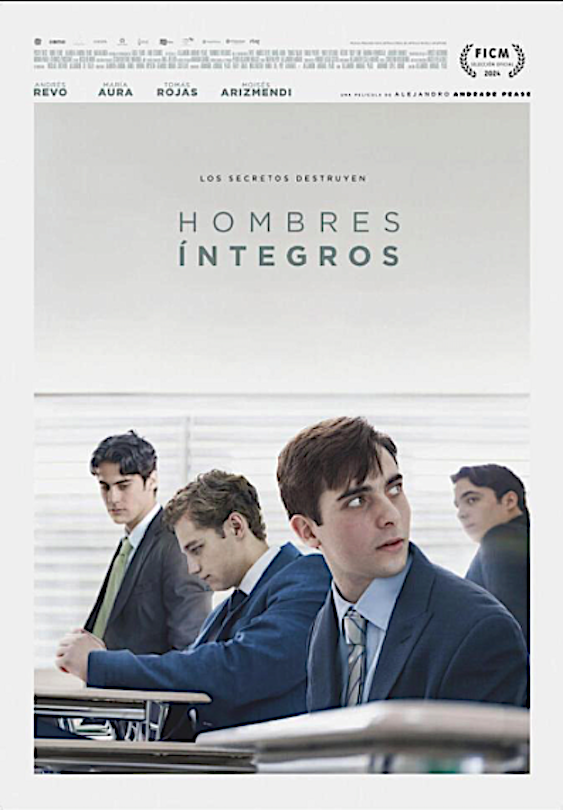
Los Angeles, CA (The Hollywood Times) 9/20/25 – From Mexico comes a riveting dramatic thriller entitled Fine Young Men or, in Spanish, Hombre íntegros (2024), which has received critical acclaim at film festivals since its launch at Cannes earlier this year. Co-written, co-produced and directed by Alejandro Andrade, Hombres íntegros stars Andrés Revo as a gay teenager who is forcibly involved in a crime by his group of friends. Hombres íntegroswas featured at the Hola! Mexico Film Festival in Los Angeles on Wednesday, September 17, at the Regal Cinemas, and Friday, September 19, at the Milagros Cinemas in Norwalk. It is also in the line-up of the current Cinema Diverse in Palm Springs on Saturday, September 20, at 4:30 pm at the Camelot Theatres of the Palm Springs Cultural Center, 2300 E Baristo Rd, Palm Springs, CA 92262. For tickets and passes, go to: https://www.psculturalcenter.org/filmfest/festival-passes
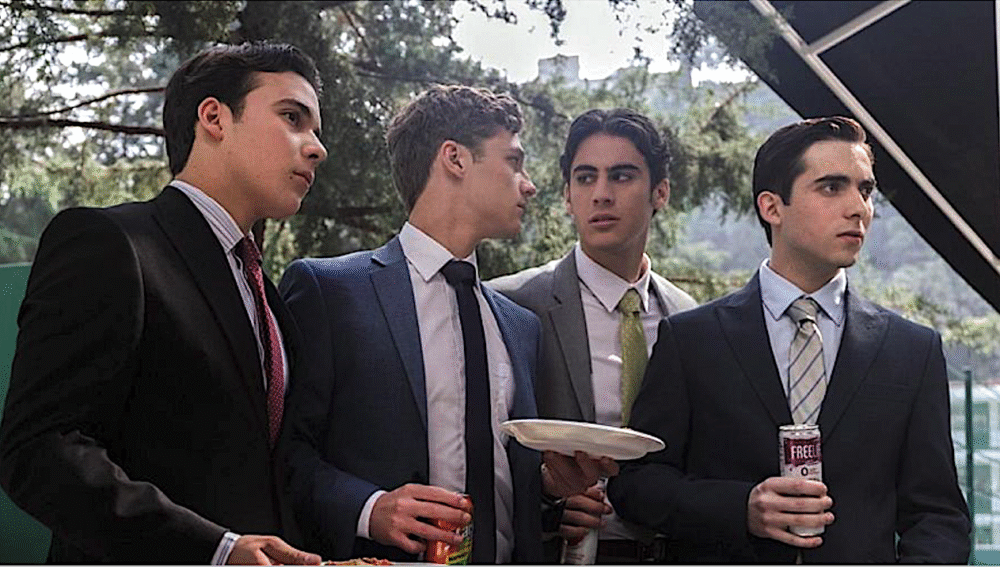 Alf is a privileged teenager who returns to his former elite private school after a year away at a boarding school in the United States. Back in Mexico, he no longer identifies with his usual friends, the athletes and the popular ones, but instead begins to bond with Oliver (Joaquín Emanuel), a new student who is completely different from the rest of the kids. Alf will face the transition to adulthood alone while becoming involved in a crime, an event that will deeply fracture the relationship between Alf and Oliver.
 Hombres íntegros is a complex film that asks more questions than it answers as a dramatic thriller. At the start of the film, we met Alf (Andrés Revo) as a teenager with doubts about his own sexuality that ultimately lead him to cross a line that will change his life forever. Eventually, the film reveals many aspects of Mexican culture about toxic masculinity and how Mexico’s patriarchal system tends to repeat the violence that plagues Mexico’s culture.
 Hombres íntegros focuses on Alf, a boy who returns to his hometown in Mexico after living abroad and undergoing a profound change from his year in the USA, where he doted on an American young man on the water polo team. But back in Mexico, he is thrust into the thick of the pressure exerted by male-dominant culture where sexism, racism, and homophobia persist.
As explained by director Alejandro Andrade: “The film talks about when you betray yourself and don’t truly accept who you are or align yourself with your true impulses and emotions. This creates toxicity around you, and the message we want to convey is that, beyond social pressure and appearance, you have to be very true to yourself, which is very difficult, especially as a teenager and surrounded by others.”
Alf (Andrés Revo) is a young man searching for himself. His sexual proclivities begin to emerge as he sets his sights on a boy from school, Oliver. Meanwhile, he continues to have a great time with hanging out and partying with a group of heterosexuals, popular, and aggressive friends who, at one point, cross the line and commit a crime. A situation in which they will have to see if they are truly the “men” they boast about being or, on the contrary, are still children trapped in adolescent immaturity.
Hombres íntegros has in Spanish a title that provokes a clear question: What is a man of integrity? The director has his own take on what this concept means: According to Andrade, “The title is an irony in a way, because, at the end of the day, no one ends up being whole. And in the end, it’s also a paradox because: What is a man of integrity? Is he an alpha male? Violent? A winner? In the film, we raise that irony, but also the paradox of how one can achieve integrity.” This begins increasingly apparently near the end of the film, where the powerful patriarchal system attempts to change the narrative of events in the story and “fix” things that will only replicate the on-going cronyism of heterosexual men and the mistreatment of women.
Again, director Andrade provides some insight into the way he shapes the script and chose not to dwell on graphic violence: “What does it mean to be a man? You have to be a maniac, a seducer, intelligent, competitive, alpha… That’s a lot of pressure, so it ends up causing a lot of frustration, repressed emotions, and so much repression becomes a pressure cooker that ends up exploding. So, I think that rather than talking about a specific society, it talks a little about this system.” Andrade points out “that “the film is aimed at Mexico” and “the problems experienced there.” However, he indicates that these dilemmas presented in the plot are not specific to young Mexican society, but rather “are also experienced elsewhere.”
An interesting aspect is the way the elite boys school is reflected in this story. According to co-writer Armando López: “They are very patriarchal systems with almost medieval thinking. I remember that in the Catholic school I attended, there was an almost military symbolism. As if they trained us from the age of six to sing songs about the army, the military, and war, when all of that was supposed to be Christianity, and that’s like something from the Crusades.” This feature film also joins other Mexican projects that seek to critique and focus on the institutions that shape Mexican society, such as the family, the military, and schools. “We live in a time where we are questioning many of the rules and norms of this system.
Armando López elaborated: “In machismo and patriarchy, it’s the men themselves who end up suffering because an ideal of man and what it means to be that becomes unattainable. And then these frameworks of toxic masculinity are created, where men themselves aren’t happy either, or they are obviously secondary victims.” he continued. “The biggest victims are women, people, and everyone else. But there’s also discontent and unease among everyone, including men themselves. We have to expose this in the hope that it will gradually help change mentalities,” director Andrade added.
The cast includes Emilio Puente as Laker, Hector Kuri Hernández as Borja, and Pablo Delgado as Pero – school buddies of Alf and all serious drinkers who party excessively. Maria Aura plays Alf’s doting mother and Tomas Rojas as Alf’s controlling patriarchal and politically connected father. Ariana Hermosilla is Diana, the pot-smoking cousin of Oliver and the recently deceased actress Veronica Touissant is Oliver’s French mother. The film has been a critical success in Mexico and Andrés Revo nominated for two Mexican Ariel awards: Best Screenplay for Alejandro Andrade and Armando Lopez. Andres Revo has been nominated for Breakthrough Actor. The Ariel Awards in Mexico are Saturday, September 20, and we will see if these nominations garner major awards.