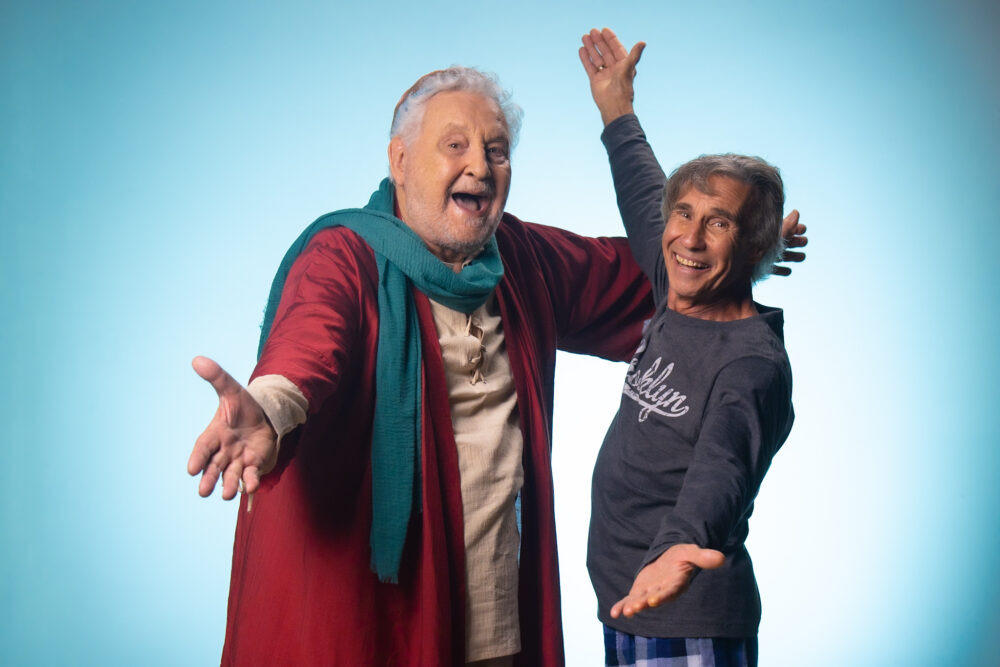
Mendel’s Messiah is a layered production that blends narrative, music, and spiritual interpretation, raising a quiet but persistent question—one that invites reflection across traditions and perspectives.
As the movie began, there was something in the setting that felt immediate and recognizable—I found myself identifying Brooklyn before it was ever stated outright, not through dialogue, but through texture and familiarity.
That familiarity, however, was quickly disrupted, moving into a portrayal of antisemitism that held a historical weight that, for me, touched something as deep as the memory of Kristallnacht- It felt horrific. We didn’t stay in that moment too long as Mendel returns to his apartment, post persecution, that familiarity continues to resonate. Cultural and regional recognition warmed my heart through a familial resemblance with Mendel and my own Brooklyn family upbringing. The multiple locks on the door, the Yiddish, the thoughts about his Bubbe and Zayde. He embodies heritage, humor and a deep desire to find truth and happiness. Which reminds me of the Ancestors who reached Ellis Island as a starting place for hope and community among many Jewish families as the origins of many from NYC eventually dispersed throughout the United States.
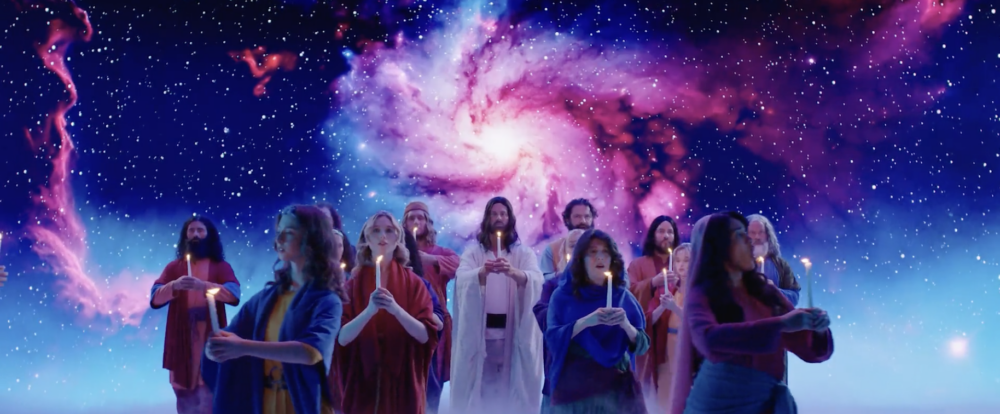
As the story continues, we follow Mendel through his unfolding revelations in time, as we join a host of talented characters. Which becomes an immersion into multiple traditions—Jewish, Christian, theatrical, and musical. At times, it evokes the spirit of Fiddler on the Roof, while elsewhere it moves into gospel, cabaret, or even global dance influences. The choreography blends these styles with ambition.
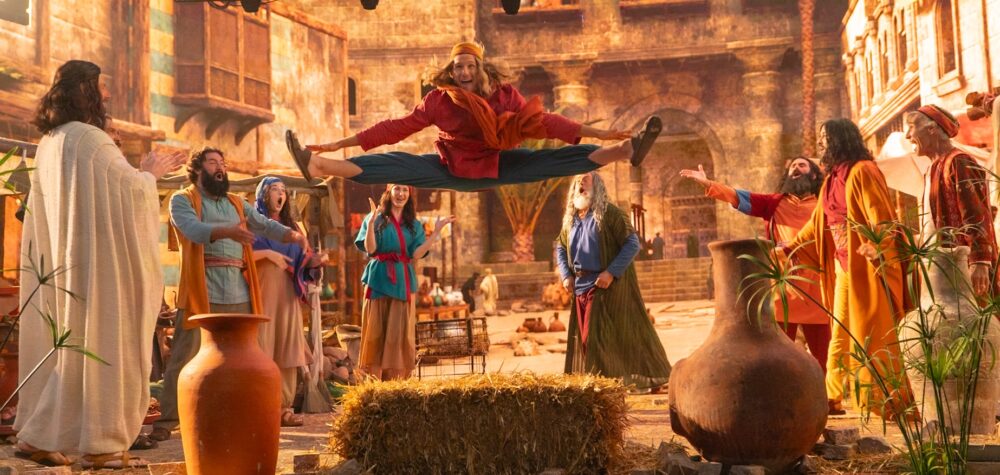
At times, the repetition of certain styles—particularly the jazz and cabaret-inspired ensemble moments—created a sense of familiarity within the visual language shaping its impact – especially when placed against the emotional weight of the subject matter. Such as seduction oppositional to divine light.
Occasionally, the music rises above the lyrics, and I found myself wanting to follow the words more closely—to fully take in what was being said. And yet, when I stopped trying to capture every line, something shifted. The experience became less about understanding and more about feeling. It moved through the body more than the mind, and in those moments, it was breathtaking.
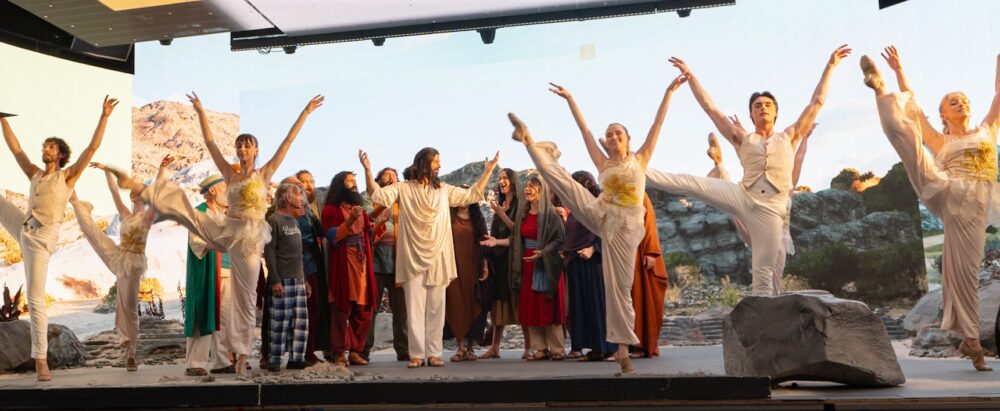
The portrayal of Pontius Pilate stood out in an unexpected way. Here, Pilate is not portrayed simply as a figure of blame, but as someone caught in tension—between authority and pressure, judgment and deflection. That ambiguity felt significant. As someone who is Jewish and carries the surname Pilato, I’ve experienced firsthand how certain narratives persist across cultures and have encountered its historical weight —from Puerto Rico to southern Italy, where the name is immediately recognized. Personal context continued to make moments in the film feel both familiar and complex, highlighting the layered relationship between identity, history, and interpretation.
As the story progresses, it becomes increasingly text-driven, drawing heavily from direct biblical language. Dialogue often feels less like conversation and more like scripture set to music. While this lends the piece a sense of authority, it also creates moments of density that can feel overwhelming.The use of Psalm 22 during the crucifixion is one of them. Not just the opening line—“My G-d, why have You forsaken me?”—but its continuation. The movement from anguish into memory: “Our fathers trusted…” The language becomes physical—poured out like water, bones out of joint, heart like wax—and in that, something shifts. It is no longer purely symbolic; it becomes embodied, deeply human.
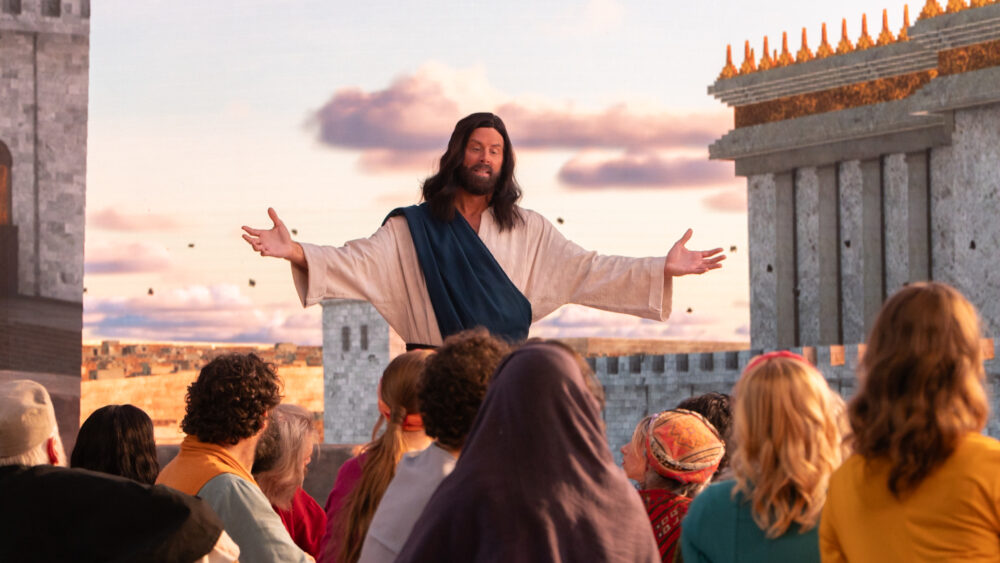
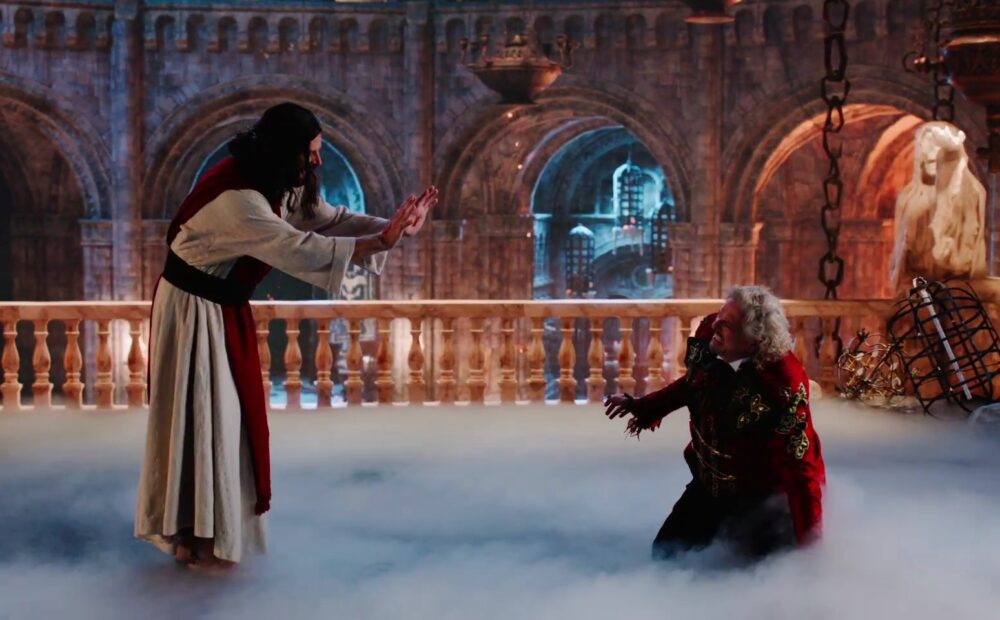
The final confrontation arrives with a heightened theatricality—Belzebuth reappearing in full force, almost celebratory, claiming authority, while Yeshua returns in white, marked visibly by the wounds in his hands. There is no physical struggle, only declaration. When he speaks of laying down his life and taking it up again, and of holding the keys of authority, the moment shifts fully into symbolism. Belzebuth attempts to negotiate—“can we make a deal?”—but the response is absolute. He is cast down, not by force, but by presence. The scene resolves not as a battle, but as a transfer of authority, expressed through language, image, and tone rather than action.
The scale of the moment settles, returning to Mendel after his search for truth and time travel with his Angel tour guide. Now post revelation he returns to his life and the familiarity of his newly restored candy store.  This time, as he enters a new dawn and his lifelong daily rhythm, he seems to carry his spirit differently with a quiet sense of calmness and gratitude. The surroundings feel renewed, grounded in comfort yet expanded in perspective. There is a clarity to what lies ahead—something lighter, restored, with a new sense of being beginning to unfold.