By Sarah A. Spitz
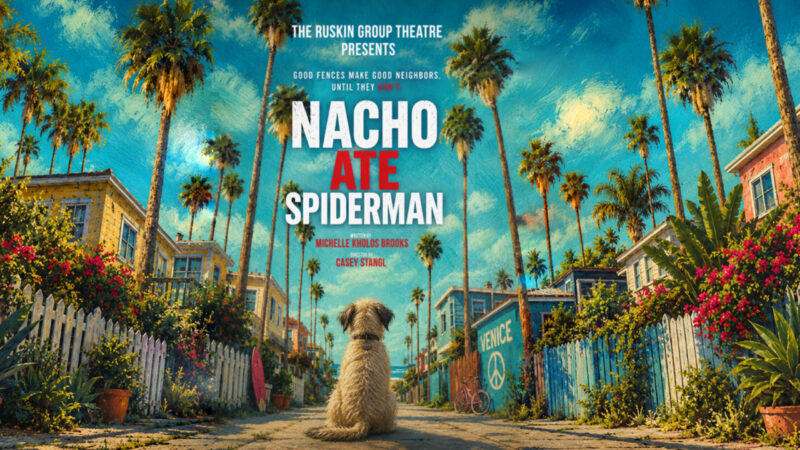
Santa Monica, CA (The Hollywood Times) Nov. 6, 2026 Playwright Michelle Kholos Brooks has lived on a walk street in Venice for 20 years. She loves her neighborhood, “Where the houses sit close enough that we don’t have that much in between us, fence-wise.” That’s why it was such a shock when a neighbor’s free-range rabbit named Spiderman got eaten by another neighbor’s dog, named Nacho. True event.
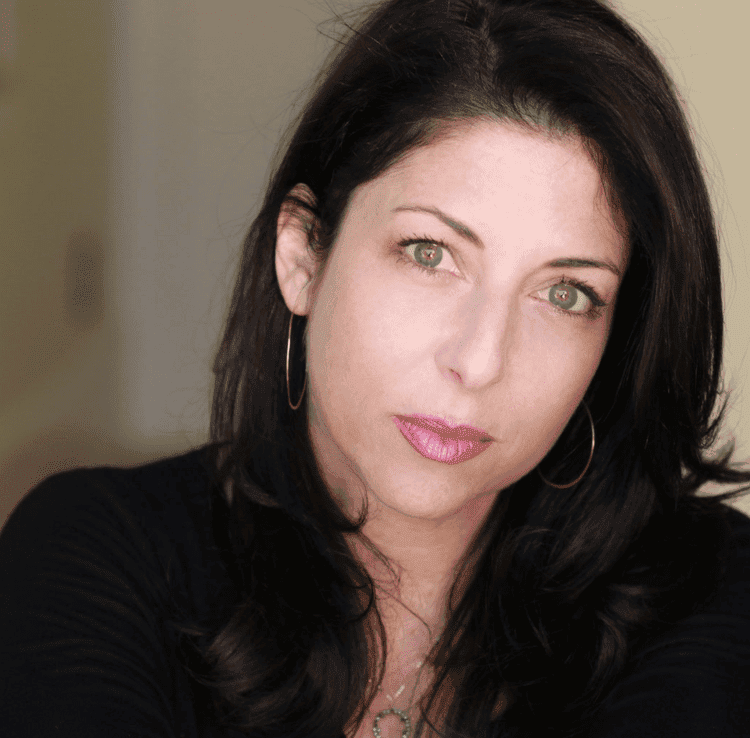
Out of that real incident, she has spun an entire play, but the accusations and the shifting alliances in it are all her own invention.
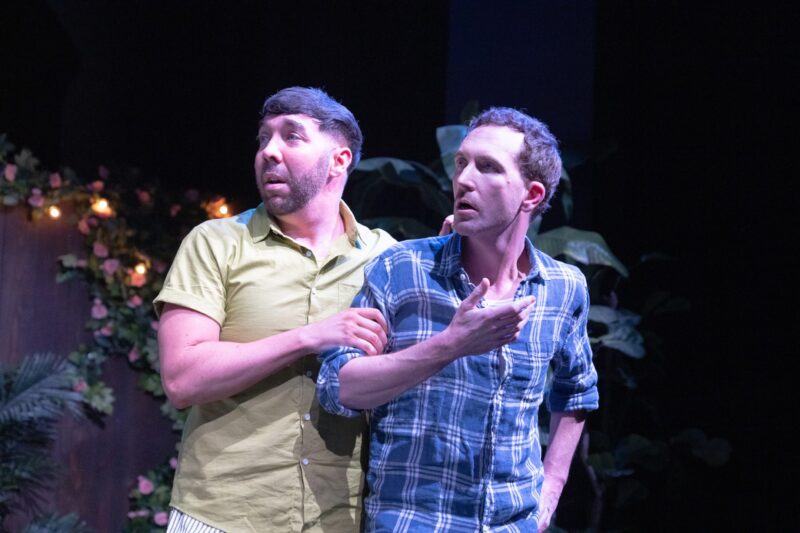
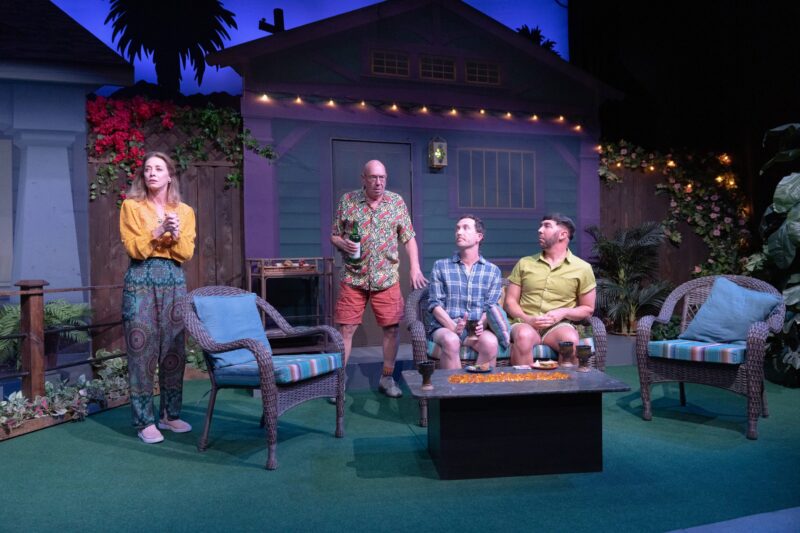
Aptly named for the real animals, Nacho Ate Spiderman is making its West Coast premiere on Saturday, Nov. 7 at the recently rebuilt Ruskin Group Theatre arts complex at Santa Monica Airport. Directed by Casey Stangl, it stars Sharon Lawrence, Dann Florek, Matthew Scott Montgomery and Jamie Pierce.
Michelle loves her neighborhood for its “free, progressive attitudes about so many things.” But when she first moved in, she noticed that pets, belonging to people who did not like confining their animals, were disappearing and even being killed.
Spiderman’s owners let him hop around the block, and neighbors kept finding him in their gardens. “They were like, oh yeah, he always comes back,” Michelle recalls. “And we were like, that’s not gonna end well.”
And, well, it didn’t. So the question became how to turn this incident into a comically serious play.
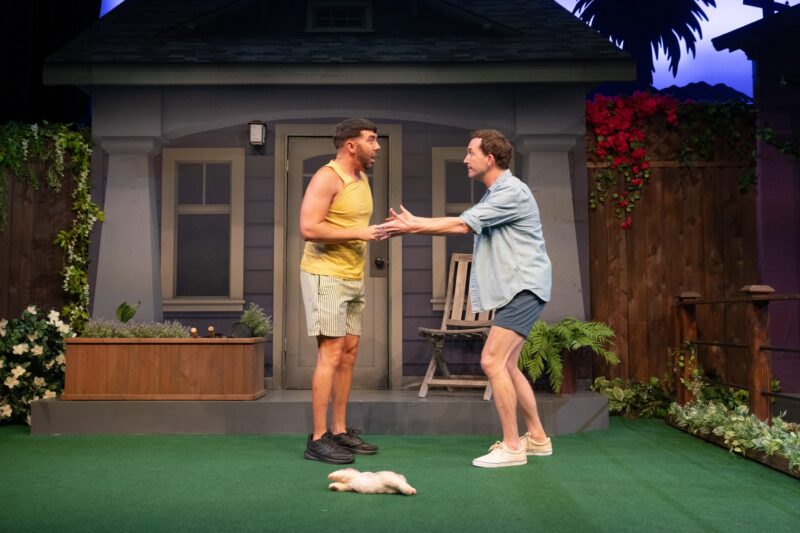
“How do we live with each other is probably the big question motivating it.” The differences are not the “usual categories” that everyone is managing right now, but quieter ones, such as when something you plant in your yard comes up in your neighbor’s garden, who bears responsibility for removal or damage.
The pets, she says, also stand in for something else: parenting. She has a son, now 21, and the rabbit saga set her thinking about how communities of parents bump up against each other. “Sometimes your kids’ best friends’ parents have a really different point of view than you do,” she says, “and you have to learn how to negotiate that.”
Then there is gentrification. After two decades, Michelle has seen longtime residents get priced out. Another actual incident that turns up in the play (that she won’t spoil by speaking about it here) left her wondering what a property owner owes a long-time renter when it’s time for them to sell. “I don’t want to blame the seller for wanting to cash out and leave money for their children. I don’t have any answers,” she says. “I’m just looking at the questions.”
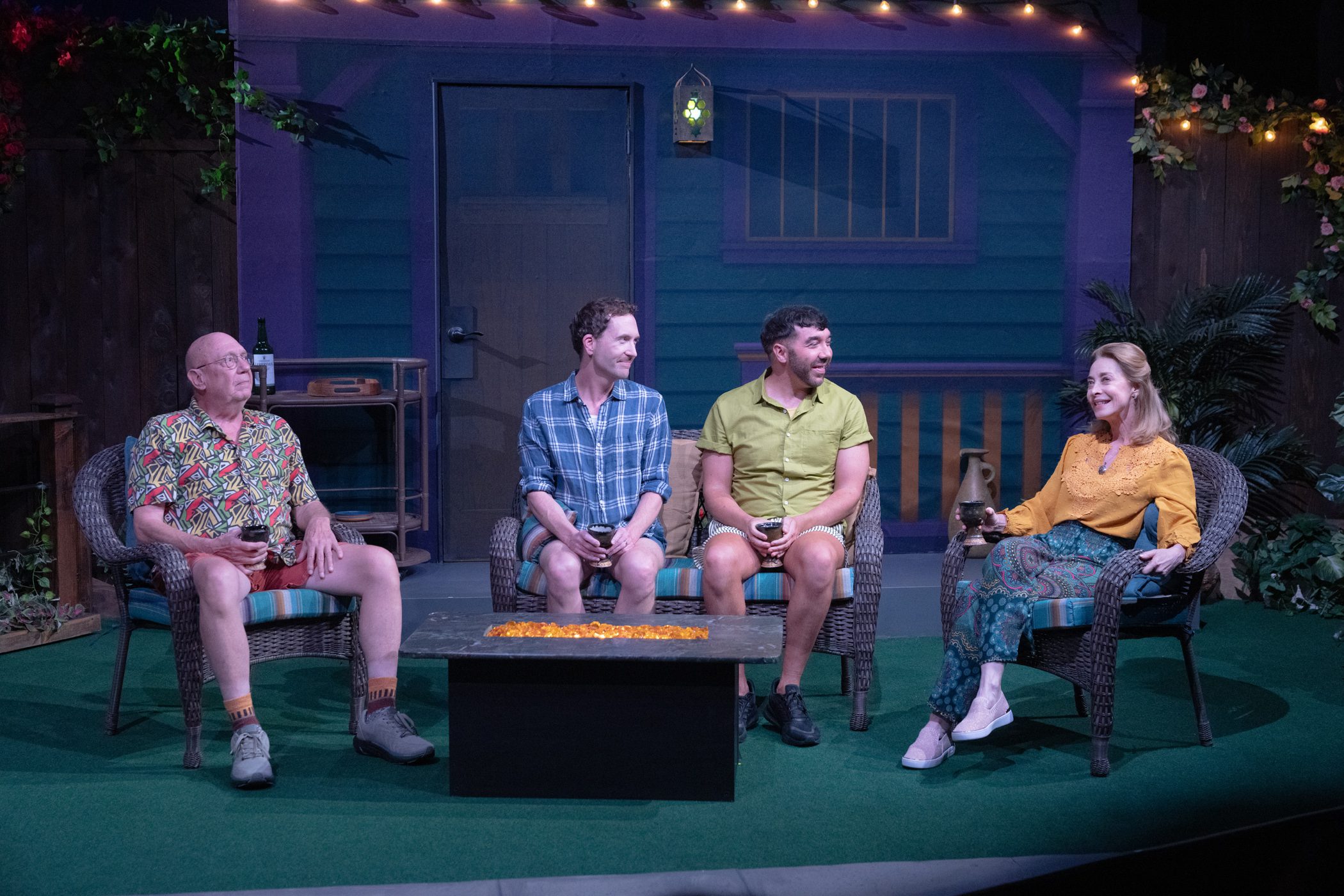
It is a lighter turn for the playwright of H*tler’s Tasters— the award-winning play about young German girls selected to taste Hitler’s food to make sure it wasn’t poisoned — and War Words, based on interviews with veterans of the Afghan and Iraq wars. They’re just three of at least ten full-length plays she’s had produced, and there are even more short plays.
To Michelle, the distance between the more serious works and Spiderman Ate Nacho is not so great. “So much comedy comes out of darkness,” she says. Her husband tells her she moves through the world as if she “fell off a truck in the middle of nowhere,” baffled by why people behave the way they do. She says she rarely knows why she is starting a play, but somewhere in the middle she cracks the spine of it, and everything lines up.
Hanging on a board by her desk is a line from Kazuo Ishiguro’s Nobel Prize speech. “Stories are one person saying to another, this is the way it feels to me; does it feel the same to you? That hit me with such force,” she says, “because I thought, that’s what I’ve been doing.”
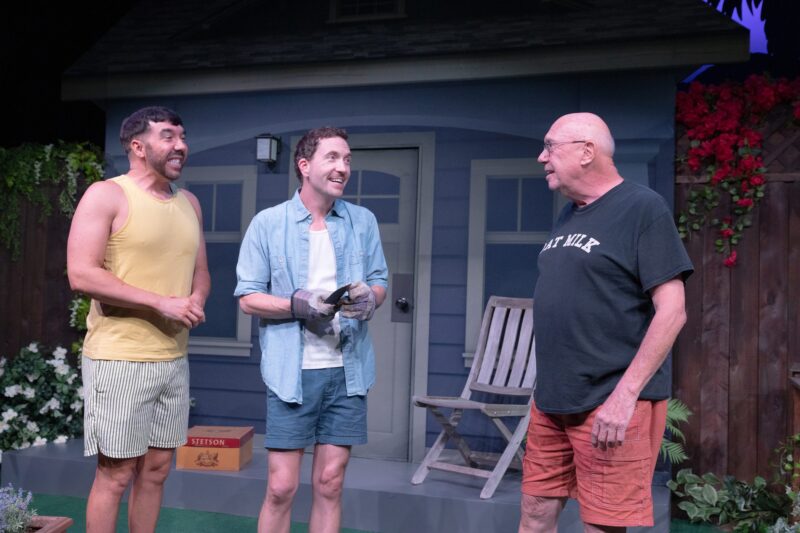
She’s barely had a moment to breathe, since the play had its world premiere at New Jersey Rep, which closed just last weekend. Two days after flying home from the New Jersey opening, she was in rehearsal in Los Angeles, with a different cast, a different director and a different stage. “My head’s reeling a little bit,” she says. “I learned so much about the play, getting it on its feet in New Jersey.”
Michelle and I share a background in public radio. She first worked for Maine public radio before producing for the national shows, Marketplace and The Savvy Traveler. She’s used to being on the other side of the microphone and admitted to being a little nervous, since this was her first interview about this play, and she said she hadn’t quite nailed down her thoughts about it yet.
I came to her theatrical work without knowing about her public radio background or the family she married into. So I asked if working in public radio influenced her writing for the stage. It was, she says, “The best possible training I could have had for playwriting, because you have to listen so carefully to the way people talk.”
She learned how little people listen to each other, and how they avoid conversations. She learned to edit for time and not be precious, sometimes tossing what she thought was her most clever writing to create a tighter story. Theater collaboration, she says, reminds her of those morning editorial meetings: “You’d say something, and then somebody else would say something smarter, and that would make you smarter.”
On the personal front, usually people who date meet the parents after they’ve decided they’re the right one for each other. Not so in this case. She met husband Max Brooks —author of World War Z: An Oral History of the Zombie War, which was later turned into a film starring Brad Pitt — at a party thrown by Melissa Clark, her friend from Emerson College who had grown up with Max and hoped to set him up with someone else.
That didn’t happen and Michelle remembers thinking, “There he is.” So did he about her.
Then, she says, they spent time avoiding each other, because “Neither of us was prepared for this being it.” He was finishing graduate school. She was working “a bazillion hours a week” at Marketplace. A few years ago they told their story at a Valentine’s Day storytelling event under the title “How Neurotic Jews Fall in Love.”
Through Melissa, whose father wrote with Max’s dad, Mel Brooks, Michelle had attended Passover seders with Mel and his late wife, Anne Bancroft, before the fateful party where she met Max.
They taught her, she says, “so much about work. They valued making things rather than owning them.” When she was burned out and thinking of leaving radio, Max told her: “You want to write? I think you should be writing. I can pay the rent, but I can’t write for you. I’m lucky,” she says, “to have a husband who grew up in a family where that was of value.”
Max, she says, romanced her with his Italian side and used his Jewish humor “to nail me down. I fell in love with him because he made me laugh,” she says. “And he still makes me laugh, even when I want to kill him.” History repeats itself because Anne famously said the same thing about why she married Mel.
Anne Bancroft died two months after Michelle and Max’s son was born. “He’s so much like her,” Michelle says. “Sometimes things will come out of his mouth and I’m like, I think she’s still watching me.”
These days she appreciates being at a point in her career where people have stopped asking whether her father-in-law or her husband helped write her plays. “People have started seeing me separately,” she says, “as somebody with her own path. A much lower-profile path, but it’s my path, and I love it.”
What she hopes audiences take home from Nacho Ate Spiderman is a good time. “My most important job is to entertain people,” she says. After that, she hopes they look at their own neighbors with more kindness, especially anyone being pushed out of a neighborhood. “I hope they rescue lots of dogs and bunnies,” she says. “And I hope they laugh a lot. We all need a laugh right now.”
She also makes a plea for small theater, which “desperately needs people to go and sit in the seats.” In a talk to the national security think tank she’s part of and where she is “the playwright,” she said a play seems like a good idea when you buy the ticket, until Friday night, when you are cursing your way into the theater through traffic and fatigue.
But then, she says, “You are in a room with people giving you their hearts, and now we’re all breathing together in the room again.” She calls the Ruskin Group Theatre, with its elevated renovation, “fantastic,” and praises the enthusiasm of her cast, crew and all the people bringing her play to life on the stage.
Bonus points, she says, to the theatre for offering a signature margarita, called, naturally, Nachorita. And her neighbor, Nacho’s human, plans to attend and maybe even bring the dog!
Nacho Ate Spiderman at Ruskin Group Theatre, 2800 Airport Avenue, Santa Monica, opens Saturday, November 7 at 8pm and runs Thursdays through Saturdays at 8pm, Sundays at 2pm, through December 20. No performance December 12. Tickets $45, with student and senior discounts: ruskingrouptheatre.com or (310) 397-3244. Free parking on site.