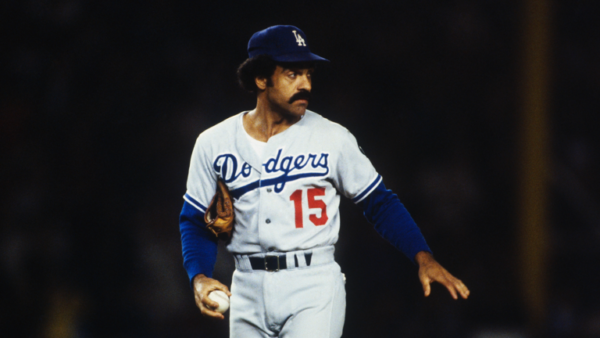
On the day the defending champion Los Angeles Dodgers missed out on the chance to sweep last year’s World Series runner-up, the Toronto Blue Jays, they got a very sad message. Davey Lopes, a member of the Los Angeles Dodgers’ record-setting infield of the 1970s and ’80s and one of baseball’s premier base stealers, died Wednesday. He was 80. The Dodgers were informed of his death in Rhode Island by his former wife, Lin Lopes. She also told the team that he had both Alzheimer’s and Parkinson’s diseases. The Dodgers posted a statement on X.
The Dodgers mourn the loss of Davey Lopes, who passed away today at age 80. Lopes was a member of the team’s record-setting infield of the 1970s and 1980s and one of the finest basestealers in MLB history. Our condolences go out to his family and friends. pic.twitter.com/dJkOk0CWbP
— Los Angeles Dodgers (@Dodgers) April 8, 2026
Davey Lopes, born May 3, 1945 in Rhode Island, rose from a challenging upbringing to become one of the defining figures of the Los Angeles Dodgers’ storied 1970s infield. Widely praised as “the greatest second baseman in LA Dodger history” by teammate Ron Cey and acknowledged as among the franchise’s best after Jackie Robinson, Lopes’s impact extends well beyond his playing days.
Born into hardship, Lopes was raised largely by his mother after his father’s death. Baseball offered a path out of what he once described as a “ghetto,” a sentiment that fueled a remarkable ascent through the sport. He was drafted out of Washburn University in Kansas in 1967 but chose to finish college before the Dodgers drafted him in the second round in 1968.
Legendary Dodger manager Walter Alston reshaped Lopes’s career trajectory by moving him from outfield to second base. Alston also reshuffled the infield: Bill Russell at shortstop, Steve Garvey at first, and Ron Cey at third. That iconic infield lineup was set for the first time in June 1973 and would play together for eight and a half seasons, the longest-running infield collaboration in baseball history. Lopes, as the leadoff hitter, grinded out hits, stole bases, and consistently set the table for Russell, Garvey, and Cey.
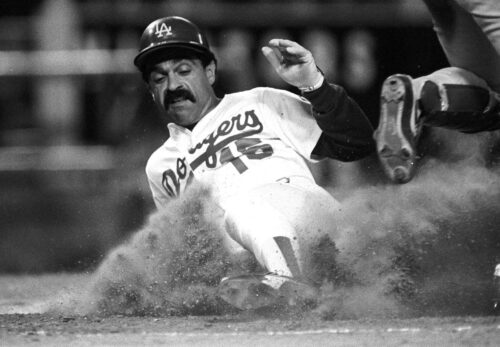
When Tommy Lasorda took the helm in 1976, he preserved the essential infield trio, keeping Lopes alongside Russell, Garvey, and Cey at the heart of the Dodgers’ lineup. The quartet’s cohesion translated into a string of successes: six Gold Gloves and 23 All-Star appearances collectively, a testament to the defensive brilliance and offensive reliability of the era. As Lasorda put it, “He was the sparkplug of our lineup,” a description that echoed through the clubhouse and into baseball history.
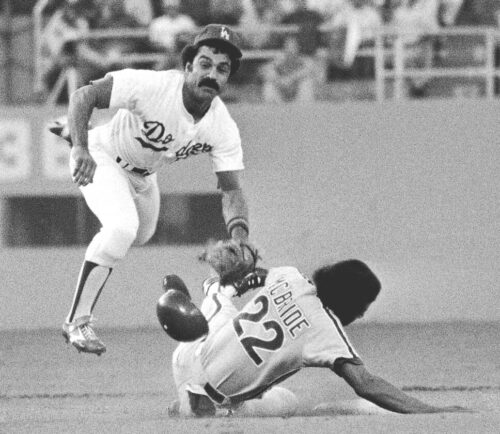
Lopes’s on-base skills and speed earned him recognition as the team’s sparkplug. He compiled a career batting average of .263, drew more walks than strikeouts, and stole bases at an impressive 83% success rate—one of the highest marks in baseball history. Power was part of his package too: 155 career home runs, including a season-best 28 in 1979, the second-most in Dodgers history at the time.
Leadership mattered in a tangible way. Lopes served as Dodgers captain from 1977 to 1981, a demonstration of his influence within the clubhouse and his peers’ respect. The famous infield, under his leadership and example, helped drive three Dodgers World Series appearances, culminating in the 1981 championship. Teammate Steve Garvey has recalled Lopes as “a leader—never flinched, always prepared, and able to rally the clubhouse.”
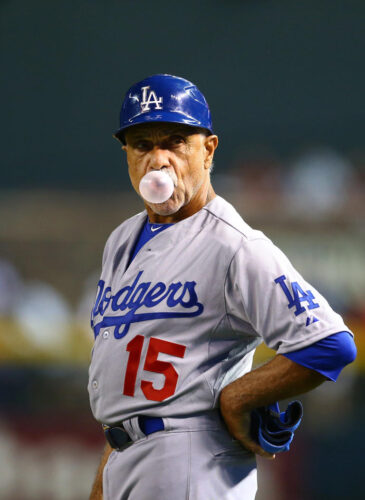
The 1981 triumph marked a peak, but Lopes’s baseball journey extended beyond his playing days. Following the 1981 season, he was traded to the Oakland Athletics and finished his 16-year major-league career with the Houston Astros. Beyond the diamond, Lopes remained deeply involved in the game. He worked as a coach and instructor, sharing his on-base philosophy and baserunning acumen with younger generations. Lopes worked as a major league coach for six teams including the Dodgers for 4 years and the Milwaukee Brewers as manager for 3 seasons. In retirement, Lopes stayed connected to baseball through broadcasting, alumni events, and mentoring roles, continuing to influence players and fans alike. Baseball historian Jane Emery adds context to his legacy: “Lopes’s combination of speed, patience at the plate, and elite defense defined an era of Dodgers baseball.”
Many Dodgers fans who watched Lopes as a player and coach will surely remember his many contributions to the team. Because, as many fans will tell you, no Dodgers legend ever truly dies; they will always live on in the hearts of its passionate fans.