
Hollywood, CA (The Hollywood Times) 6/16/26 – As social media continues to blur the boundaries between performance, identity, and survival, filmmaker Katherine Connor Duff delivers a provocative and unsettling examination of those realities in her short film This Little Piggy Goes to Market, making its World Premiere at Dances With Films’ LA Midnight Shorts program.
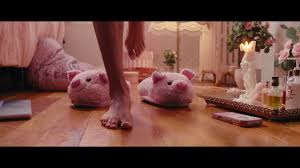
The film centers on Penelope, a young woman facing eviction who turns to selling photos and videos of her feet online in hopes of earning enough money to survive. What begins as a seemingly simple side hustle quickly evolves into something far more complex, and disturbing, as an increasingly demanding audience pushes her toward revealing more of herself than she ever intended.
 Connor Duff’s film is far more than a story about a foot fetish community. It is a sharp social satire exploring modern performance, online consumption, loneliness, and the way social media encourages audiences to view human beings as products.
During our interview, Connor Duff described the film as part of her ongoing “Voyeur Series,” which examines how contemporary performers seek attention and validation in an increasingly digital world.
“I think it offers us a lot of freedom, but not a lot of protection,” she explained. “Something about the Wild West of the internet leaves people, especially women, open to what I like to call modern-day witch burnings.”
What makes This Little Piggy Goes to Market particularly effective is that it never settles for easy answers. Rather than mocking its characters, the film explores the emotional voids driving both the performer and her audience. The men watching Penelope are not presented as simple villains. Instead, they are lonely, frustrated, grieving, isolated, or disconnected from meaningful relationships.
Connor Duff noted that she wanted to explore “how different types of men relate to this woman who becomes essentially an object to them, a representation of what they need in their daily lives.”
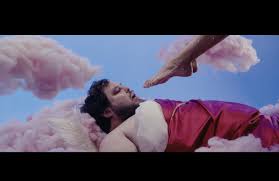
 The film’s split-screen presentation becomes one of its greatest strengths. Multiple viewers occupy the screen simultaneously, allowing audiences to observe the voyeurs while they observe Penelope. The effect is both fascinating and uncomfortable. We become participants in the same act of watching that the film critiques.
Visually, the film is remarkably sophisticated. Connor Duff and cinematographer Steven Mangurton draw inspiration from classic cinema, including Rosemary’s Baby and Pillow Talk, creating a voyeuristic atmosphere that constantly reminds viewers they are peering into private moments. Every frame feels carefully designed, and the editing performs a difficult balancing act by directing attention across multiple storylines unfolding simultaneously.
The technical achievement should not be overlooked. Managing numerous characters, sound sources, text messages, livestream interactions, and emotional arcs within one screen could easily become chaotic. Instead, the film remains remarkably coherent while maintaining tension throughout.
Performance-wise, Sienna, who portrays Penelope, carries an unusually demanding role. For much of the film, audiences know her primarily through her voice and carefully choreographed foot performances before finally seeing her face. Connor Duff revealed that finding an actress capable of carrying all aspects of the role was one of the project’s biggest challenges, but the result proves she made the right choice.
 Perhaps the film’s most powerful observation arrives near its conclusion. The audience’s obsession ultimately shifts from Penelope’s feet to her face. The demand becomes relentless:
“Show your face. Show your face.”
What begins as admiration transforms into entitlement.
That transition captures the film’s central argument. Online audiences rarely remain satisfied. The performance must continually escalate. More access is demanded. More vulnerability is expected. The person behind the content becomes secondary to the audience’s appetite.
Connor Duff intentionally denies viewers a traditional sense of catharsis.
“I wanted to make a comment about how we relate to people online,” she told us. “We forget sometimes that there’s someone on the other side of that screen.”
That message lingers long after the credits roll.
This Little Piggy Goes to Market succeeds because it functions simultaneously as suspense thriller, social commentary, character study, and media critique. It asks difficult questions about modern internet culture without offering simplistic solutions. In doing so, Connor Duff has created a film that is both timely and deeply unsettling.
 At a moment when more people than ever are monetizing their lives online, This Little Piggy Goes to Market serves as a compelling reminder that every screen contains a real human being, and that attention, while valuable, always comes with a price.
Rating: 4.5/5 Stars
This Little Piggy Goes to Market premieres as part of the LA Midnight Shorts program at the Dances With Films Festival on June 20.