

By Robert St. Martin
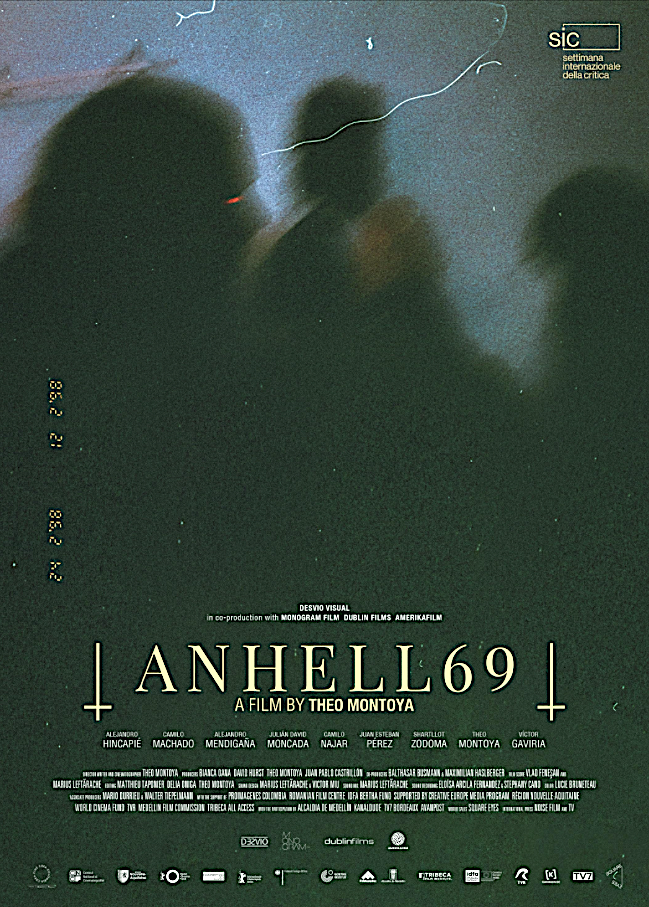
Los Angeles, CA (The Hollywood Times) 6/13/24 – Screening at 2220 Arts & Archives on Beverly Boulevard on Thursday, June 20, at 8:00 pm, is Theo Montoya’s Anhell 69 (Colombia, 72 min., 2022). A multiple-prize winner at the Venice Film Festival and a hit at SXSW and recipient of the Paul D. Lerner and Stephen Reis Grand Jury Award for a Documentary Feature at Outfest Los Angeles in July 2023, Theo Montoya’s feature-length autobiographical documentary gives us some powerful insights in the queer community of Medellín, Colombia, which is his hometown. This docu-fiction hybrid expands Montoya’s earlier short film Son of Sodom (2020), weaving together a tapestry of young queer life in Medellín and reflecting on the sense of impending violence and death that still haunts Medellín to this day. The film is a haunting portrait of young LGBTQ+ people who seem to have been raised by women and no real father. They live without hope for the future, only surviving in the here and now. Tickets for Anhell 69 can be purchased for Mezzanine: Theo Montoya’s ANHELL69 on Thursday, June 20 at 2220 Arts & Archive using the app DICE.
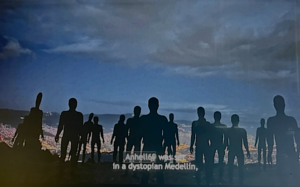
Anhell69 was supposed to be the title of Montoya’s feature-film debut. He calls it a B-movie with ghosts. Montoya set out to make a dystopian zombie movie set in Colombia, in which the premise is that people are having sex with ghosts: These are referred to as “Spectrophiles,” the name for humans who are into that sort of thing. The film to be made in a dystopian Medellin of the future in a city where Pablo Escobar was the father of a city engulfed in violence – where there was no more room in the cemeteries and the ghosts of the dead mingled with the living. To make the film, Montoya recruited non-professional actors belonging to the LGBTQ+ community. But the film was never made. Besides, the friends he made during the audition process (from 2017) have died over the years. Their deaths were either caused by suicide or drug overdose.
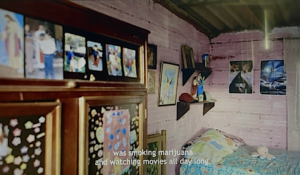
Anhell69 begins with a funeral hearse driving around Medellin, the Colombian city synonymous with the drug cartel of the same name and very much remembered that way in the popular imagination The narrator explains that he was born two years after the death of the famous drug kingpin Pablo Escobar. But the violence in Colombia persists. Montoya tells his own story, mostly in meditative voiceover. There’s a great shot where he describes his childhood as the camera pans through his childhood bedroom, and a key revelation hits just as we see his picture of Britney Spears. It soon begins clear that the filmmaker is presenting himself as a corpse.
Theo Montoya was particularly infatuated by the 21-year-old Camilo Najar, who died of a heroin overdose. He was supposed to be the protagonist of his movie. In fact, “Anhell69” was Camilo’s Instagram handle. Montoya’s previous short film Son of Sodom (2020) was the filmmaker’s elegy of sorts to Camilo. In the story for Ahell69, Camillo given the name Anhell was the first to have unprotected sex with a ghost. Anhell69 is set in a dystopian Colombia where the dead walk the streets as red-eyed ghosts. The youngsters of the city are sexually attracted to the ghosts. Anhell and his friend began to look for ghost lovers online – and go to clandestine ghost parties. Soon, when Spectrophilia becomes prevalent, the government and Catholic Church join forces to hunt them down. The story is obviously an allegory of the trauma, oppression, and discrimination encountered by the young generation in the city that’s doomed.
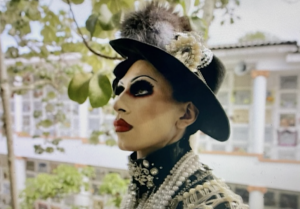 The queer community we encounter in Anhell69 is driven by live-in-the-moment philosophy. The documentary opens with a funeral hearse cruising through the night-time streets of Medellin. Renowned Colombian poet and filmmaker Victor Gaviria drives the car (revealed later in the narrative). Of course, in the face of death and annihilation, all there’s left to do is keep making cinema. The film-making process is not only to visualize the memories and deepest fears but also to challenge the status quo. Montoya, who says he got to know the streets of Medellin at the age of 14, was only able to cry in a movie theatre.
In Anhell69, Montoya provides a deeply sensual portrait of the lost queer youth. He embarks on a poignant quest to immortalize these souls who were denied a future. And the documentary is further strengthened by a free-wheeling visual language that possesses a heady mix of tragic romanticism and nihilism. Sadly, Camilo Najar, the lead in the proposed film, died of an overdose a week after the casting interview that we see in this film.
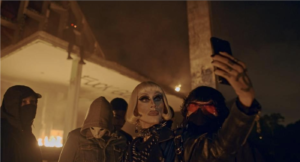 It is important to know a bit about Medellín. The narrator explains that he was born two years after the death of the famous drug lord Pablo Escobar. But the violence in Colombia persists. In 2016, the Colombian government and the Revolutionary Armed Forces of Colombia (FARC) signed a peace agreement. This brought the 52-year-old armed conflict to an end. However, despite the peace accord, violence persists across the country. The COVID pandemic and nationwide lockdowns have also added to the collective sufferings of Colombians. Human Rights Watch reports that since 1985 at least 8.2 million Colombians (out of the 50 million plus population) were forcibly displaced due to the violent conflicts. In fact, Colombia is home to the world’s third largest internally displaced population; the first two being Congo and Syria. Add to that the 1 million displaced Venezuelans who now live in Colombia.
Colombia’s position in terms of LGBTQ+ rights is complex. The political class of the nation is largely conservative and right-wing. The Catholic Church also plays an important role in Colombian politics. Interestingly, there are impressive changes in terms of protecting the civil rights of Colombia’s queer community. Same-sex marriage is legal in the country since April 2016. Nevertheless, the legal frameworks to defend the rights of LGBT+ people only look robust in the paper. In reality, like many other nations, Colombia is one of the most dangerous countries for the LGBTQ+ community. The struggle to combat stigmatization is often overturned by incidents of serious violence. Under Colombian law, the age for consensual sex is 16 and it seems that many young people are attracted to sex work because they cannot find any other means of making money.
 Medellín may be the “Mecca of homosexuality,” but it also a “cemetery.” The question of death always looms over the minds of the young people in the film. The widespread pogroms and civil war in Colombia may have officially ended in 2016. But the lingering effects of violence impact the city’s most vulnerable and marginalized communities, including the queer and trans young people.


