by Sarah A. Spitz
(Article has been updated with current production photos by Cooper Bates)
Los Angeles, CA (The Hollywood Times) September 27, 2026 Caroline Aaron can’t remember a time when she wasn’t working. “If I’m not working, I’m gonna create work. One of the things I love about what I do is that it’s a mountain you can never scale. Even during the pandemic, I was teaching over Zoom, and taking so many classes, it was like I was in college. I find work relaxing.”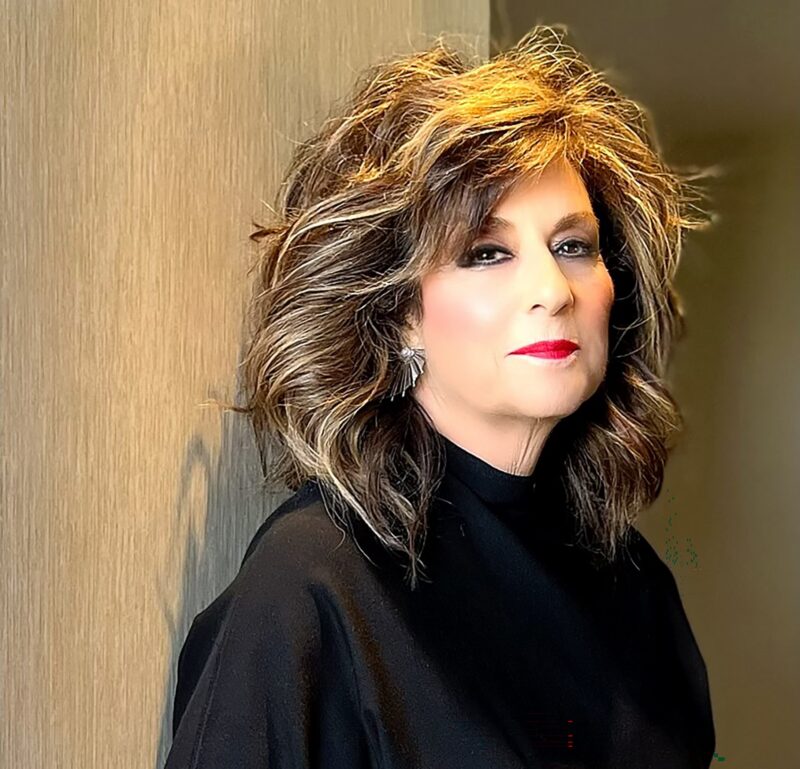
And she’s got the resume to prove it. This versatile actress, now 72 years old, may best be known for her outsized portrayal of Shirley, The Marvelous Mrs. Maisel’s mother-in-law, for which she won a Screen Actors Guild award two times, but she’s also appeared in multiple films by Mike Nichols, Nora Ephron and Woody Allen and has an enviably long list of stage and TV credits and awards to go with it.
She’s the kind of actor who plays mothers, matriarchs and women who hold families together by force of will. But in The Best Medicine, Aaron isn’t playing a character so much as standing in for the playwright’s life, backed by her own personal experience.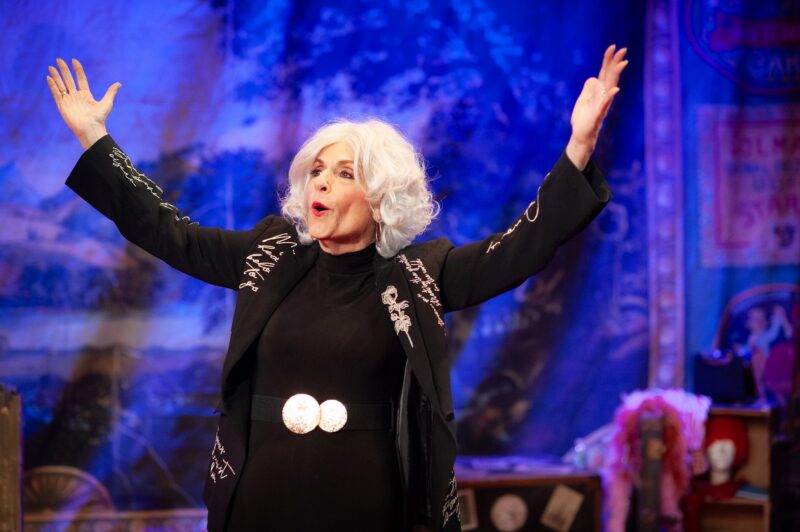
Written by Ojai-based playwright Robin Gerber, The Best Medicine (as in “laughter is…”) centers on what happens when a husband is diagnosed with Parkinson’s disease and a wife becomes, almost overnight, a caregiver. Aaron first performed the piece last summer at Great Barrington Public Theatre in the Berkshires (Massachusetts). And she may be one of the reasons it’s being staged at West L.A.’s Odyssey Theatre Ensemble.
Gerber had hoped her husband might be well enough to attend the East Coast performance, but it was too much of a trip for him to make. Aaron recalled, “Off the cuff I said, well maybe someday we’ll do it in L.A., and then you can drive down from Ojai. And next thing I know, Robin called me and said, ‘When are you free?'” Aaron says that’s not the only reason, of course but, “I’m excited that her husband will get to come see it, because it really is a love letter to him.”

The title is a nod to how the playwright’s protagonist kept herself going. In response to her unforeseen circumstances, Gerber began studying comedy, creating a short routine that was very well received, and inspired her to develop this one-woman show.
Aaron makes the distinction between something that is autobiographical and something that is is personal. “This is personal. It’s about what she had to confront.”
And Gerber didn’t stop there, says Aaron. “She’s become an advocate and activist, and has even lobbied Congress” about the crisis in caregiving. “She really walks the talk.”
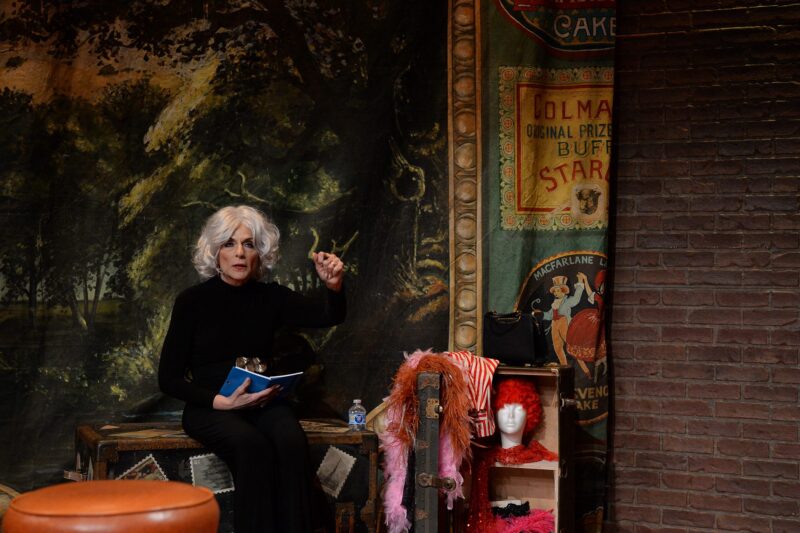
For Aaron, the material didn’t require much imagination. She became a caregiver when her sister, renowned New York theatre director and producer Josephine Abady, was diagnosed with cancer. She died in 2002. That history has folded itself into the performance in ways she didn’t expect.
Driving home from a recent rehearsal, she found herself wondering, “Why am I so blue? What’s wrong with me? And then I realized, I have started internalizing the journey of this character. This is EVERY day. You wake up to this every day, when you’re taking care of somebody. It can be so isolating, so lonely, and there’s no community, there’s no resources, and no money for people who are doing this full time. It’s unbelievable how much it intersects with the experience in my life.”
She’d fly to New York, then feel guilty about leaving her family, then back in L.A. where she lived at the time, she’d feel guilty about leaving her sister.
Another poignant episode traces back to Aaron’s own family. Her husband’s father, ”This big giant of a man,” she said, “six-foot-four, a onetime college athlete, suffered a stroke and ended up in a wheelchair. His wife did not want the job of caring for him. She wanted to put him in a home. ‘We can’t travel anymore, we don’t go to the club anymore, we don’t play tennis anymore,’ she told her stepson, cataloguing her own losses. “And (husband) Jamie just looked at her and said, ‘It didn’t happen to you. It happened to him.’ So I always say to my husband, when I don’t think he’s being nice to me, beware of the second wife. She’s not going to take care of you.”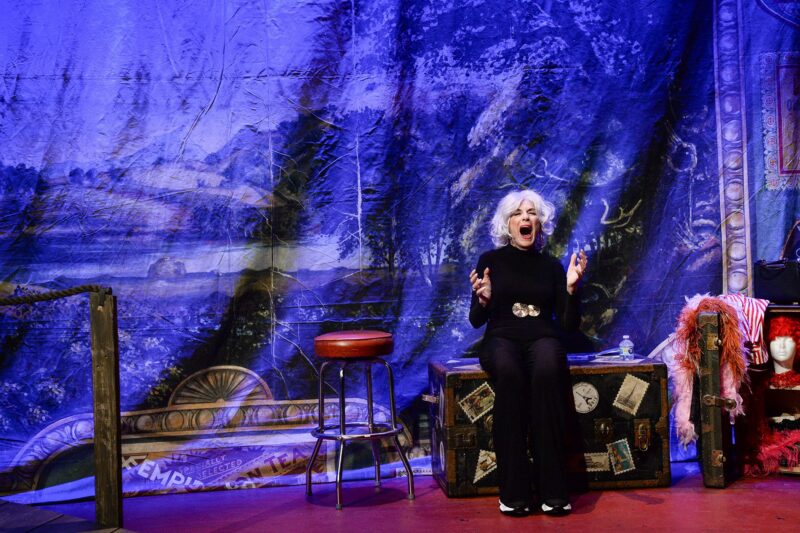
The play arrives into a culture that is only beginning to reckon with caregiving as a public crisis rather than a private burden. Roughly 65 million Americans are currently serving as full-time caregivers, in a country that Aaron says offers them little institutional support , no shared database of resources, no funded relief, often no acknowledgment at all. “Everybody sitting in the audience for this play,” Aaron said, paraphrasing the playwright, “is either a caregiver now or is going to need one. No one can escape this.”
And with great understanding, Aaron says, “A lot of people in this situation feel like they don’t have the right to fall apart because they’re not the one with the disease. I hope the play will give caregivers permission to feel what they’re feeling and recognize that they need to take care of themselves, too.”
And while the subject matter might seem like a bummer, Gerber’s sense of humor makes it work. It’s about love, loss, resilience and finding joy in unexpected ways.
Caroline Aaron is never cast, as she puts it, as “just a white person. I’m cast as an Italian, as a Jew, as an Arab.” Her birth name was Caroline Abady. “My father, Aaron, was born in Beirut, Lebanon. He died when I was very young. But in New York whenever I’d go for an audition as Caroline Abady, people would come up to me and say, could you give my resume to your sister.”

She’d wanted to change her last name to Sidney, her middle name. “But Actors Equity already had a Carol Sidney, and there’s a rule that you can’t have the same name as another actor. To resolve the issue would’ve taken six weeks of arbitration, and I didn’t have six weeks. I knew my mother would be sad if I didn’t incorporate my father’s name into mine, so I became Caroline Aaron, professionally.”
Decades later, her daughter did something like that, only in reverse. At the age of 30, she decided to honor her family’s legacy. “So she went to a courthouse on her own and legally changed her surname to Abady. My husband was not at all upset,” Aaron said. “So now there’s a new Abady.” Reclaiming a discarded name, she said, is its own quiet act of caregiving, for a history, if not a person. “When people honor their heritage, it’s so meaningful, especially when they’re young.”
Next up for Caroline Aaron is a sports comedy movie, called Hot Curlers, that will take her to New Zealand. It’s about a team that wants to get to the Olympics, but being very short of funds, ends up staying with “the old folks” in an assisted living facility.
The Odyssey run of The Best Medicine will include audience talk-backs with such guests as actors Amy Brenneman, who’s been a caregiver to her 91-year old mother and neurodivergent teenager (10/23 or 10/25); Amber Rollo, wife of podcaster Matthew Christman on 10/9; Debra Stricklin, wife of comedy writer, Barry Blaustein on 10/16; and Dr. Adrienne Keener, professional neurologist on 11/1.
Think of the play as a trial run for your future in the role of caregiver; it may help prepare you to face it with both strength and humor.
Performances Oct. 10–Nov. 15:
• Fridays at 8 p.m.
• Saturdays at 8 p.m.
• Sundays at 2 p.m.
WHERE:
Odyssey Theatre
2055 S. Sepulveda Blvd.
Los Angeles, CA 90025
OdysseyTheatre.com
(310) 477-2055 ext. 2