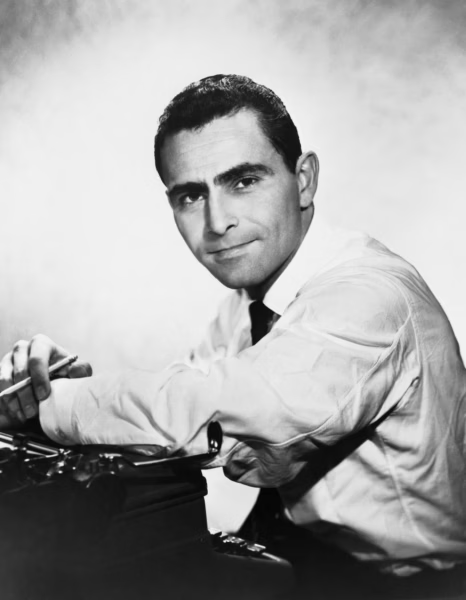
A lot of television fans know these lines: “You unlock this door with the key of imagination. Beyond it is another dimension: a dimension of sound, a dimension of sight, a dimension of mind. You’re moving into a land of both shadow and substance, of things and ideas. You’ve just crossed over into…the Twilight Zone.” Those lines come from a television series that has cultivated a loyal fan base for generations and for decades. The man behind the series: Rod Serling, a true television pioneer.
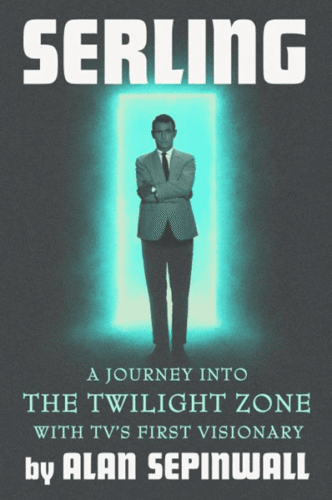
Alan Sepinwall’s “Serling” is a biography that treats Rod Serling not as a legend to be recited, but as a writer whose mind was forged by pressure, discipline, and loss. From the start, Sepinwall’s central method is clear: he ties specific moments in Serling’s life to specific choices in his work, especially the stories that made The Twilight Zone both unsettling and strangely humane. The result is a portrait that feels learned without feeling academic and illuminating without turning Serling into a cipher.
The book opens by complicating the familiar image. Serling is often remembered for frightening tales, yet Sepinwall begins with a quieter origin story: a Jewish family in Syracuse, warmth at home, popularity at school, and a “joking” personality that doesn’t easily match the dread of his on-screen persona. What matters, though, is not that early life was happy, but that Serling later took himself seriously in select ways—his obsession with stature, his dissatisfaction with school, and especially his devotion to writing. Even these early tensions become part of the biography’s pattern: Serling didn’t simply “have” talent; he cultivated narrative authority as compensation and as calling.
World War II became the biography’s most dramatic hinge. Sepinwall emphasizes how service changed Serling’s moral temperature. He survives Leyte — “after Leyte, Hell was a vacation” —and the book lingers on the lasting scars: physical injury, hunger, and the pain of being unable to attend his father’s funeral. These experiences, Sepinwall suggests, help explain why Serling’s work so often feels like it’s asking what remains after safety disappears—how people behave when rules fail and comfort is removed.
From radio to television, Sepinwall charts Serling’s climb with an attention to craft that never feels incidental. Serling’s dialogue-centered strength, his early radio work, and his breakout success with Patterns are presented as the professional steps that make The Twilight Zone possible. Just as important is the book’s emphasis on control. Serling negotiates an unusual level of authority—executive producer, showrunner, and the final word on critical elements—so the series feels unified rather than assembled.
Sociopolitical pressure threads through the biography as well. Sepinwall highlights Serling’s hostility to racism (“the singular evil…is prejudice”) and his capacity to navigate censorship by reshaping narratives, as with “Noon on Doomsday.” Later, burnout and institutional friction follow him, alongside accusations of political extremism and plagiarism—episodes that the biography treats as part of the cost of being outspoken in a medium that profits from acceptability.
Even when the series wobbles and Serling’s later television programs struggle, Sepinwall insists that legacy is still a kind of continuation: reruns, scholarship, adaptations, and enduring relevance. By the end, Serling doesn’t just deepen admiration for The Twilight Zone; it clarifies why the show still lands. Sepinwall’s strongest achievement is making Serling’s worldview feel audible inside the episodes—proof that for this writer, storytelling was never merely entertainment, but a way to insist that attention, conscience, and imagination matter.
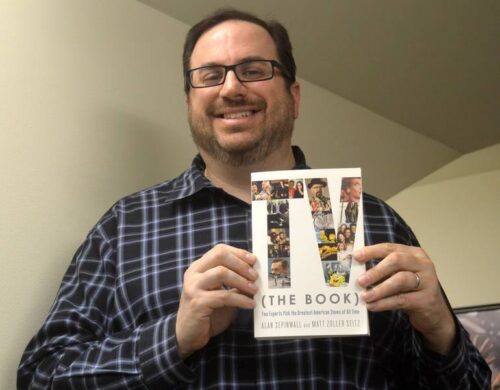
I had the pleasure of talking with author Alan Sepinwall. I enjoyed him talking about all the people he interviewed before putting this biography together. The list was staggering: Steven Spielberg, Guillermo del Toro, JJ Abrams, Ryan Johnson, Vince Gilligan, David Chase, and Rob McElhenney. These are all men who can be considered the titans of the industry today, and they admitted that some of Serling’s work was their inspiration as they began their careers and still inspires them today. Both Sepinwall and I agreed that Serling was wrong about his legacy. Towards the end, Serling believed his work would be forgotten. The fact that we still have marathons, books, and even attractions built to the memory of the Twilight Zone shows that Serling will live on.
This book is a must have for any fan of Rod Serling or The Twilight Zone. Even if you are not a fan, I would recommend this book because it is worth examining a man who may not have been too tall in life…but he looms large today. The best part is that this wonderful book can be yours, and you won’t even have to travel…to the Twilight Zone…
For order, please follow this link: https://www.hachettebookgroup.com/titles/alan-sepinwall/serling/9781538773888/
Here is the full interview: