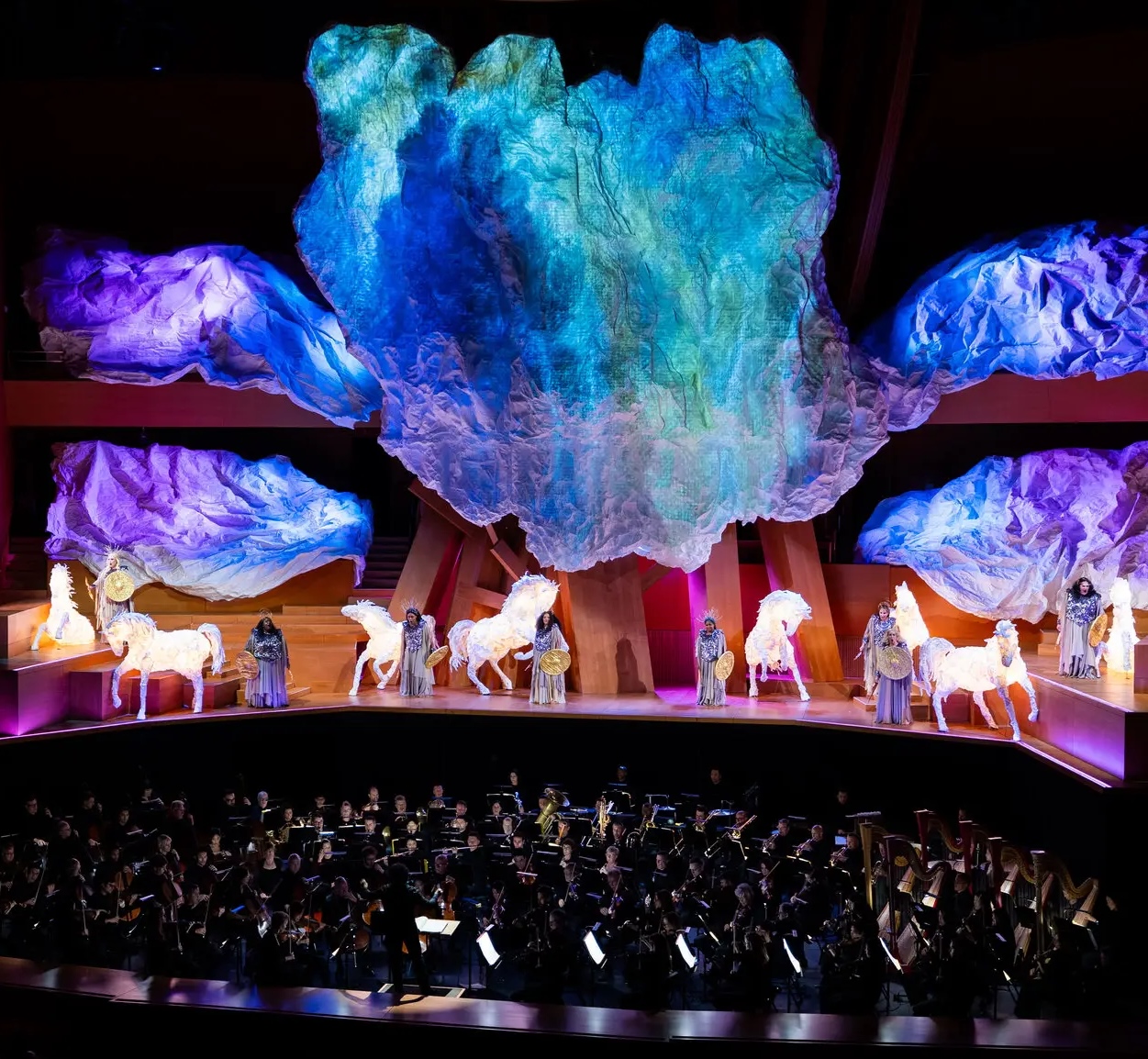
Across three monumental nights of Wagner’s Die Walküre, Gustavo Dudamel conducted the LA Phil with power and precision in one of his epic closing chapters.
By John Lavitt
Los Angeles, CA (The Hollywood Times) 05-26-2026
In the final weeks of his transformative tenure with the Los Angeles Philharmonic, Gustavo Dudamel is not quietly slipping away. Instead, he is becoming a legend. Across three extraordinary evenings at Walt Disney Concert Hall, Dudamel led Richard Wagner’s Die Walküre (The Valkyrie), Acts I, II, and III, with a force of vision and emotional command that felt almost superhuman.
Conducting Wagner is always a colossal challenge. Conducting Die Walküre over three separate nights while maintaining narrative cohesion, orchestral precision, and emotional intensity is something else entirely. Yet Dudamel did not merely survive the challenge. He transcended it.
From the first storm-tossed phrases of Act I to the devastating farewell that concludes Act III, Dudamel conducted as if channeling something larger than himself. His body seemed to become part of Wagner’s score. At times, he moved with volcanic energy, unleashing the Los Angeles Philharmonic’s immense power with terrifying force.
At other times, Dudamel drew the orchestra into moments of aching vulnerability and tenderness, revealing the humanity buried beneath Wagner’s gods, warriors, and myths. The result was overwhelming. He transformed Die Walküre into something living, dangerous, and emotionally immediate.
The first act belonged to the striking contrast between Jamez McCorkle’s Siegmund and Soloman Howard’s Hunding. McCorkle portrayed Siegmund not as a traditional hero but as a traumatized man propelled by pain and destiny. Even in exhaustion and desperation, he never wavered from his mission of revenge and survival. His singing conveyed emotional urgency and inner conflict.
Opposite him, Howard’s Hunding embodied a very different version of masculinity: authoritarian, rigid, and terrifyingly self-assured. Howard’s commanding presence transformed Hunding into more than a jealous husband. He became the embodiment of oppressive patriarchal power itself.
Acts II and III shifted toward the gods, with Ryan Speedo Green delivering a physically imposing and psychologically complex Wotan. Green’s sheer vocal power and commanding stage presence made him genuinely intimidating. Yet Wagner’s brilliance lies in revealing the vulnerability beneath authority, and Green captured that tension beautifully.
However, the evening’s revelation was Sarah Saturnino as Fricka. Her performance radiated charisma, intelligence, and righteous fury. Saturnino did not merely confront Wotan; she overwhelmed him with moral clarity and theatrical magnetism. Every moment onstage carried electric intensity. Her performance left the audience wanting far more.
Christine Goerke also brought immense emotional weight to Brünnhilde, especially in the heartbreaking conclusion of Act III, where Wagner’s music reaches devastating emotional grandeur. Dudamel shaped these final moments with astonishing patience and sensitivity, allowing the farewell between father and daughter to unfold with profound emotional truth.
Equally remarkable was the staging itself. Designed years earlier by the late Frank Gehry, the production transformed the seating behind the orchestra into a fully integrated theatrical environment. Rather than feeling like a concert adaptation, the staging transformed Walt Disney Concert Hall into an immersive operatic landscape. The scenic design gave Wagner’s mythic world a haunting architectural beauty, perfectly suited to Dudamel’s sweeping interpretation.
As Dudamel prepares to leave Los Angeles, this monumental Die Walküre stands as both a triumph and a farewell: a reminder that for over a decade, Los Angeles has witnessed one of his generation’s great conductors at the height of his powers.