She Dances opens in a moment of quiet finality. Claire, now a high school senior, stands with her best friend preparing to leave behind the dance competition circuit that has shaped their lives for as long as they can remember. Having grown up traveling from competition to competition, the stage has been a constant presence. For dancers raised within this system, the circuit becomes more than a series of events; it becomes the rhythm of childhood itself.
As the story unfolds, however, the film reveals that this final competition carries more emotional weight than the usual pressures of performance. Claire arrives at the convention accompanied by her father, Jason, with whom she shares a strained and distant relationship. She calls him by his first name rather than “Dad,” and the tension between them suggests a fracture that goes far deeper than ordinary teenage independence.
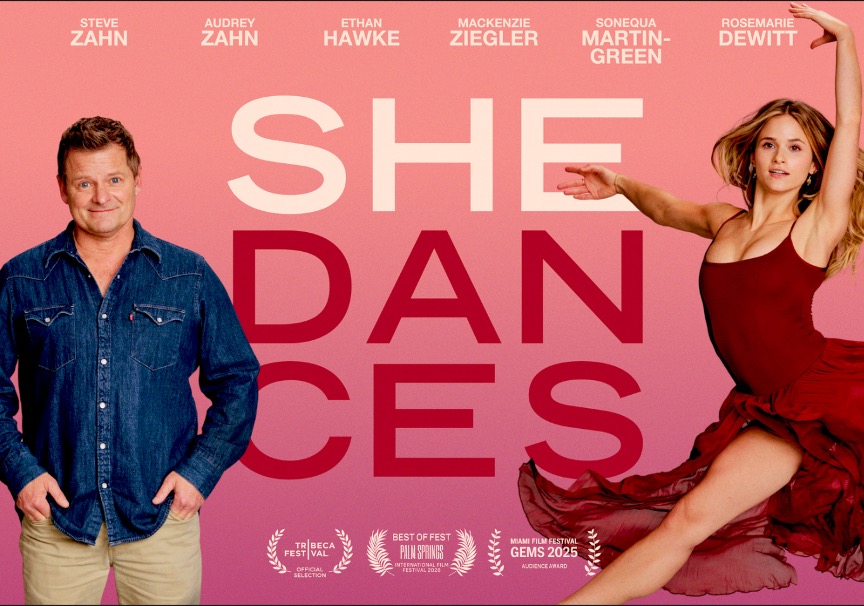
The film also carries a quiet layer of authenticity in its casting. Claire is played by Audrey Zahn in her screen debut, appearing opposite her real-life father, Steve Zahn, who portrays Jason. The story itself draws from a moment in their own lives when Zahn accompanied his daughter to a dance competition while she was still a senior in high school. Audrey Zahn has described the competition circuit like their own world—a culture the film captures with surprising familiarity. Claire’s best friend in the film, Kat, is played by Mackenzie Ziegler, known to many from the dance world through Dance Moms. The inclusion of real home-video footage within the film further deepens the sense that this story is rooted in lived experience.

Yet beneath the familiar rhythms of the competition world lies a deeper emotional thread that gradually comes into focus. The film quietly reveals that Claire, and her father are carrying a loss that has reshaped their family.
That fracture quietly centers around the absence of Claire’s brother, Jack. The film never explains exactly what happened to him. Instead, his absence lingers as a quiet presence shaping the emotional landscape of the family. Claire describes the loss simply: it feels as if Jack “disappeared.” The ambiguity mirrors how grief often lives within families—present in everyday interactions yet rarely spoken about directly.
Jason appears to carry that grief in ways that have reshaped the family’s life. The film hints at withdrawal, depression, and struggles with alcohol as he attempts to numb the pain of a loss he cannot fully face. His coping has fractured both his marriage and his relationship with Claire, leaving father and daughter navigating the same grief from opposite sides of silence. Claire, meanwhile, copes differently. Rather than withdrawing, she throws herself into dance, channeling emotion into movement.
For those familiar with the world of competitive dance, the film’s emphasis on this being Claire’s final competition carries particular meaning. In many youth circuits, dancers age out once they graduate high school, making the last competition feel like the closing chapter of a formative part of their lives. It marks a transition from the structured world of childhood competitions toward the next stage of a dancer’s life. Claire and her best friend are already envisioning the continuum path, discussing their post-graduation move to New York City. For many young dancers, this moment marks the shift from years of training in the youth circuit to stepping into the professional dance world they have been preparing for since childhood. Against that backdrop, Claire’s final performance becomes more than a competition routine—it becomes a threshold between youth and professional life in pursuit.

Small moments throughout the film begin to soften the distance between father and daughter. They watch old home videos together, brush their teeth side by side in a shared hotel bathroom, and slowly begin to speak about the brother whose absence has lingered between them. These scenes unfold quietly, suggesting that healing rarely arrives through dramatic confrontation but through small acts of shared presence.

Jason’s professional life is also tied to the loss. At the beginning of the film, the sale of the distillery he built with his best friend and business partner—Two Jacks—is already underway. The name reflects a shared bond between the two men, each of whom had a son named Jack. When Jason’s partner unexpectedly appears at the dance convention, worried that Jason may be slipping back into destructive patterns, the conversation they finally have reveals the depth of their shared grief. What initially appears to be a business matter becomes something more personal, suggesting that neither man truly wants to let go of the memory embedded in the company’s name.

One way to understand the emotional depth of She Dances is through what grief researchers call Continuing Bonds Theory. Rather than encouraging mourners to “let go” of the person who has died, this theory recognizes that maintaining an ongoing connection with the deceased can be a healthy and meaningful part of mourning. The film quietly illustrates this idea throughout the story. Jason’s company, Two Jacks, carries the name of his son. Claire watches old home videos of Jack and remembers the nickname he once gave her—“Skipper.” In the final performance, those memories move from private reflection to public expression when Claire projects childhood footage of her brother onto the stage behind her. In doing so, she does not leave her grief behind; instead, she brings it into the dance itself.
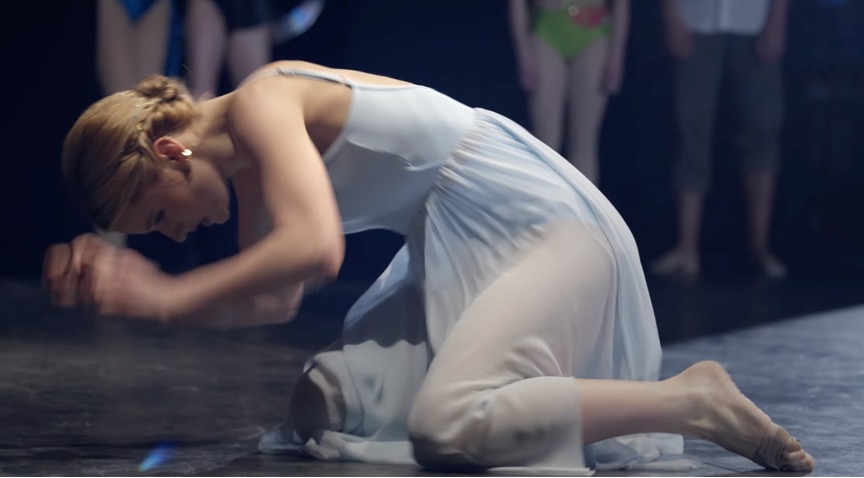
Claire’s final performance becomes the emotional centerpiece of the film. The cinematography captures fragments of movement, memory, and reaction rather than presenting the dance as a straightforward competition routine. The performance unfolds against projected images from the siblings’ childhood, transforming the stage into a space where grief and remembrance coexist. Whether the choreography presents as a structured routine or closer to improvisation is intentionally unclear. What matters most is the emotional truth Claire conveys. She commands the stage with exceptional poise and technical clarity, pairing strength and control with a deeply expressive presence. In that moment, the competition itself fades into the background. Claire is no longer dancing to win; she is dancing to acknowledge the loss that has shaped her family’s silence.
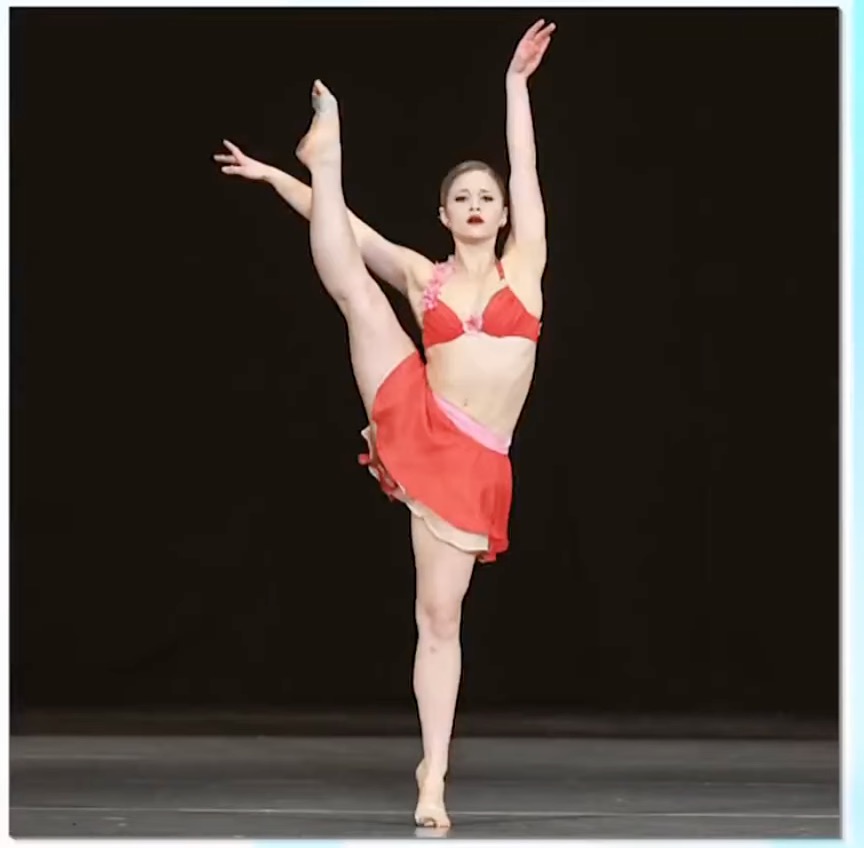
Perhaps the most telling choice comes after the performance ends. Claire leaves the competition without waiting to hear the results. Whether she wins or loses no longer matters. The dance itself has already fulfilled its purpose.
When grief cannot be spoken, the body often carries the story. In She Dances, movement becomes the language that finally allows it to be shared—a reminder of what somatic and dance/movement therapies have long understood: sometimes the body knows how to begin healing before words can.
Films like She Dances remind us that art—whether through music, movement, or storytelling—can become a place where grief finds expression, and where connection quietly returns.