The film opens with the voice of Holocaust survivor Nomi Kapel, speaking in Hebrew as subtitles display her recorded testimony across the screen. Her maiden name—Agraphski or Grabski—is uncertain, reflecting how much trauma impacted her original world and childhood history. She begins telling a story from 1942, when she was ten years old.
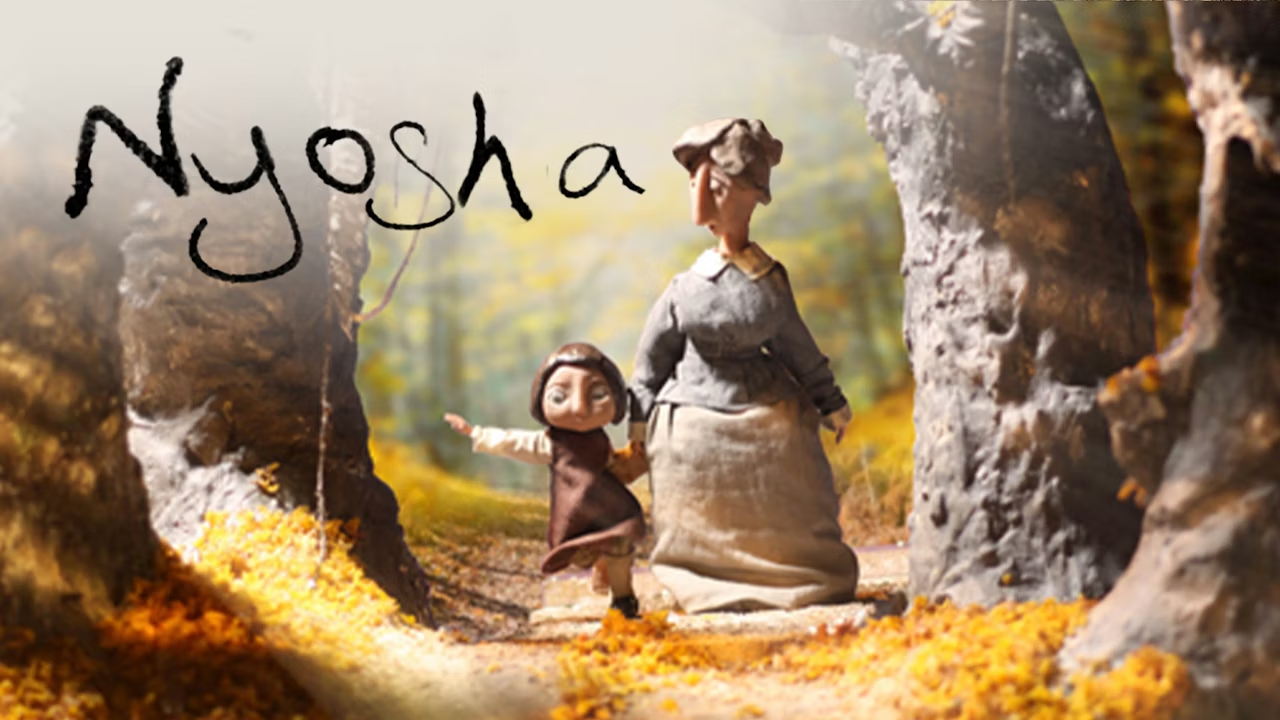
In less than fifteen minutes, we are exposed to an entire war. We move from normal life and hard work to the Jewish encampment, to Kristallnacht, and to the capture of the Jewish community—events we already know historically, yet here they are shown through the story of a young girl, told through clay animation.
The shoe becomes the center of the story. It was shiny black with a buckle, and she had to buy them one at a time because she didn’t have enough money to purchase a pair.
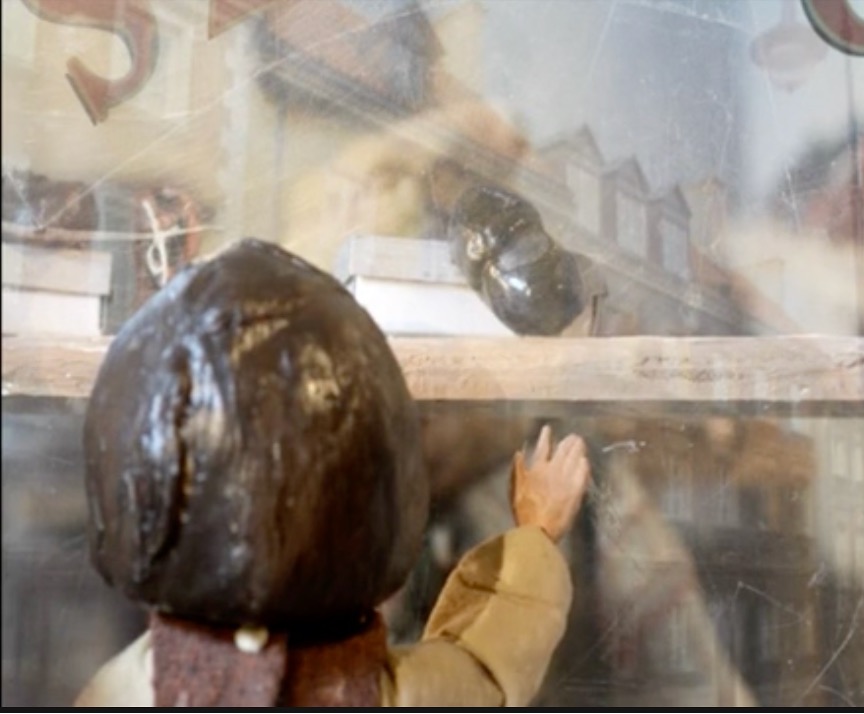
For me, the reminder of shoes is heavy. The first thing you often see when you walk into a Holocaust memorial museum—whether here or somewhere else—are the shoes. Piles and piles of shoes. They have always impacted me. They are heavy with meaning and metaphor.
Through clay animation we walk through the memory not only feeling connected to the human story, but seeing it through the mobility and perspective of a child’s eyes. Her understanding is limited, yet the story unfolds around her. At moments the film shifts from clay figures into chalk drawings—an artistic transition that can feel almost like a mental shift from the semi‑real world into the inner imagery of memory, imagination, or the visions of a child trying to understand what is happening around her.
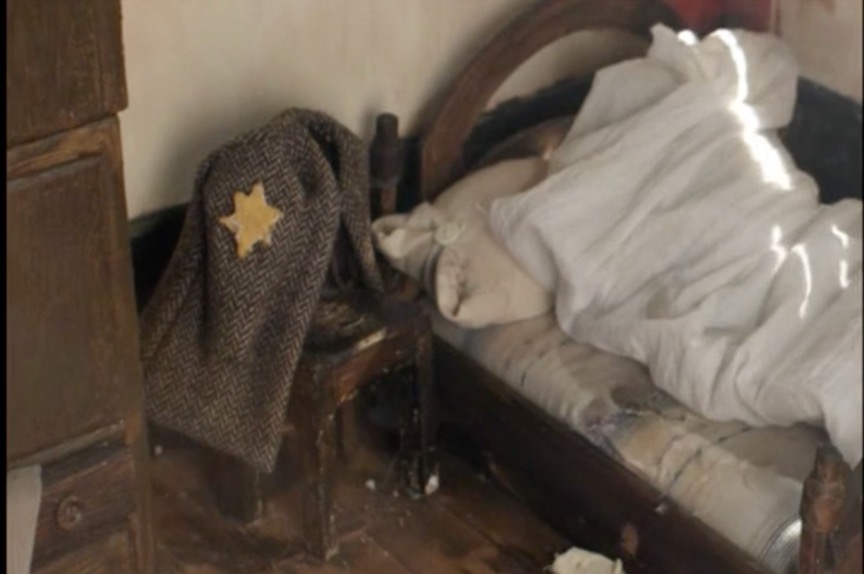
Soon, the quiet unraveling of normal life appears. In a subtle but chilling moment, the child’s simple jacket transforms with the appearance of the yellow “Jude” star. What had once been ordinary clothing becomes a forced mark of identity, signaling the beginning of the ghetto period and the quiet unraveling of normal life.
Later we see her working—carrying wood, peeling potatoes, and doing whatever work she is asked to do, continuing to add coins to the small box she keeps.
But when she finally returns to the shoemaker to buy the matching shoe, the shop is empty. Shoes lie scattered across the floor. The world she knew had already begun to change.
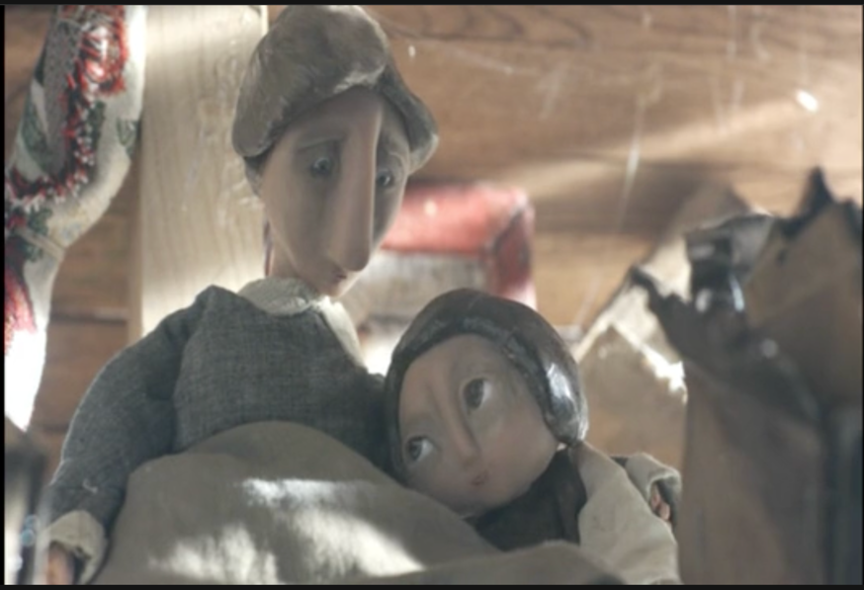
From there, the story moves quickly into hiding, fear, and survival. The Nazis are rarely shown fully—only fragments, boots, shadows, or partial figures—keeping the perspective anchored in what a child might see and understand.
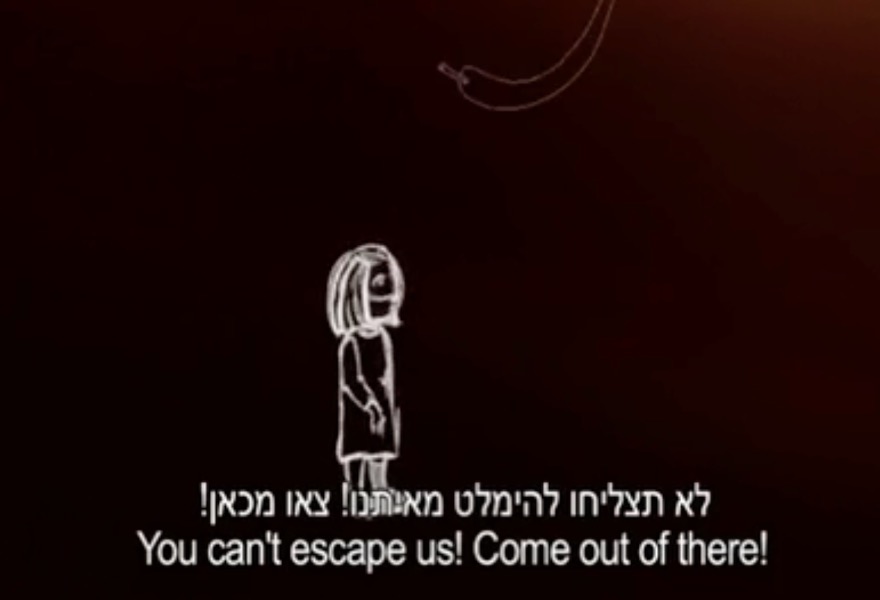
At one point, she describes hiding under a blanket on the couch, barely breathing while a Nazi enters the room and checks for signs of life. As she tells this part of the story, the animation briefly shifts to chalk drawings. In the drawing, she balances across the shoelaces stretched between the two shoes. The lace loosens, and she falls. Immediately afterward, the scene returns to clay animation, where we see the Nazi’s leg push her shoe aside with his foot, before his footsteps fade as we hear him leave the room.
Eventually, the child rises, puts on both shoes, and walks out into the snow with nothing but her dress and those shoes. No coat. No belongings.
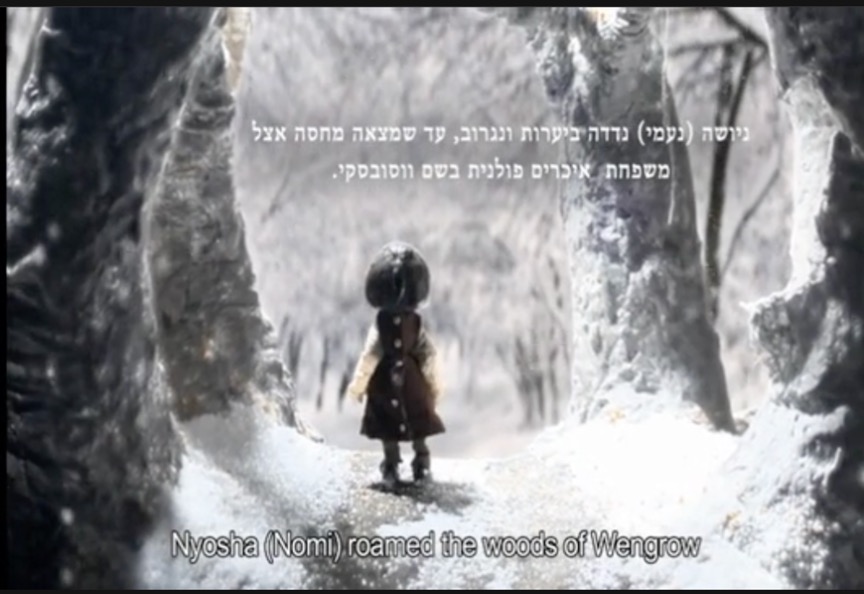
The music becomes soft and gentle, almost like the telling of a new beginning. Piano notes accompany the sound of wind, birds, and the quiet sweep of snow as she continues walking.
She wanders through the woods of Węgrów until she finds shelter with a family of Polish farmers named Wasowski, who risk their own lives to hide her until the war ended.
Three years later, she joins a group of orphans, like so many other children who survived.
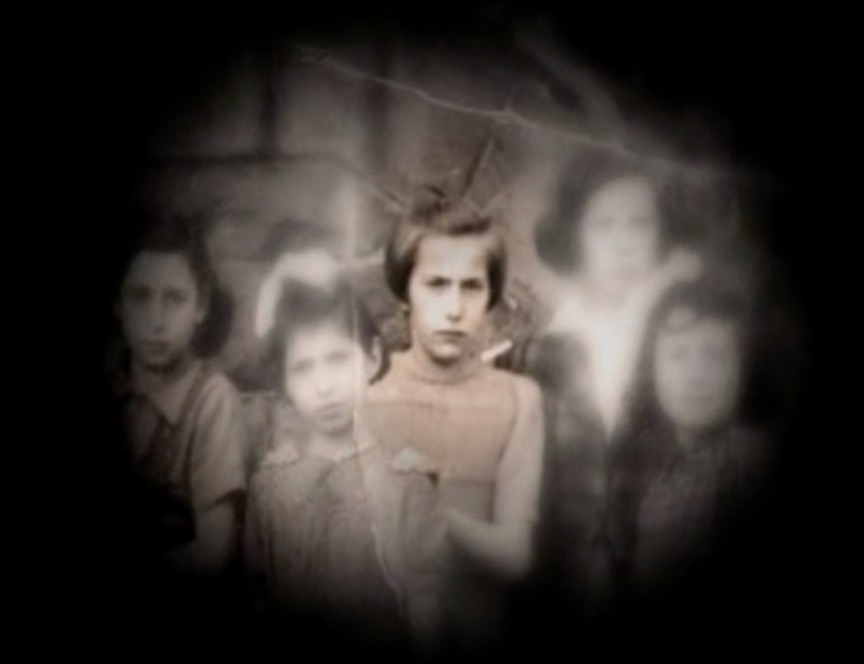
At the end of the film, we see her real photograph as a child as the clay animation fades away. We learn that she immigrated to Israel in 1947, married another Holocaust survivor, and became a mother and grandmother. Throughout her life, she continued to share her survival memories as inspiration for others.
She passed away in 2006 at the age of 73, surrounded by her large and loving family.
A short film, yet an immense memory—years of life and survival shared through clay animation in only a matter of minutes. It stands as a tribute to those who survived the Holocaust and to the memory of its victims and their families.
The film can be viewed on ChaiFlicks.